01 Apr 2026
Elena Hogg, founder of local culinary company FOOD by Elena, raises her little finger for some afternoon delights…
The practice of taking ‘afternoon tea’ dates back to the mid-nineteenth century, when Anna, the seventh Duchess of Bedford, decided she was fed up of the hunger pangs that plagued her between midday lunch and dinner at eight o’clock.
Anna would arrange for small sandwiches, cake and lashings of tea to be served to bridge the gap between meals. These days, it’s a cereal bar. They really knew how to do things back then.
The proliferation of convenience and snack foods we see today means that afternoon tea is not so much a necessary stop-gap, but more of an indulgence; a quasi-ritualistic, opulent and decadent meal carved out of a frenetic week. Its aristocratic origins bequeath the afternoon tea a certain elegance, too – when I’m hosting one, I pull out my finest china, my prettiest teapot and I’m fairly sure afternoon tea is why cake forks are a thing.
From a food business viewpoint, this time of year sees quite an uptick in bookings for afternoon tea. There’s a strong association between tea, scones and outdoor eating, I think, so as the weather improves, we’re more naturally inclined to seek out daintier, fancier food over the hearty fare of winter.
Of course, we’re still in Britain, so it’s likely to be raining as we nibble our cucumber sandwiches.
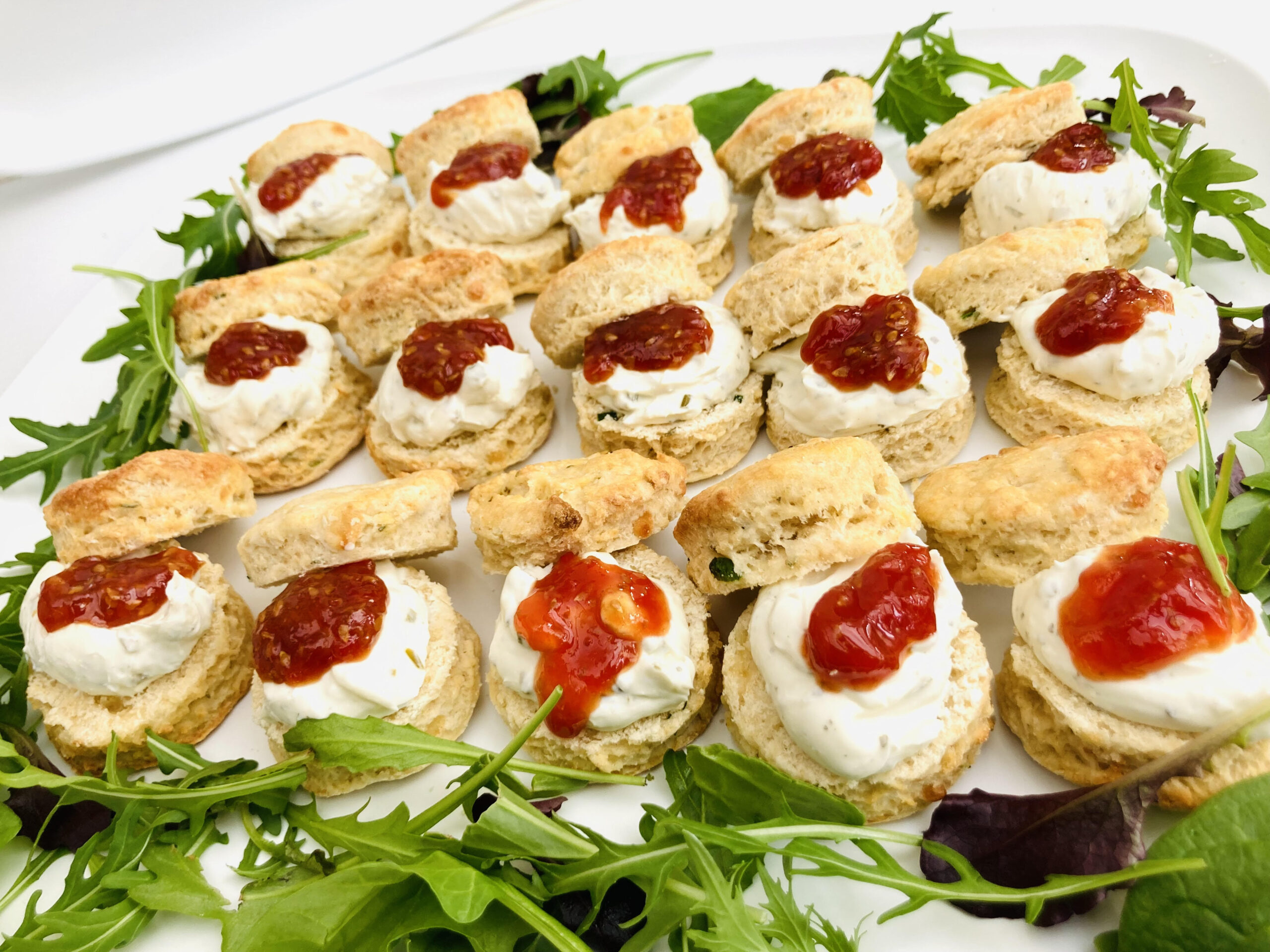
When a client asks for an afternoon tea, I offer to send my menu, but am always keen to explain that I like to offer a bespoke service as far as possible: one client recently said her mum, in whose honour the afternoon tea was being held, has never really liked the jam-and-cream combo, and so I made her savoury scone with cream cheese and my homemade cherry tomato ‘jam’, which solved the ‘What, no scones at an afternoon tea?’ concern while also amusing the client’s mum no end, because these scones look just like a sweet scone with clotted cream and jam, but obviously taste savoury. The guests all had quite the surprise on their first bite.
I urge you to try making the tomato jam, which is an Ottolenghi recipe: take 800g of good quality cherry tomatoes, put them in a saucepan with boiling water and blanch them so you can pull the skins off easily. Put the skinned tomatoes back in the saucepan (drained now of water) and smush them with your hand to break them up a little. Add to the tomatoes 180g of jam sugar (or regular caster sugar with a teaspoon of pectin mixed in) and a squeeze of lemon juice. Let it come to a gentle boil, then reduce the heat right down and let it simmer, uncovered, for about an hour, stirring frequently. The sweet-yet-savoury flavour is a real surprise for the taste buds, especially because the visuals scream ‘sweet jam’, but the tomato flavour is distinctly savoury and therein lies the mind-bender.
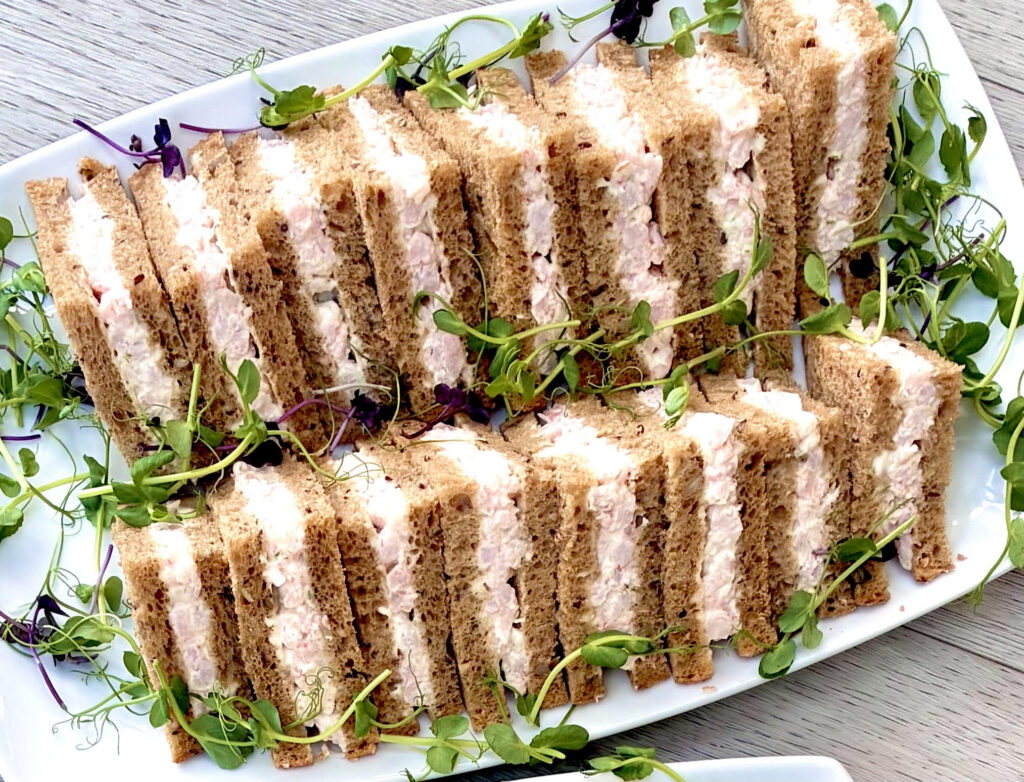
In terms of the sandwiches, finger sandwiches are traditional, but I often counsel clients to have a platter of quartered sandwiches because one is far less limited in terms of fillings. Little strips of bread have very little surface area to hold a filling, and so require ingredients that can adhere well. Salmon and cream cheese work well, as does ham – or, indeed, traditional cucumber – held in with mayonnaise or butter. But anything chunkier or heavier will fall out, causing both a mess and disappointment.
Sandwich quarters, on the other hand, can hold fillings like a thick slice of tangy cheddar with some of that tomato jam and some rocket leaves, or a quintessential afternoon tea coronation chicken. My most popular sandwich filling is prawn with lime mayonnaise and I’m always taken aback by how the most successful things I make are often the simplest. Add the zest of a lime to a half-mug quantity of good quality mayonnaise (no, you don’t have to make your own mayo to benefit from this kitchen-hack) and leave to infuse for half an hour.
The effort is minimal but the flavour enhancement is huge.
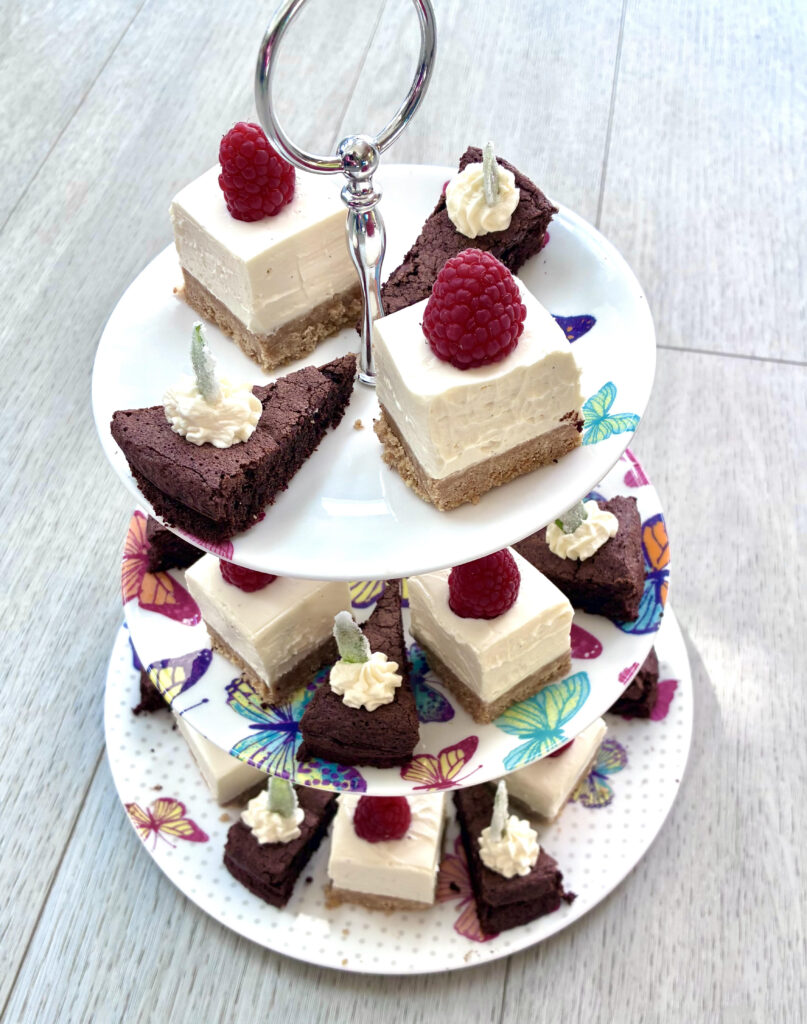
The sweet element of an afternoon tea is where the most fun can be had. I’ve made little popping-candy lollipops before, which admittedly are arduous and painstaking, but great fun to eat. I’d recommend bakes that can be cut up into dainty squares, like key lime pie or cheesecake or a zingy lemon tart, then coupling them with something fudgy and dense, like a white chocolate and raspberry blondie, or a flourless chocolate torte.
And to add a little flourish of finesse, try making some candied mint leaves, which can sit prettily in a piped blob of Chantilly cream atop almost any sweet treat: pick some mint leaves that aren’t too big or small – roughly two centimetres in length.
Beat an egg white till it’s frothy and use a small, clean paintbrush to paint a thin layer of egg white over both sides of the leaf. Next, drag it through a little mound of caster sugar till it’s covered with a thin layer of sugar crystals and place on a small lined tray in a dry spot for a number of hours.
They go brittle and hard, but remain very fragile so be careful.
The process is slightly faffy, I grant you, but these little leaves explode with minty, sugary deliciousness when you bite down on them and bring a ripple of ‘oooh, I wasn’t expecting that’ whenever I serve them. Give them a go. After all, if afternoon tea isn’t the perfect occasion for ridiculously pernickety, teensy morsels of fancy frivolity, floral china tea cup in hand and little finger elegantly raised, then when is?