19 Mar 2024
Children of the well-to-do have always had access to schools, tutors and governesses. In St Albans, for centuries the wealthy sent their sons to St Albans School, originally founded by the monks of St Albans Abbey, and now occupying the old Abbey Gateway building.
However for the masses, formal education was either non-existent or patchy until near the end of the 19th century and even then it was only to age 10.
Going back a couple of hundred years there were charity schools, Sunday schools and dame schools.
Many children in St Albans and surrounding villages attended plait schools – ‘school’ being a fairly loose term. Sweatshop for child labour or childminding facility may be more apt descriptions.
Parents paid a few pence to send their children to the ‘school’ – usually a cramped room in a cottage – to learn to plait straw, but they could then make a few shillings from selling the finished plait to one of the numerous straw hat factories in the area.
Children would plait all day and, when there was heavy demand from the straw hat makers, well into the evening. In the winter the children would take little containers filled with charcoal from home, ‘dicky pots’, to keep themselves warm.
The school also served to keep these children, some as young as three, occupied whilst their mothers worked either from home or in one of the local factories. At the time there was some serious concerns voiced about women working in factories, earning their own money, neglecting their children and housework.
Or maybe it was just that having to compete with factories, it became more difficult and expensive to hire domestic servants? Depending on the inclination or ability of the teacher cum supervisor cum childminder they learned to read some simple words, recite a passage from the Bible or have some stories read to them whilst they worked.
Sunday schools would provide a few hours education at the weekend for children who worked in factories, farms or domestic service during the week.
As Factory Acts reduced the hours children could work, some children were able to attend a ‘National’ school or a ‘British’ school. The National schools were run by the Church of England, with the British schools non-denominational but largely supported by non-conformists. Although the societies were set up early in the 19th century it was a while before they became established in our area.
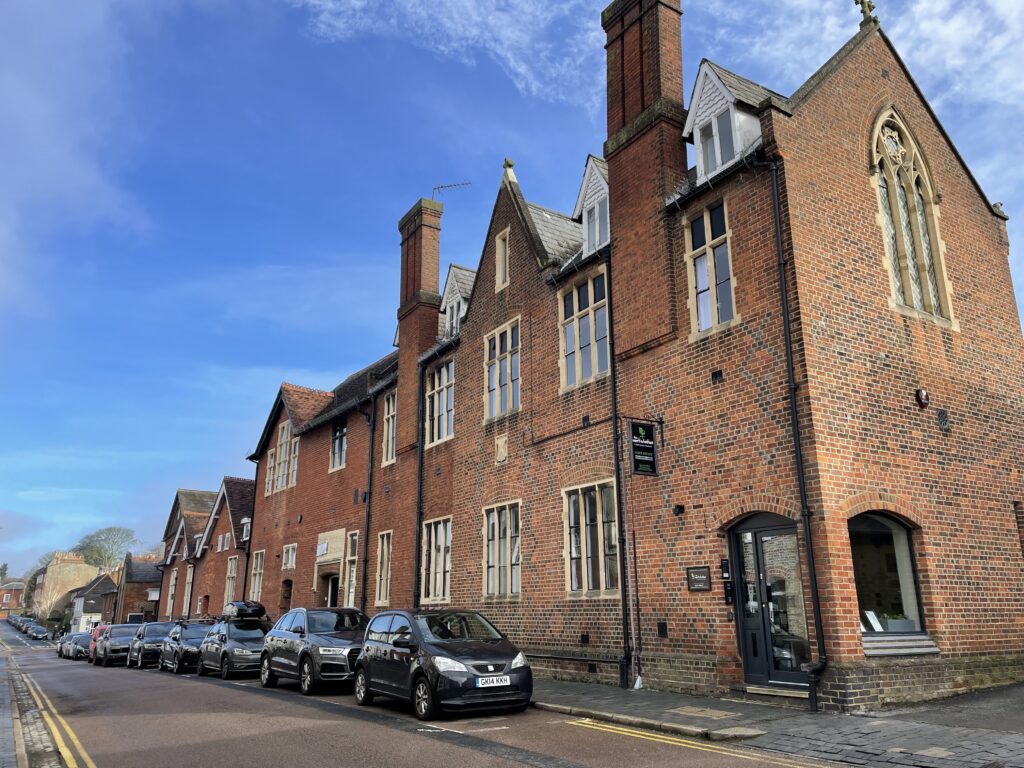
In St Albans a National school was established by the vicar of St Peter’s in the 1830s in Hatfield Road (now demolished) and shortly after, the Abbey school was opened in Spicer Street. There was a British school in Spencer Street.
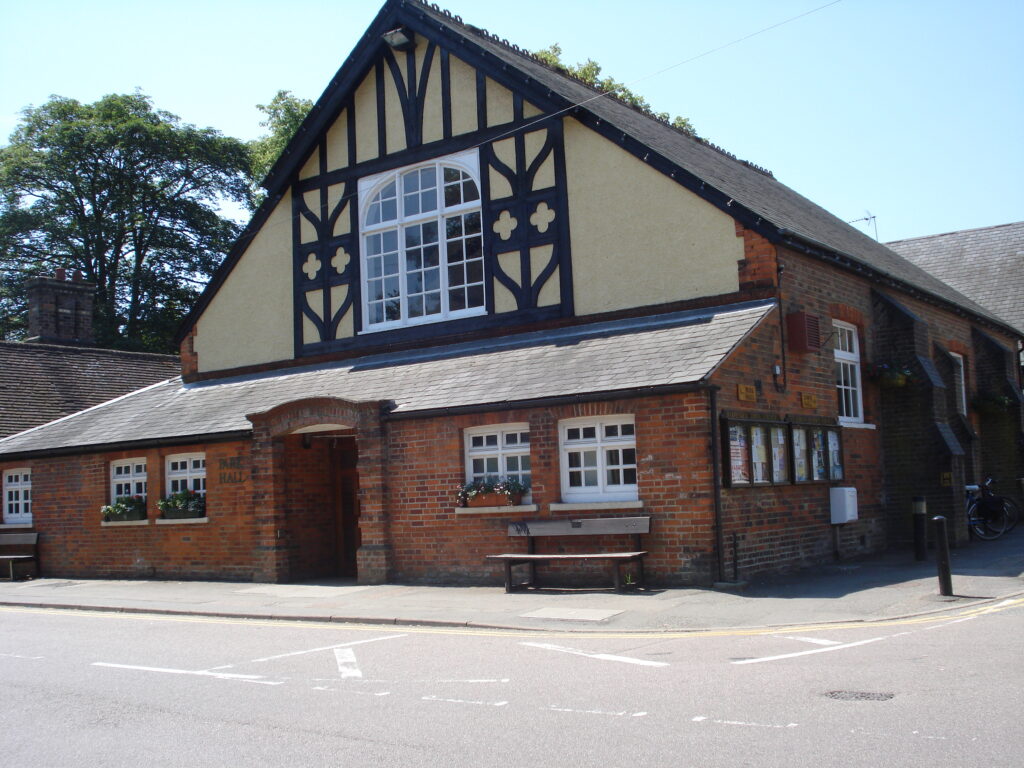
In Harpenden, a British school was established in what is now Park Hall, largely aided by Sir John Lawes, whilst the first National school was St Nicholas, still in its original building. You can see from pictures of the schools that windows were often quite high in the wall – deliberately designed to stop children being distracted by looking out of the windows!
These schools were funded by the parishes or benevolent individuals until 1833 when the government first started to make grants available to schools. When applying for funding, the schools had to raise enough money to match the value of the government grant which meant that the National schools tended to get more funding as they often served richer parishes.
Class sizes tended to be very large, often with a wide age range. Teachers were poorly paid and often poorly trained. The main emphasis was reading, writing and arithmetic. A Quaker, Joseph Lancaster developed a method to teach as many as possible with such limited resources. Older, bright pupils would be instructed by a teacher then they, in turn would pass this knowledge to groups of younger pupils.
Where classes were a little smaller (about 50 children), the emphasis was on the teacher and the blackboard at the front, discipline and silence was key with all children in rows, all eyes on the board.
Children would copy and learn what the teacher wrote on the board. Paper was expensive so early writing lessons involved practising writing letters with a wooden stick in a tray of sand. They would move on to writing on slates with slate pencils. The children often sharpened their pencils outside on the school walls – some fine evidence of this practice can be seen etched into the brickwork at Park Hall in Harpenden. Finally, they graduated to paper and nibbed pens dipped into the inkwells that were filled and passed out each morning.
There was emphasis on rote learning, whole classes chanting information and repeating set answers to set questions. By 1861 it became important that children could thus demonstrate what they had learned when a school inspector came to visit because the government had changed the method of funding these voluntary schools. Money was allocated to schools based on children reaching a certain standard, and also a certain level of school attendance being met, verified by a visit from the school inspector.
Children were often absent from school because of illness, sometimes poverty and inadequate clothing combining with bad weather to make attendance difficult or sometimes help at home was needed – a young girl may have had to stay away from school to look after younger siblings to enable her mother to work longer hours. Partly for this reason, some schools extended and opened infant departments so that these older girls could bring the younger ones to school and attend herself.
Still many children had no schooling at all despite legislation limiting the hours for child labour because, as population in the towns grew, there were not enough school places.
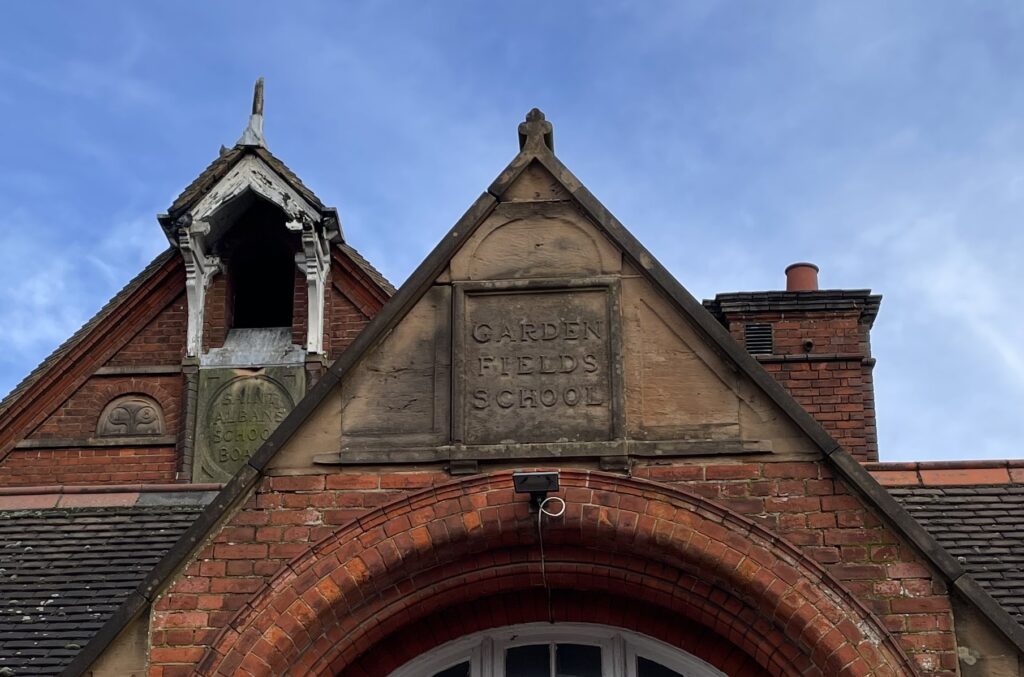
In 1870 an Act of Parliament set up locally elected school boards with the power to raise money through the rates to ensure there were enough school places for all children to attend, in effect building ‘state’ schools to supplement existing church and voluntary schools. The St Albans and the Harpenden and the Sandridge etc school boards were born.
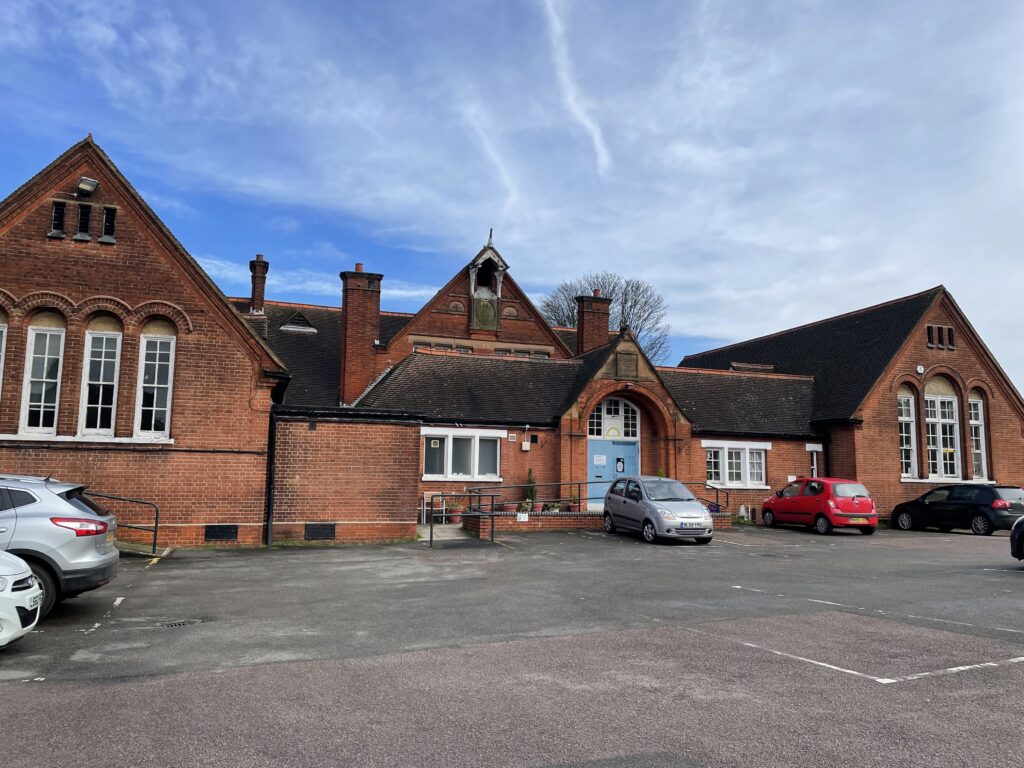
One such school built by the board was very typical of its time, Alma Road Board School built in 1882 for girls and infants (the equivalent for boys was opened the year before in Hatfield Road). Others, such as Garden Fields in Catherine Street, now the Jubilee Centre, and Bernards Heath School in Sandridge Road (under the Sandridge School Board) followed. Even when school places became available for all children, attendance for 5-10 year olds was not compulsory until 1880, nor totally free until 1891!
In these new, better funded schools there were improved facilities and children were able to do more PE, needlework and cookery for the girls and woodwork for the boys. The school day was still very regimented though and classroom walls unadorned. Children were often seen as being born bad and had to be cajoled into being good, obedient and respecting of authority. Discipline was still harsh. There were lines, detentions and the cane was used. Children with difficulties could be ridiculed or scolded as lazy. It is interesting to note that whilst the RSPCA was set up to prevent cruelty to animals in 1824, it was 60 years before the equivalent for children, the NSPCC was set up in 1884.
Some of the voluntary schools took the opportunity to gain increased funding from the rates and expand into improved premises by becoming board schools, for example the
British School at Park Hall moved to new premises in Victoria Road (becoming a library before reverting to being a school, Harpenden Academy).
Others were dragged reluctantly, such as the British School in Spencer Street, as the managers wanted to maintain a non-denominational school in the parish, but the premises were deemed inadequate so it was closed and merged into the Hatfield Road Board School.
This dual system of voluntary and board schools did not last for long – in 1902, the boards were abolished and all schools put into the control of local education authorities, heralding a whole new era in education.
For more on life in Victorian St Albans join the Tour Guides on a Victorian walk, details at stalbanstourguides.co.uk