30 Sep 2026
Elena Hogg, founder of local culinary company FOOD by Elena, has plenty of poultry plans for her dinner table…
I can think of a long list of things I love about chicken. Top of the list would probably be that it’s versatile. Chicken has a powerful aroma – there’s nothing that quite beats the smell of a chicken roasting in the oven – but quite a neutral flavour, meaning it can absorb a marinade or dressing well, and it can sing from the treetops as the protagonist in a stew.
But chicken can also quietly complement powerful flavours that sit alongside it on a plate, as with chicken saltimbocca, for example, where chicken breasts are wrapped in Parma ham and baked in the oven.
Saltimbocca literally means ‘jump in the mouth’ and I like to think this refers to the piquancy of the crispy prosciutto on the tongue rather than it coming alive and jumping from plate to mouth unbidden.
Horror film scenes aside, the chicken doesn’t compete with its salty, spiky ham wrapping, but rather lets it win, providing a succulent, mild backdrop so the dish remains balanced. Chicken is a team player.
And it’s cosmopolitan: we in the UK have adopted a great many of its international guises into our own eating culture. There’s the aforementioned Italian saltimbocca, the chicken curry (whether that be Indian, Thai or Malaysian), Afro-Portuguese piri piri, Ukranian chicken Kiev and Japanese yakitori, to name but a few.
Yes, there’s a chicken dish to suit every mood, every budget, every skill level and every timeframe. If you’re in a bit of a rush for a quick weeknight supper between getting home from work and running out the door for book club or spin class, or whatever other wellness-enhancing activity I assume you all do, not only does pounding a chicken breast flat with a rolling pin and sprinkling it with a Schwartz jar of ready-made seasoning mean the meat takes mere minutes to then cook in a frying pan or air fryer, but the bashing part is deeply therapeutic.
Perhaps you made a delicious roast chicken at the weekend and have a carcass and some leftover pan juices you’d like to use up? Sweat some onions in a pan, then, once they’re soft, add the chicken carcass and loosen any residual juice/jelly/burnt-on bits from the roasting pan with some boiling water and add this to the onions and carcass. Add more boiling water to cover the carcass and throw in a bay leaf or two, if you have any, and a handful of black peppercorns.
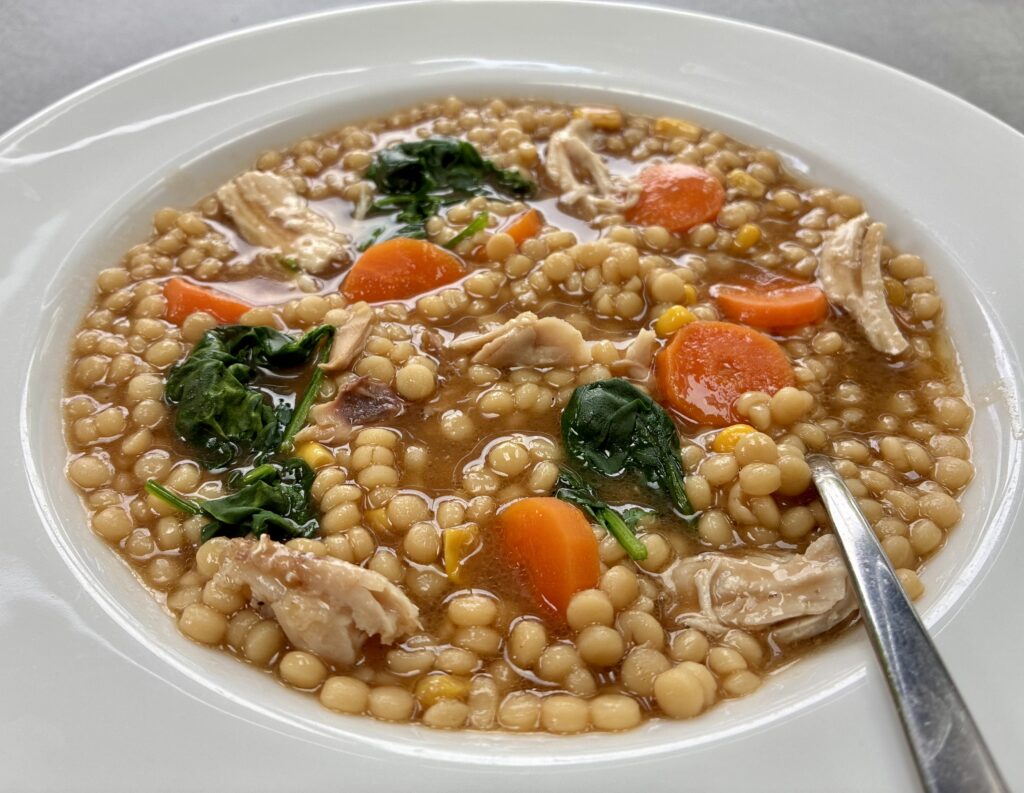
Season with salt, let it all simmer and after about half an hour you have a delicious stock. I then strain it, bring it back up to the boil and add some giant cous cous or pearl barley, some carrots, sweetcorn, greens and either shredded leftover chicken or some jarred white beans (or both), and I have myself a really flavoursome, comforting soup.
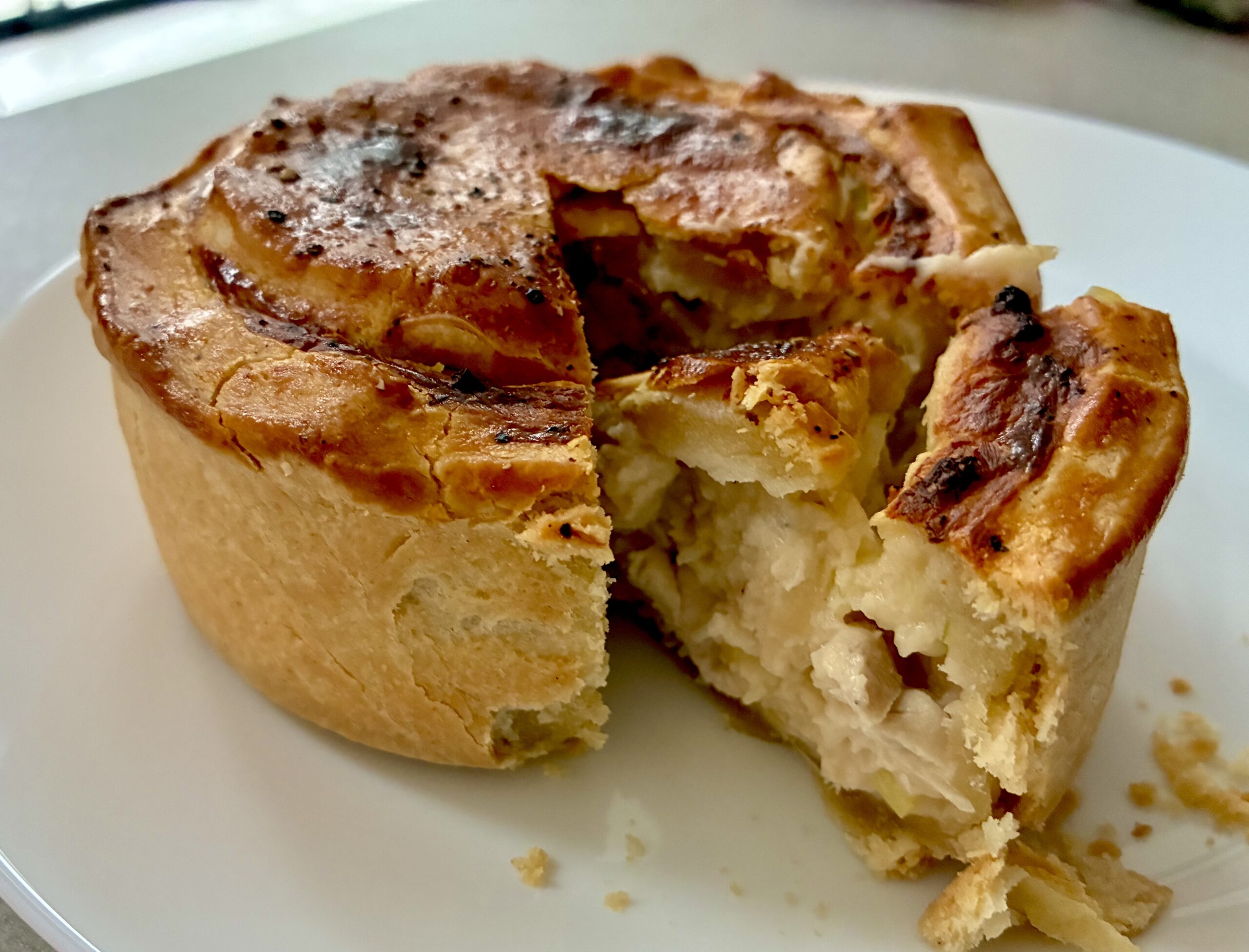
If, however, you find yourself inspired to flex your culinary pectorals a little, you could always make a chicken pie. Pies always deliver visually, especially because even the imperfections add to the appeal (who doesn’t love a caramelised overspill of gravy down the side of a golden pastry crust?).
You can of course buy a pack of ready-rolled puff pastry, which will expedite matters and get you to the eating stage quicker. I fully endorse this.
But if you feel inclined to spend some time on your kitchen pursuits, and don’t mind having to wait for your pastry to rest (because it buys you time to read that article you’ve torn out and kept, or do your Duolingo), then making your own shortcrust pastry is the ticket.
Even with a savoury recipe, there’s a biscuity taste to homemade shortcrust which adds a real more-ishness to each bite – both in terms of flavour and texture.
Despite its reputation for being unforgiving and fiddly, shortcrust is actually relatively robust, and even if you’ve had to re-roll it because it’s ripped or stuck to the surface, it will still taste delicious once baked.
You just need to leave a little more overhang if you’ve worked the pastry more than once, as it will want to shrink, rather than stay at the size you’ve rolled it to.
I use the BBC Food recipe for ‘Easy shortcrust pastry’ and it’s pretty reliable. I deviate from it only in that I use salted butter – I have no idea why baking recipes always ask for unsalted. I’m no such puritan.
When it comes to bringing the dough together, it may feel quite dry and crumbly.
My advice is to resist adding more water immediately; keep kneading a little and it might come together without extra water, though if it really does need it, wet your hands rather than adding water to the mixture directly, as this distributes the moisture more evenly and guards against adding too much.
As for the filling, use chicken thighs because they are cheaper, tastier and more juicy than breasts. Poach them in a combination of milk and chicken stock, then use the poaching liquor to make a simple roux.
Next, sweat some sliced leeks in butter very slowly so they’re melty-soft and add them to the roux with the chicken thighs, which need roughly dicing up.
Roll out your rested pastry and line a cake tin or pie dish with it. Save some for making a lid. Don’t feel nervous because the pastry senses it and then misbehaves.
Spoon your chicken and leek filling into the dish or tin and roll out a lid that’s actually slightly smaller in diameter than the rim of the pastry lining, so there’s a few millimetres’ gap between the lid and the casing. This will let steam out and avoid any explosions, but still allow for slight spillage and that delicious caramelisation I mentioned earlier.
Perfection is all well and good, but a gnarly, rustic homemade pie is a little slice of heaven.