09 Sep 2026
Newcomers to Harpenden might be surprised to hear that the town once sustained its own thriving free newspaper, providing grassroots journalism which challenged the dominance of the Herts Advertiser and other paid-for titles like the Luton News.
Based on Church Green, The Harpenden Free Press provided vital social commentary, and detailed coverage of local news from the mid-20th century until it eventually closed in 1973.
Memories of working as a local reporter as Harpenden grew from a village into a town are recorded in a book by the late John Seabrook, ‘The View from Church Green’, who joined the title as a 16-year-old trainee in September 1948 and eventually left in December 1959.
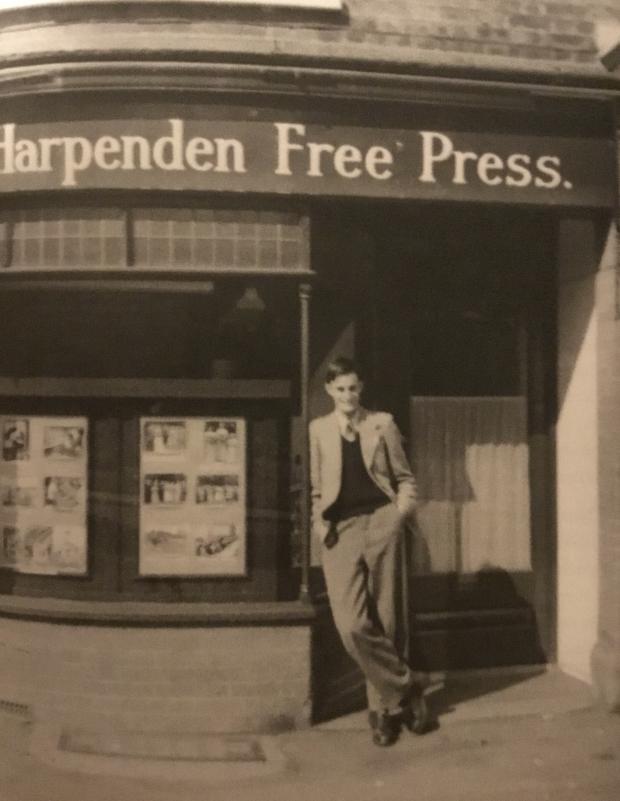
His recollections and research provided the basis for this article, supported by other sources such as Harpenden Local History Society, and we are grateful for their contributions.
Although eventually based out of a modest site on the north side of Church Green, the first edition of The Harpenden Free Press was produced from 1 Bowers House, a building concealed behind the shops of Bowers Parade.
It came out on December 4, 1936, and although it bore a nominal price of one penny, was distributed free of charge to the whole of Harpenden, mainly by local Scouts.
The original editor was an experience journalist, Robert “Bob” Lovegrove, who had previously worked for both the Herts Ad and the Luton News.
With the latter title he served as their Harpenden journalist from 1927, which had allowed him to build up a wealth of local contacts before deciding to launch his own title.
The first editions were published by the Victoria Press, a local printer active during the 1920s and ‘30s, after Bob entered a partnership with managing director Lt-Col Eric Walthew, who was a major figure in pre-war Harpenden society as captain of the cricket club and a stalwart of the British Legion.
Walthew named the title and helped cement Bob’s position in the community, which was important in a time when the mainstream newspaper industry looked down their noses on free sheets.
Bob Lovegrove ran the paper single-handed in the late 1930s, writing all of the news stories and editing contributed copy. He did have a part-time assistant who produced a women’s column and chased advertising, and local resident Jill Day wrote a children’s section, but otherwise Bob did the lot.
This mainly consisted of interesting items of local news presented as commentary, even on the front page, but covered a wide range of issues large and small, and was fully immersed in the “village” community.
Some of those earlier news stories reported on major changes in Harpenden, including the decision by the Rothamsted family to sell much of their estate in the 1930s.
Harpenden Urban District Council negotiated to buy a 56 acre area of parkland, and on March 4 1938 the Free Press reported how this was to provide playing fields for local residents and protect this important open space from development.
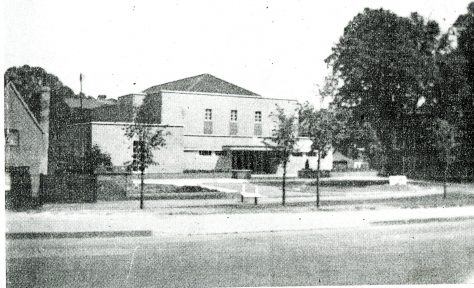
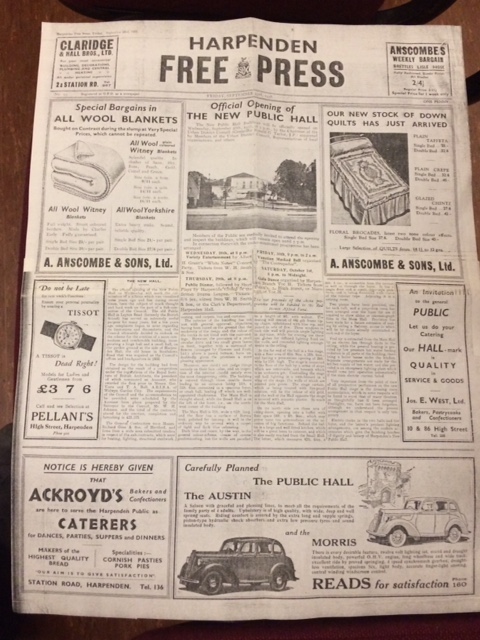
In September 1938, the opening of Harpenden Public Halls was front page news, even though the event coincided with Prime Minister Neville Chamberlain returning from his Munich meeting with Hitler. Later that month the newspaper printed a special edition giving details of air raid precautions to be observed in the event of war.
When WWII eventually broke out the title temporarily ceased publication in July 1940, meaning some of the more local details of Harpenden’s wartime existence were not recorded.
A short-lived title, Echoes from Harpenden, a revival of The Echo newspaper founded in 1919, published a few issues mixing the tragic news of servicemen killed in action with comments on Prisoners of War and marriage notices.
Jean Sealey, nee Darby, who worked as a trainee journalist on the Free Press before the war, recalled how the Free Press ceased operations: “The proprietor, who was a major in the Territorial Army, was called up and the paper was closed down.”
This sounds like it refers to Walthew, as Bob Lovegrove was to return to work for the Luton News from their Church Green offices until July 1946, when the publishers revived the Free Press six years after it had last printed an issue.
The deal included Bob returning to his role as editor working from the Church Green offices, this time supported with his own staff in producing weekly editions printed in Luton and distributed in Harpenden on Friday afternoons.
Although it retained its title – something Bob said reflected its independence – this version was sold for twopence a copy.
The numbering continued from where it left off, but there were more photographs than previously, with pride of place given to the right-hand of the front page, an image referred to by staff as “The Pretty”.
The revived paper’s new chief reporter, George Smallman, had the advantage of living above the office in Church Green, and he worked alongside a team including experienced journalist Mary Alderton, junior reporter Jim “Buster” Scott, a part-time advertising rep and a receptionist who handled photo sales and small ads.
On September 6 1946, the Free Press criticised Government delays to Harpenden Council’s plan to build 50 new homes in Batford to deal with the ongoing post-war housing shortage, and it would be several years before the estate was completed, although even longer before it received a bus service of its own.
John Seabrook joined the newspaper group on September 6 1948, learning on the job initially as a ‘proof readers’ copy-holder’ reading aloud stories for the Luton News ahead of publication, before becoming a junior reporter the following spring. He started at the Free Press in October 1949, following George’s promotion to the Luton News, with Mary taking over as chief reporter.
As was often the case with small newspapers, office hours were restricted to 9am to 5.30pm, no matter what might have been happening in the town, but reporters were also expected to attend evening club meetings, plays and concerts, and also work Saturday mornings as part of their standard week.
John recalled visiting the police station in Vaughan Road to check on the early morning log of crime and motor accidents with the constables on duty, using the office bike to get around locally, or catching the 321 bus into St Albans to attend court or council meetings.
Home Counties Newspapers had an agreement with the Herts Advertiser which prevented the Free Press from covering stories in other parts of their patch, so Wheathampstead was the limit as far as coverage was concerned.
Early in 1950, Labour Prime Minister Clement Attlee called a General Election, kicking off a campaign which focused on the creation of the National Health Service and various nationalised industries in the midst of an unpopular era of austerity and shortages.
At that time Harpenden was still part of the Hemel Hempstead constituency which had survived as a Conservative seat despite the Labour landslide of 1945, with the MP one Viscountess Davidson, who had occupied the role since 1937.
During the course of the campaign a row broke out after Lady Davidson complained how children of working class households could no longer enjoy bread and dripping, something Labour said had been a necessity, not a privilege.
Despite the controversy, she comfortably retained her seat with a majority of 6,587, which the Free Press reported in a rarely used ‘Stop Press’ space.
Also that year, the newspaper published an advertisement which cordially invited anyone who was interested in forming a light operatic society in Harpenden to a public meeting in the Small Public Hall at 8pm on Thursday July 6.
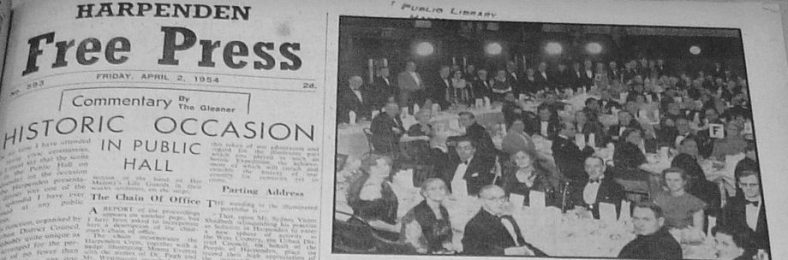
As the society says on its website: “The small public hall was nearly filled, and it was resolved to form Harpenden Light Operatic Society (HLOS). After much work by the officers and committee, who soon realised that there was a great deal of work involved in getting the society ‘off the ground’, it was arranged with rights holders and the Harpenden Urban District Council that HLOS would perform ‘The Pirates of Penzance’ on the 21st, 23rd, 24th and 25th April 1951 and thus our lovely society was born.”
Meanwhile, it was all change with the newspaper’s staffing, as Clare Shoosmith left for another paper, Jim Scott returned from his National Service with the RAF, John Seabrook left for his own tour of duty overseas in Singapore, and Barry Corby also joined the team.
The Free Press reported on how Harpenden enjoyed Revels to celebrate the Festival of Britain in 1951, but shortly afterwards Jim was to leave and join the Harpenden office of the Herts Advertiser in Station Road, with a new trainee from Luton taking over his slot. Tim Brown would later become an overseas correspondent for major newspapers and the BBC.
John Seabrook returned from National Service in August 1952, just in time for Mary Alderton’s departure for a senior role in Luton, allowing him to become chief reporter, but with Barry now the only other member of the journalism team apart from Bob Lovegrove.
When Barry himself departed for National Service, it began a steady stream of trainee reporters coming in from Luton to support John Seabrook for varying periods of time, even as the newspaper itself expanded from eight pages to 12 due to increased advertising.
As Harpenden grew out of post-war austerity, a full-time advertisement manager was engaged to take advantage of the new shops and businesses which emerged, with Peter Lambourne taking on the role.
John Seabrook recalled the working conditions at the time included junior reporters having to keep the editor’s coal fire topped up, undertakers flirting with receptionist Betty Webb, and male staff having to use a shared outside toilet in a yard at the back of the premises, while women could draw a penny from petty cash and use the public conveniences at the far end of the High Street.
When the plans for celebrating the Coronation of Queen Elizabeth II were confirmed, the Free Press made a point of telling readers they could watch the television broadcast in the Public Hall, and also carried a half-page advertisement inviting young women over 17 to compete for the honour of being the Fairy Queen for the event, with the Common to be decorated with ‘toadstools’ to turn it into Fairyland.
One of the biggest stories of the period was the crash of an RAF Meteor 4 (RA475) flying out of RAF Oakington in Cambridgeshire on September 3, 1953, and ending up in fields at what was Hetts Farm and is now Aldwickbury golf course.
The Free Press’s John Seabrook secured a national exclusive on the story as it happened after the Herts Ad’s deadline and he was able to cycle out to the crash site.
He went on to report on the five-week military inquest, which recorded a verdict of accidental death as no reason for the crash could be proved.
Also in 1953 the newspaper reported on the latest efforts by local people to open an outdoor swimming pool in the town, a campaign which dated to before the war, estimating the cost would be in the region of £40,000.
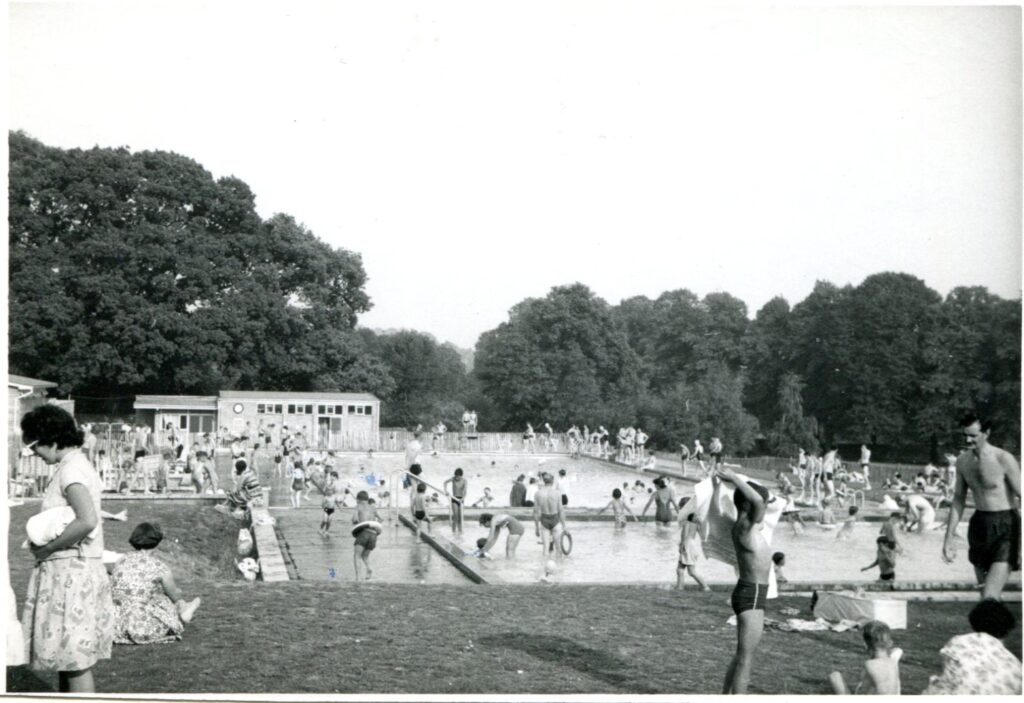
Following a fundraising drive it eventually opened on May 7 1960, and shortly afterwards, the newspaper reported that the council had banned the use of snorkels, masks, flippers and balls!
A report in March 1956 highlighted the changes which were taking place in Harpenden, as one of its flourishing youth clubs was “forced to suspend its activities as a result of nuisance and obstruction caused by a gang of local Teddy Boys”, something which was very unusual for the village.
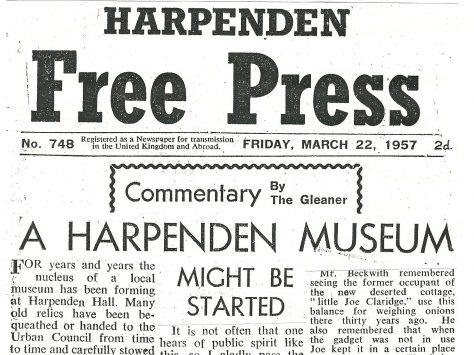
In 1957, the Free Press carried a story on its front page announcing proposals for a Harpenden Museum, although the lack of a dedicated premises for this endeavour resulted in it not being pursued.
As was the case with all the local newspapers at the time, the Free Press covered the murder of Ann Noblett across December 1957 when she disappeared to January 1958, when her body was discovered. It remains one of the major unsolved murders of the 20th century.
The growth of Harpenden from a village to a town continued at pace during the 1950s, as more people moved into the area. The Free Press reported on the Hertfordshire Plan, which resulted in housing being built in previously green fields, including the Aldwickbury and Grove Estates, and around Roundwood Park where a primary school opened in 1955 and the secondary school the following year.
When cottages along the western side of Church Green were considered for demolition and replacement with shops, none other than the President of the Harpenden Society, Captain Kenneth Bond, said the town could not be kept as a museum piece and had to grow.
In March 1959, long-standing editor Bob Lovegrove finally stepped down, succeeded in the role by Ken Sutton, who had been chief reporter at the Hertfordshire Pictorial in Hitchin, and John Seabrook also departed for a job in public relations that Christmas.
The Harpenden Free Press underwent a design change in 1961, with more news stories appearing on the front page and the disappearance of “The Pretty”, and it continued publication until 1973, when it succumbed to the wave of closures and amalgamations which hit the regional newspaper industry at the time.
Not long before it disappeared for good, the Free Press reported how international links between Harpenden and its twin town in Germany were strengthened when a road on a new estate in Harpenden was officially named Alzey Gardens.
The road on the Hilltop Estate in Southdown, which was built by George Wimpey Co Ltd, was named Alzey Gardens in return for a road being named Harpendenstrasse – Harpenden Street – in Alzey in 1976.
With the demise of the Free Press, Harpenden lost its only dedicated newspaper, and even efforts by the Herts Advertiser to maintain a Harpenden edition at various points in its history failed to succeed. Other titles like the St Albans and Harpenden Review and the St Albans and Harpenden Observer also provided extensive coverage of local life, but these too have long since ceased publication.
Whether Harpenden can maintain a newspaper of its own in the current tough environment for the regional press sadly seems unlikely, although stories focusing on the town will continue to feature in the pages of the St Albans Times.
John Seabrook passed away in 2022, but his book on the history of The Harpenden Free Press from 1936-1960 can still be found on sale in the town.