30 Apr 2026
Elena Hogg, founder of local culinary company FOOD by Elena, explores different ways to take it with a pinch of salt…
My son, who is currently cramming for his chemistry end-of-year exam, is responsible for the topic of this fortnight’s column.
He’s just recounted several times (in order to commit to memory) how salt is made when an alkali, or a metal oxide or hydroxide, reacts with an acid, creating a brine solution that is then poured into an evaporating dish over a heat source. The brine water evaporates, leaving pure salt crystals.
Science lesson over. But it reminded me of a recent article I read about not all salt being made equal.
What I learned led me to outright change my salt-buying habits, in fact. I’d always bought the cheap and cheerful refill bags you find on the bottom shelf of the supermarket salt section for things like seasoning pasta water.
But it would appear that this baseline version of salt is the most processed kind and the least beneficial in terms of micronutrients. So I swapped to the nearby cardboard containers of sea salt for my every day cooking needs. Less processed, but still inexpensive, it’s ideal for bulk use.
For more refined needs, however, I have quite the arsenal in my kitchen cupboard. To fill my salt cellar, I use rock salt because it’s still relatively cheap, but has a far more rounded flavour than punchy sea salt.
Using a salt cellar to achieve very finely ground seasoning is perfect for individual portions of already plated food, especially dishes like soup or fish fillets, where larger salt flakes would be too aggressive in the mouth.
For a steak or pork chops, however, seasoning with something like kosher salt or fleur de sel is ideal: the robust texture of the meat can handle the crunch of a larger morsel of salt, and the same goes for the intense hit of flavour. So what you’re eating is a huge factor in which salt to season with.
When to season is another conundrum: a lot of the time we might only think to season before serving, or indeed after, but salt has a role in flavour-building right from the start of the cooking process.
Take sweated onions, for example, which form the basis of innumerable dishes. The idea is for the sweetness of the onions to come through and – somewhat ironically – adding salt right from the start really helps.
The interplay between salt and sugar is no longer such a mystery, however. It’s been well documented that sweet and salt share a special push-and-pull, with each enhancing the other as long as neither goes too far. I like to add a good pinch or two of salt to the melted butter and brown sugar mixture that binds my flapjacks together, because the saltiness enlivens the oaty sweetness dramatically.
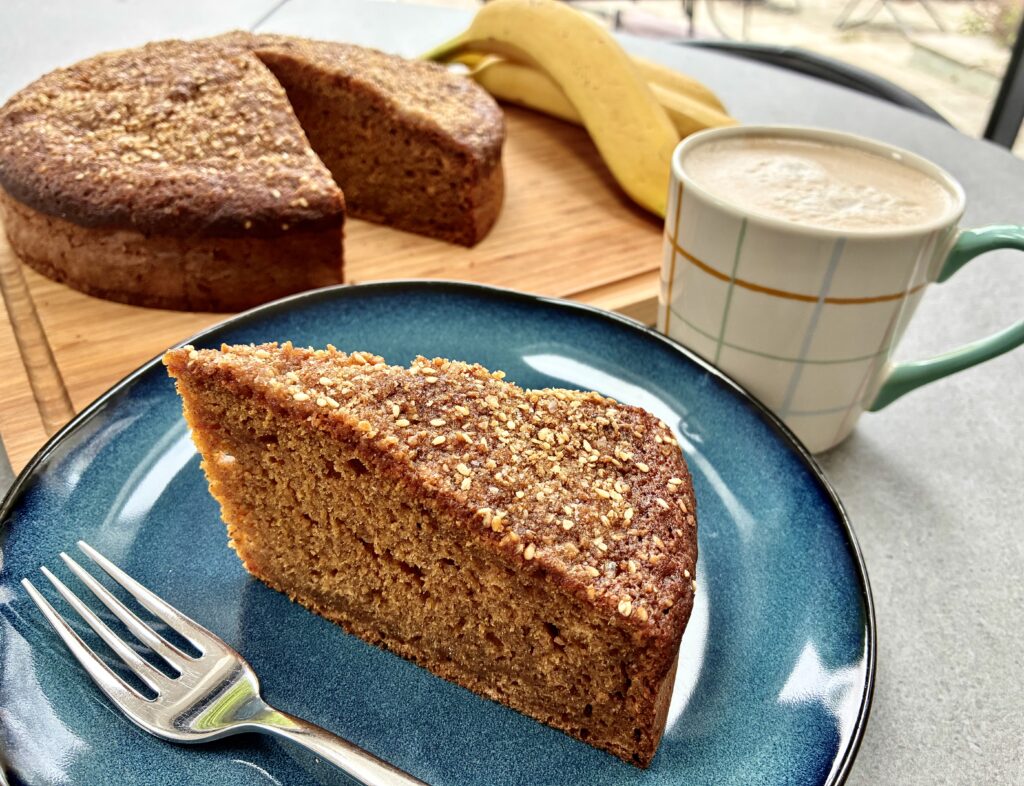
I recently made Thomasina Miers’ banana and caramel cake, which comes with a sesame crust on top. What made it deeply sublime, however, was that the sesame seeds were toasted and then pestle-and-mortared with salt and demerara sugar before sprinkling over the dark, gluey, banana-y cake batter and baking in the oven.
The success of this cake topping has inspired me to add an orange zest and pistachio crust to a honey cake I plan to make for a supper club this week and you can bet your bottom dollar I’ll be bashing some salt into it, too.
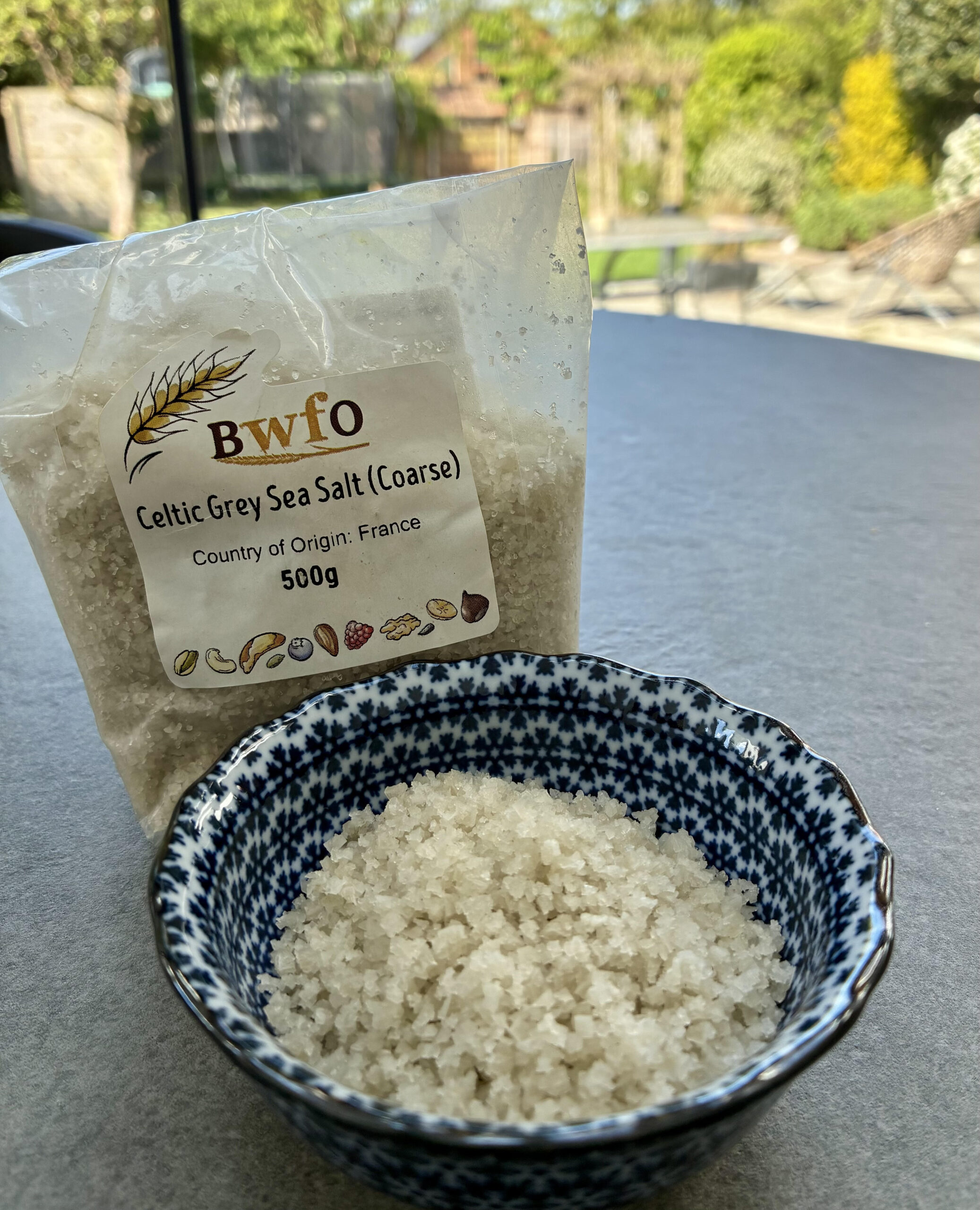
Some of you might remember an article I wrote a few months ago about a gift my husband bought me consisting of various kinds of peppercorns from Eat Whole Foods. Well, inside the box came also a couple of beautiful salts, the first being Celtic grey sea salt.
Sourced off the coast of France, it’s known for being unrefined and rich in magnesium and potassium, though ‘rich’ only compared with other salts, I imagine. I’m afraid salt is no substitute for leafy greens.
In truth, while I appreciate its lack of processing, its minerality and its lovely light grey hue, this salt has a high moisture level that makes it less versatile.
I find grinding it in a salt cellar impossible as it’s dampness impedes it from sprinkling evenly and instead I get powdery clumps dropping onto my plate.
Furthermore, its crystals are too hard to pinch and grind between my fingers, despite my concerted efforts. And yet it’s too prized to simply dissolve in pasta water, so I shall persevere in my search for its perfect use. Perhaps in the next batch of flapjacks…
The other kind of salt that came in the gift box was kala manak, which is a black rock salt from northern India and the Himalayas that is kiln-fired for twenty-four hours with various botanicals and has an intensely sulphurous overtone to it.
As such, I’ve found it most at home in eggy dishes like omelette or egg curry, by which I really mean quasi-offensive in anything else, if I’m honest. A sulphur hit on your roast potatoes isn’t great, I quickly learned. But it’s perfect for salt-curing egg yolks, for example, which is one of the simplest ways of fancifying your dinner party canapés or crostini.
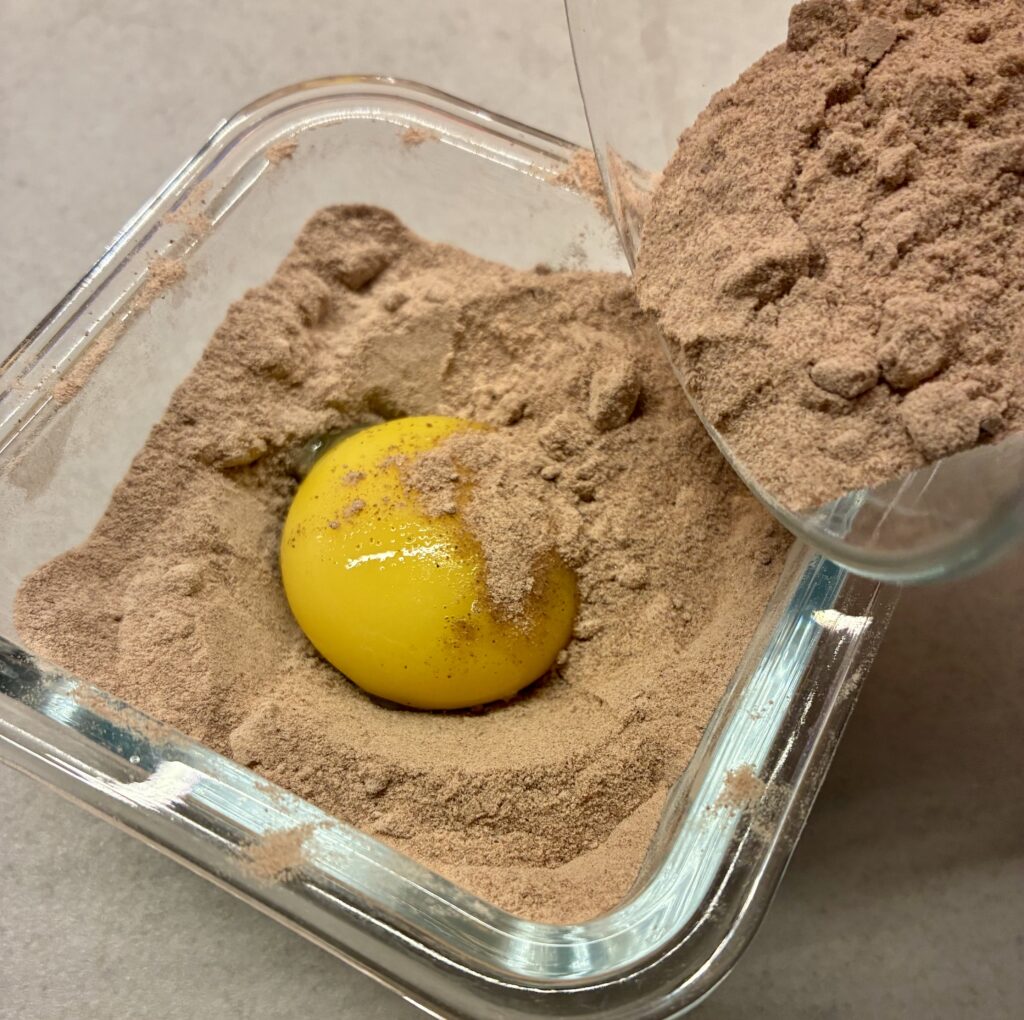
Simply pour fine salt (I use my kala manak, but any fine salt will work) into a small food storage container, make a well with the back of a spoon, gently place your egg yolk in there and cover with more salt. After a day, it’s still viscous and will ooze temptingly over some asparagus spears. After four or five days, it’s much firmer and slightly jelly-like around the edges, and can be sliced thinly as a garnish.
Leaving it a good 10 days should provide you with a hard egg yolk you can then grate over dishes, which is why it’s often dubbed the ‘poor person’s truffle’, but
I’d take that with a pinch of salt.