


29 Nov 2024
Life matters, doesn’t it? But surely, so too should death?
A new Private Member’s Bill giving some terminally ill adults the right to end their lives prematurely is to be debated in the Commons today.
Under the proposed legislation, anyone over 18 (in England or Wales) registered with a GP for at least a year and expected to die within six months would be able to bring their life to an end using fatal drugs.
The patient would have to be deemed to have mental capacity and express a clear, settled and informed wish free from coercion or pressure.
Additionally, they would make two separate declarations of their wish to end their life both witnessed and signed in front of two independent doctors confirming they are eligible – with at least seven days between each assessment.
As a final measure, a High Court judge must have contact with one of the doctors, and be able to question the dying person or anyone connected to them, and even after they have made their ruling a further 14 days must pass before any action is taken.
Despite these safeguards, the Terminally Ill Adults (End of Life) Bill remains one of the most controversial pieces of legislation to pass through Parliament, not least because it has been rushed through just months into many MPs’ first term in office.
There are, of course, different arguments both for and against an assisted dying law, and even locally the issue has proved highly divisive.
Founder and host of the Widowed AF podcast, St Albans-born Rosie Gill-Moss, says she is in favour of the proposed law change.
She set up the podcast after her husband died in an accident at sea, to offer hope, comfort and a non-judgmental place not just to grieve but also to laugh.
She explained: “I have had the unique experience of speaking to more than 100 individuals about some of the darkest times of their lives, often compounded by the suffering they have witnessed.
“The reality is that while end-of-life care is often excellent, it does not alleviate all suffering. None of us can predict how we might feel when facing a terminal diagnosis. Some may want to fight until their last breath, finding their own dignity in that, others may fear it, and with good reason.
“An option to die before the pain becomes unbearable, before we forget who our family is, or even who we are? I personally want this option to be available, I can’t say if I would use it, but I know I want the choice.”
However, St Albans GP Dr Richard Pile is opposed to the bill: “I wouldn’t feel comfortable if asked and would decline to be involved in the process.
“I didn’t sign up to medicine to end people’s lives. It could put a lot of vulnerable people at risk, and it’s the thin end of a very worrying wedge.
“It’s unlikely to end up as part of our core general medical services contract, so would require extra, specialist doctor time to do.
“As a GP I’d rather spend my time helping people to stay healthy, avoid illness (or manage illness better when it does happen) and help people die a good death with proper palliative care. Not hasten the end of life.”
Rev Peter Crumpler, associate minister at St Paul’s Church in Fleetville, set out his own thoughts: “I’m with Gordon Brown, the former Labour Prime Minister, on this issue. He has called for a commission to look into palliative care, to ensure that the best end-of-life care is available to everyone. That should be our objective. I’d also want an in-depth look at the implications of the proposed bill.
“Although well-intentioned and motivated, my concern is that it would over time change the way society views the elderly, those with disabilities and the most vulnerable, with them increasingly seen as a burden. It could also impact the relationship between health professionals and the wider public.”
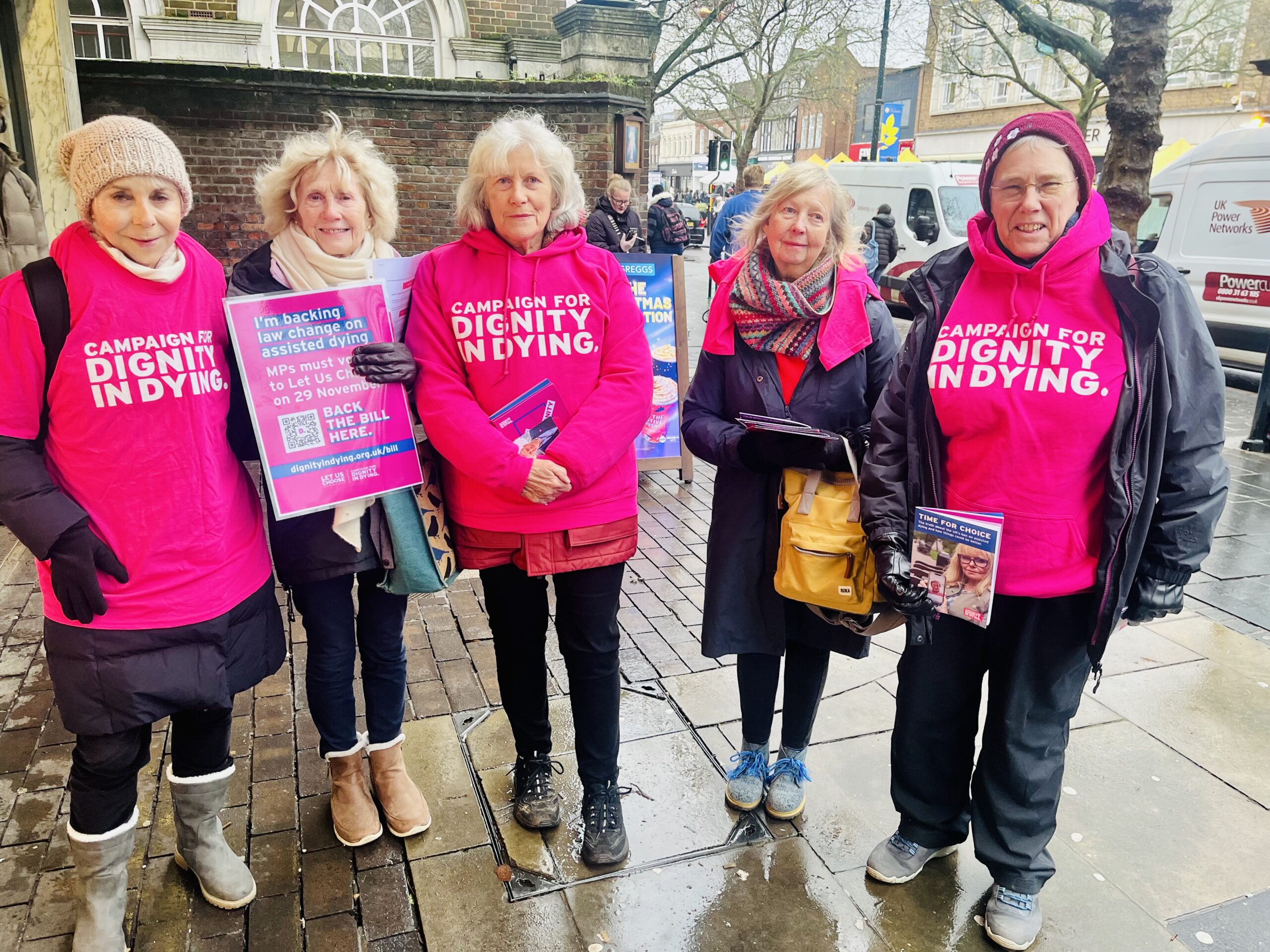
Members of campaign group Dignity in Dying were in St Albans city centre on market day this week, speaking to members of the public about the bill.
Janet Tansley, 69, said: “I had to make a decision when my husband died. He had a brain haemorrhage and after being operated on didn’t have any response to stimuli. That was on the Saturday and by the Thursday the doctors said they didn’t think the prognosis was good.
“So I said, just let him die peacefully then, don’t keep him alive artificially. After my children and I had been to see him they turned off the life support and he died the following day.”
She joined the group about a year ago: “I feel very strongly, like my husband did, that we should have the choice to die if we want to.”
Leslie Hall, 77, from Redbourn, said she isn’t sure the bill will go through due to the amount of vocal opposition at the moment: “I don’t think that people realise that with the best palliative care in the world, there’s a percentage of people who cannot be kept out of pain. And I don’t believe anybody wants to die in pain.”
Lib Gorton added: “There’s no sanctity in suffering, but this bill is being very tightly drafted, for good reason, because then it’s more likely to get through.”
Angela Pankhurst was with her mother for the last six months while she was dying: “She had what I would call a good death, with her family around her, and I’d wish that for everyone really. I believe in the right of an individual to choose what that good death might be, and if that might be to be assisted in dying, then every human being should have that right.”
Marie Hogg added: “I strongly believe that people who feel that they should have a choice ought to be given that choice.
“At the moment, people who, for whatever reasons – religious or whatever – choose to die a painful death because they consider life to be precious at any cost have a right to feel that way and to carry out their wishes.
“But people like me are not allowed to have my wish.
“It may never come to pass. I could die under a bus or from a heart attack. You know, life is unpredictable and so is death, but if the time comes when I am terminally ill, in terrible pain, I would like to have the right to have a choice.”
When asked about the process in Switzerland, Marie said she had even considered going to Dignitas, but stressed this was not an option that everyone can afford.
A decision on the vote will rest in the hands of the country’s MPs today. In a letter to ministers, Cabinet Secretary Simon Case confirmed that “the Prime Minister has decided to set aside collective responsibility on the merits of this bill”, and that the Government would “therefore remain neutral on the passage of the bill and on the matter of assisted dying”.
This means MPs will have a free vote on the bill and not be dictated to by their party whip.
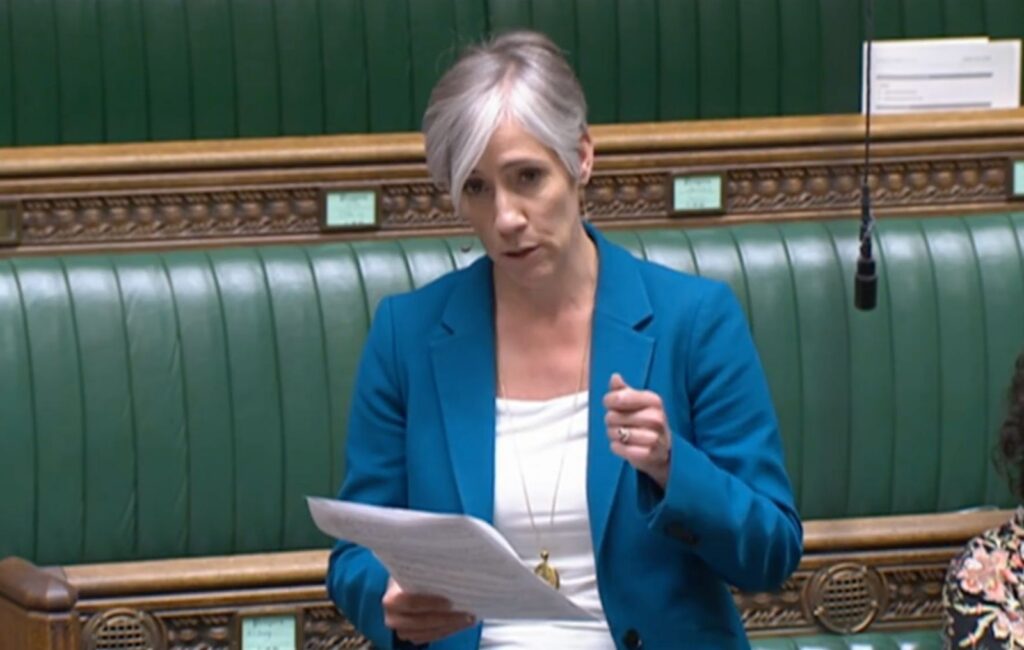
We asked St Albans MP Daisy Cooper for her personal views.
She said: “Since the Terminal Ill Adults (End of Life) Bill was announced, I have tried to take an approach which is both compassionate and considered.
“I’ve said before that my instinct has been to allow assisted dying in some circumstances, but that that would always be subject to my being satisfied with the safeguards for those who may be unable to make empowered and free decisions.
“It has therefore been particularly important to me to come to an informed and considered view having looked at evidence from around the world, taken every argument in turn, and tested the specific provisions in the Terminally Ill Adults (End of Life) Bill against these.
“I was initially concerned that not enough Parliamentary time would be available to consider this complex legislation but am now reassured that if the bill passes the first vote, then there will be more months of debate, scrutiny, and another vote before it could become law.
“Having heard horror stories from other countries about the ‘slippery slope’, I’m reassured that under our law, the scope of this bill can simply never be widened beyond those who are adults (18 or older), with a terminal illness and less than six months to live.
“And whilst I’m a huge supporter of improving palliative care, I don’t believe it’s an ‘either or’ argument: the evidence shows that for some patients, palliative care can only go so far.
“I do however have concerns about possible deficiencies in the bill relating to coercion and the protection of those without capacity – specifically on the threshold for an assessment and the assessor training that would be required.
“As such, I still haven’t come to a settled final view on the bill, but I will vote for it at this first stage in order that it can move forward for further scrutiny, possible amendment and then, importantly, another vote before it has a chance to become law.
“More broadly, over the past few weeks I’ve grappled with the ethical, emotive and technical questions that this bill presents. I have reflected deeply on the sanctity of life and dignity in dying, and I’ve interrogated the strength of the legal protections.
“I’m acutely aware of just how profound this decision will be. If we get it wrong, it will be on my conscience. That is the nature of a conscience vote. And I know that however I decide to vote, my constituents will be divided: there will be many who are pleased and many who are disappointed.
“Finally, constituents have shared powerful and harrowing testimony, and I’ve been moved to tears more than once. I’m incredibly grateful to all those who wrote to me, especially those who relived extreme trauma to do so. With this in mind, it is my sincere hope that both the Parliamentary and public debate is held in a sensitive and respectful way.”
