


14 Feb 2026
Laura Bill tells candidly of her life-changing autism diagnosis and how she’s now reprocessing a lifetime of experiences…
People’s facial expressions always made me feel that there was something ‘different’ about me. I put it down to being one of twins or having a slightly northern accent on my hard ‘a’s (think grass, path and bath).
Whilst in many ways I am an excellent communicator and people person, I’m a bit niche. It’s a certain type of person who truly gets me; the way I think, the sometimes seemingly bluntness of my words, my sense of humour, my warm but worried nature that never switches off.
I have a fat contacts book and loads of acquaintances, but I keep my real circle small. I can count on one hand my solid close friends and I genuinely like it that way.
When I got my autism diagnosis just three weeks ago – it wasn’t a shock to my loved ones. They said things like “Yes – didn’t you already know?” or “Why has it taken so long to find out?” as well as “How do you feel about it?” (The latter is the best response out of the three, for your reference.)
I am not saying that neurodivergency should be shocking. But finding out something ‘new’ about yourself as you work your way through your forties doesn’t come without impact.
What is autism? That’s a huge question. The National Autistic Society define it: “… influences how people experience and interact with the world. It is a lifelong neurodivergence and disability.
“Autistic people are different from each other, but for a diagnosis they must share differences from non-autistic people in how they think, feel and communicate.”
You may have heard it described as a spectrum. That is because of the variation of characteristics and behaviours which all come under the umbrella of the condition.
People with autism feel things and react to them differently to non-autistic people. Some find socialising confusing or tiring.
Some are overwhelmed in loud or busy places. Some have intense interests and/or have a preference for order and routine. Many people ‘mask’ (hide) their feelings which can lead to mental illness.
When I was much younger I read a book by an autistic author who talked about how she loved to stretch chewing gum out of her mouth and into the air and the pleasure she derived from it.
She couldn’t understand why other people didn’t like her doing it and didn’t want to experience that joy for themselves. They seemed to find it uncomfortable and it puzzled her.
I use that as an example of how certain characteristics can be very individual and the way in which autism differs from depression or diabetes in that there is no typical presentation.
I didn’t think I was autistic. ADHD? Yes, for sure. The female edition. Not the one where you throw chairs at teachers and “get in trouble a lot” as the GP enquired when I first mentioned an assessment.
I jest about there being a different form for women and girls but it’s widely documented that both ADHD and autism often present differently across genders. I was diagnosed with ADHD in November 2023 and as they overlap that made it harder for me to spot my autism.
It was my twin sister Caroline who would hear my daily anecdotes of frustration and ask if I realised this was autism.
To be honest I shrugged it off at first thinking how could a qualified teacher and journalist who has interviewed Prime Ministers and Corrie and EastEnders stars possibly be autistic?
I had worked with autistic adults and children from being in my early twenties.
I’d written master’s level essays about it during my teacher training and gained really high marks which in a way proves it’s not really an academic thing or not when it comes to self-discovery anyway.
Turns out anybody can be neurodivergent and it cuts across all types of CV, apparently.
Growing up I picked up on held stereotypes of autistic people some of which are evident in some… if somebody flaps their hands, maybe doesn’t speak much or look others in the eye and lines up their toy trains or is obsessed with hoovers that they might have autism.
I worked with a boy from Harpenden who was so obsessed with hoovers that he knew where the shop staff in each store on Station Road kept them. On our walk, he would pull me by the arm into a shop, walk us through to the cupboard where the vacuum cleaner was kept, insisting the staff let him see it. Quite often they agreed because they knew him and he was only three at the time.
For fun he would sit with the Argos catalogue and say “Hoover! Electrolux! Henry! Shark!!” as he excitedly identified each brand before he could actually read.
It fascinated me back then and it still does.
The hand-flapping and other physical manifestations of autism, as well as the intense hobbies are all part of self-soothing. Some professionals use the word ‘stimming’ which is short for self-stimulatory behaviour.
It calms the loneliness and isolation, I guess.
Well, these insights I’m sharing aren’t situations I could immediately identify with but who doesn’t take part in behaviours which make them feel better? Neurotypical people often drink, smoke, shop, go to spas and such. We could say that every human is seeking ways to feel better all the time.
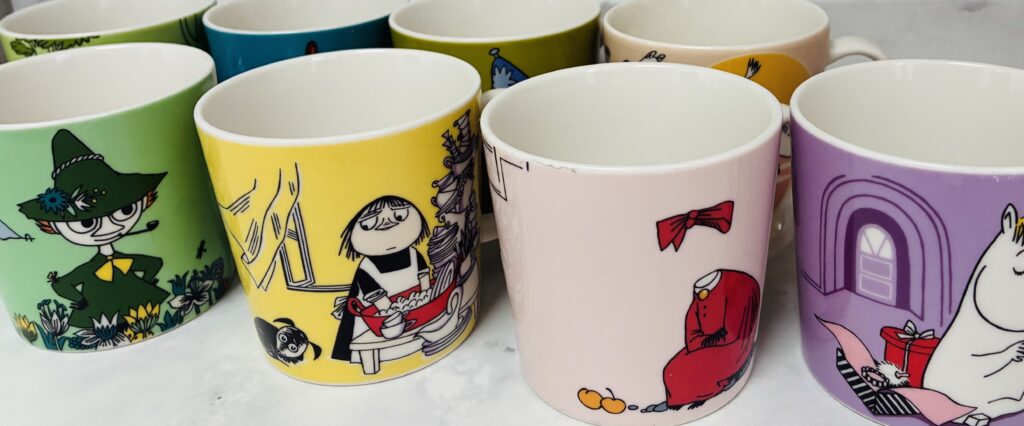
I have too much eye contact, if anything, I hate housework and I don’t own one train. I do have an exceptionally large collection of Moomin mugs. Around fifty. Some of them are limited editions.
I am probably Space NK’s most regular customer due to a bit of an interest in skincare products. I have been known to ‘help out’ staff members with the occasional “No, that one isn’t the retinol-based cream, it’s THIS one” type comments.
If you know me, even a tiny bit, you’ll know how much I adore animals. They make me feel safe and happy and there is nowhere I would rather be than in bed with a couple of cats to snuggle, a coffee and documentary on.
But mainly my autism has been and still is masked by my ADHD. I might seem like a party girl but really I just want to sit in the corner and talk about the wrongs of animal testing.
Which made so much more sense to me than “small talk” always. So when people ask how I am I tell them. Always. And they often don’t like it. Some don’t expect it. And the experienced ones among them don’t ask unless they have an hour or two spare.
Friends jokingly say things to me before job interviews like “Be yourself! But not too much!” We laugh. But it’s true.
One of the hardest things about living in this head is that I can’t get a break from myself. Part of the relentless overthinking is deep exhaustion and burn out. And an extreme sense of pain after any sort of rejection – even things which can seem minor.
This was particularly difficult at secondary school and it still affects me today. Especially with the job searching and interviews.
Just recently I had two interviews for roles I could easily have done. Very straightforward communications roles for small organisations and when I say I prepared for them – I really did.
But what happens when I am anxious is that the “isms” come out in full force. If it wasn’t so painful it would be hilarious to capture the looks of the strangers in front of me who are trying to be professional.
I think part of the ‘problem’ is that I don’t want to hide who I am.
I want to show that I am able to do the job they are looking to get done. A lady on a hospice charity interview panel asked me about a time I was in a stressful situation. And I gave a very real example of being in a court hearing where a man had his nose chopped off with a machete. The woman, who was head volunteer of charity shops or similar, literally clutched her pearls.
Was that a bad example to give? Should I have said about how frustrating it was when my manager had asked me to photocopy something for them and there was a person in front of me who had caused a jam and I didn’t want to keep my manager waiting? Probably. But that wasn’t my truth.
At a different interview I was asked how I was going to cope with the mundane aspects of the job. Short of saying “Erm…fine,” it wasn’t obvious what she wanted.
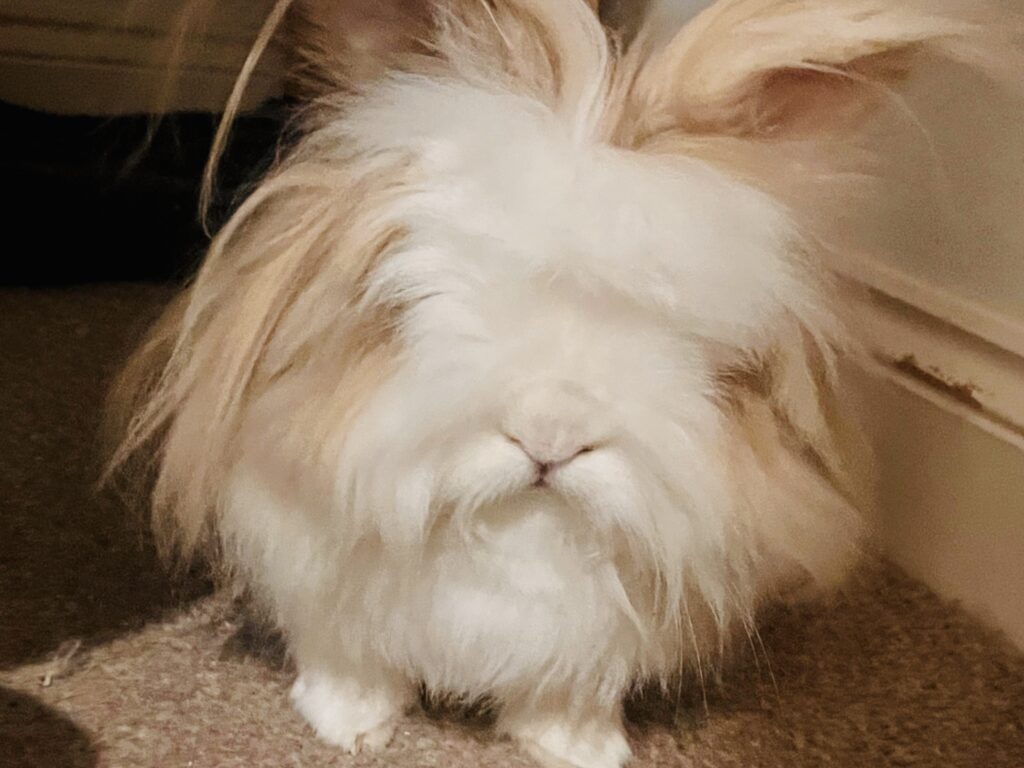
But I said this: “I have a house rabbit. Rabbits poo between 400 and 600 droppings a day. I diligently pick up her poos because I love her. And it’s part of the deal, right?”
Now I’m fully clear in my head that this was a brilliant example of my attitude towards the mundanities of life. But this was the thing that kept me awake at night wondering why I had been “unsuccessful” as they called it. “Unsuccessful” should never be used when they don’t want you for the job. I would say they were unsuccessful at choosing the right candidate. Particularly as the first one they chose turned them down.
The actual assessment was a couple of weeks ago. The guy conducting it was experienced with people like me and knew how to get the best out of me and he wasn’t afraid of my reality.
I did butt in a lot and he had to navigate us both through it so that we weren’t still sitting there at Christmas. After all, I had lots to tell him. Forty-six years worth of examples of not being understood isn’t easy to squash into an hour and a half.
I got the highest score possible for autism and he confirmed I have Level 1 autism which used to be known as Aspergers.
The relief was intense. I felt permission to let myself off the hook for so many damaging moments that have haunted me for decades.
You may think that the rise in neurodivergent diagnoses is because it has become fashionable to have an assessment. Some of my own family think the same. What has actually happened is that more people are now able to access the information about themselves that they have probably been searching for their whole lives. It’s not that a huge number of adults woke up one day all deciding they wanted some new labels.
As the world understands neurodivergence more, we can hope to be less ‘disabled’ by the people, organisations and systems around us.
I assure you the struggle to feel understood and a deep sense of belonging is something experienced by generations of adults with autism, ADHD, dyslexia and other conditions which really should have been identified in their childhoods. Hopefully now we know better we can do better.
If you would like support or to find out more you can go to National Autistic Society or Top Neurodiverse Charities for Support in the UK.
