10 Jun 2026
Elena Hogg, founder of local culinary company FOOD by Elena, has been working on her orzo…
Of all the pasta shapes – long, short, twirly or tube – I think the trickiest to make the best of is orzo, owing to its tiny size and potential for clumping together. But with careful cooking and proper treatment, it is a delicious, versatile and satisfying morsel.
Relatively new on British shelves, it made its way into mainstream supermarkets only in the mid-2000s, although specialist delicatessens stocked these little ellipses of starchy goodness back in the 1980s.
In Italy, the word ‘orzo’ actually means ‘barley’, and what we know as orzo is in fact commonly branded as ‘semi di melone’. This translates as ‘melon seeds’ and is exactly what they look like. They have also been marketed as ‘risoni’ in Italy, which means ‘big grains of rice’, even though they contain no rice whatsoever.
The connection with rice isn’t totally unfounded, however. Orzo is the perfect replacement for rice in a dish fondly dubbed ‘orzotto’, and although it doesn’t have the traditional clout of risotto, it takes a fraction of the time to cook and requires no slavish stove-side stirring. This is a significant point in its favour.
Points are also gained from texture (it has a pleasing bouncy chew that rice doesn’t) and more points still from orzo’s rice-like release of starch into the cooking liquor, resulting in the same creamy richness you get in typical risottos (or risotti, for the linguistically puritanical).
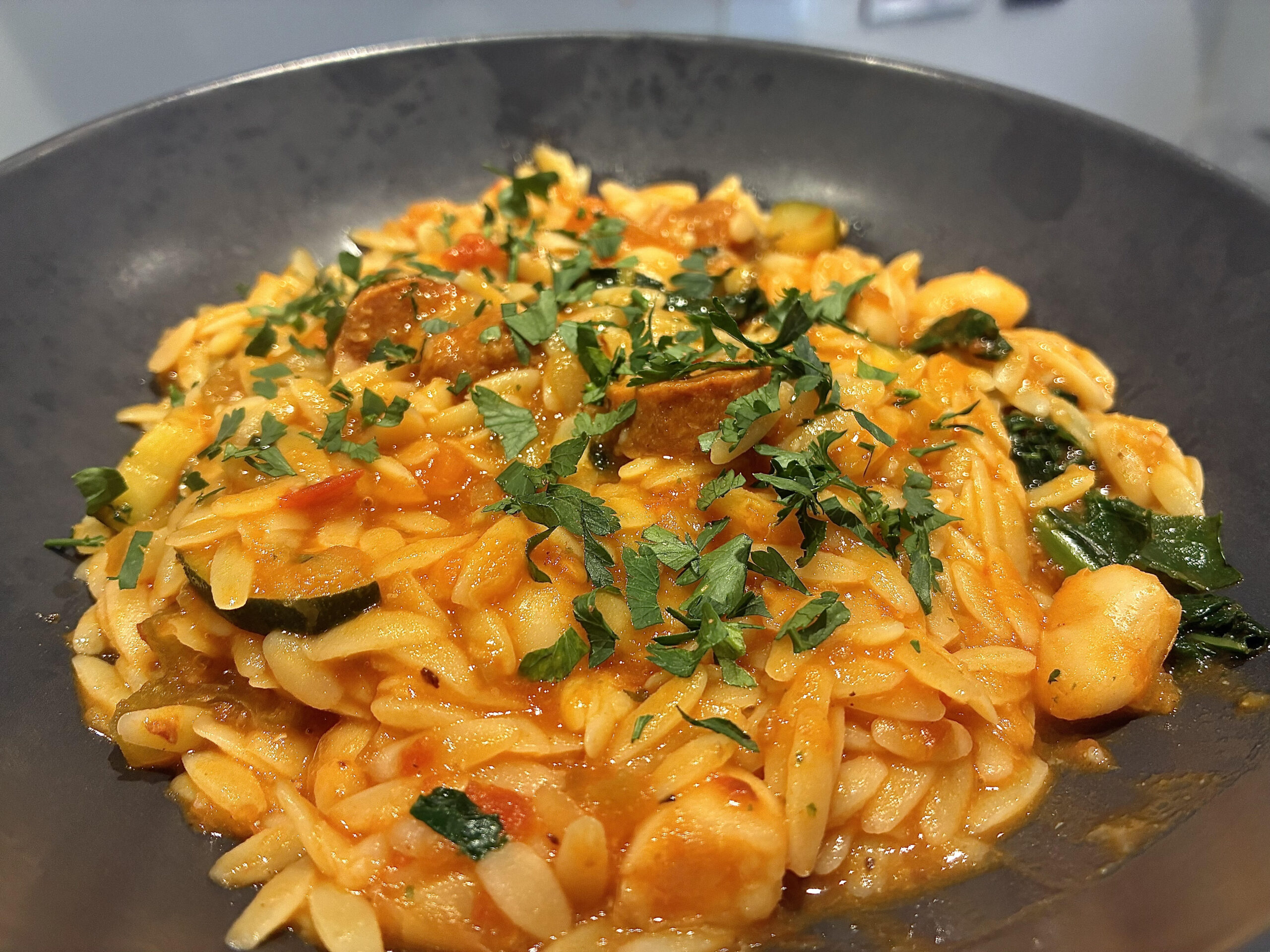
I recently made an orzotto-type dish for a quick Friday night supper for some girlfriends. It was a released to sweat diced onions in, adding thyme sprigs and minced garlic after ten minutes.
I then added chopped tomatoes and butter beans, plus seasoning and a squirt of tomato purée, and left them to simmer for twenty minutes or so. Ten minutes before we wanted to eat, I added the orzo and cooked chorizo to the pot and stirred it all together. The orzo soaked up all the smoky, sweet flavours of the chorizo and tomatoes, and in return bequeathed its silky starch unto its surroundings. As if by magic, the contents of the pot went from loose pasta sauce to rich risotto. Hey presto! A Friday night one-pot wonder.
Orzo is the identity crisis of the pasta world: neither rice nor typical pasta, and hurrah for that, I say. Its slippery shape makes it ideal for warming and nourishing broths when noodles feel like too splashy a battle and, although they do continue to swell and soften in the hot broth, they don’t lose their shape and become mush like other pasta shapes would.
One of my favourite childhood meals was ‘pastina in brodo’ or ‘little pasta in broth’welcome stodge-fest at the end of a hard week: sometimes a robust and carb-coma-inducing plate of pasta is just the ticket. I sliced some cooking chorizo and fried it until just charred. I removed the chorizo and used the oil it had and my mum would make it with tiny star-shaped pasta and Bovril.
It was the single most comforting thing to eat in the whole world. I make it for my children with orzo, a Knorr chicken stock pot and a tin of sweetcorn thrown in for fibre, but it is still essentially the same simple, umami-filled bowl for those days when easy eating is a must.
But we are in June and while the weather doesn’t always behave, we have in fact seen some soaring temperatures of late. So I wanted to leave you with a more summery suggestion for orzo: a salad.
Cold is perhaps the trickiest way to serve orzo, because there’s no heat to keep the starch flowing, so the pasta can start to stick together.
The trick is not to overcook the pasta, and then use an oily dressing to coat it quite soon after cooking. As long as these things are done, the rest is easy and, frankly, great fun.
You could combine olives, feta and bell peppers with fresh oregano for a Greek- inspired orzo salad, or go down a more Scandi route: pound some capers, lemon zest and dill in a pestle and mortar, then spread it over some salmon fillets before roasting in a medium oven for 15 minutes.
Flake the cooked salmon into the orzo, strew with more dill and thinly sliced fennel you’ve pickled for 20 minutes in a combination of white wine vinegar, sugar and peppercorns.
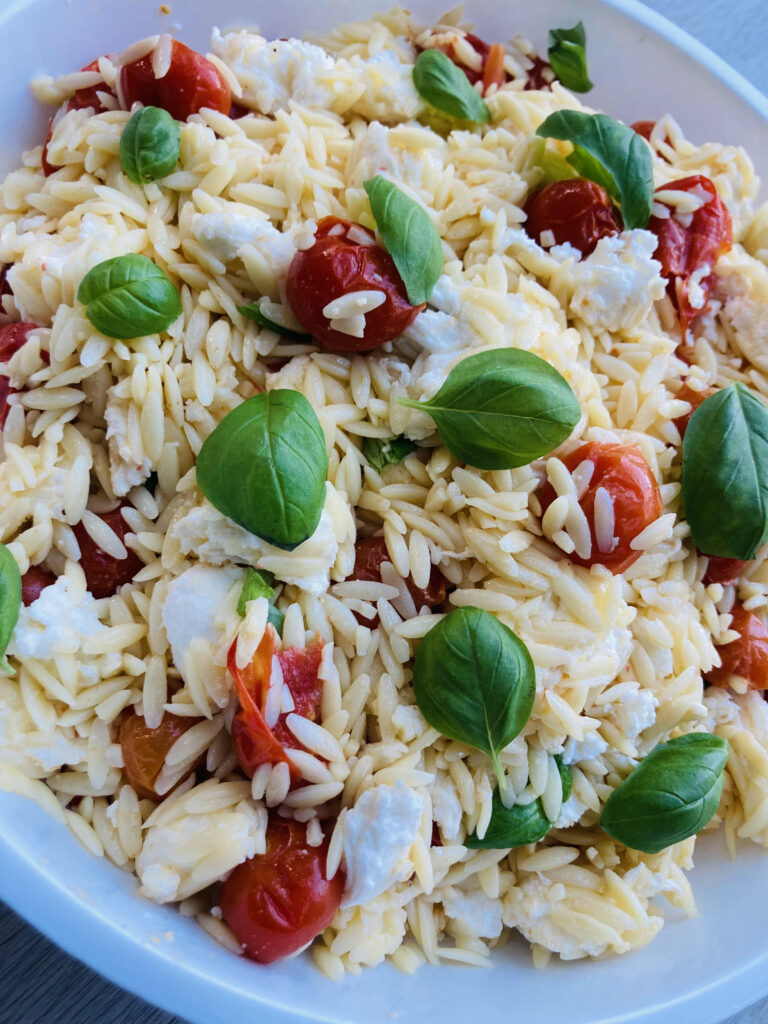
Or you can join me in my favourite, classic tricolore tribute to all things Italian and festoon your orzo with torn-up mozzarella, basil and slow-roasted cherry tomatoes. If you can stretch to some really good quality mozzarella and the expensive cherry tomatoes, you’re in for a proper treat. And don’t forget the basil – there’s nothing quite like the flavour combination of tomatoes and basil, plus it’s not the Italian flag without some green. Buon appetito!