05 Nov 2025
One May evening, a man emerged from a wood near London Colney. Buried in the wood was a parachute, a radio transmitting set and a parcel of food. Also hidden was a loaded pistol and a swastika.
The man was a German spy.
It was 1941. Much of Europe had fallen to the Nazis. There was heavy fighting in North Africa. Eight months of heavy bombing by the Luftwaffe – the Blitz – had killed over 40,000 British civilians. More than a million homes had been destroyed or damaged. But now Hitler’s attention had switched to the Eastern Front and Operation Barbarossa – the invasion of Russia.
Nearly two years previously in a radio broadcast at 11.15 am on 3rd September 1939 the Prime Minister, Neville Chamberlain, had sombrely stated that: “This country is at war with Germany.”
All over Britain, the bright welcoming lights of homes, pubs and dance clubs were hidden from enemy bombs behind blackout curtains. Here in St Albans, even Verulamium Lake was drained so it didn’t reflect moonlight. Drivers had to put caps over their vehicle lights to dim them, which meant at night the roads became lethal. 15 locals died from road accidents. Pedestrians were advised to wear light clothing to make them more visible. Opportunists began marketing luminous items, from buttons to handbags to artificial pin-on flowers.
Even the church bells fell silent at first. They would be rung only to warn of invasion. Once the threat of invasion had lifted, the peal of bells would once more be heard. At St Albans Cathedral, the bells in the tower were removed. A special fire watch was initiated for the building.
But behind the blackout curtains, the bands still played and the men and women of St Albans still spun around their local dance halls to the swing beat of the Big Band sounds,
especially the Lindy Hop. Energetic, joyful, irresistible, the Lindy Hop was a dance which grew out of jazz, tap and the Charleston. It was brought here by American soldiers stationed in Britain and became just the thing to lift the mood and, just for a short time, forget the horrors and fears of war.
It was realised very early on that it was essential to keep a positive outlook. Films shown in St Albans cinemas were designed to boost morale.
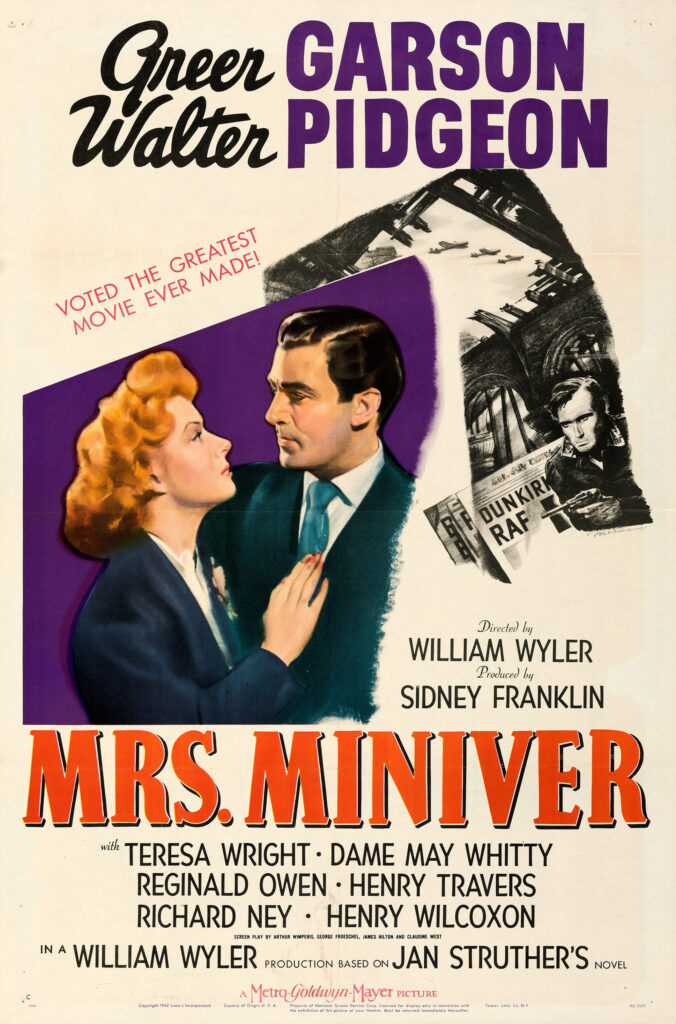
Winston Churchill described the 1942 film ‘Mrs Miniver’ as propaganda worth 100 battleships, thanks to its effect on public morale and emotional impact on its American audience. The stoic courage of the ‘plucky limeys’ depicted in the film helped bring it a lot of American sympathy as well as six Academy Awards. Meanwhile poignant songs such as ‘We’ll Meet Again’ sung by Vera Lynn resonated for those going to fight, as well as for those left behind.
Even an apparently frivolous concept like fashion was recognised as significant to public morale. After all, as Audrey Withers, editor of Vogue wrote, “It would be an added calamity if war turned us into a nation of frights and slovens.”
Before the war, fashion had become more democratic. Although haute couture was still being produced in designers’ workshops, the spread of department stores like Fisks of St Albans, as well as sewing patterns, meant that many of these designs could be copied and worn by most. However, the war brought shortages of material as well as problems with production and distribution. Resources and manufacturing needed to prioritise military needs. The advice from Vogue magazine was to “put your money into one good outfit and vary it with accessories”.
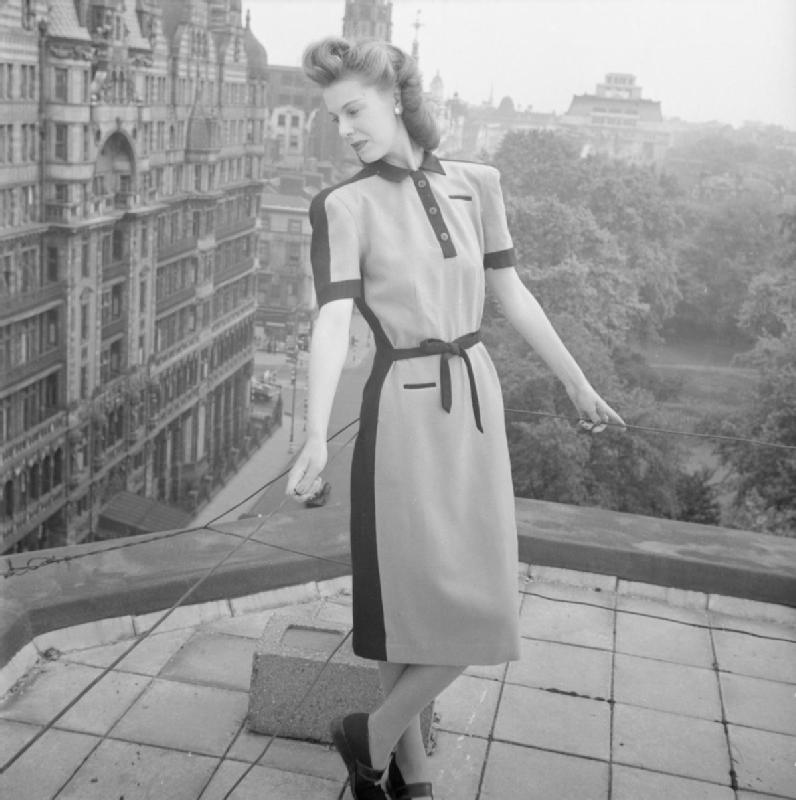
But that wasn’t enough. In 1941, there was an unpleasant surprise with the introduction of clothes rationing. Clothing items would, like food, be priced in coupons. Everyone, whether man, woman or child, would receive 66 coupons to last a year.
A coat, for example, would require 18 coupons. A new frock, 10-12 coupons. A pair of stockings, six coupons. But this created the need to control the efficiency and quality of clothes production. And prices. The people who could least afford it were having to spend a large number of coupons for low quality clothes which didn’t last long. So in 1942 the Government took over supplies of the raw materials and made the manufacturers produce a quota of what was known as Utility clothing. These were identified by a CC41 mark which guaranteed a level of quality and value for people’s coupons.
Restrictions were introduced to strip clothing of all but the essentials in order to save materials. Women’s new shoes could only be manufactured with a maximum heel height of just over 2 inches/8 cm. No new open-toed shoes. Shortage of elastic meant that elastic waistbands were mostly forbidden – except, thank goodness, for women’s knickers.
Rules covered length of skirts, number of pleats and an absolute maximum of three buttons on coats and jackets.
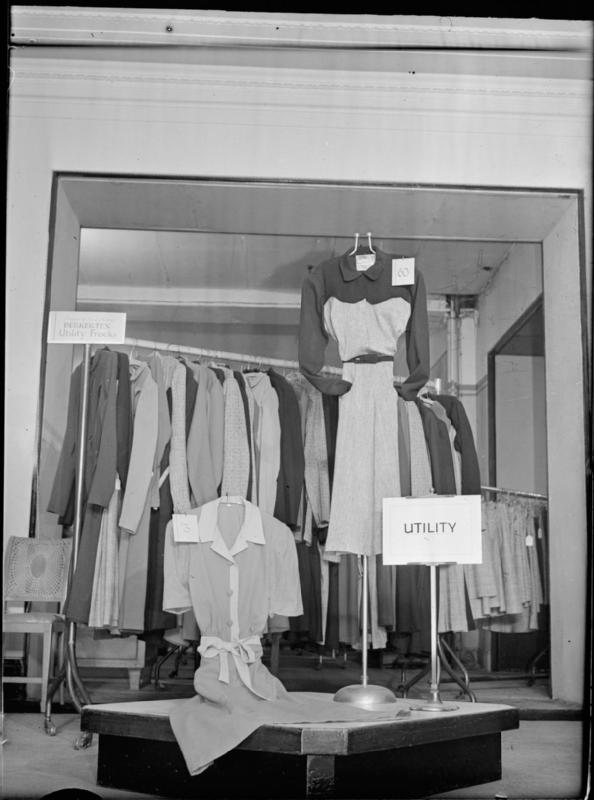
A very unpopular rule limited the lengths of men’s socks to a maximum nine inches. If men needed new suits, they had to switch from double breasted to single breasted with lapels of a certain size and pockets of a certain number. No turn ups were permitted on trousers.
It didn’t stop there. By 1943, short trailers started playing in St Albans cinemas on the theme of “Make Do and Mend”. These encouraged the British public to repair, re-use and re-imagine existing clothing. Women’s magazines churned out articles on how to remodel shirts, use old flour bags for boys’ shorts, turn your husband’s old suit into a two piece for yourself or make siren suits for your toddlers. Siren suits were one-piece costumes, like boiler suits, notably worn by Winston Churchill. They could be speedily pulled on over nighties and pyjamas for the dash to the air raid shelter. Many even included a handy drop down panel at the back to allow quicker trips to the loo.
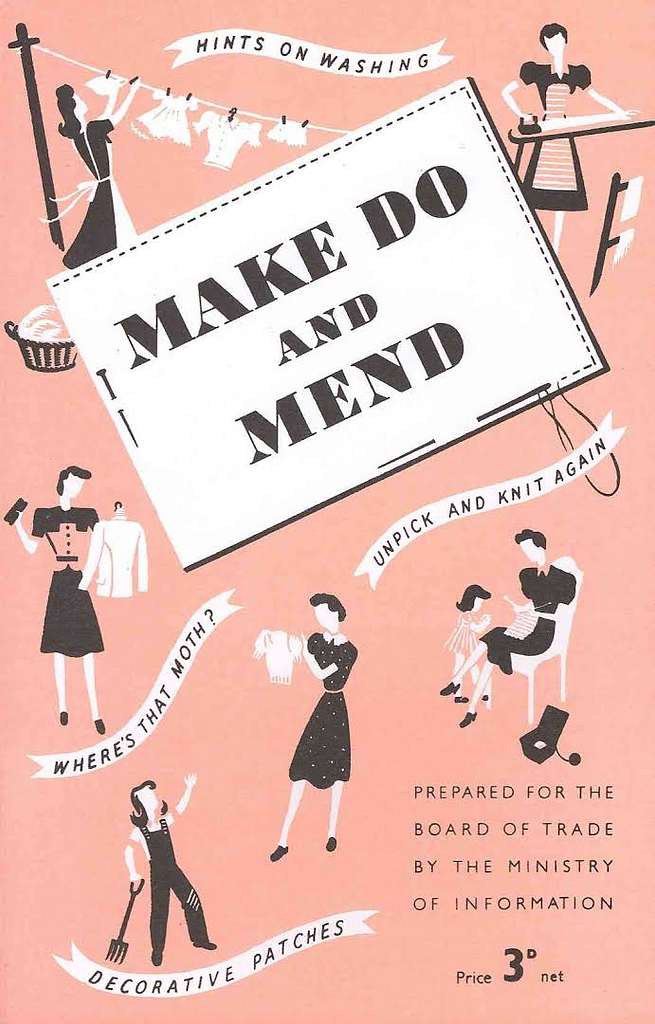
This all sounds pretty drastic but it’s reckoned that around four million square yards of cotton were saved each year. But nothing stopped people trying to look good. The Government
very wisely involved leading fashion figures in the design of Utility clothing to strip off ‘frills and furbelows’ in an acceptably stylish way.
And women became increasingly resourceful. Lingerie was fashioned out of parachute silk, and wedding dresses were made from repurposed curtains, as curtain material wasn’t rationed.
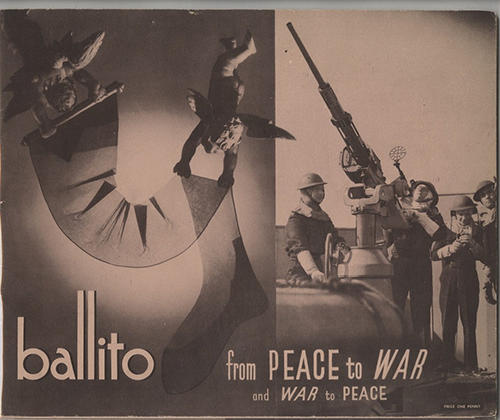
Hosiery mills like Ballitos in Fleetville had mostly been given over to war work so stockings were in short supply. Instead, women would stain their legs with gravy browning and a pencil line drawn up the back of the legs to simulate stocking seams. Even beetroot was used to stain lips.
Children found that their sweets were rationed to three ounces a week. In fact, there were shortages of pretty much everything from saucepans to toothbrushes to soap. Everyone was encouraged to switch off unnecessary lights and run no more than five inches of hot water in the bath.
So virtually every aspect of daily life was affected. It was Total War. There were many sobering signs that this was a war which would not only be fought on the battlefields but also on the home front. Gas masks were issued to everyone, with special respirators for babies. Emergency mortuaries were established. Public air raid shelters constructed in Belmont Hill, New England Street, Bernard’s Heath and Clarence Park.
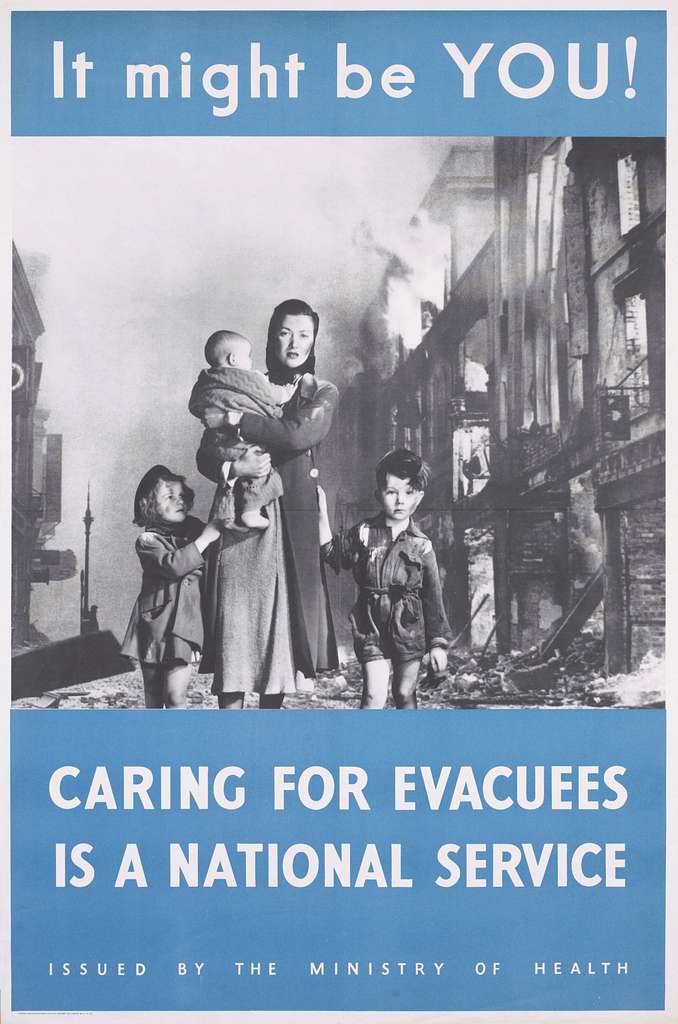
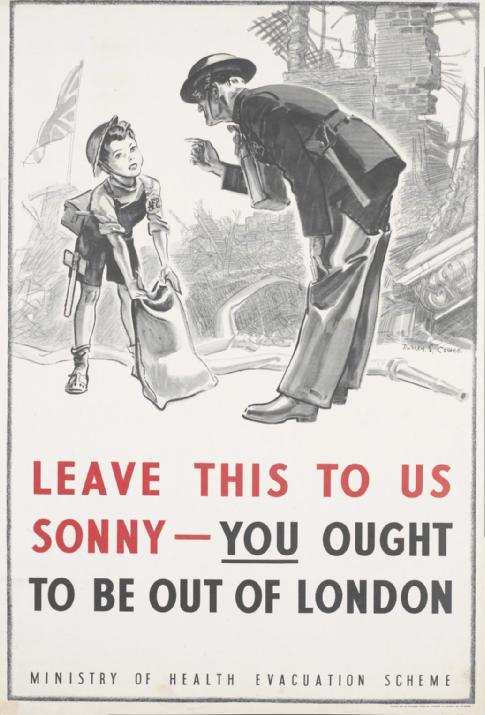
Enormous casualties were expected from the bombing raids so children were brought out of London and other cities to the countryside. St Albans was seen as a relatively safe refuge with only 10 killed by air raids, so became a major evacuee reception centre. In the first week of the war, 6,000 evacuees arrived needing a home. For many London children, seeing the green fields and woods of the Hertfordshire countryside was a revelation.
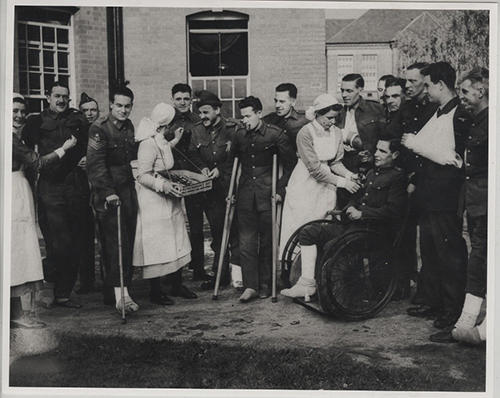
It wasn’t just children who found a refuge in St Albans. Hospital patients were also evacuated here. Sylvia, daughter of Canon Glossop of St Albans Cathedral, had received a medal for her work with the Red Cross during the 1914-18 War. Now Sylvia once again leapt into action, setting up the St Albans Joint Voluntary Nursing Services.
This organised and managed nursing duties for local hospitals taking on evacuated patients from St Bartholomew’s in London.
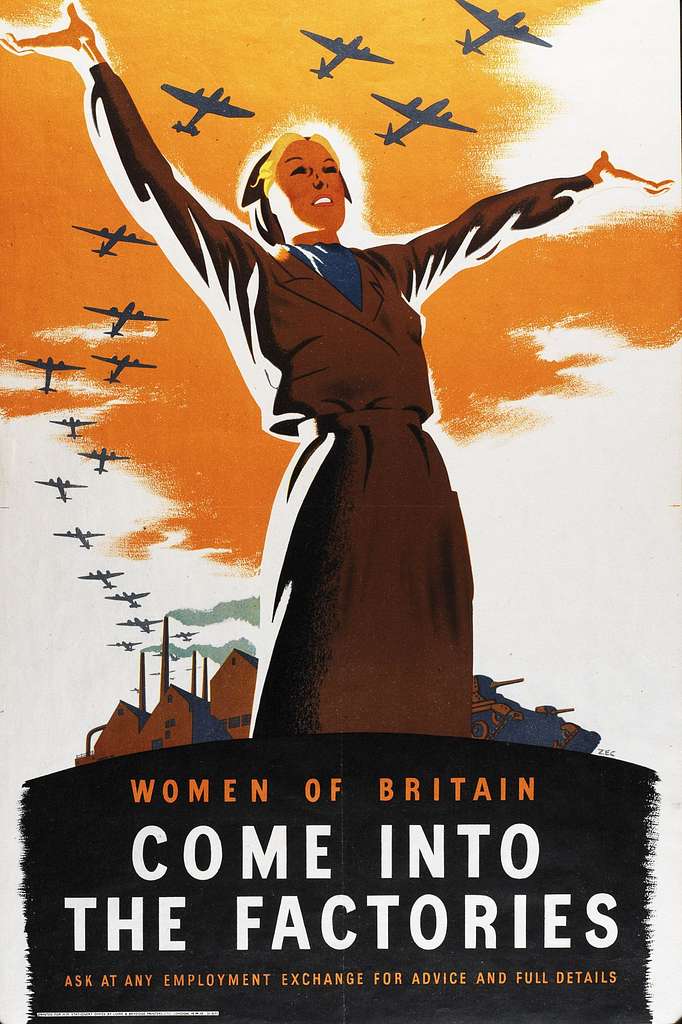
Everything which could contribute to the war effort was turned to good use. Local industry was switched to the war effort. Day and night shifts at the Ballito factory, now manufacturing ammunition, meant their production line never stopped. They also made parts for the Hatfield and Leavesden air factories producing De Havilland Mosquitos and radar equipment.
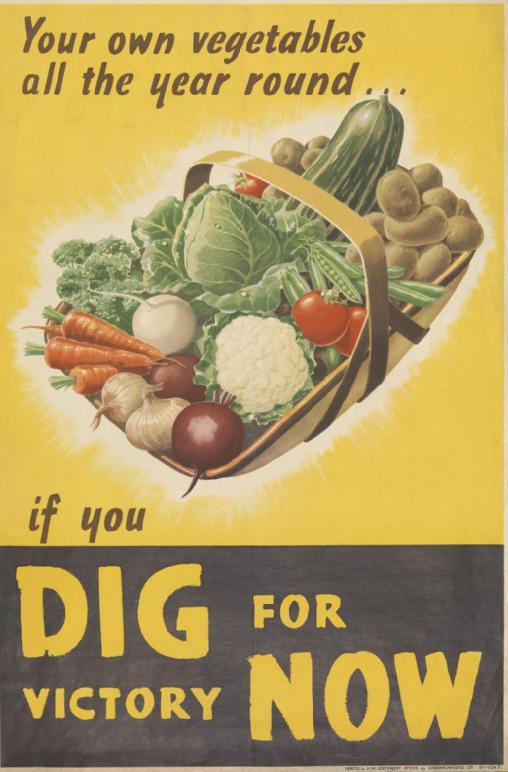
Posters emphasising that ‘Careless Whispers Cost Lives’ reminded these factory workers of the need for discretion. Other posters exhorted women to help with the evacuees, to join the Land Army, the fire service, to grow vegetables instead of flowers, to waste nothing which could be repurposed. Everyone was expected to do their bit.
It’s said that the British people became the most totally mobilised of all those involved in the war. Even local conscientious objectors played their part, working with the Women’s Land Army at the Hertfordshire College of Agriculture (now Oaklands), taken over by the Agricultural Executive Committee.
There were other more furtive operations taking place locally. In 1940, the Special Operations Executive (SOE) was created to spy, sabotage and perform reconnaissance in occupied Europe. Gorhambury House was one of their bases. Meanwhile the Secret Intelligence Service (part of MI6) moved into Glenalmond House in King Harry Lane. The unit was led by Kim Philby and they apparently used to enjoy a drink or two in the King Harry pub.
Fellow drinkers were casually given the impression that Glenalmond House was occupied by archaeologists working on Verulamium.
On Woodcock Hill near Sandridge, a radio station employed over 100 male and female operators to detect and locate radio transmissions from suspected enemy agents and German spies. Intercepted messages were sent off to Bletchley Park by motorcycle couriers.
And that particular German spy? He was called Karl Richter. His parachute had landed in a field near London Colney. He had hidden in a nearby wood for nearly two days before
heading towards the road. It was Richter’s bad luck that a lost lorry driver stopped to ask him for directions.
Obviously unable to help, Richter had only moved a short distance away when Police Constable Scott appeared. Now armed with the right directions, the grateful lorry driver made a passing remark to the policeman about the unhelpful behaviour of a stranger.
The suspicious PC Scott followed Richter, questioned him and took him to the police station. Richter was found to be carrying several hundred British pounds and American dollars, a map and a compass. As well as three pairs of pants and two pairs of socks.
Ready for anything – except a lost driver and a curious policeman.
At the end of the war, there were 162 new names to be added to the war memorial in front of St Peter’s. The men who did make it home found a battered nation and shortages in virtually everything. There was still rationing for food and clothing. There was still austerity. Britain was deep in debt. But things, gradually, were going to get better.
On November 11 we remember the fallen of both World Wars. The St Albans Tour Guides will be offering their guided walk around St Albans’ unique Street War Memorials on November 9 and 11. Tickets cost £6 with all proceeds going to the British Legion.
St Albans Tour Guides are local volunteers and are trained and qualified blue or green badge guides. For information and to book, go to www.stalbanstourguides.co.uk