


07 May 2026
Is the reorganisation of local government the perfect time to think again about reforming the system used to select our democratically elected councillors?
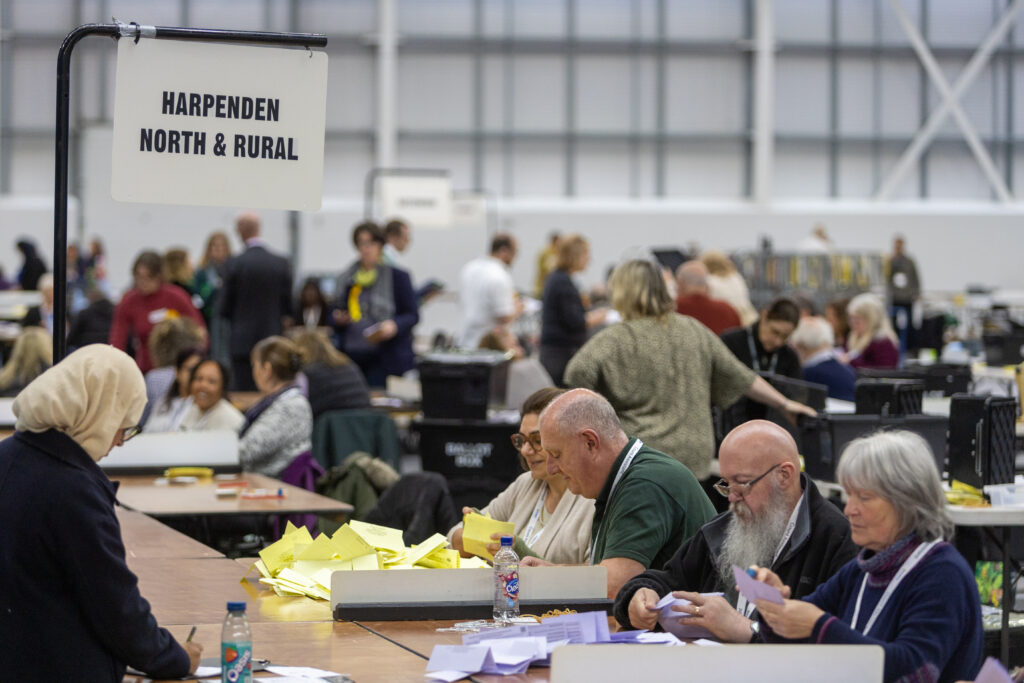
As voters across the district go to the polls today to select their preferred councillors for the last years of SADC, we ask whether the time has come for even more sweeping changes than just the structure of local authorities.
The Government initiative will replace the current two-tier system of St Albans district council and Herts county council with two or more unitary authorities by April 2028.
SADC’s preferred approach is for the county to be divided into West Herts (Dacorum, Hertsmere, St Albans, Three Rivers, Watford) and East Herts (Broxbourne, East Herts, North Herts, Stevenage, Welwyn Hatfield).
A final decision on the structure is expected in the summer, with elections for the new unitary authorities taking place next May.
But currently these would continue using the First Past The Post (FPTP) system, in which voters select one preferred candidate, with the one with the most votes being elected even if they don’t have a majority.
Campaign group the Supervote Project says during the last SADC elections in 2024 the Liberal Democrats walked off with a majority of the seats even though a majority of those who voted did not support them.
This meant the Lib Dems took 81 per cent of the available seats with only 49 per cent of the vote. In contrast the Conservatives had only one seat (five per cent of the total) to show for 23 per cent of the vote, and the Greens polled 14 per cent but also took just one seat.
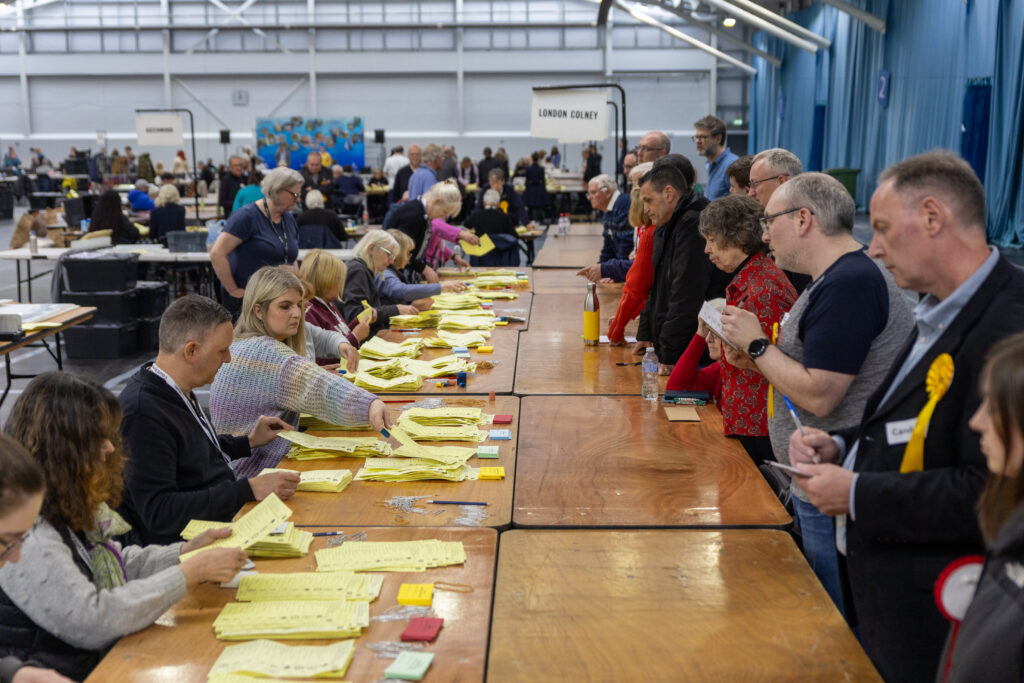
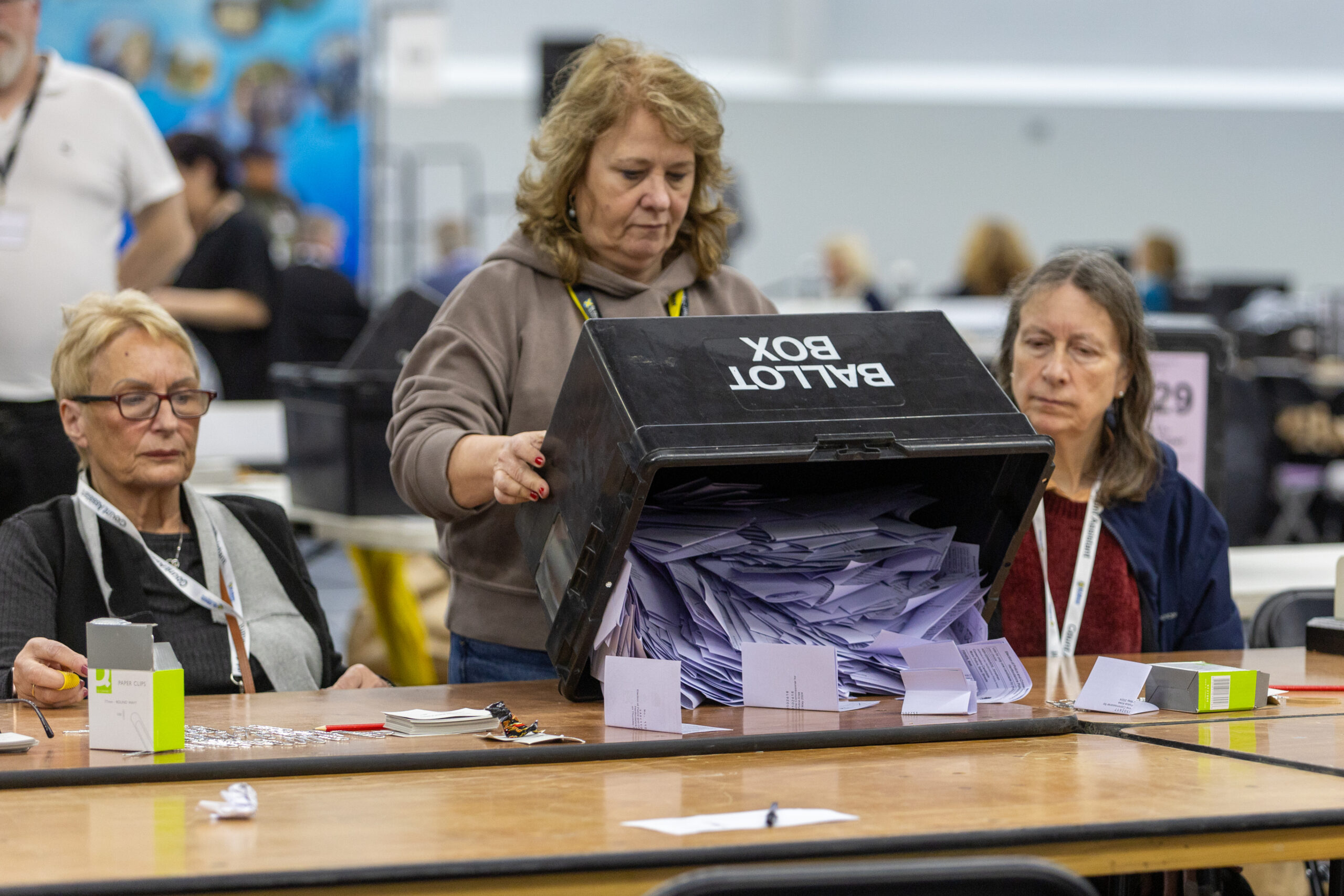
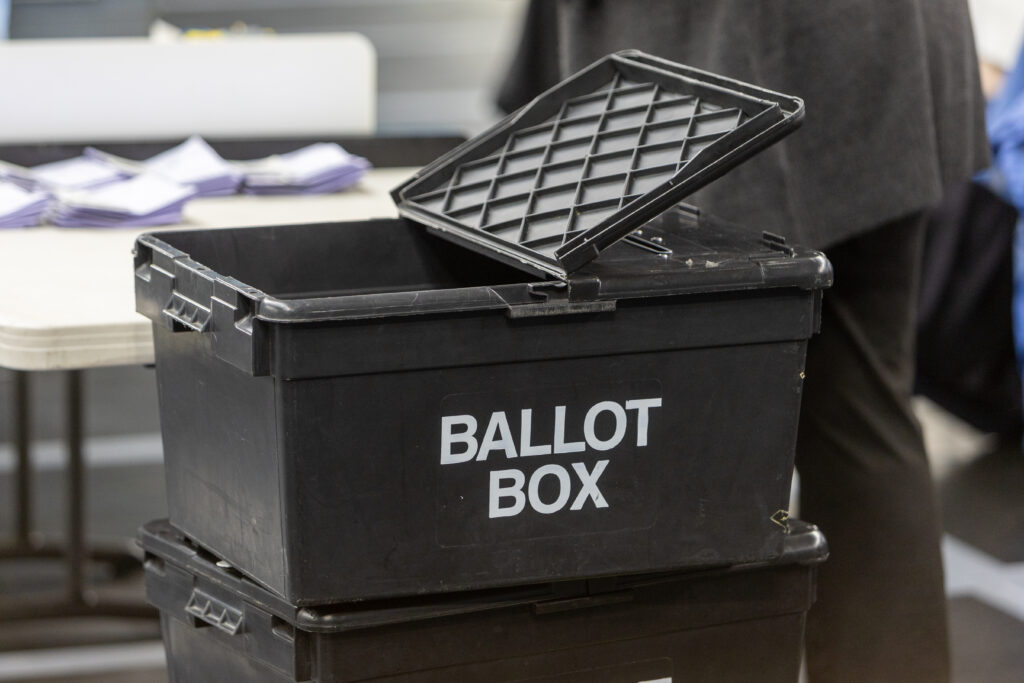
Of the 45,274 votes cast, 21,885 (48 per cent) were unsuccessful in electing a councillor, and 61 per cent of those registered to vote in St Albans refrained from doing so.
Supervote’s organiser David Green said: “There is something very wrong with a voting system that has the ability to award over eight out of 10 seats to a party that has won just under five out of 10 votes.
“We need to replace FPTP with a system of proportional representation which awards seats to parties in proportion to the votes cast for them so that, say, if Labour won four out of 10 votes, they would be awarded four out of 10 seats. First Past The Post is not designed to achieve this.
“The Single Transferable Vote (STV) is the British system of proportional representation involving the sharing out of seats in every ward in proportion to votes cast as dictated by the stated preferences of each voter in the ward. Voters have more candidate choice and are free to vote based on what is important to them, whether it be according to party, gender, culture, independence of thought or issue. This system ensures that every vote would be keenly contested, that there would be no more safe seats, with greatly reduced levels of ineffective voting and everything for everyone everywhere to play for, whether they be voters, candidates or political associations.
“STV is already in use in Northern Irish and Scottish local elections, and the Welsh Senedd has recently passed legislation that allows Welsh councils to use STV if they so resolve. St Albans and other English councils need to catch up and they should lobby the Government to introduce STV in time for the next round of local elections. Indeed, should the Liberal Democrats emerge as the dominant party after May’s elections, they ought to offer St Albans as a pilot for first use of STV in English local elections, given their longstanding support for this proportional voting system.”
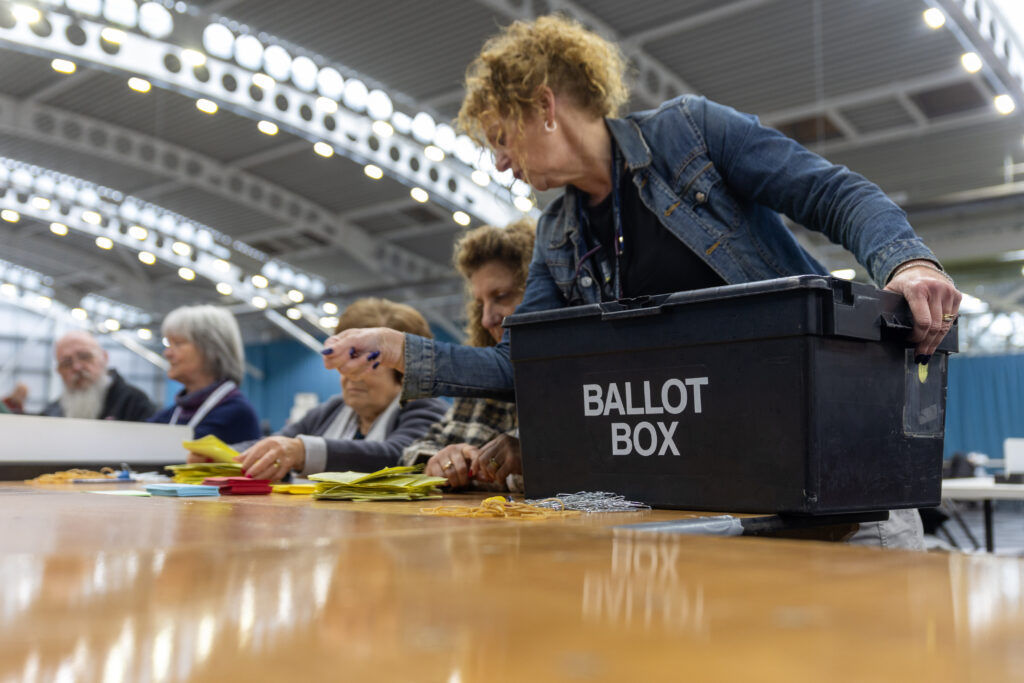
The leaders of the various political parties in St Albans offered their opinions on the need for electoral reform, and whether the current system worked in their favour or against it.
Greens and Independents leader Cllr Simon Grover is in favour of change.
“Does First Past The Post reflect how St Albans actually votes? No, clearly it does not. Even in a two-party system you can get huge distortions in results where one party wins a slim majority and all the other votes are wasted. As soon as you get our current multi-party system it all falls apart.
“In the last General Election, Labour won a landslide of seats on a minority of the overall votes. The Lib Dems won more seats than in the previous Parliament despite getting fewer votes. Locally, we’ve seen the disparity in our own results. If votes matched seats, we’d have eight councillors, not three. Votes and seats just don’t add up.
“Would I support proportional representation even if it hurt the Greens? Absolutely. We’ve campaigned for a fairer voting system for years. It would be pretty hollow to drop that position the moment it might cost us something. It’s not just about matching seats to votes, it’s a matter of trust. If people feel their vote counts for something, they’re more likely to want to vote, and feel connected to the electoral system. If people feel their vote won’t change anything, a lot of them won’t bother. That’s not them being lazy, it just a logical response to a system that often makes their choice irrelevant.
“On the question of which system, I’d go for the Single Transferrable Vote (STV). It keeps a real connection between councillors and the communities they serve. Voters rank candidates in order of preference, so nothing is wasted. It’s already working well in Scotland and Northern Ireland.
“Is local government reorganisation the right moment to make the change? I think it might be the best opportunity we’ve had in a long time. We’re already tearing up the structures and starting again. If we’re going to do that, we should do it properly. Build something that actually represents people, not just something that looks familiar.
“The current system has served some parties very well. But serving a party and serving democracy are not the same thing.”
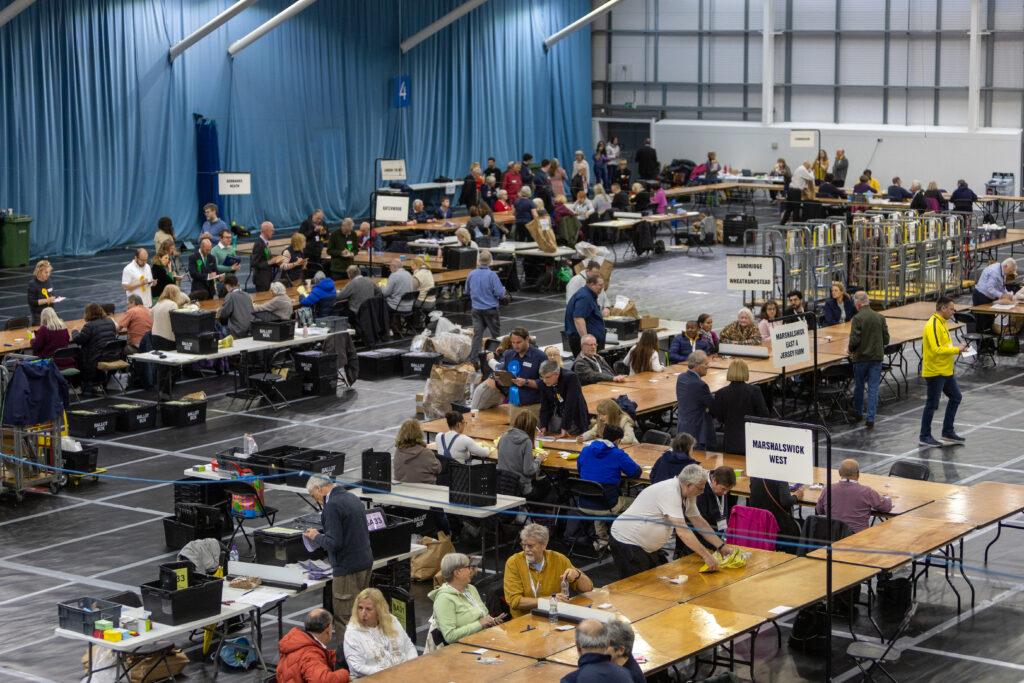
Conservative group leader Cllr Matt Cowley said: “It seems obvious to me that a more proportional system of representation would benefit my party’s electoral prospects in St Albans. If seats reflected voting patterns, my party would have at least double the number of seats on the council. But if your goal for an electoral system is pure partisan benefit, then you’ll end up with very bad electoral systems.
“The First Past the Post (FPTP) system is not perfect, but no system is. What FPTP allows is for a greater quality of representation and a greater accountability of representatives to their electorate. Any other system would either require much larger electoral areas, weakening the connection between a councillor and their constituents or it would completely abolish that ability for residents to hold individual councillors to account for the decisions that they have made through some kind of list system.
“Either option would mean that it is much harder for individual councillors to be held accountable and much harder for councillors – most of whom also have a day job – to represent the full range of views in their areas.
“No matter how senior you are under FPTP, you must answer for your record to your electorate and they can vote you out if they wish to. I don’t believe that there is another system that replicates that quality of accountability.
“As for whether the voting system results in lower turnout, I don’t believe that is true. Police and Crime Commissioner elections used to use a form of proportional representation and turnout in those elections was among the lowest in England. Scottish council elections use STV and turnout in 2022 was not notably higher than the turnout in St Albans district in the same year.
“When I speak to voters who don’t tend to vote in local elections, I very rarely hear the electoral system referenced as a reason. I think the job for all of us in local politics is to work harder to show why local elections and local politics matters – that’s what will address democratic deficits, not politicians arguing among themselves about abstract electoral systems.”
Local Communist Party of Great Britain spokesperson Mark Ewington said he thought FPTP was well past its sell-by date: “It may surprise you to find Communists concerned about democracy, given our usual bad press. But ‘democracy’ was essentially invented by Chartist campaigns to secure the vote, and it is a major cause of concern that so many voters do not participate. Communist candidates say, ‘If you do not vote, they win’.
“Indeed, the political system of the here and now demands change. Locally both the Conservatives and Labour have been hollowed out as political forces and they have both benefitted from low turnout at various points. The local people in St Albans are well ahead of some areas and recent trends indicate that people are looking for a multi-party system and electoral reform is necessary to meet that demand. Under the current system both nationally and locally many are left without a voice which
reduces interest, participation, and engagement in local politics.
“Late in 1944, once D-Day appeared irreversible, the speaker of the Commons hosted a consultation on what democracy should look like after victory. Communist MP Willie Gallacher put forward the first paper to propose PR. It was rejected of course.
“For the reasons already outlined proportional representation is essential in reflecting accurately the loss of faith in First Past the Post and the two main parties in the UK.
“In addition, local government has been subjected to cuts by successive governments and the reality as that give such cuts and the narrow ideological parameters, local democracy has suffered. Many people have disengaged from local democracy and feel powerless when it comes to change and are only part of the process on election day.
“Cynicism towards the corruption of mainstream politics at local and national level has resulted in millions not bothering to vote, because they do not think things will change. The irony is that things will not change unless people get involved and take responsibility for decisions currently being taken for them, by those who do not have their interests at heart.”
He said that local government reorganisation has been so poorly handled at Government level that there is no space to implement a different system.
“This would have to be a system covering all local councils in England at the same time if it is to work. As such, it would require legislation in Parliament. For this reason, the Communists advocate holding a referendum so that a people’s mandate for electoral reform could be achieved.
“To revive and develop community participation, accountability and self-government, powers and resources should be restored to local government in areas such as business taxation, council housing, management of schools, public transport and contract procurement and compliance.”
Meanwhile, the leader of St Albans district council, Liberal Democrat Cllr Paul de Kort, agreed that FTFP failed to represent voting patterns not only in the St Albans district, but nationwide, with the 2024 General Election delivering Labour 63 per cent of the total seats in Parliament from less than 35 per cent of the vote.
He said he would be in favour of introducing proportional representation locally even if it might affect the Lib Dems’ voting performance: “A fundamental value of the Liberal Democrats is fairness and equality of opportunity. This is something we have demonstrated locally in all our decision-making, so of course, we are in favour of all elections, whether local, regional or national being carried out under proportional representation.
“In the meantime, locally, we Lib Dems recognised the issue of the need for more broad scrutiny and challenge in the circumstances of a single party’s numerical dominance by introducing a 30 minute leader’s question time at Full Council, and the ability for any councillor to raise formally an issue at our four service and scrutiny committees for debate and, as appropriate, further action. We also have encouraged independent oversight by recruiting two truly independent members to the council’s audit and governance committee.
“There is additional evidence of our open approach at budget time. All opposition parties receive independent access to the information they need to propose alternatives with budget amendments. This year, the Green Party was unable to offer any different balancing of priorities and the Conservatives could only offer one that was so financially incontinent that it had to be rejected by the Council’s statutory financial officer. However, the Labour Party put forward a tweak to the structure of charging for garden waste which we happily adopted and it now forms part of our 26/27 budget.”
He agreed that the lack of perceived representation contributed to a low electoral turnout: “The current high level of wasted votes must be an important factor. As a nation, proud of its democratic heritage, we should be embarrassed about the low levels of turnout in local and national elections. To address this shame, we Lib Dems also favour automatic voting registration and much deeper devolved powers to local government as opposed to the current sham being foisted upon us by Labour’s unwanted LGR model.”
He said STV would be his preferred choice of proportional represenation method: “It is independently recognised to be the system that makes every vote count and that is an element that is vital for a thriving democracy. It is a genuinely proportional system and it allows the electorate to choose between candidates rather than just parties, enhancing the personal mandate of those elected to office.”
So is local government reorganisation the right time for a change in the electoral system?
“The right time was 50 years ago when the two party system started breaking up, so it would have been a great idea for the Labour Government to have proposed this a year ago, as it would then at least have provided one clear benefit from the LGR process which is being imposed on Hertfordshire. Alongside proper financial devolution, it would have allowed many residents to have a good reason to shoulder the inevitable disruption being caused to the delivery of vital local government services that we local Lib Dems fight so hard to preserve and improve.”
And finally, a brief word from Labour’s Cllr Mike Hobday, who had just one thing to say about the issue: “The problem with St Albans council is not the number of seats that the Liberal Democrats hold. It is their arrogance in dismissing alternative and local voices.”
