


17 May 2024
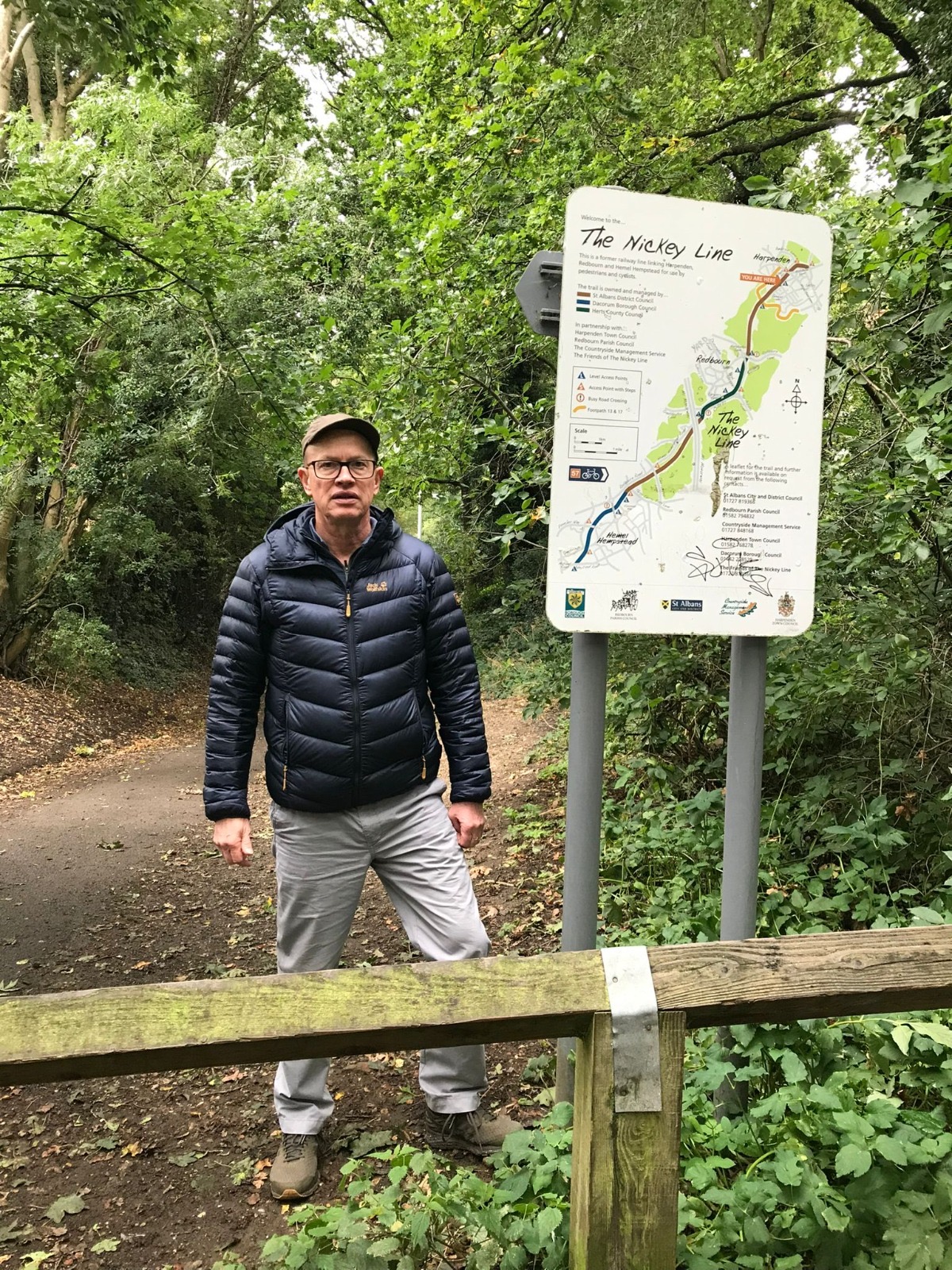
Having spent many years in charge of Beaumont School’s sixth form, it was possible any meeting with new SADC leader Cllr Paul de Kort might have felt like being called to the headmaster’s study.
In reality I need not have worried, because our interview at the Saint and Sinner was a very relaxed affair, despite casting a discerning eye over the challenges he faces in the role, but also the many positives moving forwards.
Paul, who has been a district and county councillor for the past three years, was announced as Chris White’s replacement on Friday, the news coming out of the blue without any prior fanfare. One of the other potential candidates, Cllr Helen Campbell, will continue in her role as deputy leader.
Perhaps against expectations, there was no leadership contest, with Paul selected by his fellow Liberal Democrat councillors – including those newly elected – through a secret ballot. What will follow at next week’s Full Council meeting is the selection of what is known as the Lead Councillor team, heading up the various committees, and then it’s noses on the grindstone…
Before he became a teacher, Paul worked in the oil trade industry, and therefore has a background in team leadership – so how will he approach overseeing the SADC administration?
“I think I am collegiate, but I’ll front up if something’s difficult. It’s for the leader to put themselves up and get a few brickbats for that. I think I’m good at pulling in the range of different expertise that there is amongst our councillor group now. I’ll be different from Chris just simply because he had been doing it for so much longer and had such a broad understanding.”
He’s fully prepared for the need to put himself in the spotlight as the face of the Lib Dem-controlled SADC, while also giving due recognition to his colleagues.
“I’m not really into personality politics, I think there’s too much of it on the national scale, it’s not particularly helpful. I will always say there are other people around here helping me make a decision, but that’s not the same as saying I chuck them under a bus because it wasn’t my decision, that’s not how it works.”
With their main opposition coming from the Green & Independent group, the Tories having been whittled down to just three councillors, it’s arguably more difficult to present opposing viewpoints to policy proposals.
“It’s certainly not easy having more limited opposition because of all the accusations which you’re well aware of being thrown around. ’We won’t listen to anyone because we can do what we like’. ‘Other voices aren’t being heard’. I massively contest that.
“The Conservatives don’t get out on the doorstep. I have some understanding why they don’t, given the reception they get, but by the same token, we do get out and we talk to people and not surprisingly you get some people saying, ‘You’re not doing the right thing, why haven’t you thought about that?’ That’s a good thing but that’s where you’ve still got to be open to people.
“I think what I’m keen to do as a group is actually talk to that full range of people. I think social media’s got a lot of strengths, but there’s only a select group of people who will talk about political matters on social media.
“If there’s one thing I’ve learned in a limited amount of time campaigning and getting elected is that you can really only find that out by talking to a wide range of people. The various interest groups like the Harpenden Society, the Civic Society, CPRE, they’re all an important voice, but there are more people living in the district who aren’t a member of any of those, and you have to think about the other voices.
“I think it’s really important in the debate about housing, for example. We all know there’s a massive national and local housing crisis. But for many of the people who suffer from that, their voices are harder to hear.
“I also think more account should be taken of the forgotten communities within the district, as psychologically it’s much harder to live in an affluent area when you’re not affluent.
“For obvious practical reasons, everything costs more, rents cost more, etc. but also just people’s perception, for example if you can’t afford for your kids to go to the cinema with their friends then that’s a different sort of cultural exclusion. There are pockets of relative deprivation here, nothing like as bad as some parts of the country, but it’s still there.
“I’m sure you’ve seen the sort of literature and social media the Lib Dems put out, but we do talk about the whole community rather than just interest groups, and I just think we have a really good record of talking to people and finding out what they want.”
One of the biggest challenges faced by the district council is piercing through the soundbites and suggestions surrounding the new National Planning Policy Framework, and applying them practically to a new Local Plan.
“If you’re told you can’t put houses on a plot of land which is effectively brownfield or previously developed, like the rail freight terminal site, you think OK that’s a national decision, but how can we have a situation where the national government is setting top-down targets and also saying we should not build on the Green Belt because it’s politically appropriate.
“I think most people agree we should build on brownfield sites first, but we don’t have many. We’re not the industrial North where there are old steelworks and mines, we’ve never been very industrial as a district so we just don’t have those sites.
“We talk about community and devolution on a more national scale, and I would welcome local authorities having much greater tax-raising powers. That’s not the same as increasing taxes, it’s being able to make long-term decisions about what is funded.
“One of the elements that people don’t grasp, and it took me a while when I became a county councillor, is that developers’ contributions in infrastructure under Section 106 agreements always have to be capital.
“It’s always something like building a new cycle path, maybe contributing to a new school. But it’s not paying for the teachers at that school, it’s paying for the building, and it’s building a cycle path but not maintaining it, and the county council say they haven’t got the funding to maintain it regularly.
“So you need the revenue and a stream of taxation, and let me stress I’m not saying taxes should go up here, just that more of it should be raised locally.
“In Bristol, 6 per cent of the income generated in Bristol by residents and businesses goes to Bristol. In Gothenburg, which is about the same side, it’s just over 30 per cent. So Gothenberg as a municipality can plan and to some extent determine its own destiny. It’s the disconnect that’s a problem.”
The local government finance settlement – the annual determination of funding agreed by the House of Commons – is also uncertain and subject to the whims of the Government at the time.
“It’s ridiculous. I mean, it’s one year ahead and about the last possible moment. It’s actually, inhumane for the council officers across the country as it’s just before Christmas.
“We want to see the options earlier, we want to know if we can do this or that.”
The growth of social media has also seen a rise in public criticism of council officers, something Paul is keen to protect them from, especially as they can’t reply to posts on Facebook or anywhere else.
“What you get, and I’m not saying it’s all deliberate, is basically bullying. Because you are saying, ‘I think you are failing’, while knowing that they cannot respond. The individual officer can often get attacked for failing to get back to people, for doing things too rushed, but they’re working under huge pressure.
“For example, there was criticism during the election campaign that the planning department was failing. But we were not making the wrong decisions, we weren’t making them fast enough in one particular category. SADC has the most planning applications of anywhere in the country, and has done for quite a few years, which is a huge workload, but at the same time St Albans is just about the worst place in the country to hire a planning officer because it’s so expensive to live here and they can get paid more in the London boroughs or the private sector.
“So is it difficult being a council officer? Yes it is.”
Apart from the criticism of the planning department, Paul is also unhappy with the way the Conservatives focused on SADC’s late accounts in their campaign literature.
“The people who were writing that, who were stirring it up, absolutely know what the real story is, and it’s nothing to do with this council. It’s a national problem, just Google it, it’s not just councils either, it’s hospitals as well, all public sector bodies are having trouble with the way we’ve been told to calculate our accounts, and everyone knows it’s nonsense and needs to be resolved at Parliamentary level.
“For example, somebody said ‘Wow there’s a big difference between St Albans’ accounts and the auditors of £30m, so they must have lost £30 million’. That was over the value we put on our housing stock, they didn’t say we were wrong, they just said they’d come up with a different number.
“We’ve got 4,800 social houses, think how many billions that is worth, and the difference is £30 million. Now I don’t know if you have a house, but when do you want to know the market value of your house? When you sell it. We’re not planning to sell any of our stock so it doesn’t matter.
“If they’d have said we’ve lost 100 houses, we’d let somebody steal them and walk off and they’d been turned into a factory, that’s a proper criticism.
“It’s all a nonsense and it’s all down to the privatisation of what used to be called the Audit Commission, the public body was set up to audit all these public sector organisations, hospitals, fire services, local councils. In 2015, Eric Pickles decided he’d let it be privatised, and it’s been an absolute fiasco since.
“But it’s nothing to do with this council’s officers, and that’s the one that’s made me so cross, because there’s been a sort of suggestion, that our finance people are not doing their job, they’re too lazy, they don’t know how to do it, they’re incompetent, when you know that’s not true, and if you don’t know it’s not true you should have asked somebody else who would tell you very quickly.”
The importance of getting a Local Plan in place cannot be ignored, as the district faces an onslaught of speculative development: “We see a lot of negatives from a Local Plan, people think we are committed to all these houses, but if we don’t have a Local Plan, every single house that will get built will be a five-bedroom executive house with no infrastructure.
“In our Local Plan we have spelt out already that once you get a certain number of houses there will be this much social housing. This is the provision.
“Without the Local Plan, developers can come along and say, I’ve built a thousand houses here, I’ll do this affordable thing, that’s 20% cheaper than too much, but social housing is social rent, which is set at a different level.
“Now, I would like more social housing in that package than we’re going to get, but there’s another thing called a viability test which comes from the Government which says you can’t stop houses being built around you by putting the costs up so high the developers won’t build them.”
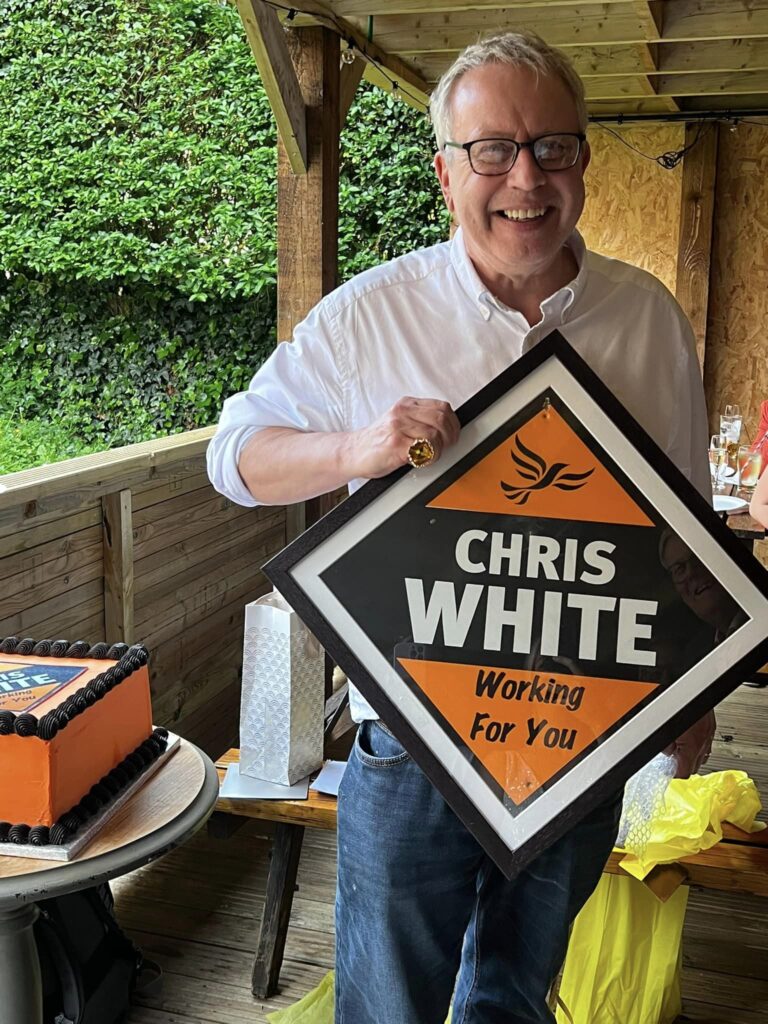
Did he get any advice from Chris when he handed over the reins of power? “Not specifically. The advice I got was very much about one or two people you need to talk to, like you, they’ll be quite useful.
“But we’ve been working together for quite a long time – and I mean people like myself, Helen Campbell, Jacqui Taylor – and it wasn’t a surprise when Chris stepped down. Remember that he became council leader in 2019 in a minority administration, which has its own issues, and then Covid comes along, so there’s understandably a huge amount of directed focus. What is the leader and what is the council going to do about these things? What I would say is he said to all of us is that he’s not the power behind the throne or anything.
“He knows that the power has moved on, and it’s with us, and we had conversations for quite a while about how this was likely to go down. How was more important than who took over, and that’s what was agreed on for a long time.”
So what are going to be his other priorities as leader?
“It’s going to be communities first, that’s the centrepiece, and obviously environment, which we must lead on. I like the phrase I must have picked it up from an American politician recently, who said, ‘You can’t teach temperance from the barstool’.
“People say, ‘You do all this, what does it really matter, the planet’s going to hell anyway?’ But you simply cannot say, well it’s a bit too difficult for us, it’s a bit awkward and some people don’t like it, and then tell other people we’ve got to sort the planet out. So we’re going to do our bit, but we’ve got to stage that.
“Then there’s business. We’re not going to subsidise every business that’s closing, but it’s about making the district a place where businesses will be able to thrive because they’ll know it’s a community that’s cohesive, they’re going to have quality open spaces, that the bins get collected, the leisure centres are working.”
Having come out of an election still very much in the majority as a party, with popular support behind the Lib Dems, what is he looking forward to moving forwards?
“I’m looking forward to continuing to do what we’ve done, which is show a Lib Dem council can make tough decisions and run things properly. I’d also like there to be a second Lib Dem MP represented, and there’s some really interesting, positive things that we’re going to be saying very soon, and I think that will point to the fact that things are going in the right direction.
“I’m looking forward to seeing a replacement for Telford Court agreed, I’m pretty confident we’ll soon get people into Jubilee Square, I’m looking forward to getting the Local Plan resolved.
“It was a tremendous achievement to balance the budget and I can absolutely defend the things we did, and I can absolutely defend the things we didn’t do.”
