


09 Jul 2025
A long-running fight to save the former Butterfly World site from commercial development has failed – thanks to the Government’s new “grey belt” rules.
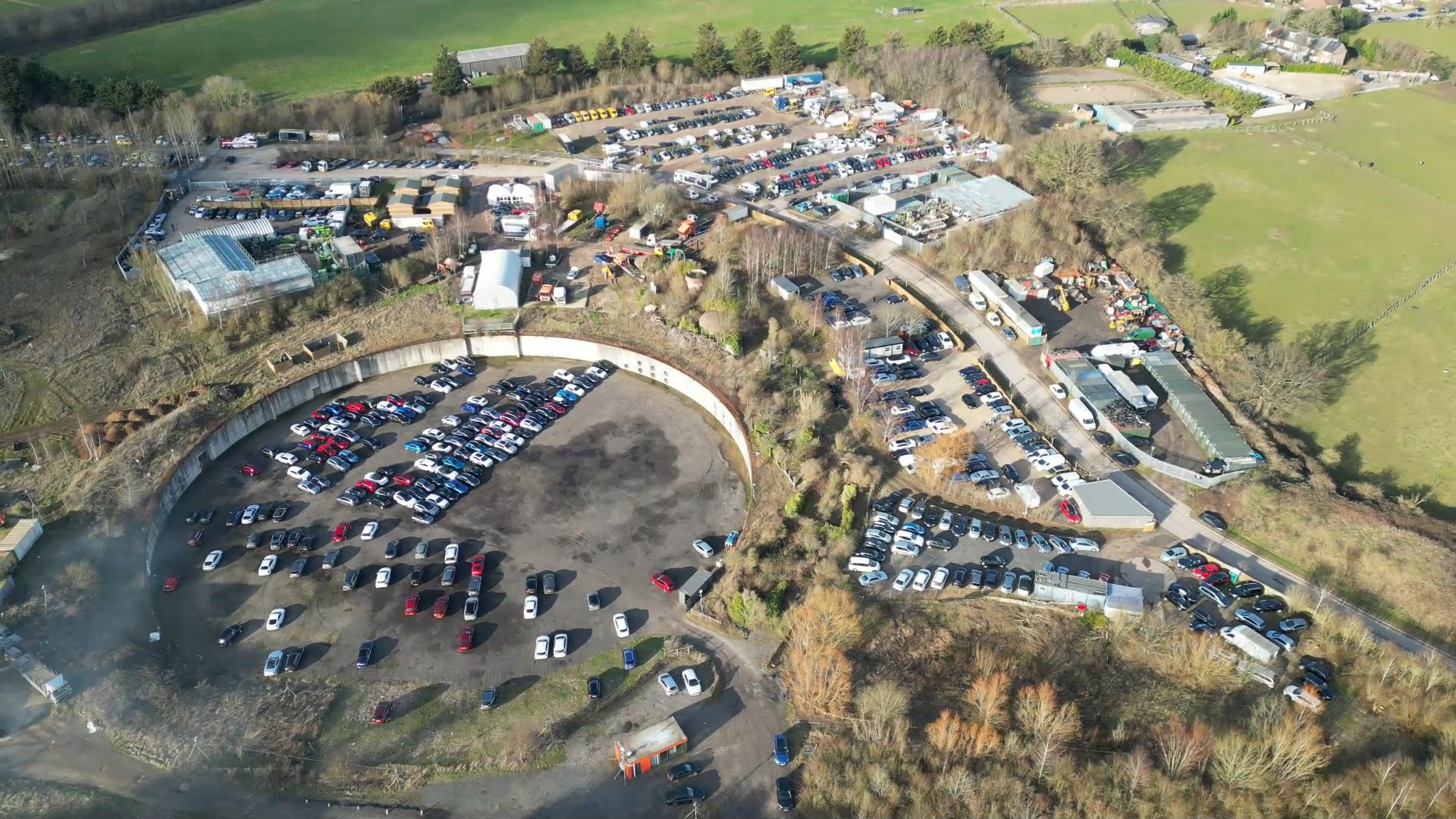
The former tourist attraction has been used as a car storage facility since it closed in 2015, but it was hoped planning enforcement measures would result in the land being cleared and restored to its former condition.
Planning permission for Butterfly World was only granted on the condition that the site was used for horticulture, horticultural training, research, butterfly keeping and for visits by the public, and should the venue close it was supposed to be restored to its original state.
But the 27-acre Green Belt location is now rammed with diggers, recovery trucks and hundreds of cars alongside other semi-permanent structures.
As previously revealed in the St Albans Times, a company called Convene Construction applied to have the adjoining land excluded from the Green Belt under the SADC Local Plan Examination in December 2019, but this was rejected by the council.
SADC served two enforcement notices on the site on October 21 2022, which included the requirements for the land to no longer be used for storing vehicles, for the removal of all temporary buildings, fencing and hard surfaces, and the clearance of all materials and waste.
Appeals against the notices by a company called Bud Rescue and Recovery were rejected and the enforcement action upheld with some minor amendments, but the terms gave a nine-month period in which the site must be cleared, restricting SADC from taking any action until June.
But following a fresh appeal to the High Court, conditional planning has now been agreed for the site, even though the planning inspector agreed it caused significant harm to the openness of the Green Belt – albeit not substantial harm.
Conditions include a landscaping and planting scheme, no activity between 9pm and 7am save for the delivery of recovered vehicles by the police and Bud Rescue and Recovery, and a prohibition of any residential use.
It is arguably the result of the Government’s new “grey belt” designation for Green Belt development, which was meant to help turn the likes of disused car parks and petrol stations into housing, but has now been adopted to transform a valuable wildlife area into little more than a car storage site.
The decision has been met with condemnation in the local community.
Malcolm Hull, chair of Herts and Middlesex branch of Butterfly Conservation, said: “We need homes for wildlife, as well as homes for people – with proper planning there’s plenty of room for both.
“The wildflower meadows at Butterfly World are home to a fantastic range of species, including the rare Small Blue. This decision threatens the continued existence of the best Small Blue site in the county.
“Neither the Government, St Albans Council or the Planning Inspectorate come out of this with any credit. They have not taken any notice of the needs of wildlife and refused to allow an appropriate opportunity for public comment.”
Neighbouring resident Janet Ryan said: “This should be shocking, but sadly it isn’t. Developers have always played the long game, and with a sluggish local council and uninterested councillors that failed to act decisively years ago, this outcome felt inevitable.
“Add to that a Labour Government seemingly waving through planning applications with little resistance, and it’s no surprise the appeal was upheld. It’s disappointing – but entirely predictable.”
SADC strategic director for community and place delivery, Chris Traill, responded to the decision: “We know that many of our residents in Chiswell Green will be disappointed by the Inspector’s ruling.
“Our legal team will examine the ruling in detail to see if there are grounds for contesting it through a Judicial Review.
“However, we will only undertake a Judicial Review if there is a strong case as it is potentially very costly and we could find ourselves liable for the applicant’s legal costs as well as our own.
“The inspector’s ruling makes no criticism of the council’s actions and hinges on a recent change to national planning policies, a factor outside of our control.
“It is accepted that change of use of this site and the addition of new structures were initially undertaken without the necessary planning permissions.
“We were correct to issue enforcement notices in 2022, requiring the cessation of these commercial activities and the removal of the structures.
“An appeal against those notices was dismissed by another planning inspector last year.
“However, the appellant successfully brought a legal challenge to the original appeal decision and the appeal was returned to the Planning Inspectorate to be determined again.
“The inspector on this occasion has upheld the appeal as a result of the change last year to national planning policies.
“This change meant that to refuse planning permissions, he had to be convinced the development would cause substantial harm to the openness of Green Belt. The previous test was whether the development would result in a greater impact on the openness of the Green Belt than the existing development.
“The inspector’s judgement is that the harm would be significant but not substantial and so he has upheld the appeal.
“He has imposed some conditions, prohibiting any residential development and most activity between 9pm and 7am. There is also a requirement to landscape.
“We will, of course, look to ensure these conditions are complied with.”
