13 Jan 2024
How can family-run businesses navigate the tax maze and implement financial efficiencies, while also incorporating a robust succession plan? Martin Cotter, Managing Director of Lumin Wealth, shares some tips.
With so much time spent on running the business in the day-to-day, family businesses often don’t take a step back and consider the tax efficiencies of effective financial planning (which larger companies consistently benefit from).
In this article I’ve highlighted some tax-saving measures that small business owners could consider implementing.
Pay structure and tax efficiency
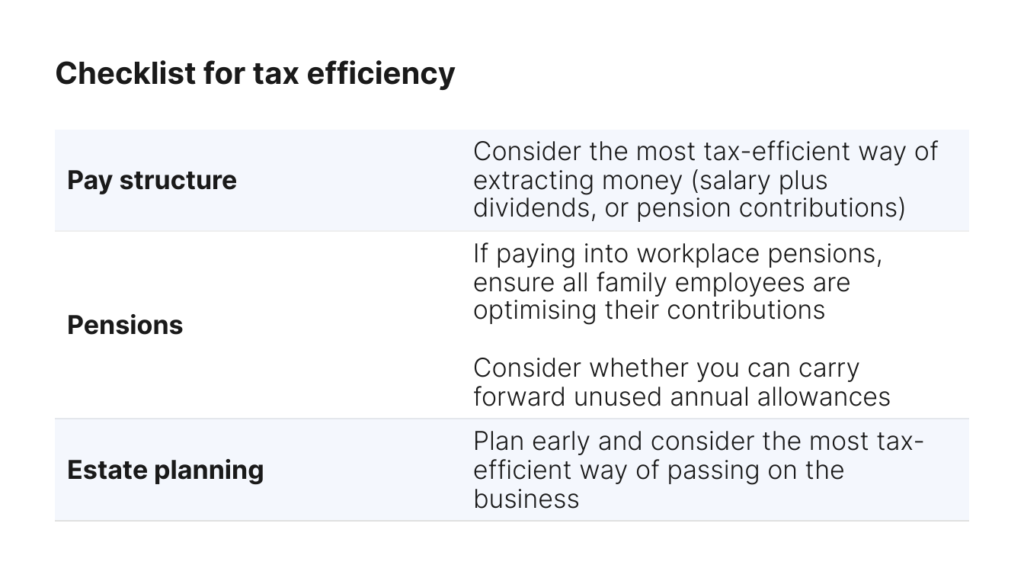
Many directors of limited companies pay themselves a small director’s salary, allowing them to build up qualifying years for their State Pension, but keep National Insurance
Contributions low. They typically draw the rest of the money in the form of dividends, which are paid out of a company’s profits after corporation tax has been deducted. However dividend tax rates are currently high, with higher and additional rate taxpayers paying tax at 33.75% and 39.35% respectively. This approach also means your pension contributions are limited, as they can’t exceed your annual salary for the tax year.
Tip: If a company is generating substantial profits then employer pension contributions can be a very tax-efficient way of paying yourself, as well as family members who work with you.
Making regular contributions into pensions
Pension contributions made via the company (as opposed to personal contributions) can lead to significant tax savings.
Employer pension contributions are considered to be an allowable business expense, so they can usually be offset against corporation tax subject to meeting the’ wholly and exclusively’ tests.
Employers also don’t have to pay National Insurance on pension contributions.
UK adults can now pay up to £60,000 into a pension annually, but a larger sum could be contributed if you have unused annual allowances from previous tax years.
Paying into pensions also provides a valuable financial buffer if the business were to struggle or fail, as workplace pensions do not form part of a company’s assets.
Tip: If your business is generating substantial cash profits, and if adult children are also involved in running the business, they could also benefit from tax savings by making pension contributions via the company, while building up their own retirement pot(s).
Succession planning
If younger family members have the appetite – and skills – to run the business then there are various ways to pass on a small business tax-efficiently. Gifting the business – or your
shares in it – to children is one option, as after the seven-year window these assets are outside of your estate for inheritance tax purposes.
Tip: If your company qualifies for Business Relief then you may be able to pass it on to descendants without a tax charge. Early planning is advised.
Expert financial planning can help small business owners reduce their tax burden, boost retirement outcomes and ensure the right legacy for loved ones. Call 03300 564 446 to find out more, or get in touch using our contact form.