24 Dec 2023
On Christmas Eve the BBC will show the latest ‘Ghost Story for Christmas’. This is a long-established tradition and, in the past, has featured the tales of arguably literature’s greatest ghost story writer – M. R James who based many of his stories in East Anglia. This year it is different. The ghost story is by Arthur Conan Doyle, the creator of Sherlock Holmes, and is called Lot No. 249.
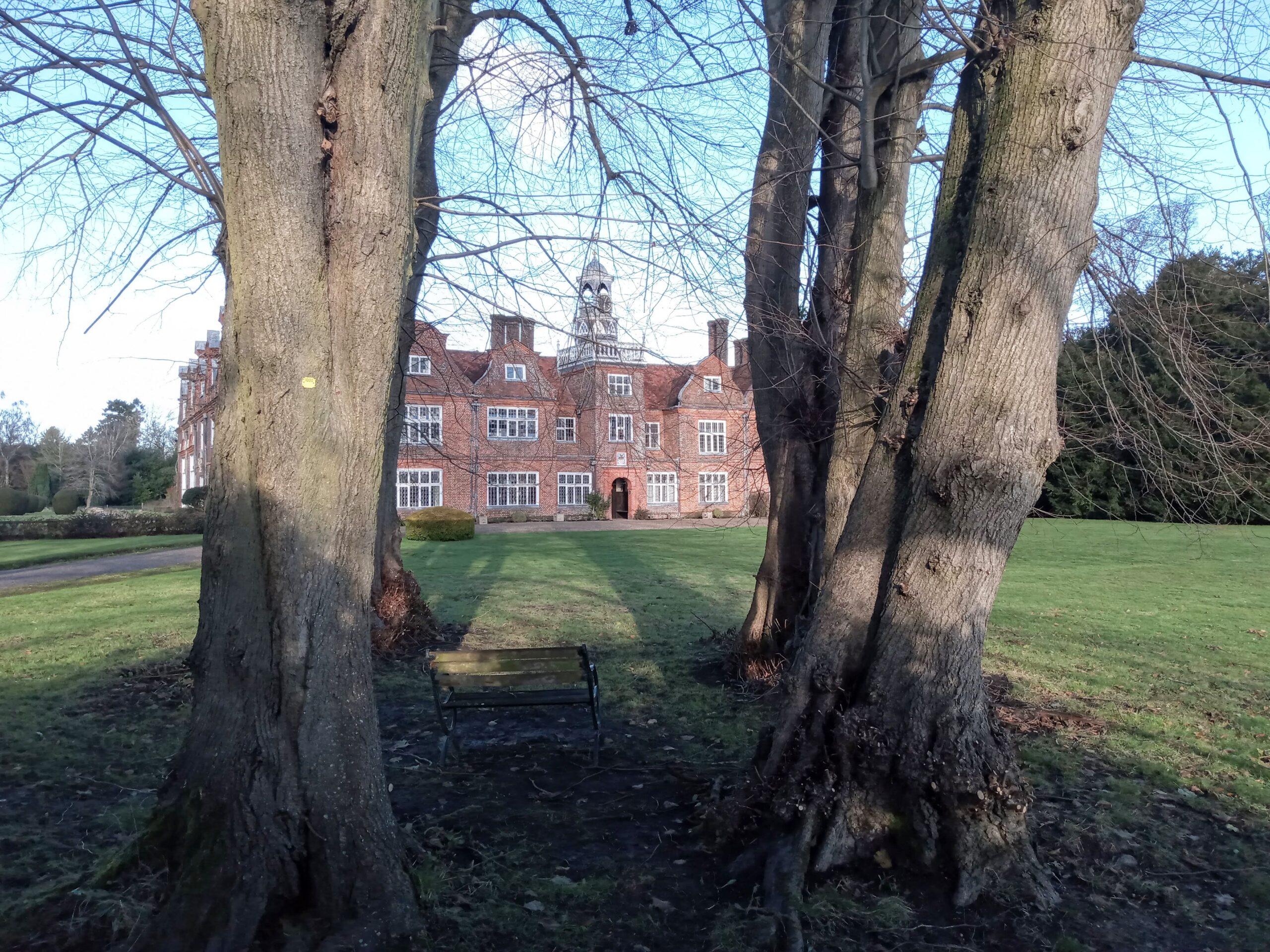
Although set in an Oxford College it was actually shot over five days at Rothamsted Manor. In this article Dr John Morewood, President of St Albans and Hertfordshire Architectural and Archaeological Society and a St Albans City and District Tour Guide looks at the enduring popularity of ghost stories, what ghostly doings occurred in St Albans, and how you can enjoy them…
Traditionally, in the absence of other forms of entertainment, our ancestors would while away the long dark evenings by telling each other stories. Ghost stories became very popular.
The earliest ghost story, Khonsuemheb and the Ghost, has been dated to Ancient Egypt 1292-1077 BC. Ghosts feature in the works of Homer and Roman authors such as Plautus and Seneca. Many occur in Shakespeare’s plays – Hamlet and Macbeth are great examples- and in The Winter’s Tale the young prince Mamillius starts to tell a ghost story to frighten the young ladies of the Court: ‘there was a man who dwelt by a churchyard’.

Let us not forget the ghosts in Charles Dickens’ A Christmas Carol or in the novels of Sir Walter Scott. The popularity of ghost stories grew in the short story form from the 1870s onwards. Nor were their authors always people you would associate with the genre. The leading medievalist scholar Montague Rhodes James defined the genre – something bad always
happens to people who are just a bit too curious for their own good, particularly if they are of an intellectual persuasion. And M. R. James as the leading medievalist at Cambridge University would appear to fit the bill.
But James as Provost of King’s College Cambridge, Vice-Chancellor of Cambridge University and appointed, at the express instructions of King George V, to be Provost of Eton College was no slouch.
Sir Arthur Conan Doyle may be best remembered as the creator of Sherlock Holmes but his ghost story – the Captain of the Polestar – perhaps based on his own experiences in the Arctic – is heart-rending.
Both H.G. Wells – famous for his science fiction writing such as The War of the Worlds – and his mistress and later wife Catherine wrote ghost stories. The acclaimed American writer Shirley Jackson wrote ‘The Visit’ in 1952 which is so cleverly written you don’t recognise it is a ghost story until the final pages.
Nor was it just a case of celebrated authors trying their hand at the genre.
The BBC’s establishment of a ‘Ghost Story for Christmas’ had household names queuing to play a part – Christopher Lee, Denholm Elliott, John Hurt, Robert Hardy and in more recent times Frances Barber, Simon Callow, Una Stubbs and Rory Kinnear all have starred.
This year’s production is no exception and Lot No. 249 stars Kit Harington, who everyone will remember as Jon Snow in fantasy show Game of Thrones.
There is something definitely attractive about ghost stories and in many parts of the UK you can go on a ghost walk. St Albans is no different with ghost walks provided by the excellent St Albans Tour Guides.
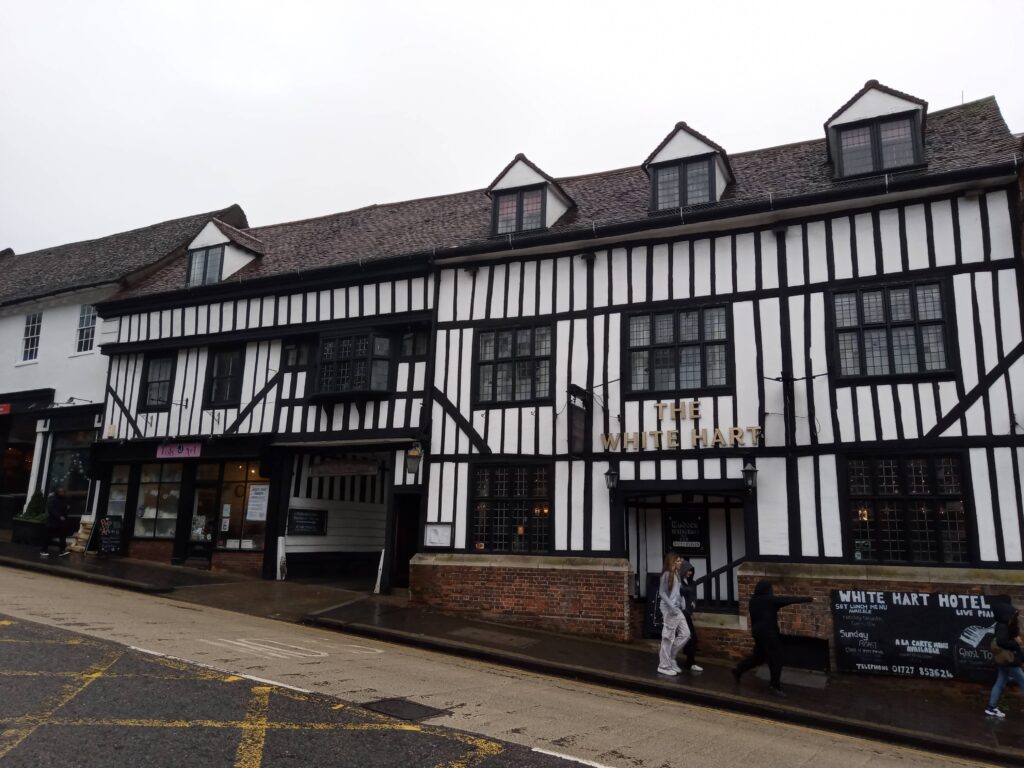
The White Hart on Holywell Hill is reputed to be England’s most haunted inn. Its ghosts include the unfortunate Elizabeth Wilson whose death, while she was on the
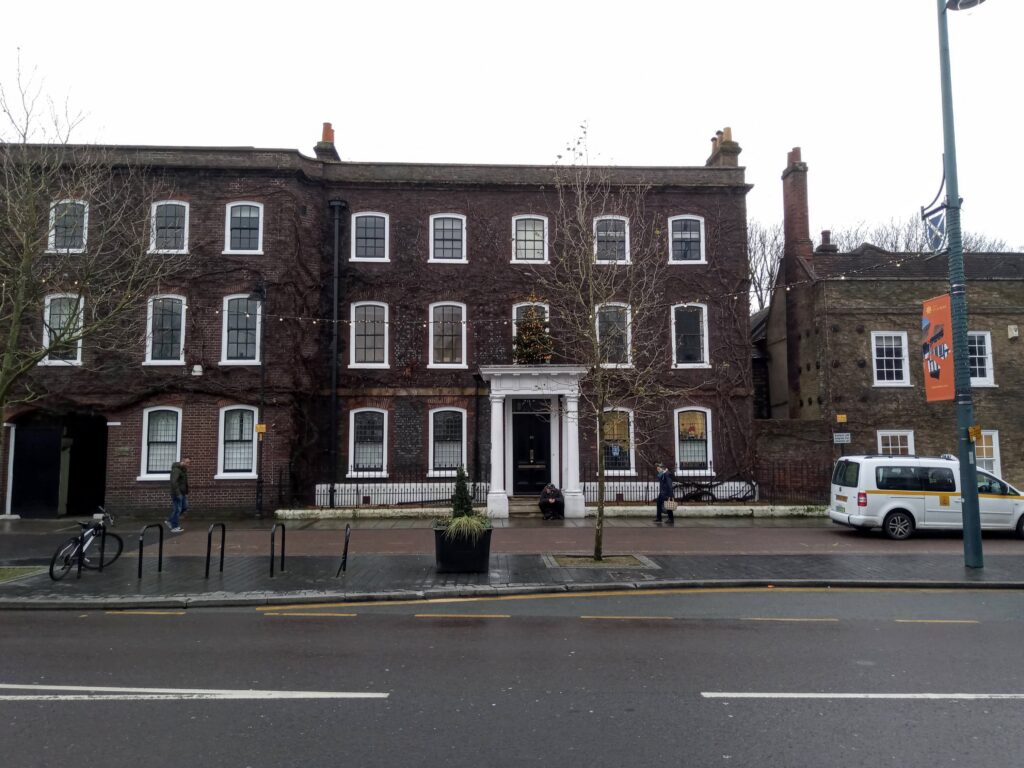
Northampton Coach entering the inn yard and failing to lower her head in time, is immortalised in Charles Dickens’ The Pickwick Papers. Specsavers in Market Place hosts the ghost of a young boy called Charlie. In St Peter’s Street you will find Mallinson House with its ghost of a butler who committed suicide there whilst St Albans’ new venue The Saint & Sinner houses the ghost of the unfortunate Dorothy Osborn abused by her husband, a mayor’s son – perhaps the original saint and sinner.
Who knows, you may visit Romeland. There was an exorcism of a ghost here in one of the houses in 1904.
The guides also run tours of Haunted Harpenden.
It may seem hard to account for the popularity of ghost stories. In the 18th and 19th century smugglers devised such stories to scare gullible people away from ruins where they had hidden their contraband.
The famous ghostly drummer of Herstmonceux Castle in East Sussex was simply one of the smugglers wearing a cast-off uniform covered in phosphorus who walked the battlements beating a drum.
The Norfolk legend of the hellish creature Old Shuck was taken over by smugglers who tied a lantern around the neck of a black ram and let it loose to deter villagers from the places where they landed contraband.
Now the stories have a less sinister purpose.
Some may well be based on people’s actual experiences – the learned M. R. James when asked whether he believed in ghosts stated: “I am prepared to consider evidence and accept it if it satisfies me.”
There does seem to be a human pleasure in being scared but being so in a safe environment where the rationale for the fear is explained in the form of a ghost story. For the alternative is much worse as H.G Wells’ sceptical hero found in The Red Room: “There is no ghost there at all; but worse, far worse – the worst of all the things that haunt- Fear! Fear that will not have light nor sound, that will not bear with reason, that deafens and darkens and overwhelms.” Happy Christmas!
For the ghost walks offered by City and District of St Albans Tour Guides see https://www.stalbanstourguides.co.uk/