10 Dec 2023
It seems like a simple mistake to make, pouring the fat from your Sunday roast into the sink or tipping some dirty engine oil down the drain, but would you really do the same if you knew it was likely to contaminate one of St Albans’ precious natural gems?
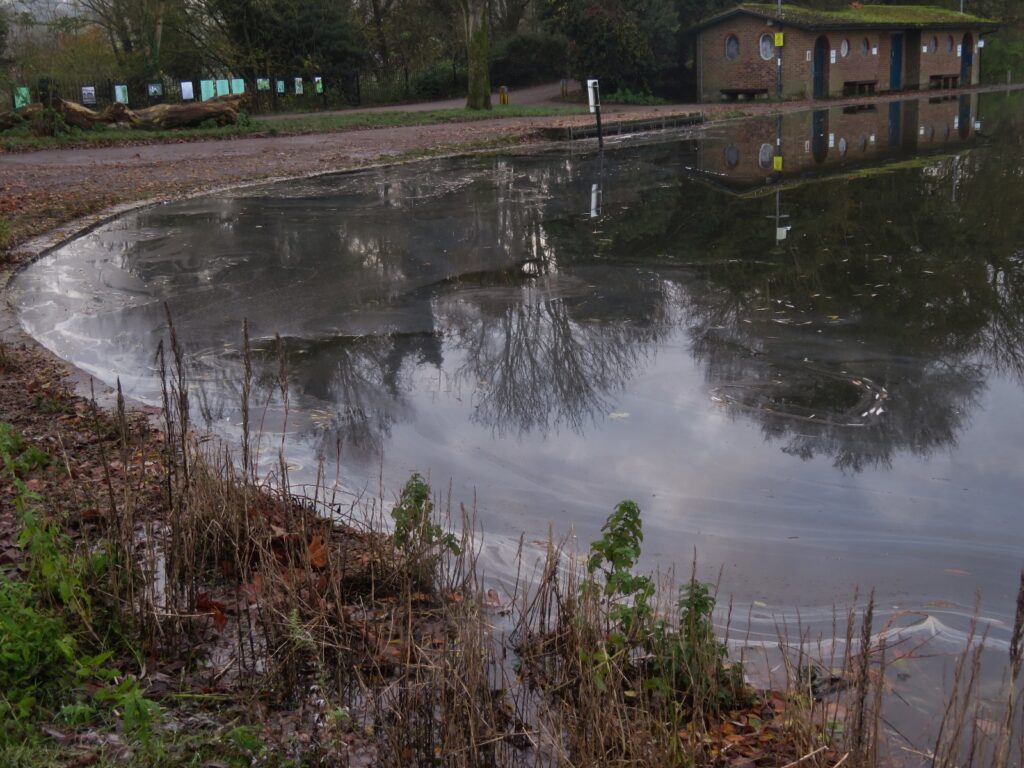
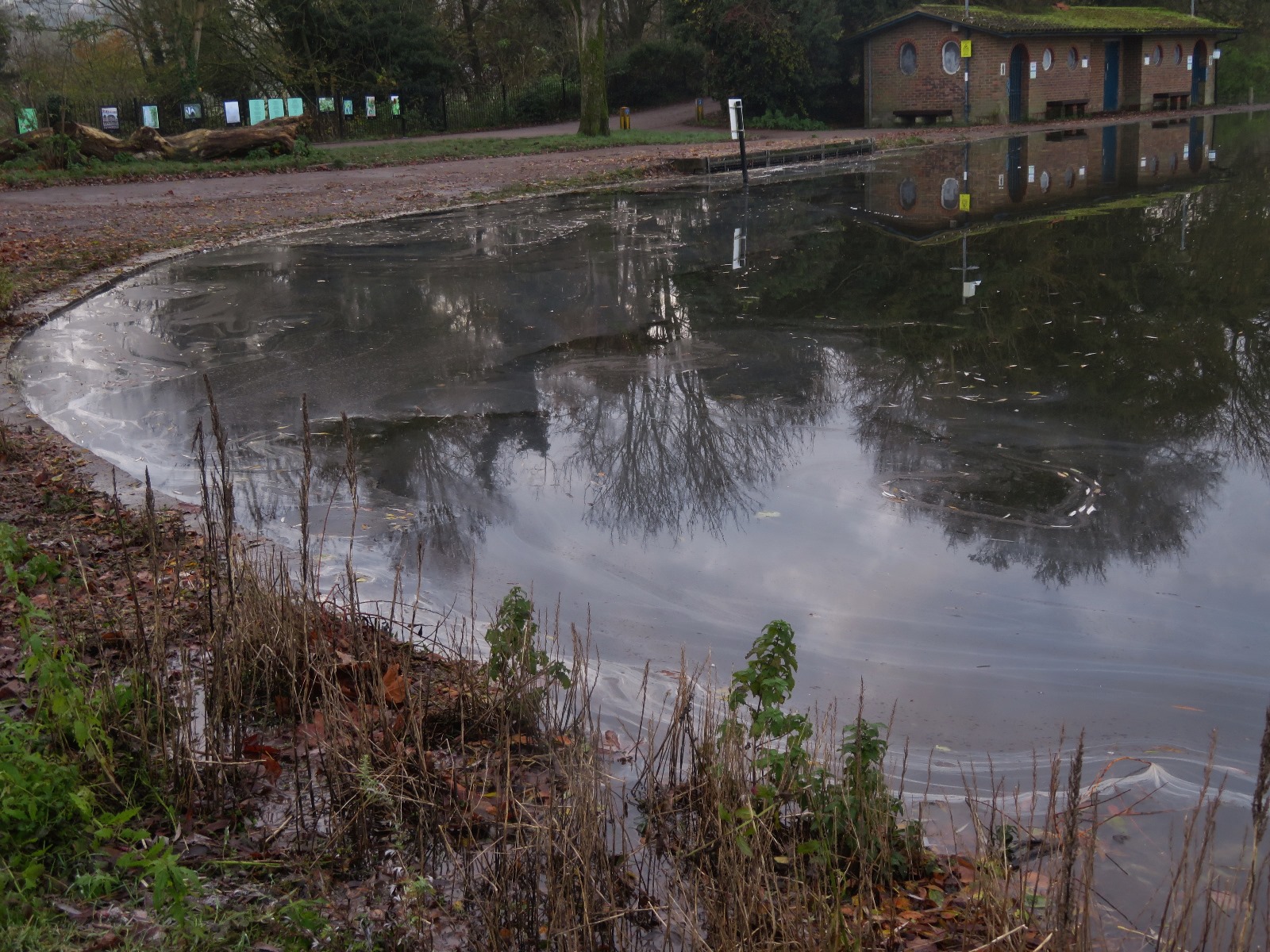
Recent sightings of an oily film on the surface of rare chalk stream the River Ver and Verulamium Lake may have been caused by a contaminant being dumped into the sewage system in the surrounding area.
The source of the oil was traced back as far as the mill stream behind the Waffle House, where water goes over a spillway and rejoins the natural course of the river. Because the oil was on the surface, when it reached the high water of the boating lake it was drawn into the main lake as well.
Thames Water and the Environment Agency were both involved in tackling the oil, with the water company installing a boom where the river flows into the boating lake to catch the substance.
Ver Valley Society chair John Pritchard suggested one possible origin for the oil: “It’s a big secret that the whole of the Batchwood Estate storm drain runs into the mill stream at the Waffle House.
“So every time it rains, the water from the whole estate as far up as the King William IV pub runs in there, and often there is more water in the drain than there is in the Ver. So it then runs into the mill stream and makes its way to the Ver.
“So it’s possible that somebody tipped oil into the drain somewhere on the Batchwood Estate and it’s made its way into the river. It could also be coming from somewhere more local in the millstream, but that would be the smart move.
“It now has to run its course, because as far as the lake’s concerned, at the moment it’s a thin film. It’s nasty, it’s hot helpful, but it’s probably not doing any huge ecological damage. There’s no dead or dying wildlife as far as anyone’s seen.
“So in the grand scheme of things it’s dramatic but it’s not a critical event. It doesn’t mean one shouldn’t try and find a source and clean it up and you don’t want a repetition if it’s somebody doing something they shouldn’t or something’s broken.
“If anyone sees pollution like this, the thing to do is phone the Environment Agency pollution hotline, which is 0800 80 70 60, and then they can decide whether to come out and investigate or they can ask the water company to do so.”
John said the Batchwood Estate storm drain was probably built in the 1940s or ‘50s before the estate itself in the 1950s, and is probably no longer working as well as it should.
“The storm tanks are probably small, and nothing’s done to delay the water getting in there, so it pulls crud straight off the road and sends it into the River Ver. That’s a hugely expensive problem to solve and no-one wants to pay for it, but it could explain why the chalk stream isn’t as good as we’d like it to be.
“The Environment Agency, despite our protestations, weren’t prepared to take that flow into account as part of their solution to the park. You can do all you like to improve the conditions in Verulamium Park but if disgusting water is being pumped in from just outside the park you know it’s 10 points off your dream scheme don’t you?
“So there’s a wider issue here of addressing road run-off and also making people aware – not just on the Batchwood Estate but also other parts of St Albans – that what they do in their street does actually affect the river even though they seem to be remote from it.
“We’re now looking to take some water samples to carry out lab analysis and take some more pictures to compare to the ones we’ve already got from a couple of years ago to show how disgusting it is. Then that usually focuses people’s attention.”
Thames Water responded as soon as they were aware of the situation. A spokesperson said: “A surface water outfall pipe near St Michael’s Bridge had discharged fats and greases into the River Ver. Investigations into the source of the fats and grease are ongoing. We’ve been supporting by placing booms in the river to help stop it spreading and mitigate its impact.”