11 Nov 2026
Lesley Cowland is at the Abbey Theatre for four new plays produced by the Company of Ten Writers Group…
It was a worthwhile innovation for the Abbey Theatre to give The Company of Ten Writers Group the chance to stage four of their plays in the studio. Each of four performances were either sold out or very well attended, which suggests that audiences are ready to see new material from different writers. Staging these plays in the studio was an excellent choice; with very little scenery and the close proximity of the audience to the players it created an intimate space to share the stories being unfolded.
Come in No 8
By Marc Harris, directed by Beverly Hyman
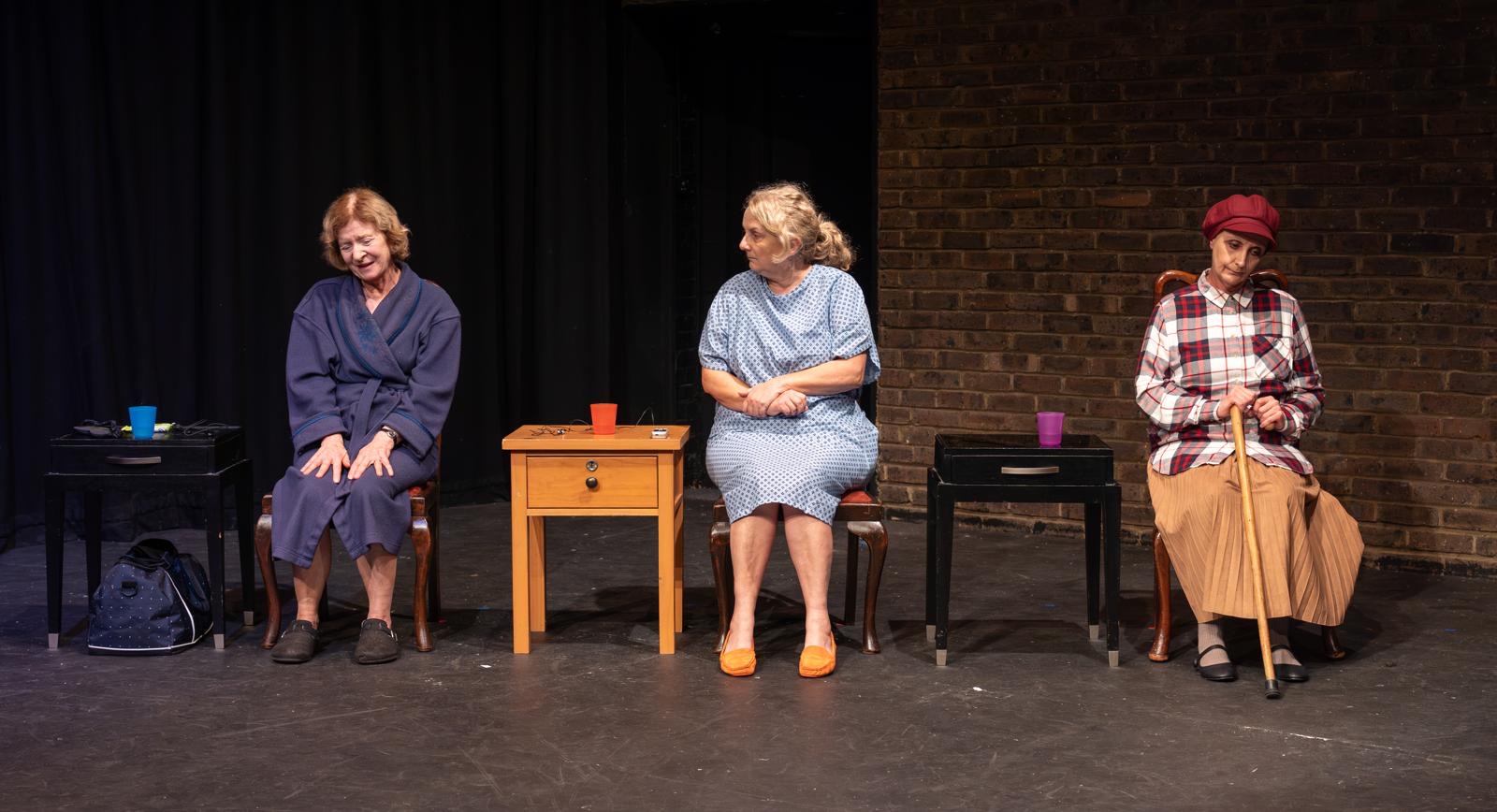
A poignant story set in a hospital geriatric ward where a new patient joins two others who have been there for some time.
The stage set was well thought out: three chairs with a small side table next to each one instantly suggested a hospital ward. A great idea as beds take up room and necessitate the actors climbing on and off.
From the upper-class accent to the fluffy dressing gown Margie Skinner created Barbara, the newcomer to the ward. Clearly a lady who knows her place in the world but has never been in hospital before so is, naturally, frightened and not too keen to make friends.
Beverley Robley portrayed Judith, with a nicely grounded working-class persona, a pleasant lady who has been on the ward for some time with various medical needs. She does her best to befriend Barbara, which doesn’t go well until they find a common ground which unites them.
Then there is poor Charlie, christened by Barbara as ‘Come in No 8‘ because she is in bed No 8. Charlie is in a world of her own. She clearly has some form of dementia and takes very little notice of the other two women.
Throughout the play Shelley Bacall gave a realistic performance of a dementia patient, staring at nothing, rocking her body and keeping a monotone voice.
The play highlighted the plight of older people, particularly those with mental health problems, who get forgotten and abandoned in the wrong place. Well written and directed it created an uplifting play with laughter, friendship and hope.
Ready to Go
By Becky and Polly Alexander, directed by Maureen Bukht
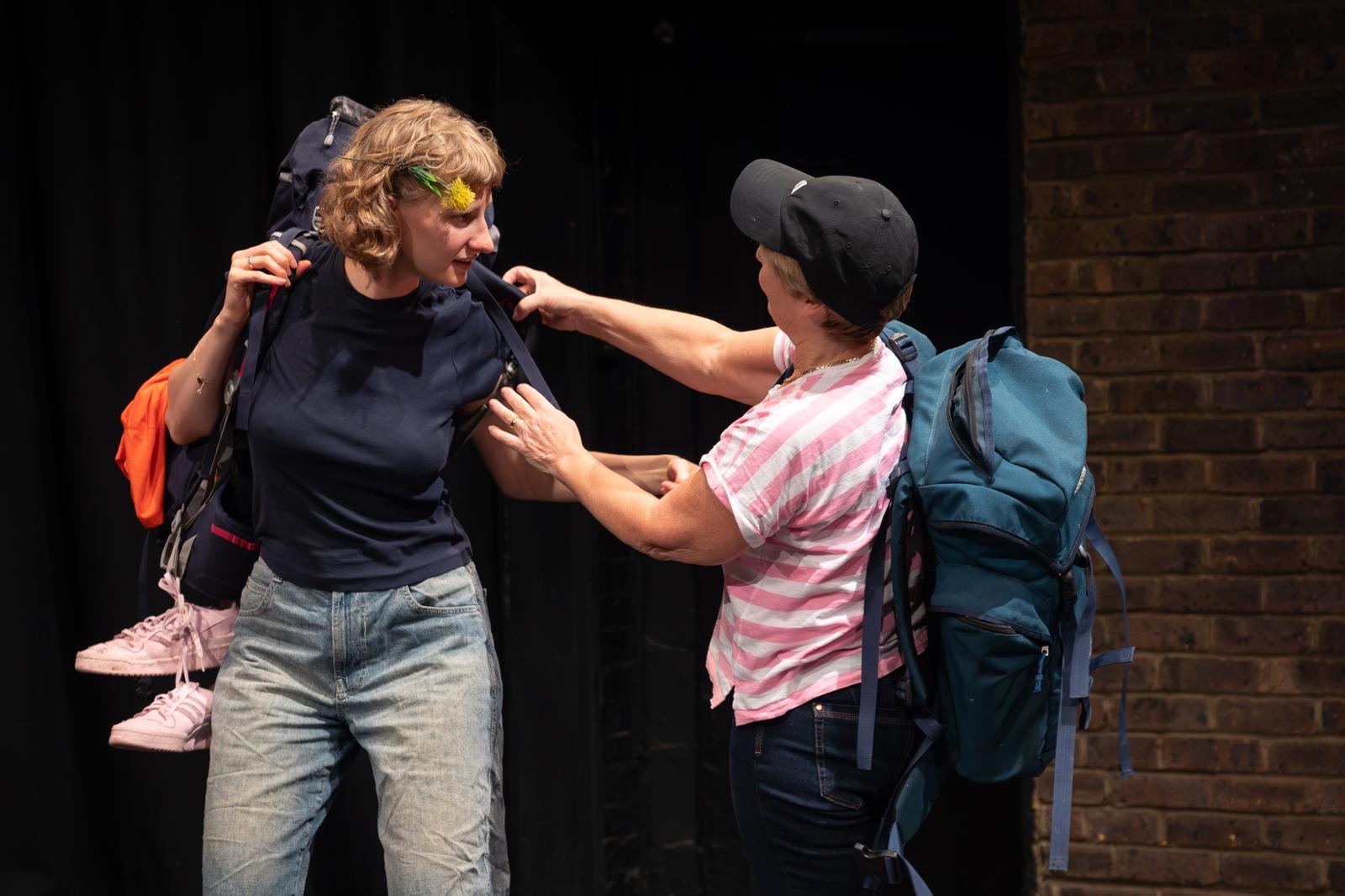
What happens when your only daughter is getting ready to go to university? For this mum, who just happens to be a huge fan of ‘Race Across the World’, you go on a hitch-hiking trip to Italy.
On a blank stage the two large rucksacks, brought on by Mum and Daughter, certainly suggested they were in the middle of nowhere. The occasional passing vehicle noises, nicely reinforced that they were trying to hitch a lift to their next destination.
Mum played by Paula Jeffs is desperately trying to have a fun time with her somewhat stroppy daughter, Hatty Hardy.
There was a believable connection between the two characters. Paula kept the upbeat, happy chat going throughout even when it was met with hostility and teenage angst. Hatty kept up the typical teenage responses, sometimes just using facial expressions which were louder than words.
In addition to the naturalistic dialogue, each character had a monologue which added to their back story and expressed their inner feelings which was well directed.
Hatty realistically expressed the relationship difficulties she had had at school and the fear of being alone at university. Paula spoke from the heart worrying about her daughter and reminiscing about her husband and their life as a family. This piece was written by a real mother and daughter which explains why the relationship between the characters was very genuine.
Gerald
By Jane Fookes, directed by Deborah Heath
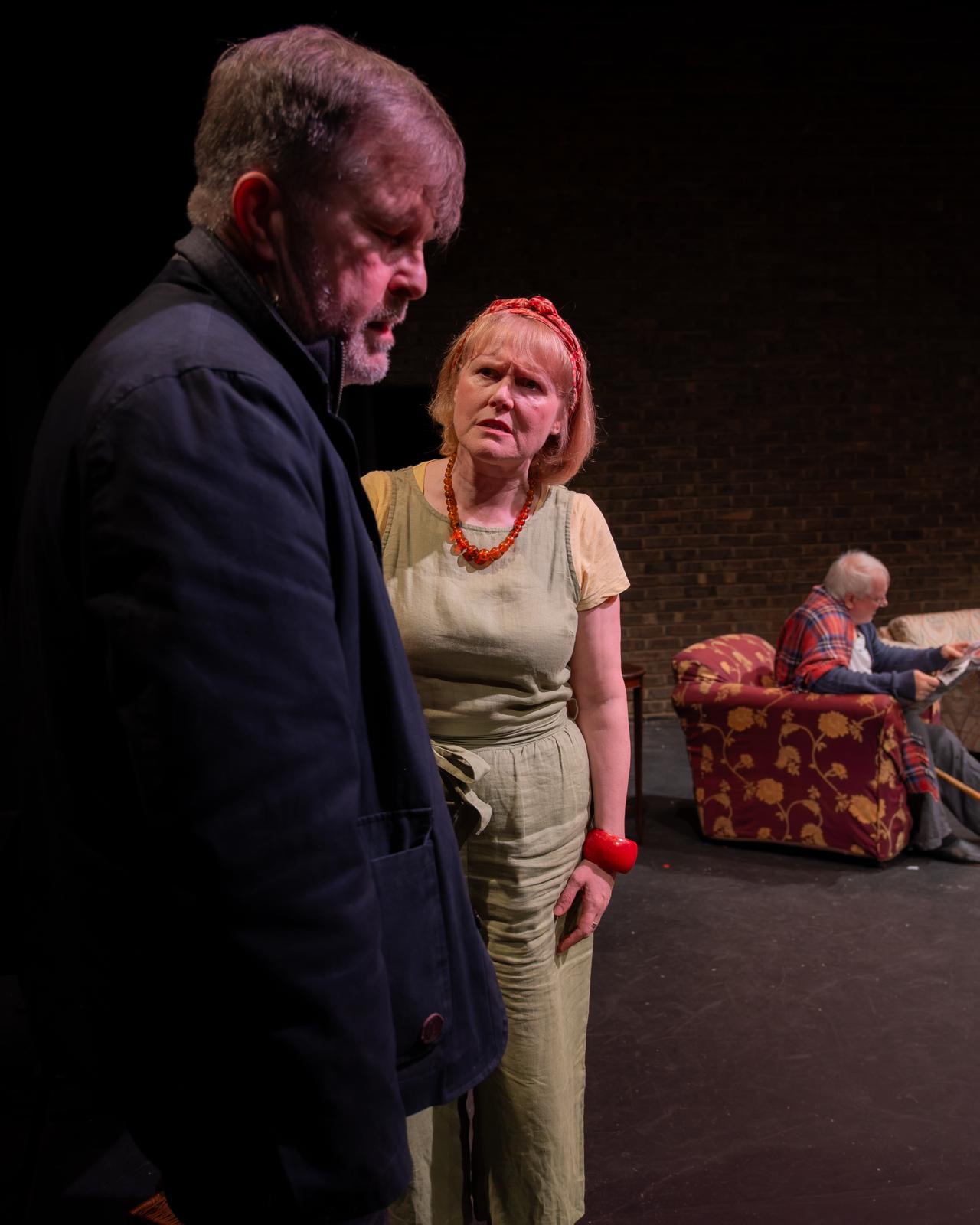
Gerald is a belligerent old man who lives alone. He doesn’t like visitors so is not very welcoming when his son, Adrian arrives on his doorstep with his girlfriend Mel. They are not welcome and the visit is not at all what Mel was expecting.
The action is set in a living room with armchair, sofa and occasional tables, all slightly scruffy, nicely reflecting the man who lives there.
Rory Byrne depicted a very cantankerous Gerald. The anger isn’t over done, but it is constant. There is a little gentleness when he talks to Mel, but that doesn’t last. The only time he really softens is when he talks about the spirit of a young girl he believes is looking after him all the time, her name is Serentity.
Adrian, played by Simon Gibson, was a great foil for Gerald. From the beginning it is clear he doesn’t want to be anywhere near his father and has only agreed to go because Mel wants to meet him. He does try to speak kindly, but soon stops and falls back on the normal frustration and irritation. Very good facial expressions and body language spoke louder than words.
Poor Mel, constantly called Margory, was the butt of Gerald’s rudeness. Alison Wright played a woman who was trying to bring these two warring men together.
She moved realistically from gentle compassion to deeply hurt and downright anger.
Her interaction with Adrian was nicely done encouraging him to be kind to his father and then realising how awful Gerald was, to actively wanting to leave the house.
The end of the play sees Mel revealing something about Serenity which angers Gerald to such an extent that she and Adrian flee the house in great distress.
Jane Fookes created three very rounded characters. The casting and the directing was extremely good.
Core Values
By Deborah Heath, directed by Tina Swain
Peta is struggling to make her Pilates classes financially sound and with so many new Pilates classes popping up she has decided to start a new Early Morning Stretch class. However this isn’t a play about Pilates, but about the people who turn up for this new class.
Peta, played by Jenny Kilcast, is a generous soul but this isn’t going to help her business survive. Jenny clearly does Pilates herself and looked very comfortable going through the moves. The exercises were nicely simple but realistically performed, both by Jenny and the other cast members.
Jules, played by Suzanne Brower is a client of Peta already. She has had a shock that morning which will affect her marriage. Suzanne showed genuine heartbreak when she blurted out what she had found in her husband’s pocket.
Smantha Thien portrayed Sarah as a strong, no-nonsense woman, wanting a free trial class, but this hard exterior collapses when she talks about her mother’s dementia and the problems she is having with care funding.
Rosemary, played by Linda Vincent, was very convincing in her role of friendly newcomer and managed her developing story line very well.
Then there is Ed who has been sent to the class by his wife to try and get him fit after an accident at work. Mick Dawson was very funny in his role as the only man in the class, he did a great job with the exercises too.
They all have a life and their interaction with the other class members was beautifully written, acted and directed.