


16 Sep 2023
The decision to rescind certain road closure measures in St Albans city centre and implement a third phase of the pedestrianisation experiment has met with mixed reactions from retailers, councillors and residents alike.
The trials are a joint initiative between SADC, St Albans BID and HCC, with monitoring and evaluation taking place since October to help evaluate the current arrangements.
These will continue during the next phase of the trial to help evaluate any further changes.
In the wake of statements by HCC relating to traffic movements and air pollution levels, the St Albans Times requested further data to back up these decisions.
In their response, comparisons are made between Phase 1 of the trial (Market Street only closed to traffic) and Phase 2 (Market Street, George Street and High Street weekends), and based on average daily traffic counts.
Traffic levels in Folly Lane, Catherine Street and King Harry Lane all saw an increase during the trial, while the Peahen junction reported a marked decline.
Throughout the course of the trial HCC provided interim draft reports to the St Albans High Street Recovery Board which summarised their findings, but some of the information is still in the process of review by their data team.
An HCC spokesperson said: “Weekday traffic flows (when High Street is open to traffic) at the automatic traffic counter at Folly Lane/Catherine Street has increased 5%.
“Saturday traffic flows at the automatic traffic counter at Folly Lane/Catherine Street has increased 28.6%. Weekday traffic flows at King Harry Lane has increased 4.8%. Saturday traffic flows at King Harry Lane has increased 12.8%.
“Weekday traffic flows through The Peahen Junction on Holywell Hill, which is an air quality management area, have decreased by 39% with a Saturday decrease of 35%.
“We are awaiting the formal monitoring data but it is likely the decrease in vehicle numbers should lead to an improvement in air quality. We will continue to monitor this as the trial progresses.
“The increases above have occurred between last year (Phase 1) and this year (Phase 2). Overall across the county we have seen an uplift in traffic flows as people venture out more post-pandemic so general increases are to be expected. However they remain slightly lower than pre-pandemic levels.”
When it came to monitoring air pollution, three air quality sensors were installed in February 2023 at Holywell Hill, Verulam Road and Folly Lane. Although they therefore did not provide pre-trial data, they were used to assess day-to-day variations. The Verulam Road sensor also developed a fault meaning it only provided data for March at that location.
The spokesperson said: “These sensors measure “Particulate Matter” or “PM” of various sizes and Nitrogen Dioxide (NO2). We have also been working with SADC using the St Albans “diffusion tube network” which measures Nitrogen Dioxide (NO2) for pre- and post-trial comparisons. At the time of the interim report data was available until March 2023. Air quality monitoring and sensor data is best used over a longer period of time to provide accurate information so we will be continuing to collect data for the months to come.”
No information was available about changes in revenues at city shopping centres.
The HCC spokesperson explained: “We presently not looking at any data capturing change in revenue in St Albans as part of our monitoring and evaluation plan as this is data that we are not generally privy to. We are investigating whether it is possible to obtain credit/debit card spending data for the area or investigating filed accounts via the Companies House website however we do not have the rights to access private or proprietary financial information regarding businesses in St Albans.
“We are monitoring footfall and dwell time (how many people come to the city and how long they stay for) through mobile phone data.”
One of the biggest concerns during the trial was whether the emergency services could adequately access patients in closed-off streets.
The St Albans Times reported several incidents including
the afternoon of Saturday June 10, when an ambulance attending an emergency call in George Street was unable to get past the closure barrier and was stuck outside Thai Square. Paramedics had to walk down the road with a stretcher to reach their patient.
Previously on May 27, a woman collapsed in Hobbs in Christopher Place suffering from a heart-related condition.
The ambulance called to the scene was faced with the closure of High Street, and paramedics were forced to park outside the HSBC bank in Chequer Street and continue on foot.
They were then unable to push her through the market on a stretcher, so they had to bring the ambulance around to the White Swan and transport her aboard.
But Herts county council has always refuted any suggestions that the road closures have hampered emergency services.
The spokesperson reiterated this assertion: “The emergency services have not reported any issues during the trial. We have regular liaison with the emergency services as part of the project’s management.”
Details of when the next phase of the trial is to be implemented were also confirmed following a lack of clarity on some aspects of the scheme.
“George Street will be reopened to traffic during the week and closed at weekends.
“The times and arrangements are yet to be finalised and will be done so in conjunction with the county councillor and stakeholders. In order to facilitate the weekend closure and cycling facilities the street will continue to operate one way from Verulam Road towards Romeland at the times it is open to traffic.
“High Street will remain fully open from Friday November 10 following the weekend of the St Albans Fireworks Spectacular.
“These timescales are to align with certain legal processes we need to go through and these will take a number of weeks to finalise.”
A report to SADC’s public realm committee revealed more details about the scheme.
According to officers, just 930 responses had been received to the project’s online feedback survey by July 21, a sample size regarded as statistically insignificant to produce an accurate opinion for the population of St Albans overall.
Of these, nearly half of the respondents (47%) wanted George Street and High Street reopened to motor vehicles, and although the majority of pedestrians and cyclists felt their journeys had improved and were supportive of the trials, most drivers felt their journeys had been made worse and wanted the roads reopened.
A business survey which formed part of the report revealed the High Street Recovery trials failed to gain the support of businesses in St Albans and initial expectations that some businesses may have held for the trials have not been met.
“The trials have not proved popular in their current format with St Albans businesses and have even led to some disappointment of some George Street traders who had higher expectations of the scheme,” it stated.
As part of the trials, a computer-generated image of potential permanent public realm improvements to George Street was created, but the report said securing funding for a permanent project was likely to be more challenging if road space was reallocated back to vehicle movement.
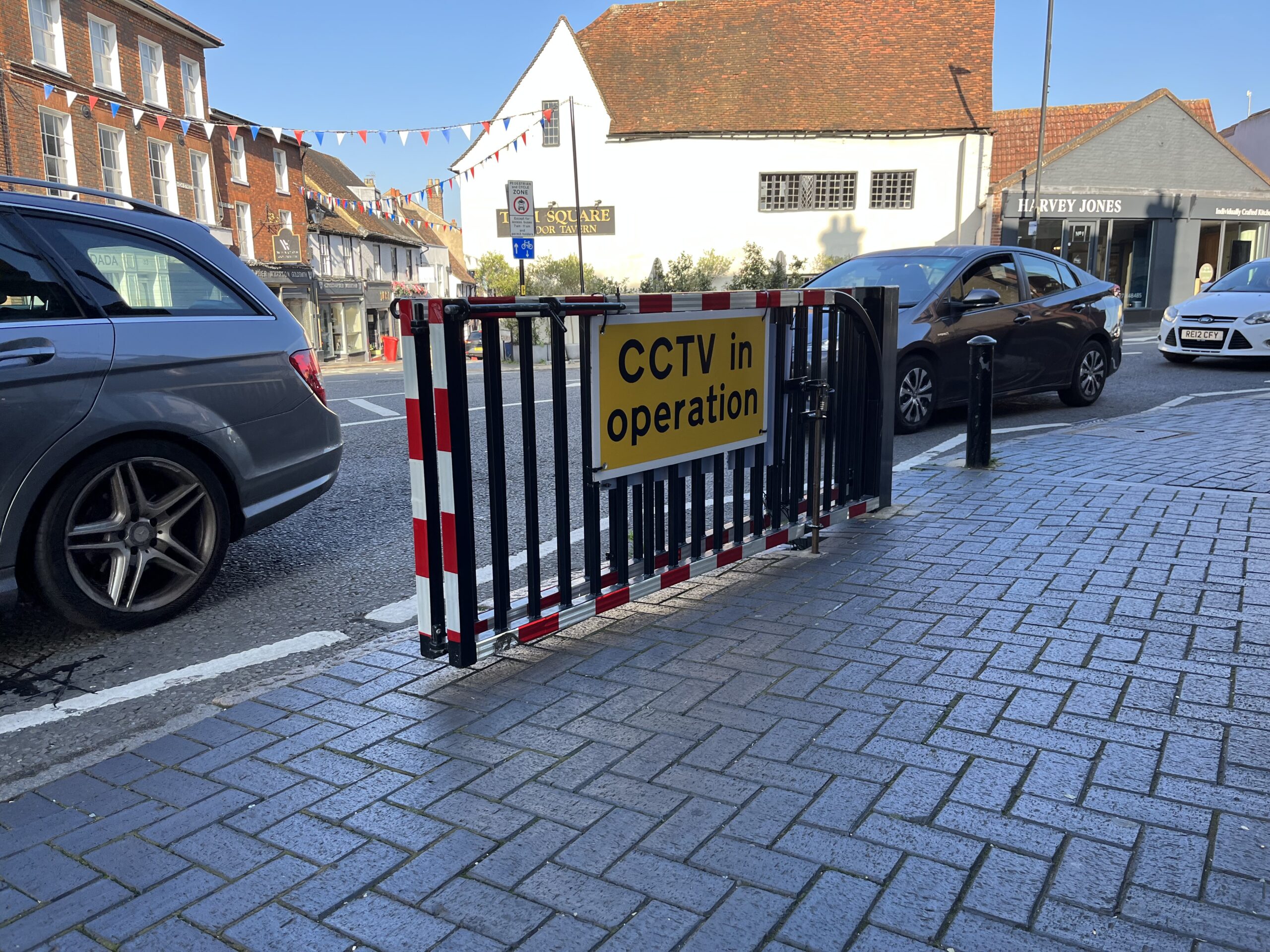
Should a decision be taken to make the George Street closure permanent, the project team would look at funding opportunities to replace the gates with automated alternatives, moving the lower gate to prevent obstructive parking, introducing new paving, street greening and other aesthetic enhancements, investigate automated traffic enforcement (not parking) and areas for further trees and places to stop and rest.
The report concluded: “The trial has failed to achieve buy-in via the public engagement survey or from business community respondents.
“A lack of on-street space activation has been frustrating for all parties. Road space reallocation is becoming increasingly political. Those opposed to the trials on the basis that they feel it disrupts car journeys may be emboldened…
“Based on all the evidence to date there appears to be little to support many of the concerns raised in the public and business surveys and we believe the trials have been a success and benefit the area.”
