


29 Sep 2026
Most of us think we know what happens during an eye test. You read a few letters. Cover one eye.
Cover the other. Answer the age-old question of “better… or worse?”
Then, hopefully, leave with a reassuring “See you in a couple of years.”
In reality, that’;s only a small part of the story.
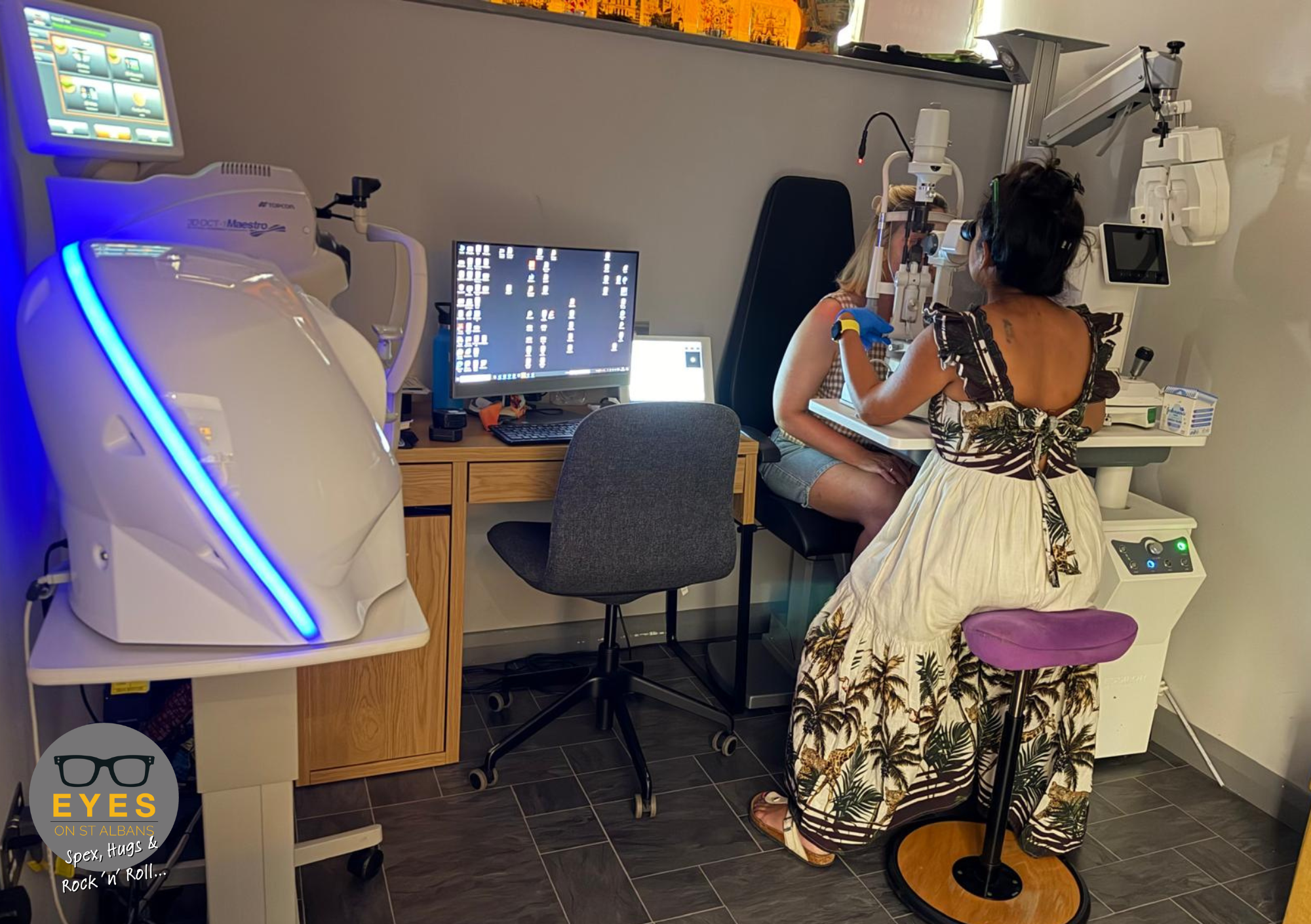
“When people come to see us, they’re often surprised by just how much we’re looking at,” says Jez Levy from EYES on St Albans. “An eye examination isn’t just about whether you need stronger glasses. It’s one of the most fascinating health checks you can have.”
That’s because your eyes are extraordinary.
They’re the only place in the body where an optometrist can directly see blood vessels, nerves and living tissue without surgery. It’s a unique window into your health, and one that’s quietly working away while you’re concentrating on reading the bottom line of the chart.
It also means an eye examination can reveal far more than many people realise.
“We’re checking the overall health of your eyes every time,” explains Jez. “We’re looking at how everything is working together, monitoring for changes and building up a picture over time. That’s why regular eye examinations are so important, even if you think your vision hasn’t changed.”
The key words there are “over time”.
Most eye conditions don’t suddenly appear overnight. They develop gradually, often with little or no obvious symptoms in the early stages. Having regular eye examinations means your optometrist isn’t just looking at your eyes today; they’re comparing today’s findings with
previous visits, making it much easier to spot subtle changes long before you would ever notice them yourself.
Sometimes those changes relate to common eye conditions such as glaucoma, cataracts or age-related macular degeneration.
Sometimes they can provide clues that suggest a conversation with your GP would be worthwhile.
And quite often…
Everything looks exactly as it should.
“Believe it or not, that’s our favourite outcome,” says Jez. “People sometimes think we’re disappointed if there’s nothing to report, but it’s exactly the opposite. Telling someone their eyes are healthy is one of the nicest conversations we have.”
At EYES on St Albans, every appointment lasts around an hour, giving plenty of time not only for a comprehensive examination but also to explain what’s happening and answer questions. It’s an approach that’s been there since the practice first opened, alongside a philosophy that many of the advanced tests other practices charge extra for should simply be part of looking after people’s eyes properly.
“We’ve always believed good eye care should just be good eye care,” says Jez. “People shouldn’t feel they’re choosing from a menu of optional extras when it comes to their
eyesight.”
As National Eye Health Week reminds us this September, looking after your eyes isn’t just about seeing clearly today. It’s about protecting your vision for the future.
After all, your eyes have been quietly looking after you every day of your life.
Perhaps it’s time to return the favour.
Spex, hugs and rock’n’roll.
