


11 Sep 2026
The president of St Albans’ leading archaeological organisation has expressed his concern over the lack of a proper investigation at the site of a major Roman road.
Professor Mark Freeman of St Albans & Hertfordshire Architectural & Archaeological Society (SAHAAS) is widely regarded as the city’s leading living historian. His book, St Albans: A History, has been hailed as the definitive account of more than two thousand years of the city’s story.
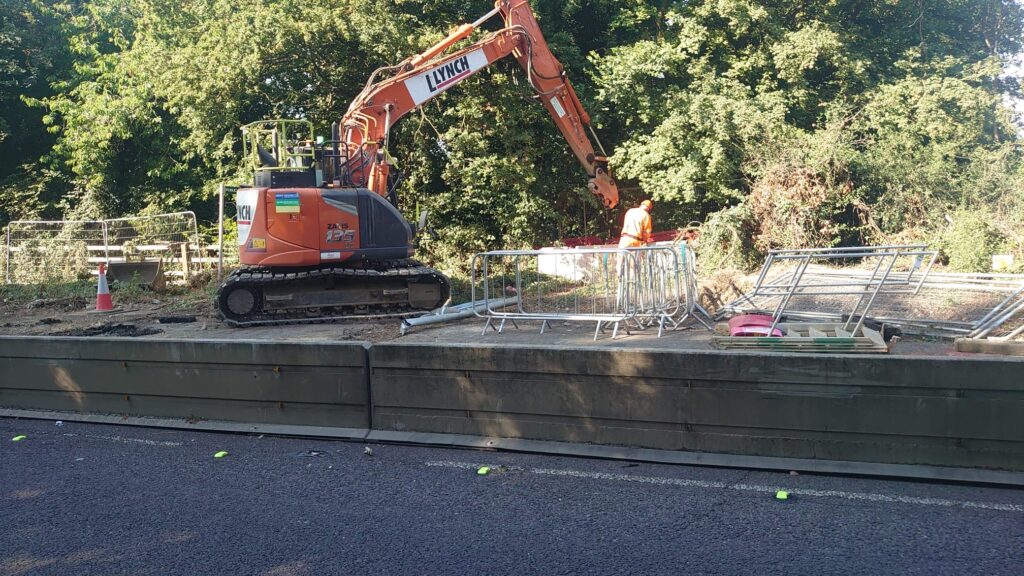
As first highlighted by the St Albans Times – and last week covered by BBC Three Counties Radio – intensive digging has been taking place at Park Street roundabout as part of the access requirements for developer SEGRO’s strategic rail freight depot.
But the A5183 is the route of the original Watling Street Roman road – perhaps the most important of its kind in Roman Britain – which exits the roundabout to the left of St Julian’s Hill where a new filter lane is being built.
Neither prior to the works beginning or while they have been underway, no archaeological assessment or effort to record and protect any historical remains has taken place, and any materials excavated from trenches dug at the site have been removed.

Professor Freeman said: “St Albans is unusually rich in the material remains of the past. Roman Verulamium is the best known of our archaeological treasures, but there are many others – ancient, medieval and modern.
“Preservation of important sites is important for its own sake, but also as an essential prerequisite for research in the future. Modern developments should always take into account possible disruption to places of historical and archaeological interest.
“Our society has campaigned for, and supported, archaeological and historical research in St Albans and beyond for almost 200 years, and we are always concerned by developments that may threaten the important, and in some cases unique, material elements of our past that we have in St Albans.
“SAHAAS are aware and share concerns that no archaeological assessment was undertaken on the Park Street roundabout prior to works starting in May. Because Roman Watling Street is known to pass through this roundabout and this area is known also to be a medieval farmstead, we would have hoped at least for an independent watching brief to be present to alert workmen of possible heritage interest during excavations.”
The original planning application for the development, which dates back to 2006, included an Historic Landscape Assessment of the former Radlett Aerodrome site which highlighted the proximity of Watling Street.
Key sections from the report stated: “Watling Street, the principal Roman road from London to Verulamium, runs north south just to the west of the site and forms its western boundary at the southern tip beside the M25. The road would have been a major focus point of settlement throughout the period. However, with the exception of the southeastern corner, it is considered unlikely that the study site contains any remains directly associated with Watling Street itself. It is conceivable that remains associated with the road may be present within the site margins…
“On the basis of the available evidence, the study site and its immediate environs appear to have been relatively intensively occupied and settled during the Roman periods… The lack of other visible archaeological features does not preclude the presence of as yet unrecorded remains within the study site.”
It appears that the outline planning permission for the rail freight project failed to stipulate an archaeological condition for the roundabout and associated works, in contravention of the National Planning Policy Framework, which states that planning authorities have a responsibility to make sure that any archaeology is properly recorded.
But once the scheme was signed off by former Secretary of State Eric Pickles in 2016, St Albans district council was entirely powerless to add any archaeological conditions at a later stage. This is because there is no process for correcting the error, even if it was in contravention of national planning policy.
However, Herts county council could arguably have done something about it.
Although highways authorities cannot introduce a new archaeological condition to a planning permission, they do possess absolute discretion over technical acceptance before executing a Section 278 agreement.
This was a legal contract under the Highways Act 1980 which involved major highway improvement works including deep drainage installations and footpath upgrades over an estimated 60-week construction timeline.
HCC chose to interpret their technical remit narrowly – focusing purely on traffic flow, signalisation, and drainage – rather than utilising their engineering sign-off authority to demand an archaeological desk-based assessment of the specific zones scheduled for sub-base excavation.
Given their responses, it is presumed that it wasn’t an oversight that Hertfordshire Highways decided not to insist on archaeological assessment of the Park Street roundabout but a desire to get the work completed quickly without archaeologists’ involvement.
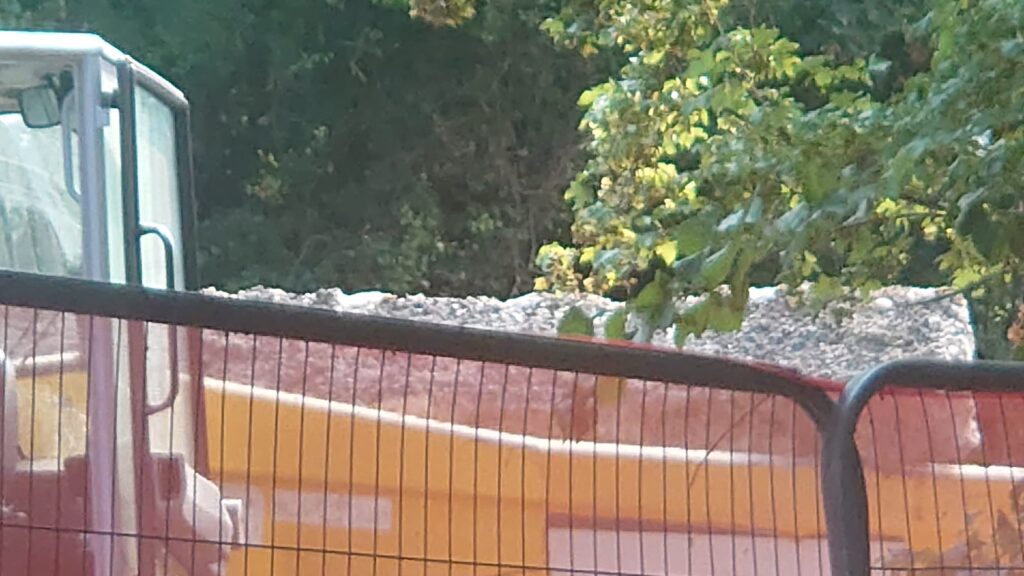
HCC have also failed to provide any details of a trench dug during the works which has been photographed and assessed by respected archaeologists. It is thought to be highly likely that it was of Roman origin and should have been part of further investigation by an archaeologist to establish whether it was historical remains.
Despite requests, HCC have failed to confirm whether the trial trench showed evidence of Roman remains, insisting that they didn’t hold this information as it was work done by the roundabout contractors on behalf of SEGRO.
Some of the excavations of materials from the bottom of St Julian’s Hill were photographed and one photo appeared to be worthy of urgent investigation as showing possible human bones or archaeological remains.
Although a case was registered with Herts police and an officer attended the scene, when he arrived – despite requests to SEGRO and Herts Highways not to remove excavations from the site – some of the the materials had been taken away.
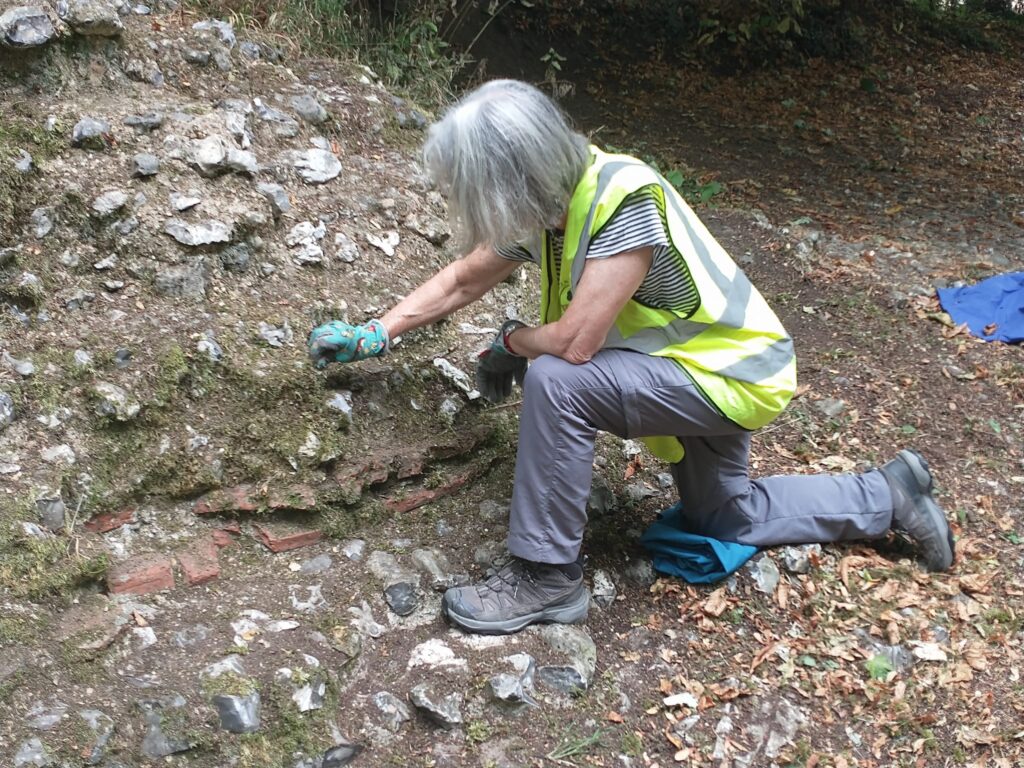
The contractor’s workmen told the officer that what they had discovered during the dig were large pieces of flint, in fact exactly what can be seen on the Roman wall in Verulamium Park. Although the police officer attended the Radlett SRFI offices, the case appears to have been closed without the materials shown in the photograph being examined.
Editor’s Comment
In the words of the great Vic Reeves and Bob Mortimer: “You wouldn’t let it lie.” And that’s certainly the case when it comes to the controversy surrounding whether remains of a major Roman road were found during the Park Street roundabout work. Indeed, we were pleased to see the story picked up by BBC Three Counties Radio’s breakfast show last week, and their executive producer actually apologised for not giving us due credit on the programme for breaking the story.
That aside, we are continuing to put pressure on the authorities for answers surrounding the whole fiasco, and have now received the support of St Albans and Hertfordshire Architectural and Archaeological Society in our campaign.
Therefore it was rather disappointing to hear from a local personality who dismissed concerns surrounding the lack of any archaeological assessment by suggesting there were plenty more Roman roads elsewhere in the district, so why should we worry about this particular stretch?
This somewhat cavalier, throwaway approach to archaeology is at odds with someone you would hope had a vested interest in protecting the history and heritage of our city, rather than worrying about whether the roadworks might overrun a bit if any investigation had to take place.
Tragically, none of the materials found on the site will ever be properly examined, and any archaeological value they had will be lost forever, but we are determined to do what we can to ensure something like this never happens again.
