


07 Sep 2026
With just days to go before an emergency meeting of SADC’s Full Council is expected to approve the St Albans Local Plan, further reactions to the Planning Inspectors’ report have come in from campaigners and councillors.
After a three-year preparation process and rigorous scrutiny by Inspectors Matthew Birkinshaw and Thomas Bristow, the Plan will be going forward for adoption on September 9.
But it remains mired in controversy, with the 15,000 new homes included in the Plan set to be built on swathes of Green Belt land across the district.
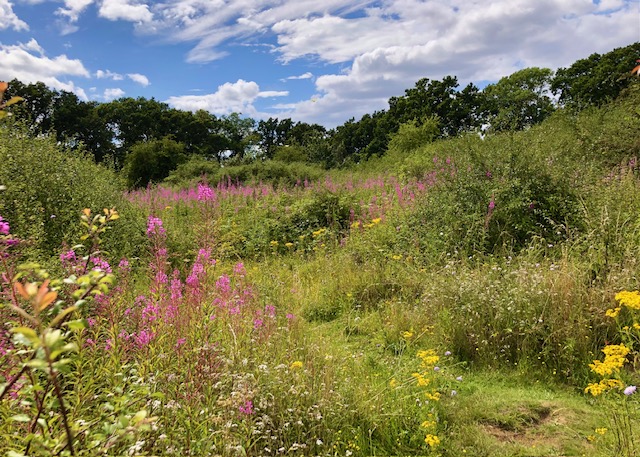
Environmental campaigner Dr Robert Wareing has been fighting for decades to save Bedmond Lane Wildlife Meadow from development, a site rich in biodiversity which Cala Homes has been eyeing for housing for years.
But despite it being recognised for its strategic significance for nature, biodiversity and the wider environment, SADC included it in the Local Plan regardless.
The inspectors said: “Many residents understandably place considerable importance on the site, not only as a valuable resource to people but also to ecology. We have been told that the site was once identified as an asset of community value and may merit the status of a local wildlife site (though not designated as either)…
“Based on the evidence before us, we are satisfied that there is a reasonable prospect that the site could be developed in the future in a way that appropriately safeguards ecology and maintains pedestrian connectivity.”
They said the proposed scheme for 70 houses should take account of ecological and botanical studies, avoid the most ecologically sensitive parts of the site and mitigate adverse effects to ecology.
“Subject to these modifications, the Plan would provide a robust policy framework concerning ecological matters,” they added.
Dr Wareing responded to the inspectors’ report: “In my opinion, this long-awaited and rather tortuous tome is not good news for St Albans. It is not good news for nature, for biodiversity or for our precious green environment. Naturally – having battled for more than 50 years to preserve Bedmond Lane Wildlife Meadow – I am bitterly disappointed with the conclusions of this labyrinthine report.”
Meanwhile in Redbourn, villagers face an onslaught of housing on their doorsteps.
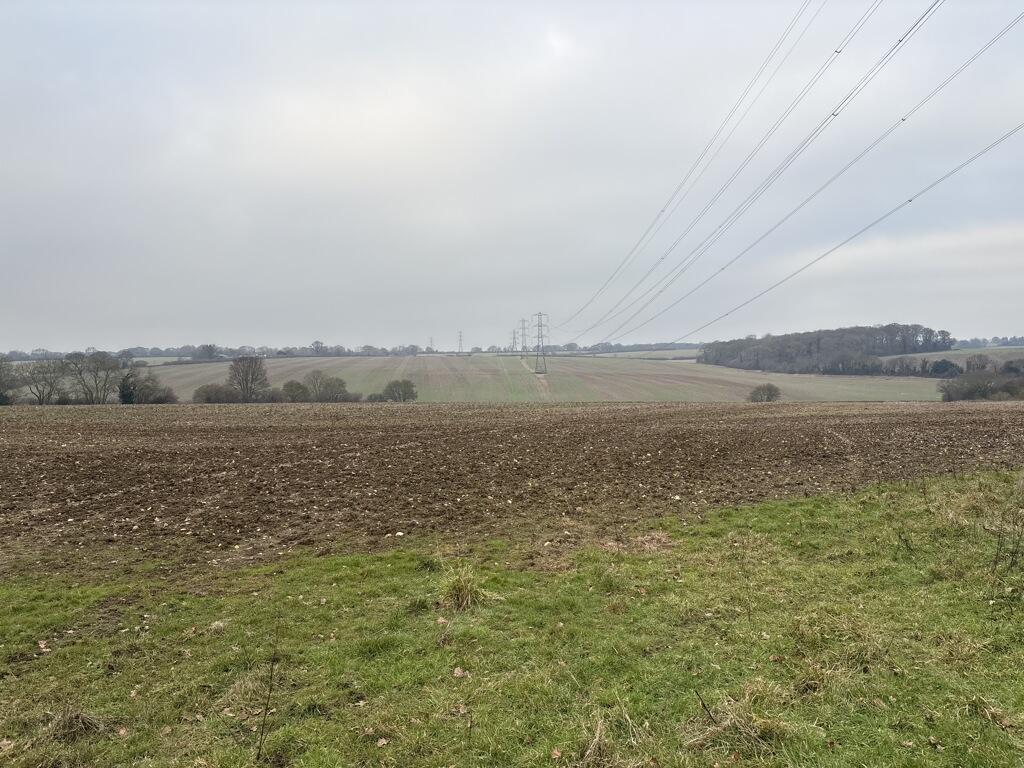
Approximately 1,000 homes are planned for a 104-acre open arable site on the northeast edge of Redbourn village, between Dunstable Road, Harpenden Lane and the Redbourn bypass, while the East Hemel development will see 4,000 homes on 975 acres east of Hemel, south of the B487 Hemel Hempstead Road (Redbourn Road) and north of the A4147 St Albans Road.

Independent councillor David Mitchell, who is also chair of Redbourn Parish Council, said: “It looks almost certain that the draft Local Plan will be adopted at the district council meeting on September 9, unless the Lib Dem administration surprisingly rejects its own Plan!
“It’s taken over three decades to get to this stage, with three other attempts at a new Local Plan failing to make it over the line, so we do need an up-to-date Plan. However, the price we are paying is the loss of around 800 hectares (2,000 acres) of the district’s Green Belt.
“Almost half of this is in Redbourn Parish with nearly 4,000 new houses proposed on the local Green Belt. Redbourn village will be surrounded by ongoing development, and it will lose its rural feel.
“Much of the proposed development in Redbourn Parish is part of the ambitious ‘Hemel Garden Communities’ expansion programme. The ARUP Green Belt Review said the land between Hemel Hempstead and Redbourn was unsuitable for development as it is a highly valuable buffer between the two settlements, but the district council decided the social and economic benefits outweighed the harm to the Green Belt.
“Much of the land in question is also highly valuable agricultural land that would best be used for future food production, but that doesn’t seem to matter either.
“We do need new houses, of course, but the target of 885 per annum is based on a convoluted government equation assessing incomes against house values which doesn’t make a lot of sense for St Albans district. If the projected population growth was used instead, the number of houses needed would be a lot lower, and much of the local Green Belt could be saved. However, we know the Government is aiming to build 1.5 million houses before the next election, so the number of housing estates is set to rise significantly, which means even more urban expansion and loss of Green Belt.
“What worries me most is whether the infrastructure needs can keep up with the rapid build out. Thames Water says that its current wastewater treatment facilities are almost at full capacity, so a lot of additional infrastructure is needed. Affinity Water says that it can use the Grand Union Canal to bring fresh water down from the north, but that’s a costly and time-consuming project to get up-and-running.
“Many of the roads are already at full capacity according to Herts County Council and unable to take increased traffic.
“However, the plan is to reduce car-use by improving public transport along with better walking and cycling routes. In the Hemel Garden Communities area, 60 per cent of all travel will be by means other than private cars.
“Elsewhere a target of 30 per cent has been set for active travel. No new strategic roads will be built to ‘encourage’ us to use alternative forms of travel. I’m all for environmental improvements and addressing climate change, but is all this realistic in the next 15 years?
“If the new Local Plan is formally adopted on September 9, that will be a major milestone for the district council, but I hope that Lib Dems will also recognise that the loss of 800 hectares of countryside is a very sad day for residents, especially in Redbourn.”

Shirani St Ledger McCarthy of campaign group Keep Chiswell Green responded to the inspectors’ decision that allocating additional land for housing in Chiswell Green was both justified and appropriate.
She said: “The inspectors’ report on the Local Plan is a real double-edged sword. On the one hand, progressing to adoption of a Local Plan, and hopefully some protection from the overwhelming number of speculative developments that have plagued the St Albans district now for years, can only be a good thing.
“However, this Plan also formally sounds the death-knell for significant swathes of our Green Belt, and with them, the wildlife, air quality, leisure and health benefits that thousands of residents, young and old, have enjoyed from these areas that will now be concreted over.
“We are particularly concerned by what appears to be an excessive concentration of development within St Stephen Parish, which comprises Bricket Wood, Park Street, How Wood and Frogmore, and Chiswell Green.
“The council’s own Sustainability Appraisal recognised that existing completions and commitments in Chiswell Green, How Wood, Park Street and Frogmore already amounted to 974 new houses – 25 per cent of the district’s entire total – but, despite the inspectors confirming that these are all ‘medium sized villages’, the Plan then concentrates all three of its ‘large’ sites within our parish.
“What is also highly misleading is the way the inspectors’ report divides planned development between the individual settlement names. It says that Chiswell Green has an existing commitment of ‘over 750’ houses, and allocates an additional 92-bed care home and 135 houses at the Noke Hotel/Miriam Lane site, while allocating 190 houses to Copsewood and 180 houses in addition to 124 already in development to Burston to How Wood.
“Yet the council’s own planning portal lists the Burston Garden Centre as being in Chiswell Green, and Copsewood sits next door to Burston on the Noke roundabout.
“Residents experience the cumulative consequences – the increased traffic on the same roads, pressure on the same infrastructure and services, loss of the same Green Belt and countryside, and development that fundamentally changes the same interconnected group of communities. Dividing the numbers between Chiswell Green and How Wood according to which name somebody has entered against a site on a report risks masking the true scale of what is happening in this part of the district.
“We are further concerned about the approach to Gypsy and Traveller provision. The Plan allocates significant additional provision within St Stephen Parish, including sites at Chiswell Green Lane, Meadowside on the North Orbital by the Tippendell Lane junction, Noke Lane and Lye Lane.
“But the inspectors go further, expressly supporting both windfall traveller sites and the ‘regularisation’ of sites which do not currently have planning permission.
“Ordinary residents will know the frustration of spending months and even years negotiating with the council over comparatively minor alterations to their homes and they are expected to obtain permission before carrying them out. Where is the fairness in the planning system then when occupying or developing land without planning permission forms part of a strategy for meeting planning need.
“The contrast with what has happened elsewhere in Hertfordshire this year is difficult to ignore. At Flamstead over Easter, Dacorum Borough Council went to the High Court to stop unauthorised development of a traveller site, while at Sawbridgeworth over the August Bank Holiday weekend, East Herts Council served a Temporary Stop Notice within hours and obtained urgent High Court injunctions preventing further development and occupation, ultimately resulting in those on the site leaving.
“Here, however, we have a Local Plan whose Inspectors are expressly endorsing the ‘regularisation’ of traveller sites that do not have planning permission, alongside provision for further windfall sites.
“Of course, every site has to be considered on its own facts, but residents are surely entitled to ask how those two approaches can sit together. In one Hertfordshire district, unauthorised development can trigger emergency High Court proceedings and removal of the occupants, in another, the planning strategy expressly supports regularising sites that have already been occupied and developed without planning permission. This risks sending a highly confusing message.
“Planning rules and enforcement need to be applied consistently to everyone and, as this Plan is adopted, the council needs to give residents absolute clarity that this ‘regularisation’ will not become an incentive for unauthorised occupation first and retrospective permission later.
“As we move into the preparatory stages for the next Local Plan, we are hugely disappointed that, although the inspectors repeatedly acknowledged the objections and concerns raised by local residents and groups about this Plan, very few of those concerns appear to have resulted in meaningful changes for St Stephen Parish.
“Residents engaged extensively and in good faith in the preparation of this Local Plan. They are entitled to question whether the final Plan reflects their lived experiences on the ground, and whether it is fair for such a disproportionate burden of development to be concentrated on one relatively small part of the district.”
