09 Aug 2026
A St Albans chess prodigy is hoping national media coverage about gender imbalance in the sport will encourage more girls and women to participate.
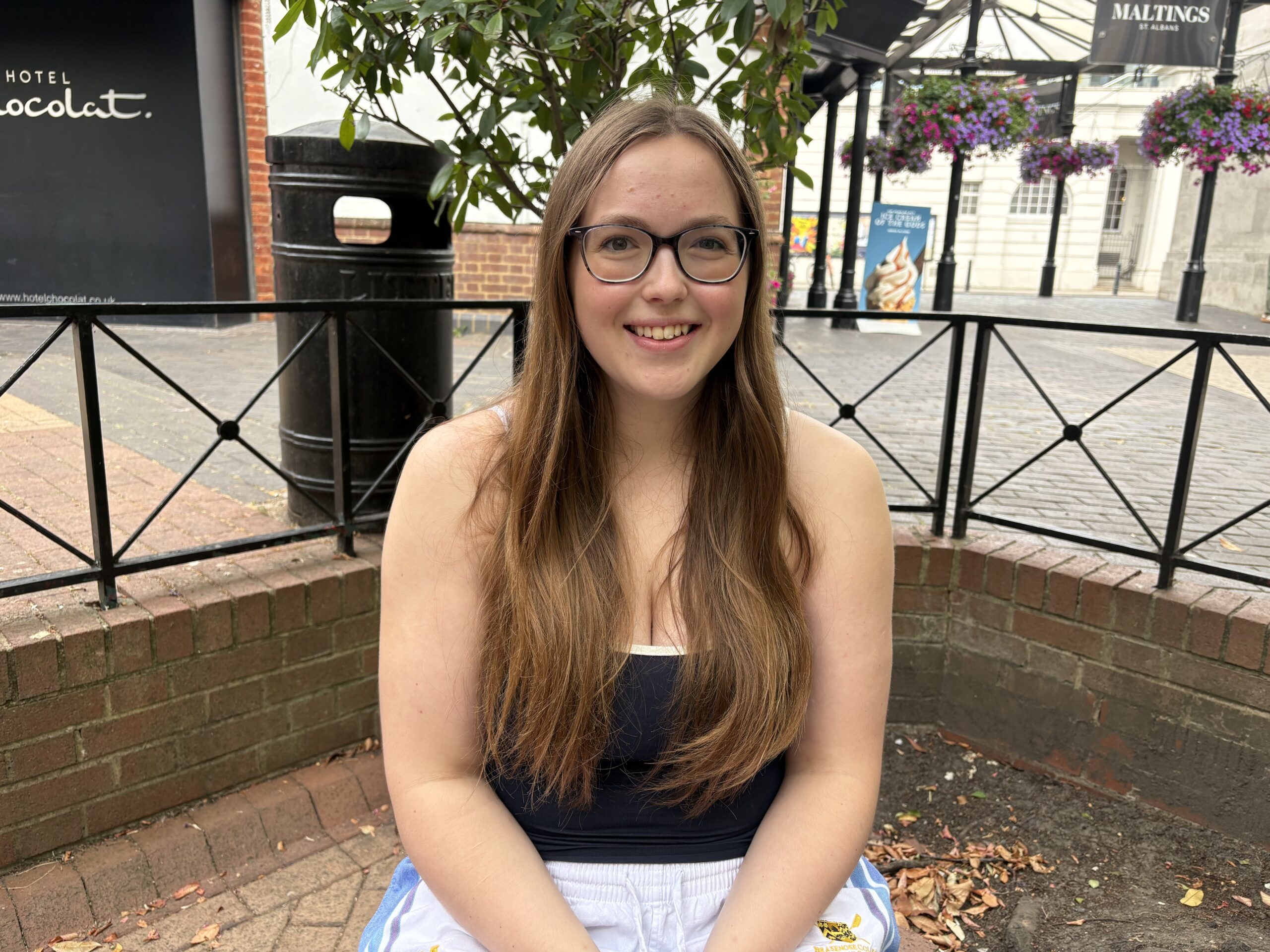
Emily Maton, 18, hit the headlines after it was revealed that her all-female chess team – the first to reach Division 1 of the prestigious Four Nations Chess League (4NCL) – could be forced to accept a male player to comply with rules designed to encourage female participation.
The former Beaumont pupil, who is now studying at Oxford University, has played chess competitively since she was nine, and this week has already appeared in The Times, The Guardian and The Independent, with more news stories on the way.
The controversy arose after the Lionesses A team – part of She Plays to Win, a campaign created in 2020 by Lorin D’Costa to encourage more young girls to play chess – was told they have to include at least one male player in their ranks.
The rule dates back to 1994, and was ironically introduced to bring more girls and women into the sport, but the 4NCL is refusing to consider changing it before the league begins again in October.
Emily has been playing with the Lionesses A team for around five years, and loves the sense of camaraderie it offers: “It’s a really, really, lovely group of people. Some of them I’ve been playing with since I was really young, some are younger than me and some are older, but the team spirit is really good.
“We all spend time training together and giving each other ideas for the game, sharing information about our opponents, it’s a really nice supportive environment.”
But she fears the introduction of a random male player into this mix will undermine that dynamic.
“I think it would send a message to younger girls that the chess world isn’t actually working to get girls into chess, you’re still not completely welcome here, you’re still the minority, which I think is quite a concerning message to send.
“I think regardless of what you think of the issue, if you reach the point where a rule which is meant to introduce something positive is now undermining that purpose then you need to change it and fix it.
“4NCL are still pretty firm on their position at the moment, but we’ve definitely sparked a lot of debate in the chess community, which is really important, although all this national coverage is great and puts a lot of pressure on them.”

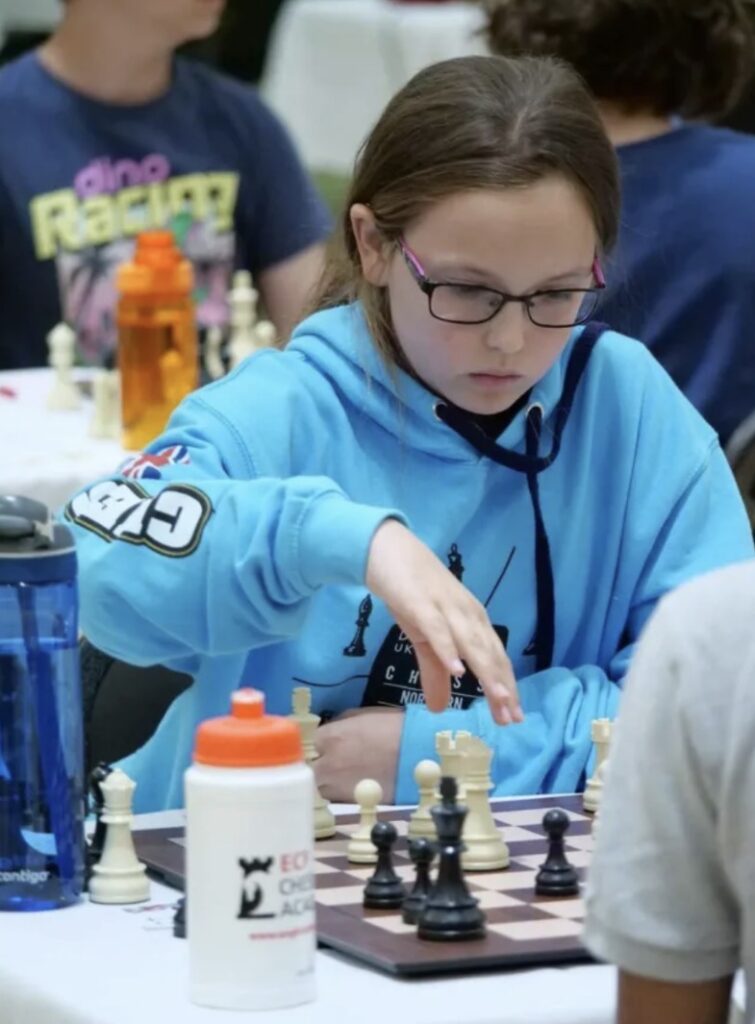
Emily herself has enjoyed a phenomenal rise from gifted amateur to representing her country in tournaments across the globe.
After her dad first taught her to play, Emily joined the chess club at Fleetville Junior School, where her natural aptitude for the sport was swiftly noticed.
“Even at that age I loved doing logic puzzles and that sort of thing, but I also really enjoyed it so I was willing to put in loads of training and do extra sessions for practice.”
She competed in her first British championship in the summer before starting at Beaumont, and her first international tour was the World Championships 2018 between Years 7 and 8.
“My parents had no idea how any of it worked. It was a huge step up, but I was lucky in that I made good friends and we met other families whose parents knew a lot more and guided us through.
“That first tournament was in Minsk in Belarus, which was absolutely insane, and since then I’ve been to Brazil a few years ago and I’m going to Montenegro this week for the European Championships, so all over the world. I’ve met so many cool people and been to so many cool places.”
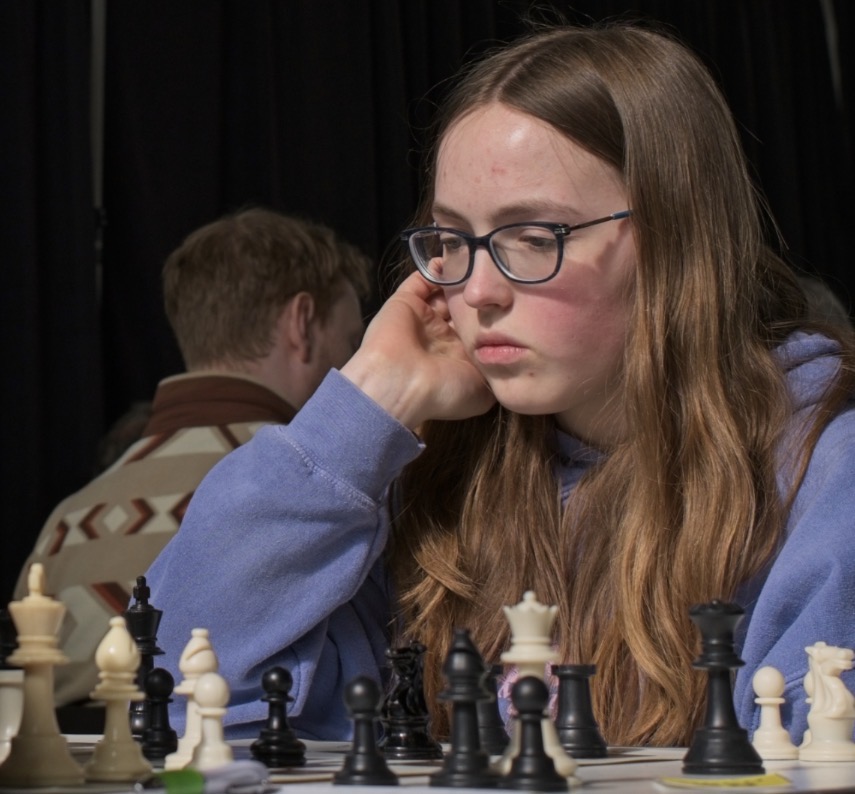
Emily joined She Plays To Win when Lorin set up the programme during lockdown in 2020.
“I think I played the first-ever tournament and took part in the first training. It was advertised to a group of girls who were in the top level at that point, but it’s since grown to almost 2,000 now.
“It’s been a great programme for getting girls into chess. I’m not sure that I would still be playing today if it wasn’t for that community, because it can definitely be quite isolating as a girl playing chess. But I’ve made so many strong friends, and we all encourage each other and worth together as well.”
However, even early on in her career she was aware of the lack of female participation in the sport.
“My Dad always tells the story of the first-ever adult tournament I played in, which was the St Albans Chess Congress. I went with my friend Katie, as we played tournaments together all the time, and we walked into the hall and just stopped in our tracks because we could not see another woman or girl. It’s almost certain we were the only girls in the tournament.
“But I definitely always noticed growing up that we were outnumbered. The younger male players have never been a problem in the slightest, they were always very willing to give me inspiration, talk about tournaments and tell me different things I could be doing, but the more explicit comments I’ve had have always been from the older generation.
“I think part of it is tradition. When you’ve been playing for so long it would have been a bit of a novelty to have female players suddenly showing up, especially young ones. Some just didn’t like the idea of losing to a girl, and I’ve had men throw the pieces off the table, I’ve had comments about girls not playing chess and whatnot.
“Obviously those people are an exception, and it’s certainly not every man who hates the idea of girls playing chess, but there are some people who don’t want us to be there.”
Shockingly, just 11 per cent of rated chess players are female, so there is still an obvious need to open up the sport to more girls and women, something Emily actively promotes.
“I’ve spent quite a bit of time with younger girls as part of She Plays To Win, and there’s such a huge generation of talent amongst them, with so many more young girls than when I started playing. I don’t think they are inherently more gifted, it’s just that now we’ve put in resources and given them the encouragement they needed.”
Beyond the controversy surrounding the Lionesses, Emily remains a passionate crusader for more female representation in chess: “The community is certainly there, you make so many great friends and you shouldn’t feel left out or not welcome. It’s important to push through, so much has already changed since when I was younger, and you deserve to be there.”