31 Jul 2026
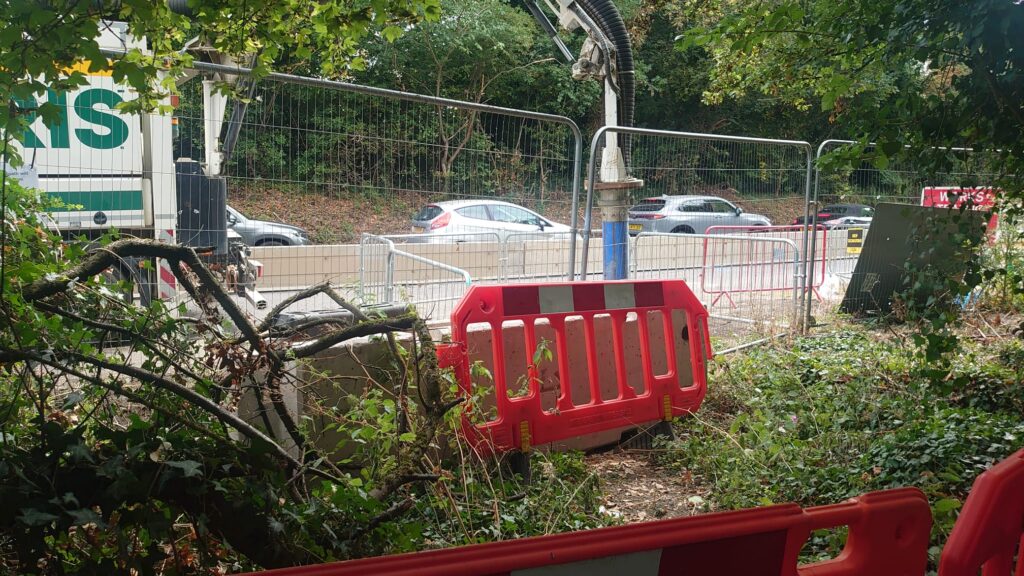
A wall of silence has come down over whether archaeological assessments were carried out in advance of extensive roadworks around the Park Street roundabout – potentially the site of a major Roman road.
The Watling Street route is believed to have run from Park Street to the roundabout and then to the left of the current road at the start of the incline of St Julian’s Hill.
But neither SADC nor Herts County Council have been able provide documentation to demonstrate that an archaeological assessment was undertaken before the Park Street roundabout upgrades started in May this year. These road infrastructure improvements are part of the planning permission conditions for the SEGRO strategic rail freight depot on the site of the old Radlett Aerodrome.
SADC’s development management team claimed it was a matter for HCC, and the works are being undertaken under a S278 agreement with Herts Highways.
This is a legal contract under the Highways Act 1980 between a property developer and a local highway authority which allows the developer to fund and construct permanent alterations or improvements to public roads. Common examples include building new site access junctions, adding traffic lights, or widening lanes.
The S278 agreement for the Park Street roundabout involves major highway improvement works including deep drainage installations and footpath upgrades over an estimated 60-week construction timeline.
A spokesperson for HCC told the St Albans Times: “While there is an archaeological condition within the original planning permission granted at appeal, this condition does not cover widening works located within the existing highway.
“We continue to work with the principal contractor to ensure that all excavation is actively monitored and should any finds be discovered works are to be halted immediately and reported to HCC and SACDC.”
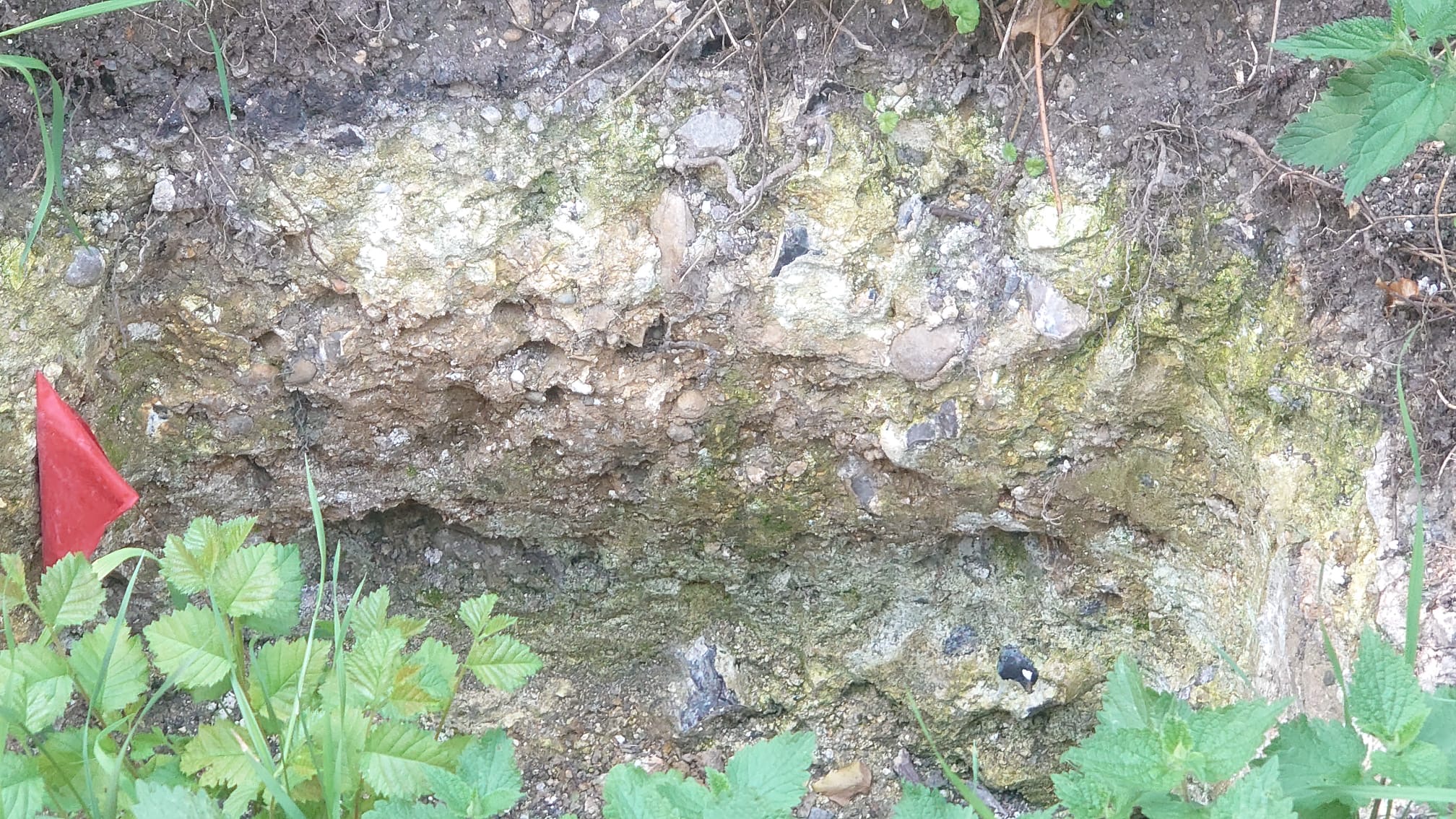
Local campaigner Andy Love has been pushing for answers about an assessment: “I have seen a trench dug to one side of St Julian’s Hill which appeared to show the existence of the previous Watling Street nearest the surface and possibly the Roman Watling Street lower down.
“There is great concern among local archaeologists and the general public that historical remains might be under threat from the work currently being undertaken on the Park Street roundabout.
“From my advice, an archaeological assessment for the area around and within the Park Street roundabout was a mandatory requirement as part of the planning permission conditions. Watling Street is a known area for archaeological finds especially being a former Roman road.
“Historic England have said that an assessment for archaeological interest should have been undertaken on the roundabout and the immediate surrounding areas.
“If work has been or is being carried out without an assessment being in place before the roundabout upgrade works commenced, this could be a serious breach of local planning requirements.”
On July 27, Andy submitted a request to both Herts Highways and SEGRO urging them to stop all ground works on the Park Street roundabout and approach roads until an archaeological assessment had been undertaken, reviewed and approved by the relevant authorities.
To date this request has neither been adhered or responded to and meanwhile contractors are still using excavating equipment at the bottom of St Julian’s Hill where it is believed the old Roman Watling Street still exists in some form.
Andy has now submitted an official complaint to Herts County Council about the lack of evidence of an archaeological assessment and the failure of Herts Highways to respond to his concerns.
In response to our enquiries about the site, SADC strategic director for community and place delivery Chris Traill said: “The planning process for this development was not under our control and we had no responsibility for making decisions on archaeological assessments or other matters.
“Planning permission was allowed on appeal by a Government-appointed planning inspector who imposed the archaeological requirement for the development through a planning condition.
“Subsequently, there was a negotiation known as a Section 278 agreement between Hertfordshire County Council, the highways authority, and the developer over the details of the works. We were not involved with those discussions.”
Responding to Andy Love’s complaint, HCC said: “As we understand it, the rail freight terminal was decided by SADC and allowed at appeal by the Secretary of State who added an archaeological condition. Both the archaeological condition and the Park Street Roundabout partial signalisation and widening works form part of the SoS’s appeal decision.
“Herts LEADS (Historic Environment/Archaeology) do not advise SADC or their planning team. Their current archaeological advisors are Place Services; before that SADC retained their own in house district archaeologist who advised on planning matters. Their district archaeologist would have been the advisor both in 2009 and in 2014 when the Secretary of State’s decision was issued. Therefore, provided the current works at the Watling Street roundabout are being carried out under this permission, Herts LEADS (Archaeology) have no role in the matter which should be monitored by SADC planning team and their archaeological advisors.”