


09 Jun 2026
Councillors have rejected the “ecocide” proposed by a St Albans golf club which wanted to destroy at least 1,000 mature trees in order to expand its offering.
The Centurion Club on Hemel Hempstead Road aimed to create an additional 10 holes on their site, claiming it would create more jobs and provide additional economic benefits to the district.
But the application included the removal of approx. 144,900m2 of mainly larch plantation woodland out of a current area of approx. 358,746m2, an area of woodland known as the Potters Crouch Plantation.
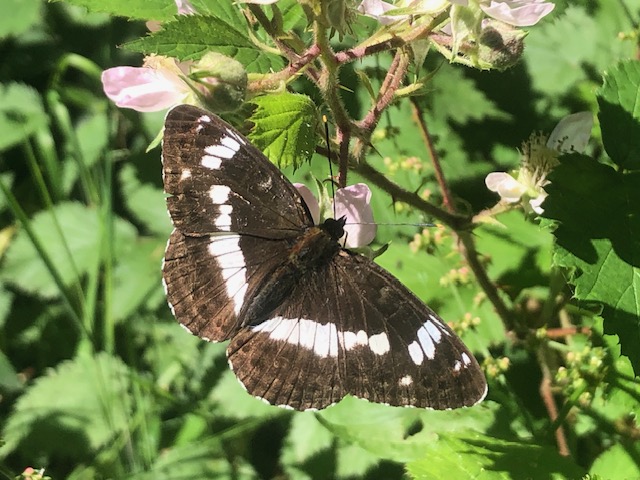
Last night councillors sitting on SADC’s development management committee rejected officers’ recommendations to approve the plans, citing the loss of trees and a lack of protection for the rare White Admiral butterfly among their reasons.
Planning officers had admitted they did not know how many trees would be lost – with some observers suggesting it could be as many as 50,000 rather than the 1,000 suggested previously.
Verulam ward councillor Dawn Gamble told the meeting: “The current application seeks to extend the site by adding a further 10-hole course to the existing 18 holes.
“To achieve this, an ancient forest plantation covering approximately 144,900 square meters, or around 19 football pitches, would be destroyed, which is approximately a third of the present forest. The claim that only 1,000 trees will be removed is almost certainly a minimum estimate, not a maximum. All of this would take place on precious Green Belt land that is already shrinking around St Albans…
“As an elite members-only club, it’s difficult to see how [any economic] benefits would meaningfully reach the wider community… Removing such a significant area of biodiversity to benefit a privileged few must be given the most serious consideration.”
“What is Centurion proposing to replace this rich habitat with? Mown fairways, artificial water bodies, wetlands, grasses, and even an artificial butterfly bank, none of which offer comparable ecological value. Promises of planting woodland elsewhere on the site are minimal compensation.”
SADC environmental lead Cllr Keith Cotton, who freely admitted to being a golfer, said he was not satisfied that the scheme would not have an impact on not just butterflies, but also climate change and water demand and the degradation of carbon sequestration from tree removal.
“I cannot see any economic benefit to the area beyond that of the golf club itself… If we fail here to prevent this development, we will have failed our residents, locally important wildlife, and this council in all of our stated intents.”
Malcolm Hull, chair of Butterfly Conservation – Herts & Middx Branch, was the only member of the public allowed to speak against the scheme at the meeting.
He told councillors: “Most woodland specialist butterfly species have become extinct in Hertfordshire. White Admiral is one of the few remaining species and is now confined to just a handful of larger woods in the county. Andrew Wood, the Herts county butterfly recorder has recently described the White Admiral colony in Potters Crouch Plantation as one of the strongest remaining in the county.
This species has a high degree of legal protection. The proposed development would destroy the key habitat areas within the wood. The butterfly has exacting habitat requirements and cannot just move elsewhere in the wood. Replacement habitat can’t be created easily – it takes decades to mature.
“White Admiral is exactly the sort of rare species which the planning system is supposed to protect. So why is this proposal being recommended?
“The officer’s reports fail to acknowledge the degree of protection for this species. The case officer states: ‘Any impacts on protected species could be suitably mitigated and so no harm was identified’. I can categorically state that the planning officer is mistaken, based on my 30 years’ of experience in the conservation of White Admiral working across Herts and Middlesex.”
He said afterwards: “I am delighted that the committee have rejected this proposal. Many thanks to Cllrs Dawn Gamble and Keith Cotton and all the committee members who spoke against the proposal.
“The key point, which the committee grasped, is that old woodland habitat is irreplaceable. Rare species can’t be saved by planting replacement trees which will take decades to mature. This is a good decision which avoids the destruction of one of the most valuable butterfly woods in the county.
“Golf courses can create high quality habitat for butterflies and other wildlife. Unfortunately this scheme was just in the wrong place. There are many pressures on wildlife arising from development. With good planning we can shape our environment in a way which allows both people and wildlife to thrive.”
St Albans Green Party councillor Juliet Voisey, who runs the local Greenpeace group, said: “The attendance from the public was immense, too many to fit in the council chamber, and many more online,
“500 objections and 900 signatures on a petition… this application was pure ecocide on an insane level. One third of the woods, nearly 150,000 sq metres to disappear along with the wildlife, and the protected White Admiral.
“It concerns me that it even got this far, that officers did not consult experts such as Butterfly Conservation at the outset (instead relying on a Herts Ecology report), and did not seem to understand that this would have gone against our new Local Plan and the Hertfordshire Local Nature Recovery Strategy.
“I also don’t understand why Centurion won’t just use the land they had allocated for new planting for the extra 10 holes instead of this insistence to destroy an established wood and then plant another next to it to compensate.”
Freda Chaloner from St Albans Civic Society said: “We are delighted that the planning committee decided to turn down this application, recognising that the ecological and other harm, particularly to the White Admiral butterfly, more than outweighed the minimal benefit from this proposal.”
The Centurion Club has been approached for comment, but managing director Scott Evans spoke at the meeting.
He said: “We’ve worked closely with the ecologists for the last three years. We’ve changed the plan to accommodate all the sensitive areas and preserve many of the mature trees and the mature beech woodland that’s there…
“We’re committed to making this one of the best golf courses, not only in the local area, but around the world. And that commitment doesn’t just stop at golf, that’s environmentally as well.”
