28 May 2026
Frogmore residents have challenged rail freight developer SEGRO to provide evidence of the ecological surveys they claim were carried out at a site used for nesting by endangered skylarks.
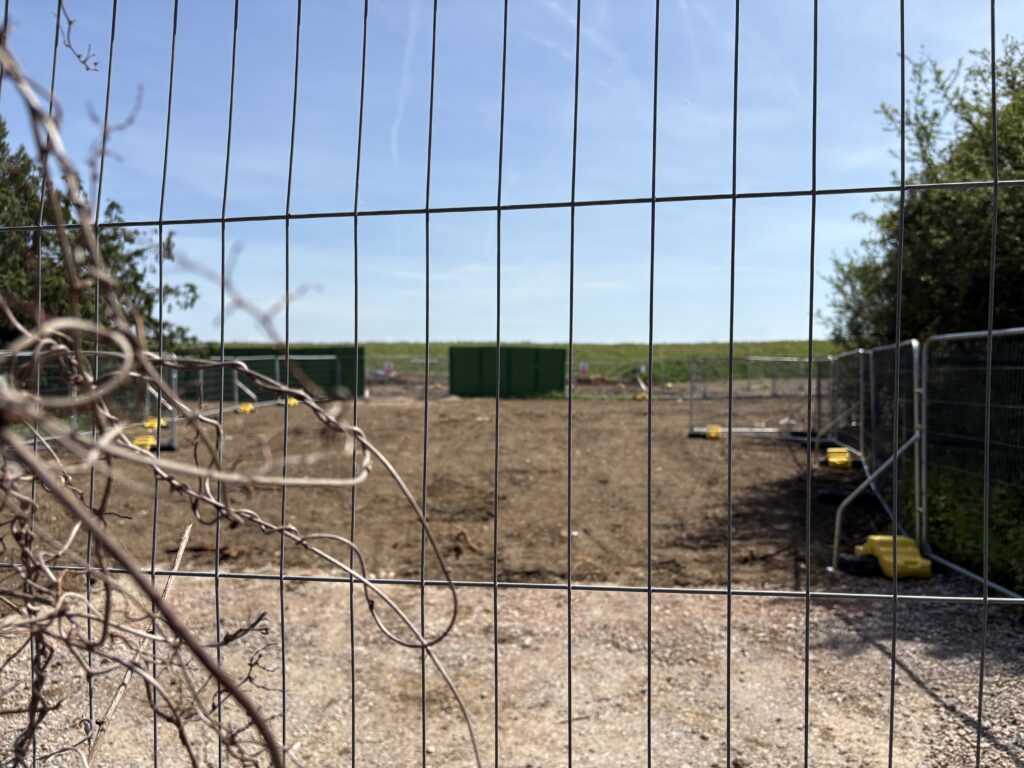
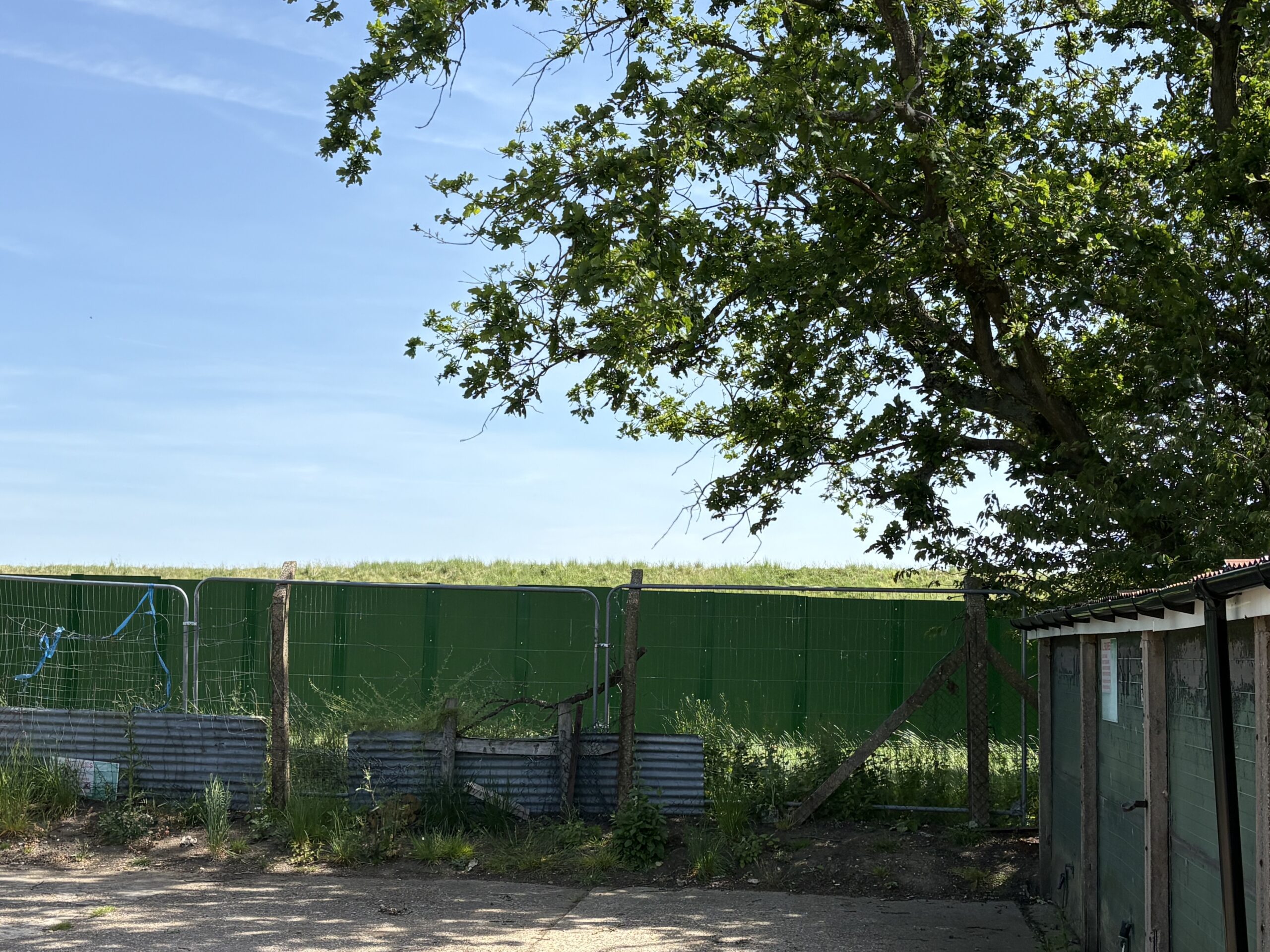
As part of the ongoing construction of the strategic rail freight interchange on the former Radlett Aerodrome, SEGRO wants to remove an artificial 1,676m embankment on the site in order to build a new access road.
The bund was installed on the site around 80 years ago by aviation company Handley Page – the aviation company whose aircraft factory occupied the site — as a sound barrier for engine testing.
Crucially it is not a remnant of quarrying activity which later took place on the site, and as a result of its age has developed significant ecological value which carries different weight in planning and conservation terms than a spoil heap from gravel extraction.
Apart from quarrying, it also survived untouched during the filming of James Bond movie Tomorrow Never Dies, as its importance to local wildlife was considered sacrosanct.
Skylarks, which use the bund as an active breeding site, are a protected species of significant conservation concern, and as such their habitats should not be disturbed or approached during breeding periods.
There are also concerns that the bund contains buried waste material from the site’s former industrial use as an aircraft factory, potentially including hazardous substances.
Residents have formally asked SADC whether an appropriate contaminated land risk assessment has been carried out specifically for the bund, and whether the Environment Agency has been notified ahead of its removal. No response has been received to date.
Despite repeated requests, SEGRO still have not produced the actual ecological survey reports relating to the site, or confirmed when these documents will be available for independent scrutiny.
Apart from skylarks, the bund is also used as a hunting ground for swifts and swallows, migratory birds which are only here for a short period of time.
With skylarks nesting between May and September, legally there are restrictions preventing any earthworks taking place within a 50m buffer zone of their nests on the bund, yet there is evidence that this has not been the case, with a huge crater dug near the Frogmore Gate entrance to the site.
Residents have formally requested that the team compel SEGRO to disclose the live pre-clearance nesting surveys, freeze ground works until independent ecological verification has taken place, and ensure any protection zones are made publicly available.
A SEGRO spokesperson responded to residents’ concerns about the bund, insisting they were both aware of their obligations and fulfilling them correctly, but did not provide any details of the surveys.
“Our contractor, STRABAG, has retained suitably qualified ecologists to advise on all site activities to ensure works comply with relevant wildlife and countryside legislation and guidance.
“Surveys and ecological checks are and always have been ongoing, with a precautionary approach taken to ensure all works are carried out responsibly.
“On the subject of nesting birds, as is standard practice, checks are carried out for ground-nesting birds such as skylarks before works take place. If nesting birds are identified, as has been the case, appropriate buffer zones are put in place and no works are undertaken within those areas until the nesting period has concluded. There are currently a number of these exclusion zones in operation on site, but works are continuing outside of those exclusion zones.
“A large part of this activity has been focused on a bund leftover from the former quarrying activity on site, which we have retained for as long as possible, recognising both its ecological value and the screening it provides for local residents.
“This bund is going to be removed this summer to allow the next phase of works that are necessary to deliver the development, including the construction of the new permanent bunds that will form part of the country park.
“The timing of any works is influenced by a range of factors, including construction sequencing, service diversions and ground conditions, but also – importantly – by ecological advice and requirements.
“In relation to works near Frogmore Gate, these activities were carried out by Affinity Water on their assets. We were not involved in their ecological surveys but believe their clearance works took place outside of the bird nesting season.
“SEGRO will continue to work closely with STRABAG, ecological advisors and the relevant authorities to ensure all activity is carried out in accordance with planning consent and legal requirements.”
Local residents responded to their comments who are affected by the rail freight development in Frogmore and Park Street, with more questions which they would like answering.
“Has SEGRO actually got these surveys to show us? Under law as the primary developer, they have to arrange for full ecological surveys, so if there has been any impact on the birds or nests then surely they would have a massive legal problem on their hands?
“SEGRO state that ‘suitably qualified ecologists’ have been retained by STRABAG. Can they confirm the name of the ecologist or ecological consultancy involved, and whether they hold full membership of CIEEM – the Chartered Institute of Ecology and Environmental Management – which is the recognised professional standard?
“If the surveys have taken place, then why didn’t SEGRO supply them instantly when first asked to show they have nothing to hide? They have also confirmed that exclusion zones are currently in place around active nests. Can they publish a map or description of the precise location and extent of those zones, so that residents and independent ecologists can verify them?
“Given that the bund is an active breeding site during the period May to September, will SEGRO commit to not removing the bund until after the skylark breeding season has concluded in autumn?
“Regarding the large crater near the Frogmore Gate entrance – SEGRO have attributed this to Affinity Water. However, residents understand this work took place within the SRFI site boundary. Can SEGRO confirm exactly where the boundary lies at that point, who authorised the works, and what ecological clearance was obtained before they commenced?
“By passing responsibility for the works onto STRABAG, are they saying they are just the landowners and not accountable for what their contractors do? Surely under UK law – including the Environmental Protection Act – SEGRO is the client and principal developer, with a non-delegable duty of care?
“They choose the contractors, they set the budgets and they reap the profits. If STRABAG breaks the law on their land, then isn’t SEGRO vicariously liable?
“So we ask them again, please give us sight of all the ecological surveys which have taken place in relation to the bund.”
Residents also have video evidence of how close contractors are to the bund and significant dust clouds being generated by earthworks on site, with minimal dust suppression in evidence – on one occasion a single bowser was present on site but not in use.
A formal statutory nuisance complaint has been lodged with SADC under the Environmental Protection Act 1990, and a request submitted under the Environmental Information Regulations 2004 for the approved Dust Management Plan and Construction Environmental Management Plan to be released publicly. SEGRO have not yet provided these documents
Campaigners are celebrating a recent small victory after SEGRO removed all reversing alarms from their plant machinery – including both tonal and broadband alarms – which had been causing intrusive noise pollution to nearby homes.
Notably, no broadband alarms were introduced as a replacement, despite these being the recognised industry standard under BS 5228 for construction sites near residential areas.
Residents believe this has now set a precedent that none of SEGRO’s future contractors will be permitted to use reversing alarms on site, with the expectation of silence established for the remainder of the development.