14 May 2026
Elena Hogg, founder of local culinary company FOOD by Elena, explores some creative options for the humble potato…
I recently found myself harbouring a glut of potatoes. All different kinds: white potatoes, King Edwards and some new potatoes too.
None were at their best on account of having been obtained via ‘Too Good To Go’. If you aren’t familiar with this, it’s an app that helps reduce food waste at supermarkets and other retailers by selling off, at low-cost, food that would otherwise end up as food waste.
It’s a brilliant premise and certainly promotes creative cookery. You can end up with quite the esoteric mix of ingredients: a month or so ago I remember contemplating three large leeks (caked in mud and hence left on the shelf, which
was why they’d found their way into a Too Good To Go box), some slightly too crusty white bread rolls and a battered block of reduced fat cheddar cheese, again left on the shelf by customers preferring a non-misshapen pack.
After scratching my head for a little while, I decided to add some eggs and some spoonfuls of truffle paste to this clutch of ingredients and make a savoury bread-and-butter pudding. It wasn’t my best invention, but it wasn’t bad either and used up those leeks, rolls and cheddar in one unctuous, truffle-infused swoop.
Back to my potato glut, though, and how to make my starchy way through them.
My son is a particular fan of my Italian mum’s recipe for roast potatoes . They’re much simpler than the usual British kind because there’s no par-boiling or tossing around in a colander, nor any pre-heating of any oil. There’s not even any peeling; you simply cut the still-jacketed potato into bite-size pieces, season and pop into a hot oven for 45 minutes or so. You can strew with rosemary or thyme, if you like, but that really is as fancy as I go with them, because their simplicity is what sets them apart.
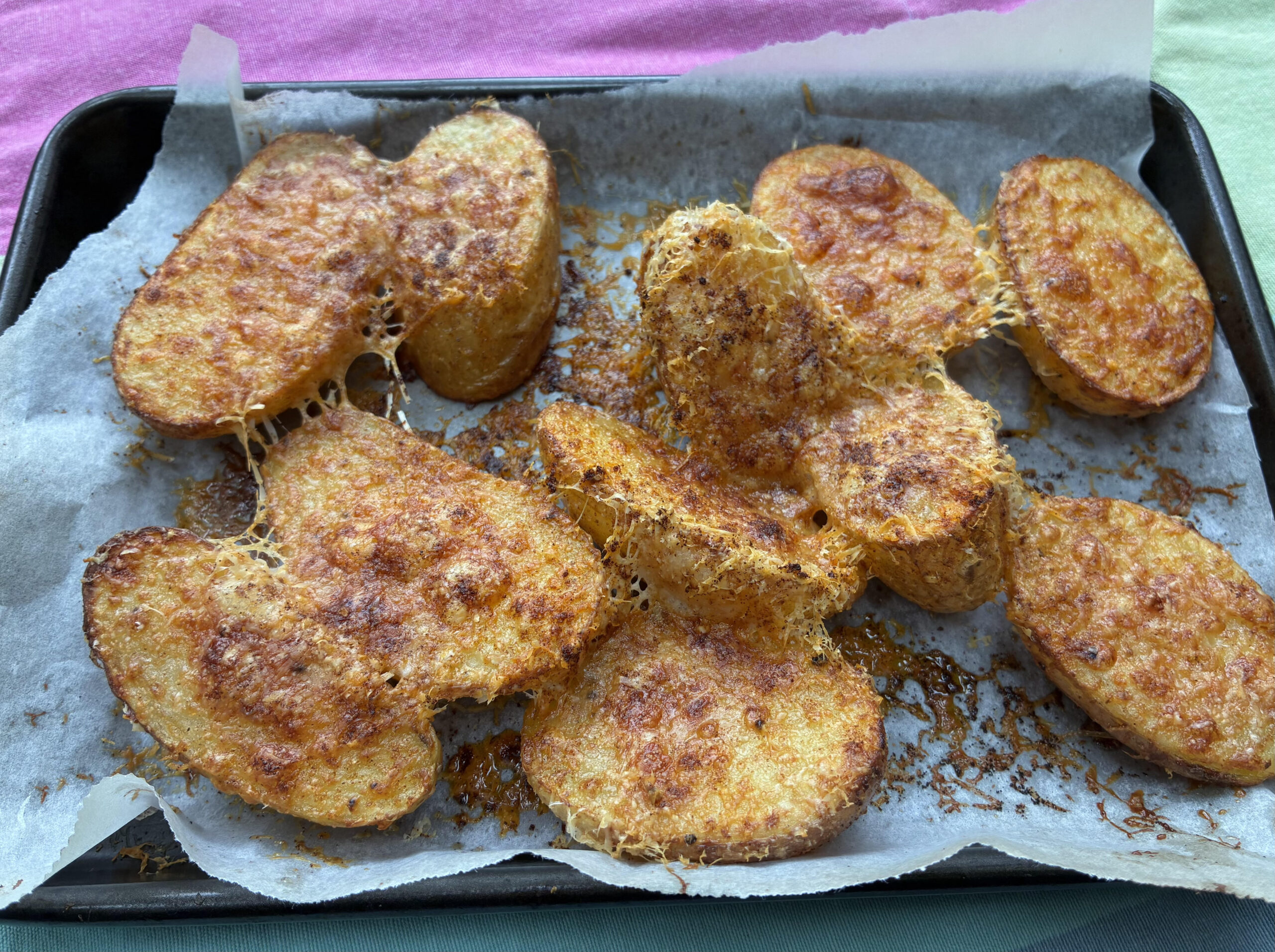
However, in the spirit of experimentation, I decided to use the new potatoes for the mid-week roast instead, and shook things up a little with some parmesan – OK, a lot of parmesan – and some paprika. I halved the new potatoes and put them in a large bowl to which I added oil and seasoning, then gave them a good mix.
I started to add my grated parmesan into the bowl too, but found that the cheese clumped up and didn’t spread too easily, so I changed tack and grated the parmesan over the potato halves once they were already laid out in the roasting tin. There was quite the blanket of parmesan and after about 30 minutes in the oven, I added some foil to stop the parmesan from browning any more.
But after 15 more minutes in the oven under foil, the parmesan layer wasn’t as crispy as I’d wanted.
I whipped the foil off for the last five minutes, then left the potatoes to rest on the side for another five, giving the cheese an opportunity to harden. They didn’t disappoint and were a proper umami hit alongside some succulent chicken and long-stem broccoli.
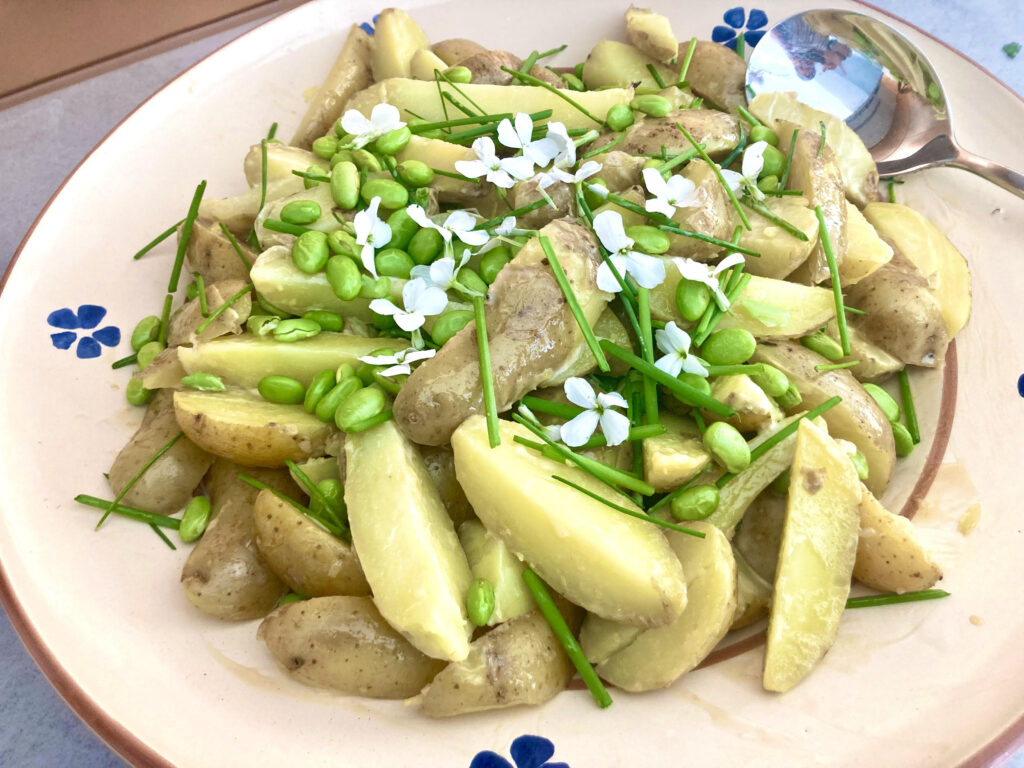
The weekend’s hosting of some friends from university days provided another opportunity to reduce my potato stock and, after browsing a few recipes for ‘potato salads with a difference’, I made a potato and edamame dish that was as bright and vibrant as the “dame’s rocket” flowers I garnished it with, freshly picked from the bottom of the garden.
The wow factor (and let’s face it, there usually isn’t one when it comes to potato salad) was all in the dressing: mustardy, lemony and shaken up with my best olive oil in a jar to which I’d also added a halved garlic clove, giving a hint rather than a hit of garlic.
My final potato dish was simultaneously the most fun and the most challenging: I made gnocchi from scratch. The process was actually very nostalgic, because I remember making gnocchi as a child with my grandmother in Italy, rolling a fork over little potato balls, squishing them slightly and creating the grooves that helped to hold tomato sauce. I remember feeling so accomplished.
It had, however, been my grandmother who’d gone to the trouble of peeling, boiling and mashing the potatoes before adding ‘OO’ flour and kneading into a dough. Next, she would roll the dough into sausages with her hands (Iwould help with that bit too, but I recall my uneven and overworked sausage being allowed to remain my plaything rather than becoming actual gnocchi…).
Making gnocchi might seem laborious, but if you set aside time in which to enjoy the process, the stress disappears and the sense of reward is high, especially at the eating stage. We ate ours with a basil-infused tomato sauce, just as my nonna served them.
Back then, on those warm mornings in the kitchen with my nonna, nothing felt complicated or onerous about it, and I really enjoyed recreating that same feeling in my own kitchen. I don’t know if things back then were always simple, but they were certainly tasty.