11 May 2026
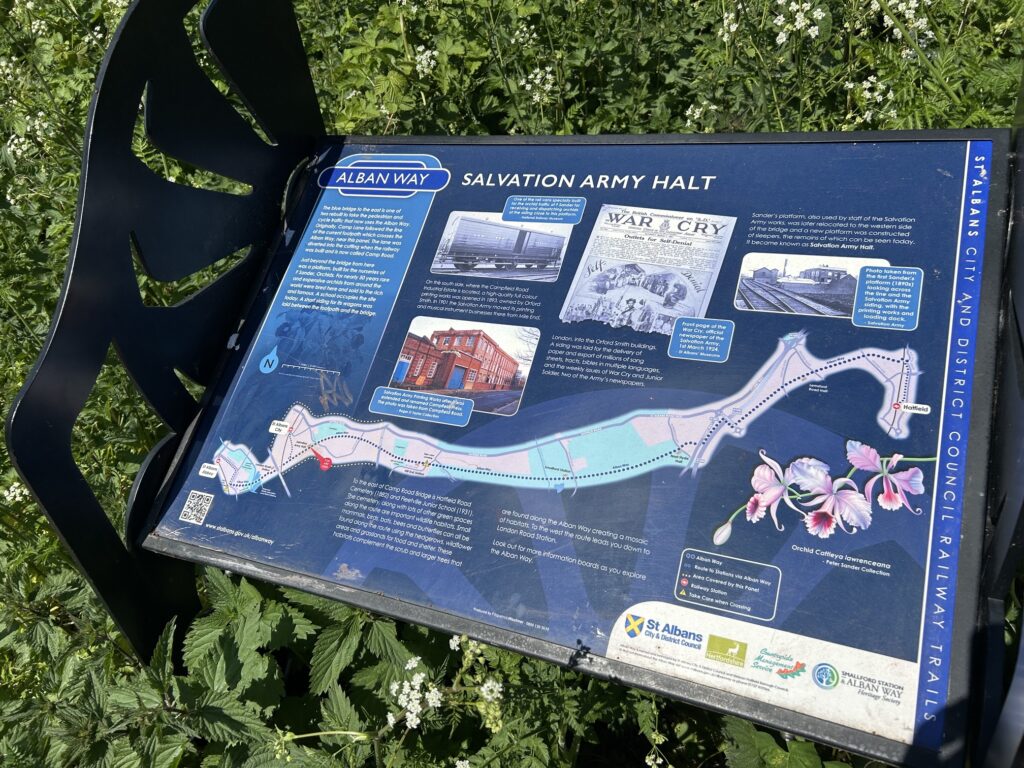
Take a walk, cycle or run along the Alban Way and you’ll come across a curious ‘halt’ or stop on the disused railway line linking St Albans with Hatfield.
Called simply ‘Salvation Army’, it’s a local link with a publishing phenomenon that today spans 130 countries around the world – and is still a common sight on many high streets around Britain.
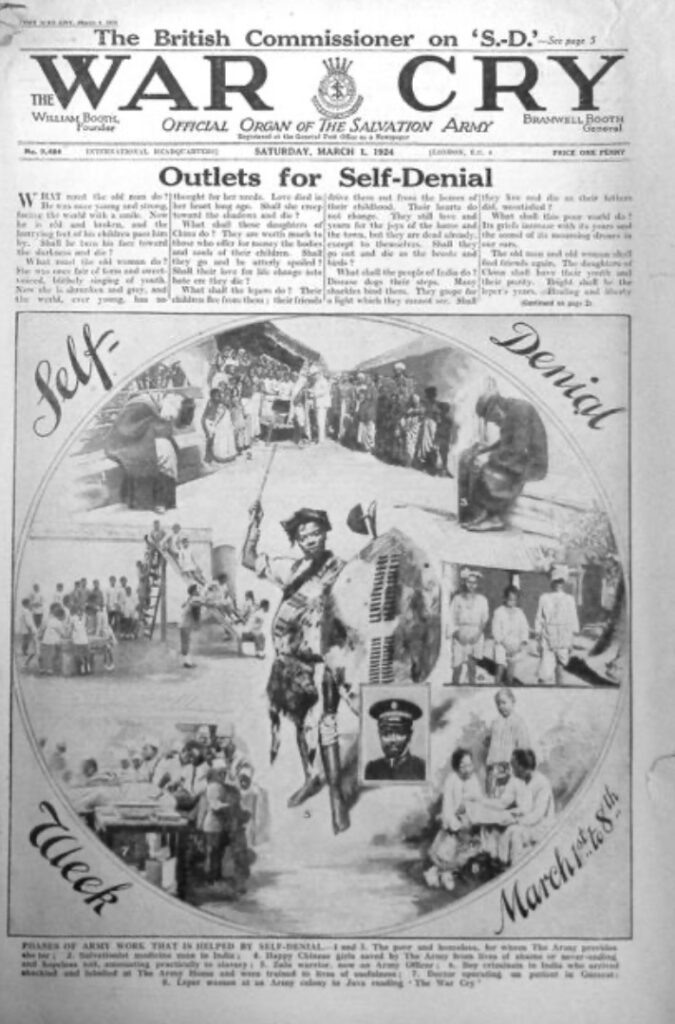
From 1901 to 1991, the Salvation Army-owned Campfield Press in St Albans printed the Christian organisation’s ‘War Cry’ – a weekly newspaper launched in 1879 when Queen Victoria sat on the throne, and Benjamin Disraeli was prime minister. Nearly 150 years later, it’s still going strong.
The stop on the line, visible on today’s Alban Way, helped speed the War Cry and other Salvation Army publications on trains across the country. The ‘halt’ and sidings continued in use until 1964.
At its peak, the Campfield Press employed more than 350 people at its Campfield Road plant. They worked on Salvation Army publications, including newspapers and hymn books, as well as commercial print work.
One Campfield Press apprentice from the 1960s recalled: “The Army gave us a sound training. You didn’t need to be a Salvationist to work there, in fact few of the men were Salvationists, but whilst you were on the premises you had to conform to Army principles of no drinking, no smoking and no pin-ups on the press, and we all had to attend a weekly service.”
A message from Campfield’s director, Colonel H.J. Wright, published in a brochure for potential customers, explained: “The welfare of employees is carefully observed in the knowledge that happy and contented workers are a source of mutual satisfaction, and everything is done for the promotion of high moral and spiritual ideals.”
Fleetville developed as a centre for printing in the late 1800s as companies based in London’s Fleet Street began to move to the city because they needed more space.
One of the first exhibitions at the newly-developed St Albans Museum + Gallery in 2018 featured the area’s printing history.
St Paul’s Church on Hatfield Road was opened in 1910 to serve the growing area of Fleetville, and today provides a range of community facilities, in addition to being a thriving place of worship.
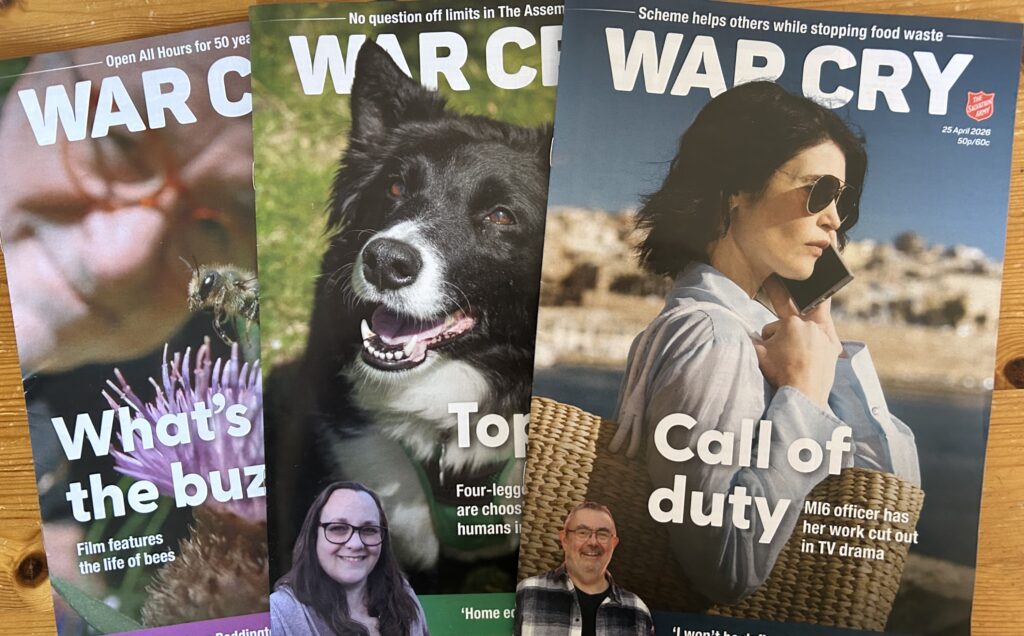
Today, the Salvation Army reports that the War Cry still reaches around 1.7 million readers in the UK and Ireland alone and raises around £1.6 million to support community projects.
I’m a fan of the publication and buy a copy every time I see it on sale from a Salvation Army member in London or on a local high street. The War Cry’s long life shows that printed publications still have a role to play in a digital world.
Recent copies have featured Premier League club AFC Bournemouth explaining the meaning of a Bible verse on a player’s bandage, lessons in honesty from a new ITV spy drama and a mother explaining why she chose home schooling for her daughter.
Each edition also includes information about the Christian faith, and how people can obtain more information.
The Salvation Army began on the streets of East London in 1865 when Methodists, William and Catherine Booth, abandoned the traditional concept of a church pulpit to take God’s word directly to the people.
Today, it is a church and charity active in virtually every corner of the world including St Albans and across Hertfordshire. It is currently serving in more than 130 countries, with many producing local variations of the War Cry – a global phenomenon with deep connections to St Albans.
Rev Peter Crumpler is associate minister at St Paul’s Church, Fleetville, St Albans.