


14 Apr 2026
For 22 years, Annie Thomson has been the figurehead of The Marlborough Science Academy. Ahead of her retirement this summer, she sat down with Laura Bill to discuss a career in St Albans which has spanned 36 years across four secondary schools.
She is extraordinary, intriguing, super intelligent and warm. Yet formidable. The respect she has for her students is reflected back in their interactions with her. She is not your average headteacher. She “gets” them and they her.
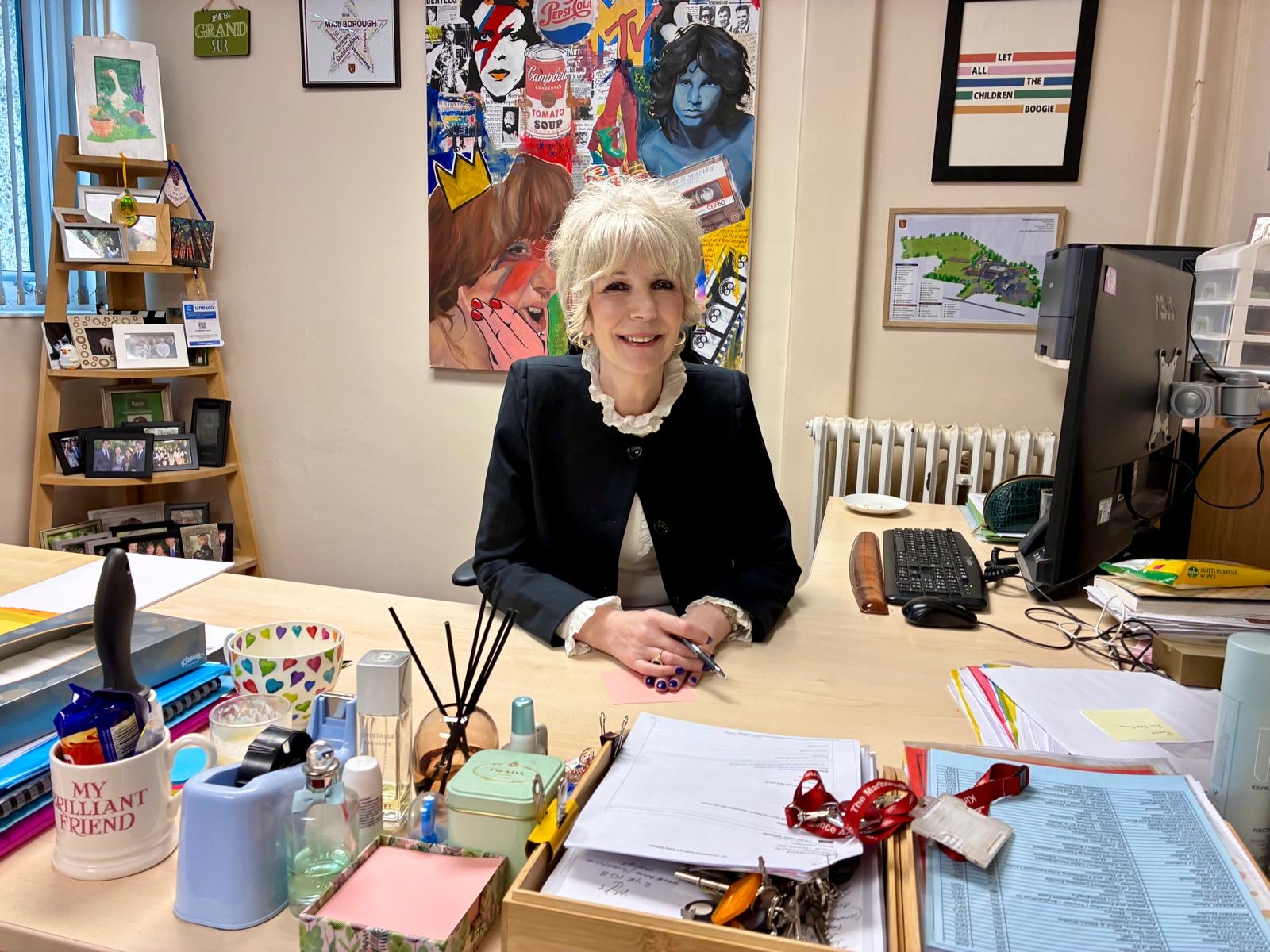
Her office feels like a creative, safe space and I bet those walls have heard some conversations over the last 22 years. There is a huge colourful piece of artwork behind her desk – a collage featuring David Bowie and Jim Morrison among others which was produced by one of her past students.
She taught me at Beaumont, having joined in 1990 as head of home economics after transferring from a school in Liverpool. I still remember some of the key terms from her GCSE food technology lessons, including staphylococcus aureus, listeria and botulism as well as how to make an epic shepherd’s pie. It was the only lesson where we had the radio on and it felt like home. Sometimes she’d even give us Jaffa Cakes.
She was warm yet slightly terrifying at the appropriate time as a head of Years 8 and then 9. I did joke with my editor that I’d better not wear too much make-up to interview her or she might come at me with her make-up wipes.
Then there were the scare stories of hairspray and Bunsen burners. Were you even a secondary school teacher in the nineties without that little gem coming out a few times a week?
I remember one assembly when girls in our year had been caught shoplifting. Annie told us a story about her friend who had been marched through Boots crying and was so embarrassed when the police arrested her and rang her parents… ‘Was that what any of us wanted?’ It wasn’t, obviously.
Her almost Liverpudlian accent, love of Pink Floyd and David Bowie and blue eyeshadow made her stand out as someone way cooler than the other teachers.
After Beaumont, she went to Sandringham as assistant head but the teachers called her the “student welfare officer” due to her pastoral nature. She was later appointed deputy head at Francis Bacon – now known as Samuel Ryder Academy – before taking her first and only headteacher role at Marlborough in 2004.
She explains how things have changed over the years: “Schools are really hard to navigate, and I think they’re getting harder to navigate. There’s more pressure on young people to look a certain way, act a certain way, behave a certain way. There’s uncertainty about their futures, even more so now.
“It’s our responsibility to create schools which are almost like a sanctuary. It gives them an opportunity to be children. Obviously, it goes without saying, there needs to be awesome and inspirational teaching.
“That’s really important because they need to believe they can reach for the stars when sometimes they haven’t been told that ever in their lives. So I’ve always believed that, but sometimes it’s just done in different ways.”
Asked about her approach to behaviour management, she said she believes there is always a reason behind a particular incident: “I think the more time you give to reflect and the quieter you are, the more likely you are to uncover what’s actually going on.”
I know from my own teaching days that shouting doesn’t really work, as the pupils just zone out until you become background noise. Annie said she believes children need sanctions for certain behaviours, but listening gives teachers an insight as to the whys and the wherefores: “It allows you to support that person in a way that can be successful, not all the time. You can’t win all of your battles, but that’s what we’ve always tried to do.”
It’s a breath of fresh air to hear such realism from a headteacher.
“Our values are embedded through the school like rock. Teachers have to be much more skilled now than we did back in the day because there isn’t that instant respect just because you are the teacher.
“You have to earn that, and I believe in that. You have to be so multi- skilled. I’m not sure I would be able to do it anymore.”
She said she’d tell somebody starting out as a teacher today that it is a profession, and they must have a really strong passion to want to do it: “I think you’ve got to have that burning desire to really, really want to care and make a difference and also understand that you’re not always going to make a difference.
“You’re not always going to be the teacher that they’re going to talk about in hushed tones because they’re not all going to want to enjoy your subject or need your subject.
“I think there’s a degree of humility needed in terms of the role, but I think it’s multi-skilled. And I think the biggest bit of advice is you never, ever stop learning.”
She said back when she taught me at Beaumont, things weren’t talked about as much as they are today but that it was really easy to pick up on things in the food tech rooms, despite Van Morrison playing in the background.
Annie talks about how sometimes children forget where they are and accidentally call their teachers “Mum”. (I can testify to this. I’ve also been called Dad and Sir before).
She adds: “You’d just be helping them to do something, and you would establish that relationship. And I think that’s kind of… That ability to forge a relationship with the children and not pretend you’re better. It’s really important. As long as there’s the respect there, otherwise you’e lost it.”
There is definitely a skill in her style. Often teachers are too caring or too strict but I wonder how she manages to do both so well.
“It’s clarity. It’s role modelling. It’s also trying to instil your values within whoever you recruit.”
One thing she isn’t afraid to do is apologise if she makes a mistake: “You know, accusing a student when it’s not been them, or maybe overreacting in a lunch queue, particularly in the rain, and then saying ‘I’m sorry, I shouldn’t have spoken to you like that’.”
But she said it’s important teachers are able to show students that when they mean business, they mean business: “I have got no tolerance for bullying. I can’t bear it if you go out of your way to make somebody feel unhappy. I just can’t bear it.
“However, we do have a good code and a good policy, and we follow through with that. There’s always a reason. We just have to get to the bottom of it. But that doesn’t mean you excuse it.”
Annie went to a really strict Catholic school where she was taught by nuns.
“And you had a gabardine blazer that used to smell in the rain. I remember that.” I recall one of her anecdotes.
She looks astonished at this memory: “It’s frightening, isn’t it? It is absolutely frightening what you can remember. Yes we used to have these horrible green gabardine blazers that weren’t waterproof.”
It makes us both reflect on how important teachers are and the things they say. It’s odd really the memories I have from all those years ago. I’ll have other snippets of things from lots of my old teachers and so will probably every adult alive. The good and the bad.
Annie has her own recollections: “I had nuns that absolutely terrified me. They absolutely terrified me to the point where I was almost speechless with fear that I would get it wrong.
“And then I had two amazing teachers. One taught me Latin and classics and one taught me English and they were just, I would have died and gone to heaven for them. They were just exceptional teachers. It does, it makes such a difference to you.”
She decided to become a teacher while training to be a bar manager. A maths teacher called Mr Kimble was in the pub and she said he changed her life. He went to the local library in Torquay when she was working and came back with some information on a teacher training course.
“Two days later, I was on the train, heading up to Liverpool, got on the course and then I needed to get my maths O-level and my tutor said, ‘You’d be an awesome teacher, Annie’ and I said ‘I can’t get my maths, Elaine’. “And she said, ‘My husband is a physics teacher and he will help you on a Thursday evening’.”
Annie and Elaine are still friends today: “Teachers change lives and sometimes they don’t know it. And teachers change lives for the good because they’ll say a nice thing or teachers will change lives for the bad because they’ll say something really hurtful and you’ll never forget that.”
She says the biggest challenge for a headteacher today is the recruitment and retention of staff because there are more and more expectations placed on the profession. This is then coupled with a lack of resources and tightened finances which makes it even harder because they are trying to do so much with very little for children who need additional support and guidance.
“SEND is becoming a much more complex and challenging issue. And I think without the right resources, without the right training, without the right investment, without the right analysis and assessment, I think it’s a genie that’s been let out of the bottle, and I think it’s going to be really difficult to manage expectations. Expectations on teaching staff to be teachers of SEND and masters of their subject and managing of everything else, I think it’s really tough.”
She looks thoughtful and slightly sad as she pauses for a sip of tea: “I have got some exceptional staff. Some that have been with me since day one. Some that have been here since 2004. I’m very lucky. I know that. I am.
“I’ve had amazing support from my husband and family as well as my governors in particular Jane Walker Smith who is chair.”
What are her plans for when she retires? “I don’t know, really. I’ll probably have a rest. tidy my house and then I’ll take stock and decide. I will do another degree – probably in classics.”
What will she miss most? “The children. Absolutely. From the minute I walk out to the minute I go home, the students, even when they get it wrong, and they do, they make me laugh, they’re kind, they’re respectful, funny, they’re nice to people who visit the school. You’ve seen them, they want to be proud for their school.”
She says of the best parts of her career is having young people she taught at Beaumont now on her leadership team, and other staff who have gone on to be heads in their own schools.
“And seeing students, one in particular, I’m not going to name him because I don’t want to embarrass him, but he will live with me to the day I die because he was so disadvantaged and so lacking in ambition and he was really challenging in Year 7 and then he had some epiphany whereby he decided school was his way out. He really, really focused and he’s a barrister now and he’s extraordinary. I’ve got so much respect for him because that could have gone the other way.
“I think it’s tough though. It’s really tough because it doesn’t work for everybody.
“If you come from a family where there isn’t a legacy or even if you have a legacy, you might rebel – we’re living in really tough times. And that’s always been a fight.”
Can she imagine a time where the school day sees a big overhaul?
“I don’t think they’ve [the Government] got the imagination or the creativity to think about how we could do this better, how we could equip children for a future where there’s going to be more dependence on AI and how we can help them – more than we do – through this crippling anxiety that stops them coming to school? And school avoidance and all of that.”
Growing up, she says her dad was her biggest cheerleader: “Because back in the day fathers didn’t encourage their daughters to be anything but wives and mothers. My dad was really successful in his own career, and he always encouraged me to be me and to push the boundaries.
“I admired his brain, his work ethic, his success, and the fact that he was always there.
“And Elaine I mentioned earlier. I’ve had other mentors along the way. I had blue hair as well at the time. It was fabulous.”
Does she like Waterloo Road, the television drama about a secondary school? “I can’t bear it. Why can’t they get somebody who knows what they’re doing to research these programmes to understand? The research is so poor.”
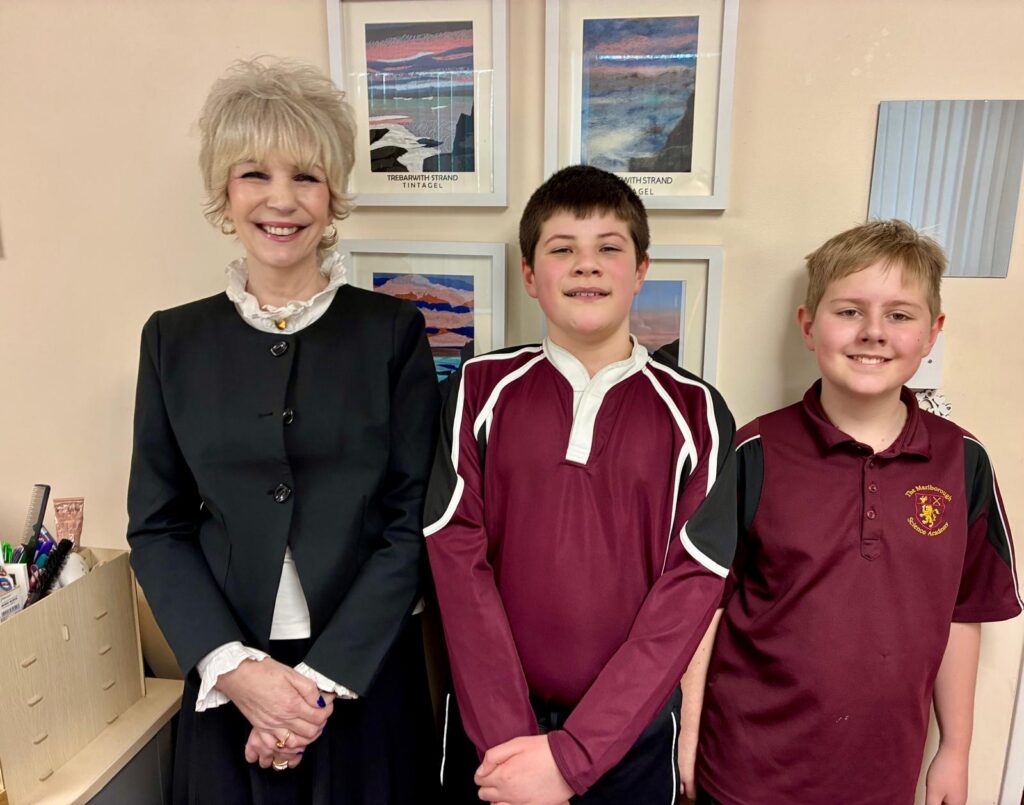
Some students have been hanging around observing our interview, and I ask them a few questions. Their answers back up everything I’ve known from my Beaumont days three (ahem) decades ago plus National Insurance.
Arthur in Year 8 told me about a fantastic club Annie runs for a small group of students, after he said that the teachers there are “really interactive”: “Ms Thomson’s club is classics, history, philosophy and it’s a real laugh. It’s a lovely break from the rest of the week.”
Another Year 8 boy called Brendan said he loves the club because it is lots of fun and he likes how they “go off in random ways”. I suspect what he is referring to is Annie’s style of being able to adapt to the room and flexibly bring out the best in everybody, encouraging openness and reflection.
Annie described the group as “45 minutes of pure unadulterated joy”.
Lauren in Year 7 said that when she came to the school she was made to feel very welcome and added: “At my primary school my headteacher had favourites but Ms Thomson doesn’t have favourites she treats everybody equally.”
Alex in Year 8 said he hopes the new headteacher appointed is one who “upholds the school values” – impressive words, I thought – and Brendan chipped in that he would like a head who is “fun, engaging and respectful”.
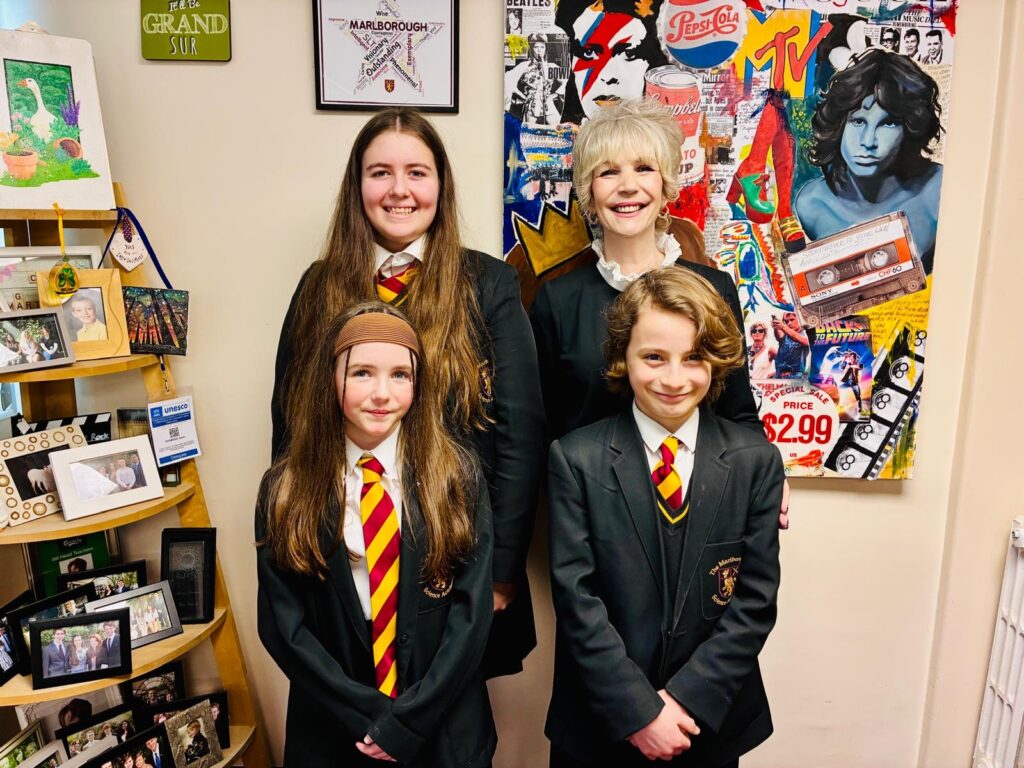
Charlotte, a Year 10 pupil, is described by her headteacher as “lighting up her day” and the student said that Annie is caring and treats all students with respect.
Whoever follows in her footsteps will have big shoes to fill. It’s also unlikely they’ll have ever had a gabardine blazer that smells in the rain, blue hair or play the Pink Floyd classic ‘Another Brick In The Wall’ – lyrics “We don’t need no education” – in assembly.
“I’ve had a great career. I’ve loved my job. I’ve made loads of mistakes. But I’ve had some real successes too.”
So why are you leaving? “I don’t know…” she smiles.
“I kind of think, after 22 years, maybe it’s time for somebody to come in and look at the school with fresh eyes. And I know that’s right.”
- This interview took place before the recent appointment of Caroline Legg as the new Marlborough headteacher.
