08 Feb 2026
Remember September 2005? In the United States, emergency efforts continued to help those impacted by the devastating Hurricane Katrina and the California Senate passed the first bill to allow same-sex marriage, while in the UK the repercussions of the July London bombings continued to play out and England won The Ashes.
Closer to home St Albans City FC managed to reach second place in the Conference South table following a 2-0 win over Lewes, and St Columba’s College held a series of events to mark its 50th anniversary.
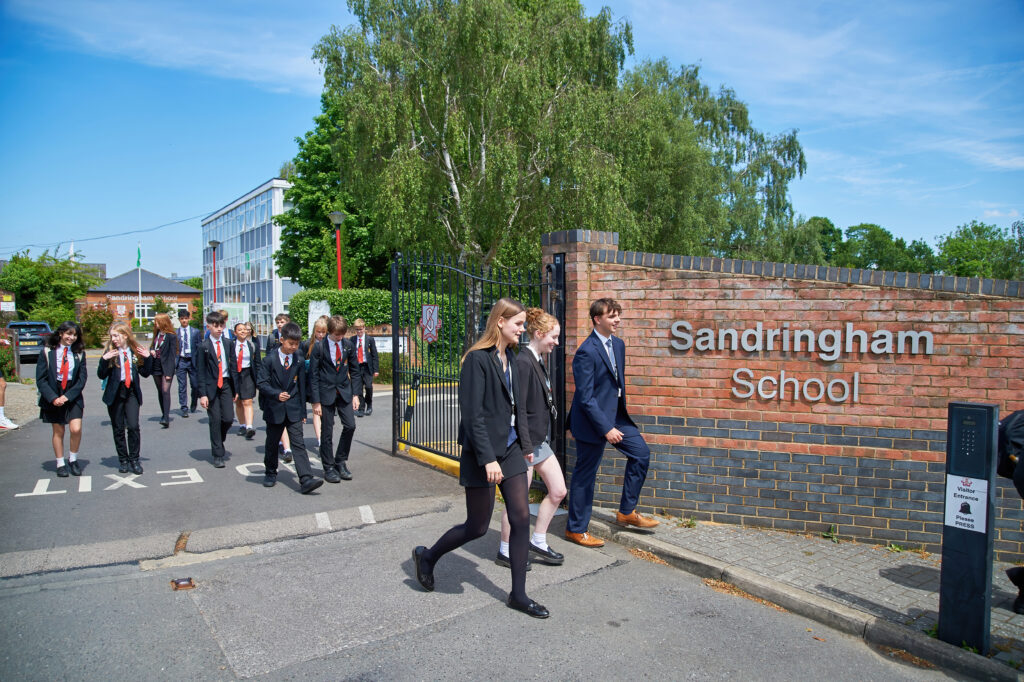
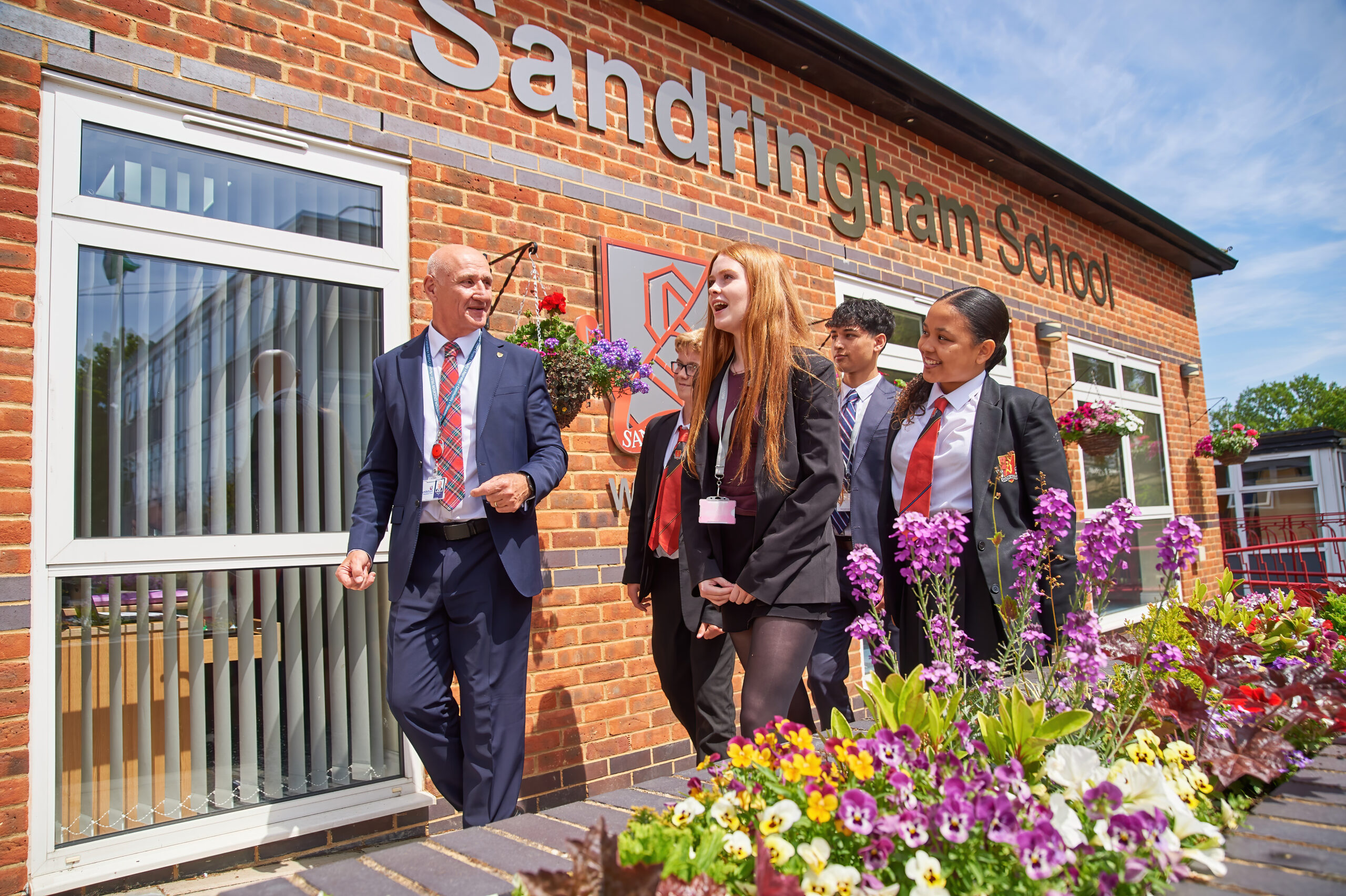
Meanwhile, at Sandringham School, a new headteacher arrived from Hemel Hempstead School to begin a tenure which would last for an impressive 21 years.
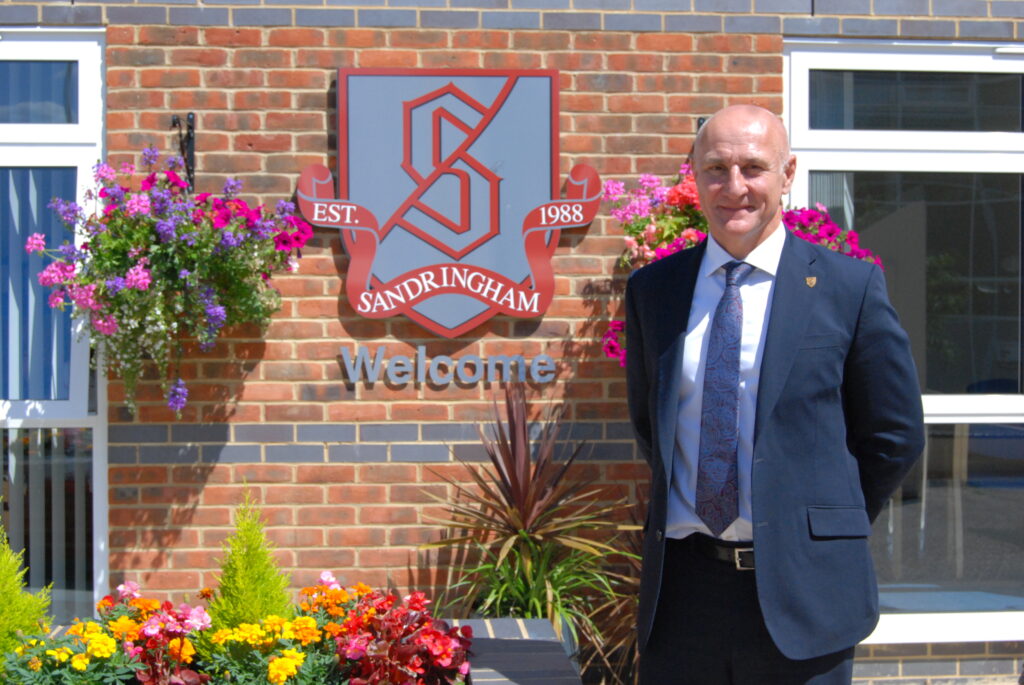
As Alan Gray contemplates his retirement at the end of the summer term, we caught up with him to reflect on the achievements and challenges of the past two decades, and ask what sort of legacy he feels he will leave behind.

Alan had been at Hemel Hempstead for five and a half years when the headship at Sandringham came up, an opportunity he said he could not let pass by.
“It was a school I had always admired for its innovation, and somewhere I thought my skill set would suit. I had secured a lot of things at Hemel so it was in a strong position, whereas this was a real chance for me to grow professionally and support in its desire to improve further.”
But did he expect to be there 21 years later? “I don’t think I had any view one way or the other. I’m the kind of person who is very loyal, I always thought it was going to be for a longer period of time, and I think working in such a school is a privilege.”
Following his arrival at Sandringham, there were several key areas which he deemed to be a priority for improvement: “Under the old [Ofsted] framework the school was graded good, which was a very strong starting point, but my job was to come in, have a good look at how things were being down, and use my professional expertise to build a team to fine-tune things.
“I don’t think there were any radical changes, it was incremental development over time. The starting point was Key Stage 4 of GCSEs, looking at the curriculum and making sure it met the needs of the school community, and then delivering that very well. The outcomes significantly improved and we reached the top five per cent in about four years.
“The next work was looking at the sixth form and how to develop a culture of very strong outcomes, lots of opportunities for independence and leadership and a sixth form that adults as well as students want to be in. When we show parents around they often say they want to be back in school now because of the richness of the environment.”
When it came to behaviour, he was keen that the children knew what was expected of them and as a result behaved appropriately.
“It’s not oppressive or anything like that, it’s not a jail it’s a school. It’s all about relationships, and if you’re very clear about the expectations and don’t waver from them, then things tend to fall in place.“There’s sometimes outliers who just can’t cope with things, so you put different strategies into place, but by and large the vast majority get it. If you appoint staff with high levels of emotional intelligence who can really connect with people, you can create an environment where there’s consistence in the expectations from one lesson to the next.”
Has he seen the role of the teacher evolve during his tenure at Sandringham, becoming more pastoral and developing a different relationship with pupils?
“I’ve been teaching for nearly 60 years now, and I think there’s always been a strong pastoral element expected in England. I think sometimes the complexity of needs are more evident now, whether that’s because we can measure them better or they actually are more, and I think teachers are more skilled now in understanding the barriers that might exist and how you support somebody to get over them.
“As well all know, special needs is high on the agenda, there’s more diagnoses and we could have long conversations about why that might be, but schools don’t have the resources, so there’s pressure about how much support you can realistically provide to young people, and I think that’s the biggest frustration in all schools, not just Sandringham.”

The Government has been looking at whether the current thresholds for EHCPs – education and health care plans – might be changed to make them more challenging to obtain, as these are linked to resources, which he feels could potentially prove an issue.
Twenty years ago, it’s fair to say many SEN children might have been dismissed as troublemakers or criticised for not paying attention, whereas nowadays there’s a degree of empowerment in identifying that this is not the case.
“Teaching’s far more sophisticated now, and teachers are much better at adapting to particular children. They’ve got seating plans so SEN children are located in particular places, they are given a certain type of work, and teaching assistants are used much better than previously, and as a result of that they are performing better.
“In the 21 years I’ve been here, that’s definitely one of the things you would notice. It wasn’t a bad school at all back then, but it’s so different now. It would be nice to compare the two side-by-side…”
At the same time, has there been an increase in paperwork and bureaucracy for teachers which has taken them away from the classroom?
“For me there is a lot of bureaucracy, but you try to be a gatekeeper and keep a lot of that away from teachers. Over the years there’s been a big drive on wellbeing and workload, and we’ve significantly reduced the number of meetings teachers have to attend and the amount of unnecessary paperwork they complete.
“The really interesting thing is that the outcomes continue to rise, which shows you that they’re putting their energy into teaching children, rather than filling in forms and accounting for themselves.
“Teaching’s still a vocation. I love it. I said in a meeting this morning, I just love everything about education. I don’t think you cannot be in any profession, whether it’s the NHS, journalism or teaching if you don’t inherently love the job. It doesn’t work.”
But how has his role changed in this time? Is he less hands-on academically?
“That’s a good question. All heads have to be business managers as well, and quite often the training you get doesn’t include a lot of the financial elements, so you have to get to grips with it pretty quickly because you’re managing millions of pounds of public money.
“There’s not a lot of headroom, so you have to make wise decisions about how many teachers you can have, how much you pay them for particular roles, how many support staff you can have. For example, the percentage of our income spent on staffing is about 84 per cent, so there’s very little room for anything else.
“It’s very tricky, because you need the skills of a business person, but predominantly you’re a head teacher, so you have to know the curriculum, pedagogy [the method and practice of teaching, especially as an academic subject or theoretical concept], and can quickly get into a lesson and see that the right thing is being taught at the right level and is age appropriate.
“It’s a highly skilled job, but you do learn more and more the longer you do it. There’s something about having some experience which helps you cope with anything that comes your way.”
Another critical factor in Sandringham’s success has been its partnerships with other schools, both in the Ambition Education Trust and the BeauSandVer post-16 consortium.
“Originally the notion of academies was to opt out of local authority control so you can make your own decisions, and Sandringham was one of the first schools in Hertfordshire to do that back in 2011. We wanted to be in control of our admissions, term times, the curriculum we offered, staff employment and so on.
“Subsequently trusts then sprung up where you have clusters of academies working together, where the bottom line is all around collaboration. By working with a wider group of professionals you’re more informed, you have better conversations and you can make better decisions for your school as well as everyone else’s.
“I think you’re quite vulnerable if you’re on your own, and being in a partnership can be very beneficial in terms of sharing resources, economies of scale, cleaning contracts, catering, buying resources and all those kinds of things.”
About seven years ago the school established a new programme, Sixth Formers into Teaching, which has successfully trained students how to teach and prepare lessons, whether in primary schools like neighbouring Skyswood or Sandringham itself.
Many of these students subsequently return to the school as trainee teachers and join the staff, creating the next generation of Sandringham staff, something which is very much part of Alan’s ethos.
We’re sitting in the sixth form block, watching the school cat basking in the winter sunshine coming through the conservatory roof, and various students are milling around after finishing mock exams earlier in the day.
“Not everybody is a full-time teacher,” he says, alluding to the huddles of teenagers. “Some of these just want to make a load of money, so will go into business or law. But you know that if you give them a good experience here in the future some of them might grow fed up with what they’re doing and come into teaching.
“We find that in companies where there are less strong moral values, it’s about making money regardless of what happens, and they get fed up with it and come into a morally purposeful environment.”
The past 21 years have seen huge challenges in education, including the impact of Covid, the rise in the mental health crisis for young people, successive Governments changing their minds about what should be in the National Curriculum and how schools should function, so is it fair to say it’s been a bumpy ride?
“Regardless of what’s happening, you’ve got to look at the bigger picture, and the way of coping with that is having a vision. You need a really clear vision of the kind of school you want it to be, and then you respond to external pressures when they come along, and if you’ve developed a really strong culture then you’re much more resilient.
“With Covid, while it was catastrophic and really damaging, because Sandringham already had devices for everyone and Google Classroom set up it was easier to accommodate that change.
“It’s all about the resilience you build. The stronger the culture, the better you are to accommodate any changes that come along, and one of the key things is not to be afraid of change.
“Sandringham has never stood still. Some people might come in and say, ‘Look, you don’t need to do anything, this is perfect’. Well it’s not, no school’s perfect. It’s pretty good but there are always things you can do better, and sometimes you have to do them differently.
“You cannot just keep doing the same thing over and over again, otherwise you’ll always get the same outcomes.”
He has alluded several times to the Sandringham culture, but how exactly would he define this sentiment?
“We genuinely believe that it doesn’t matter who you are, what your background has been previously, you are important in the organisation, and you can be very successful, and you are someone.
“This is a big school, but a small school. Every single child here feels they belong and they matter, they feel comfortable, they’re going to perform better, and that’s the culture that has been developed over the years.
“When Ofsted came in in 2008 the lead inspector said, ‘Alan nothing’s left to chance here,’ and I thought, ‘Well why would we leave anything to chance?’ Life is too precious to leave to chance.”
Perhaps one of the biggest achievements of Alan’s tenure was being named TES Headteacher of the Year in 2017, a phenomenal accolade which has lost nothing of its impact over time.
“I was deeply humbled by that and it was totally unexpected for me. I was very flattered, obviously, but I was also really pleased for the school to have that recognition. It was a reflection of the whole team, and I’m just a part of that.”
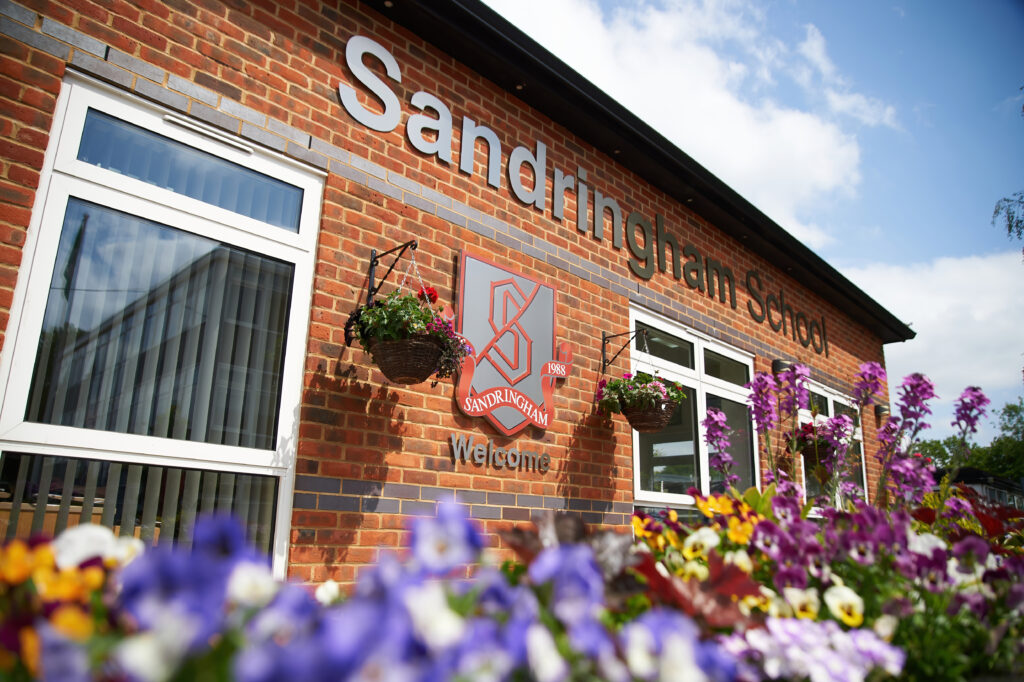
There have been rumours of his retirement for many years now, so why was the time right to finally step down?
“People kept saying, ‘When are you retiring?’, and I’m at an age when it was clearly something I needed to think about. You can’t go on forever. I love this work, but equally other people love it as much as me, and they should have an opportunity to be discovered. It just felt like the right time, there was nothing sinister behind it.”
He is clear about what he’s going to miss the most: “The students. Just that interaction. I can have a conversation with one of them and it just brings you back to when you were a 17-year-old, and that’s quite healthy because when I’m making strategic decisions with other adults I can understand what the students’ needs are.
“But I don’t know the slang, and I think they find that quite cute, and they know more than me about some things which is really important. Part of good leadership is not coming across as though you know everything, but you still have more to learn.”
Unusually, he will be involved in the recruitment process for his successor, as he is also chief executive of the trust. Although he obviously has very high standards, will he be looking for someone similar or different to his style of leadership?
“We’ve compiled a strong selection of people who will be involved in the process, so that will allow us to have very different views and come to a collective agreement.
“I’ll be fascinated to see where we end up. The key things we’re looking for are somebody who is passionate about the career and education, and has significant potential.
“I’m very different now to when I came here 21 years ago, not just in age but in attitude, as you learn so much. It’s about fit as well, and we’ve got the students involved which will probably be the hardest test the candidates will go through. That’s the acid test.”
Once a successful candidate is chosen, there will obviously be time for a proper handover, and not just about the running of the school and any ongoing projects – knowing you might need to give a particular door an extra tug because it gets stiff in the winter for example, might be one of dozens of things Alan has picked up over his tenure.
Which prompts the question, what have been the standout moments of the past 21 years? “There’s too many. Almost every day is to be cherished because something wonderful happens. They’re all things to celebrate. I couldn’t really single out anything, I’m just incredibly proud of this school community.
“The main satisfaction for me is knowing that the students are well looked after, they’re getting a good deal and they’re set up for the future.”