


04 Feb 2026
July 1946, the first summer free of war for many people for what must have seemed like a very long time…
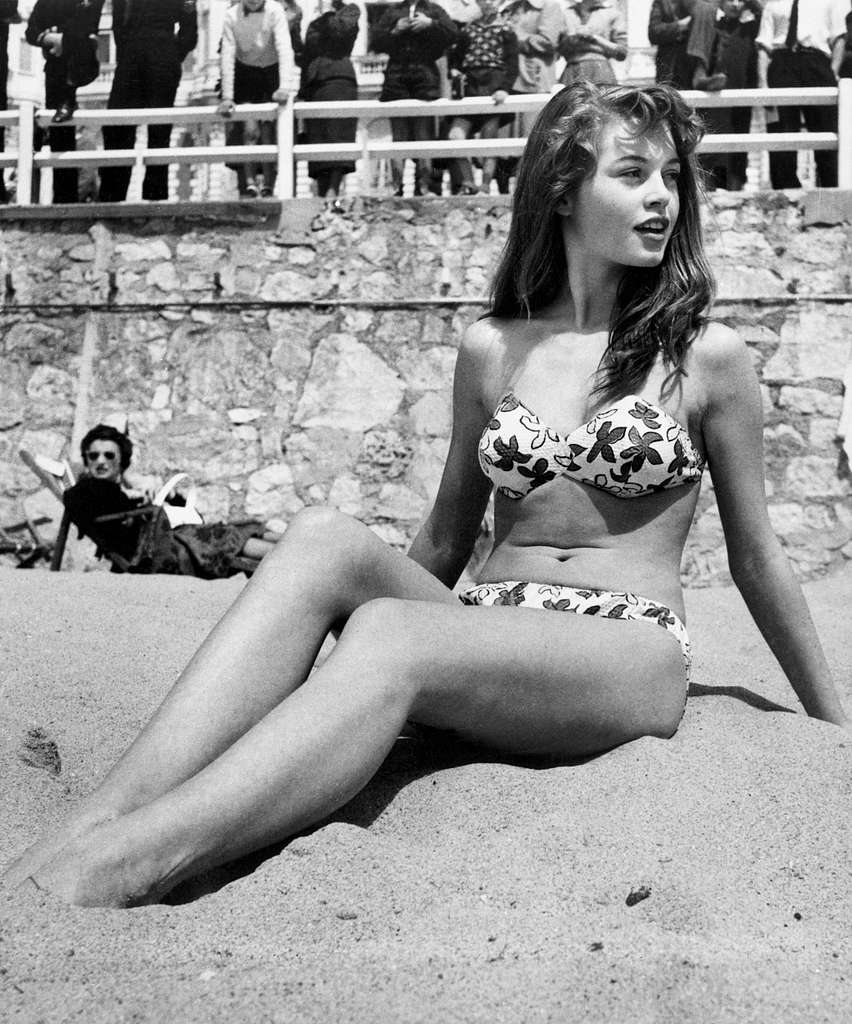
In France, a nude dancer from the Casino de Paris brazenly modelled four skimpy triangles held together with string. Named after a Pacific Atoll where atomic tests had just taken place, the bikini caused shockwaves of its own.
Although two-piece swimsuits had been around for a while, they mostly covered the navel. But the designer Louis Réard daringly described his creation as “a two-piece bathing suit which reveals everything about the girl except her mother’s maiden name”.
This shocking new swimsuit was banned from many European public beaches and swimming pools. Further east, it was seen as ‘capitalist decadence’.
Outraged magazine columnists wrote that no girl “of any tact and decency would ever wear such a thing”. But in 1951, Eric Morley arranged the Festival Bikini Contest, which was to evolve into Miss World.
The first winner was Kiki Håkansson of Sweden who very swiftly found herself condemned by no lesser figure than the Pope.
It was a new time. The war was over. But it was to be a tough peace.
The people of St Albans, like the rest of the UK, found that many essentials were still rationed. Housing was in desperately short supply due to war damage. For a few years, things were to get worse before getting better.
The bikini may have arrived but the same year, bread was rationed for the first time.
And who would want a bikini during the winter of 1947, one of the coldest on record with power shortages to add to the chill?
But there was hope. And, of course, there was a steady stream of servicemen and women finally heading home. Over four million servicemen and women were demobilised. It was a huge process which began in mid-June 1945. By the end of that year 750,000 had been returned to civilian life. Each received a one-off grant of £83 (about £4,500 today), although there was precious little to spend it on.
Out of the forces at last, they were allowed the doubtful privilege of being able to keep their uniform. And to help with the transition back to civilian life, the Government provided each man with a full set of clothes and a small suitcase to carry them in. Underwear, two shirts, tie, shoes, hat and coat – plus a ‘demob’ suit.
Sounds ideal – a tailored suit of pure wool. A selection of fabrics and colours, and the choice of either a three-piece, double-breasted suit or a single-breasted jacket and flannel trousers. The only problem was that when men turned up at the demobilisation centre, they had to choose their suit from what was available on the day and hope that they would find a decent fit. The suits were mass- produced (75,000 per week by the end of 1945), easily identifiable, and criticised for being old fashioned in their styling. For many, it was just a change from one uniform to another.
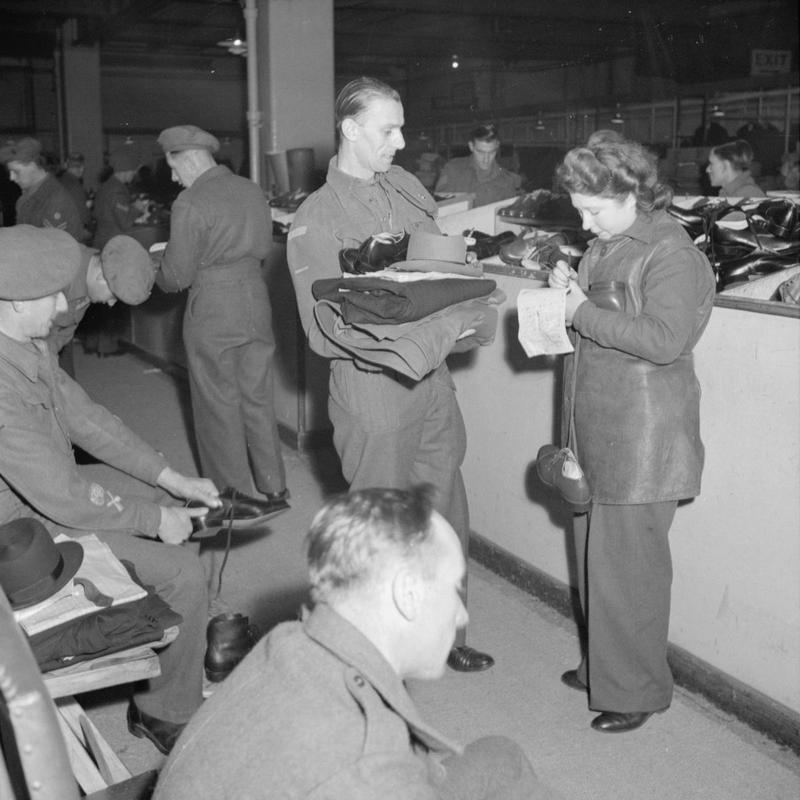
For those previously used to pre-war bespoke tailoring, the demob suit was just beyond the pale, but for others this was the first suit they had ever owned and continued in use for years, brushed off for weddings, funerals and any other formal occasion.
There was no equivalent of the demob suit for women. They had the luxury of a cash sum and extra clothing coupons to buy an outfit of their choice.
But whether they had been in uniform or not, post-war clothing on offer was still governed by fabric shortages and rationing.
Available styles followed the wartime Utility look, with simple lines designed to minimise the use of materials. Even though many of these outfits were designed by couturiers such as Norman Hartnell and Hardy Amies, they quickly lost their appeal.
British women looked enviously across the Channel because it wasn’t just bikinis coming out of France. Busy in his Parisian workshop, Christian Dior was intent on the creation of his New Look, to be unveiled in his debut collection of 1947.
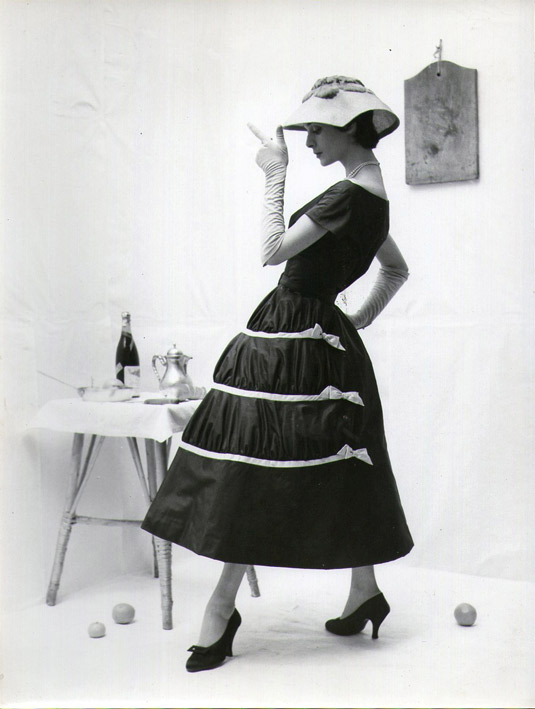
Instantly adored by devoted followers of fashion, the New Look created a curvaceous silhouette. Instead of boxy shoulders, rounded ones. Instead of skimped material, lavishly full or long, reed-slim skirts celebrated tiny waists and curves.
Not everyone welcomed the New Look. Materials were still scarce. Politicians declared the New Look unpatriotic. George VI forbade his daughters, the Princesses Elizabeth and Margaret to wear it. After all, some designs required a monumental 15 yards of fabric.
But 1949 brought an end to clothes rationing and a year later, even Utility clothes were adopting New Look touches. Women’s magazines switched from providing advice on how to ‘make do and mend’ and instead offered aspirational images of the latest styles.
Necessity had meant that creative skills were honed during the war. Many women had become adept at making do and the wide choice of dress patterns now available meant that they could create their own wardrobe.
Synthetic materials like metallic lurex, polyester and nylon net were also available. As well as that, there was ready-to-wear from department stores like Fisks of St Albans.
Mail order catalogues would be poured over while independent dress salons called ‘Madam shops’ provided clothes for local ladies of means.
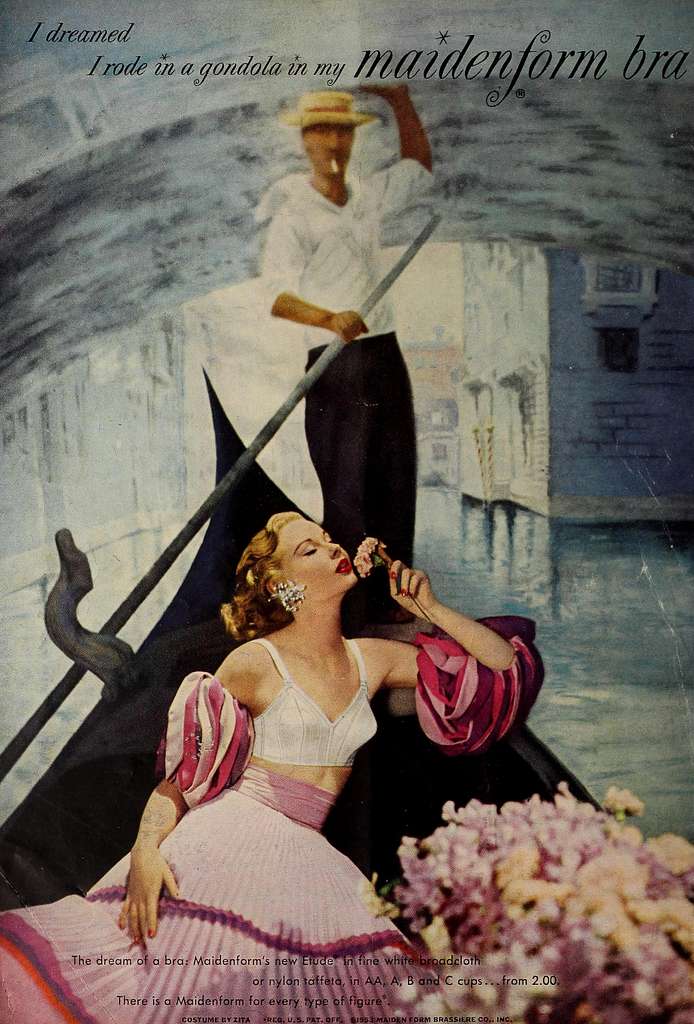
Of course, the tiny waisted look of the New Look needed the right underwear. The early fifties brought about the ‘waspie’, a tight corset belt.
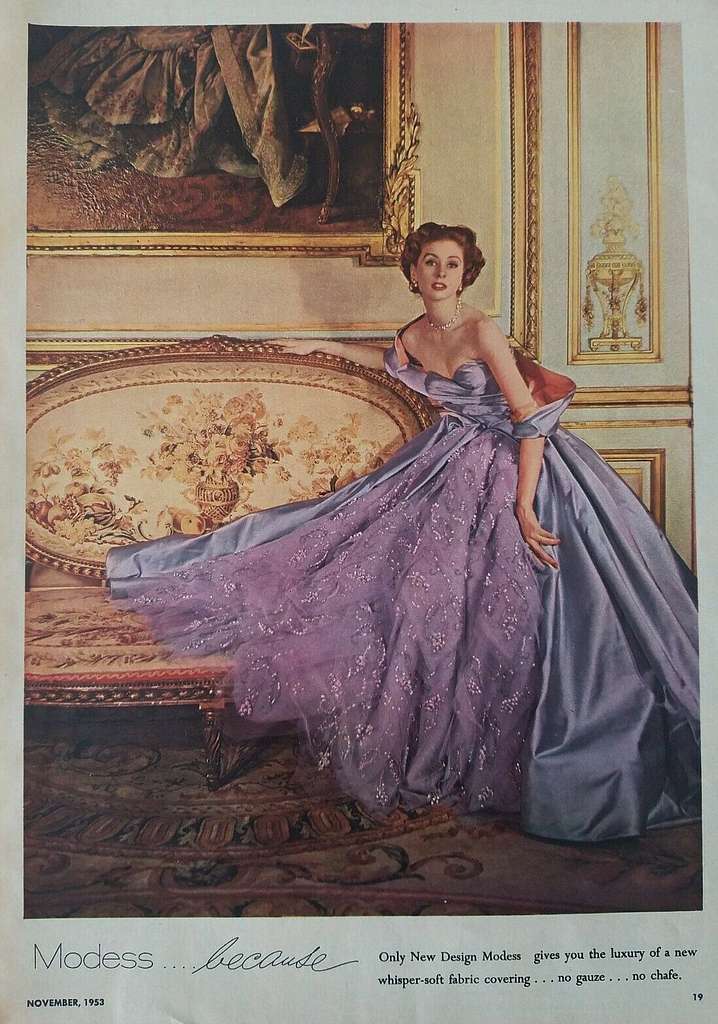
For those of a fuller figure, full body corsets did the trick, as did a sturdy elastic girdle known as the ‘roll-on’. Glamorous corselettes were decorated with lace and ribbon, while layers of stiffened, lightweight nylon net petticoats supported the new full skirts.
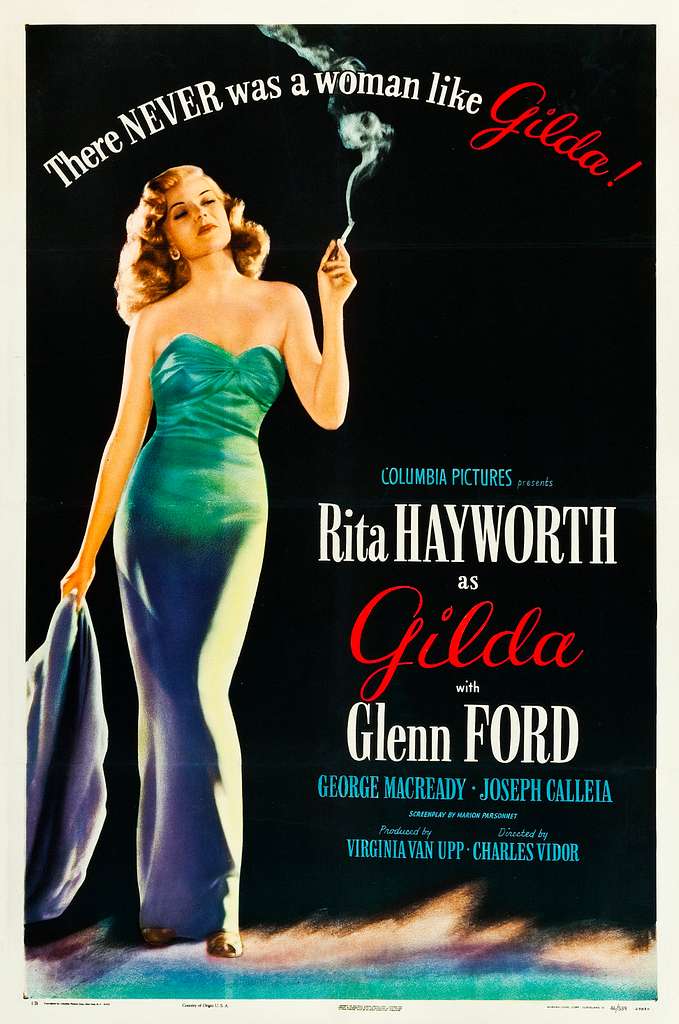
Conical-shaped brassieres became popular with younger women while bras and girdles were combined into bustiers to be worn under strapless dresses copied from film stars like the seductive Rita Hayworth in ‘Gilda’.
Ideas for fabric designs came from everywhere. Scientific developments inspired ‘atomic’ motifs, whilst artists such as Picasso and Chagall drafted highly individual patterns.
Meanwhile, in St Albans, change wasn’t just happening in people’s appearances. By 1948, the welfare state and the National Health Service had been established. The local hospital in St Albans became part of the NHS and was extended to offer 348 beds (for comparison, today Watford General has 521).
St Albans was designated an ‘expansion town’ to help accommodate London overspill.
Council housing was built along Drakes Drive, Cottonmill and other local areas, whilst private developments began construction in Marshalswick. It wasn’t just new buildings. New schools such as Aboyne Lodge and St Julian’s Boys were founded. In 1952, a young Stephen Hawking started his first term at St Albans School. Fees were 51 guineas per term and there were three applicants for every place.
It helped that jobs were available. St Albans was still a manufacturing centre. The largest employer was Marconi. Other factories included the Electrical Apparatus Co, Peake’s coats, Ryders Seeds, Nicholson’s Coats and Edwin Lee shoes. The Official Guide of 1950 commended the factories of St Albans as they “do not produce smoke, dust or noise”. And, of course, many locals commuted to London or Hatfield.
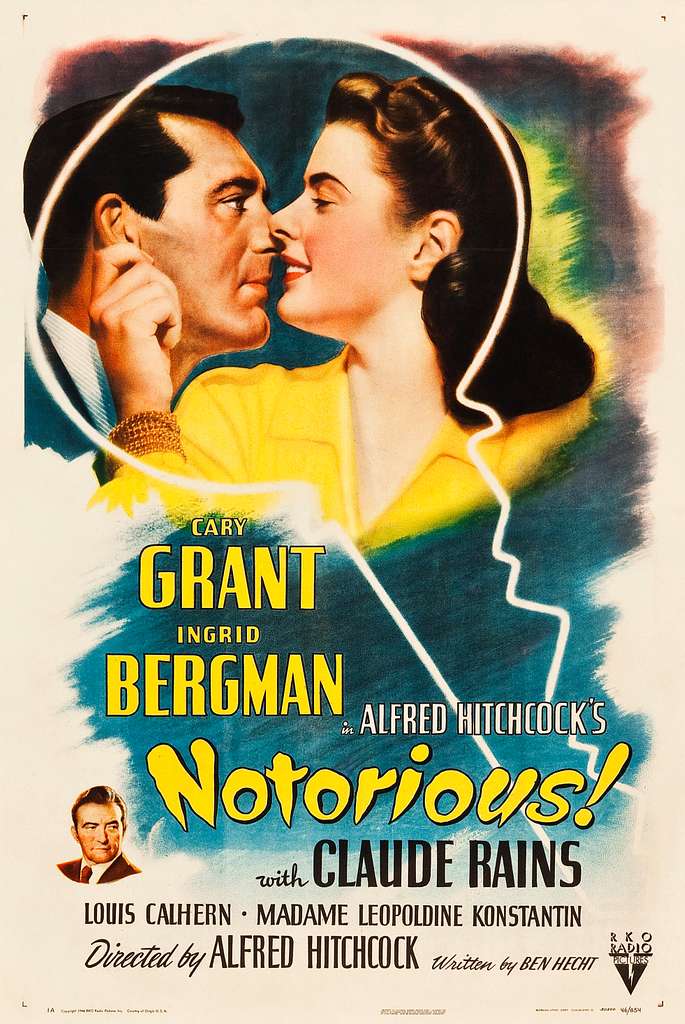
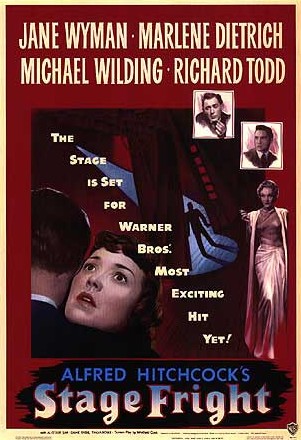
After work, people still flocked to the cinemas to be enthralled by Hitchcock films such as ‘Notorious’ with Cary Grant and Ingrid Bergman or ‘Stage Fright’ with Marlene Dietrich. She had informed Hitchcock of whose designs she wanted to wear in the film, saying, apparently “No Dior, No Dietrich”.
The sound of swing and jazz still floated out from St Albans’ dance halls. From the mid- thirties to the fifties, British musicians had been forbidden from performing in America by the Musicians’ Union.
In retaliation, American musicians were forbidden from performing in Britain. This was frustrating for the many fans of performers like Bing Crosby, Nat King Cole and Dinah Shore. However, this gave opportunities to English musicians who could also find work on the Cunard liners plying the Atlantic now that the seas were safe from U-boats.
But for those local people unable to afford the glamorous ocean liners there was still a rich musical landscape, enhanced by the Windrush generation bringing Caribbean sunshine with them in the form of Calypso music.
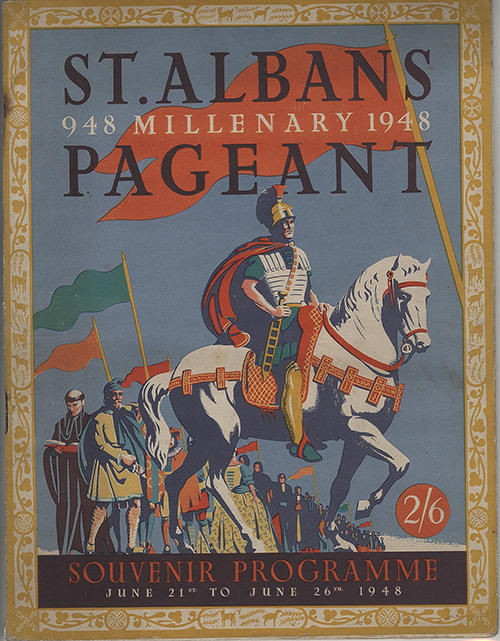
In 1948, colour and spectacle returned to St Albans’ streets in the form of a pageant. This was to celebrate 1,000 years since the foundation of the three ‘gateway’ churches, St
Peter’s, St Michael’s and St Stephen’s. The continuing shortages meant the volunteers struggled to make props and costumes. Even the Herts Advertiser appealed to the Board of Trade for permission to exceed its paper ration in order to produce additional copies of its special pageant edition. The Board of Trade replied with a resounding No.
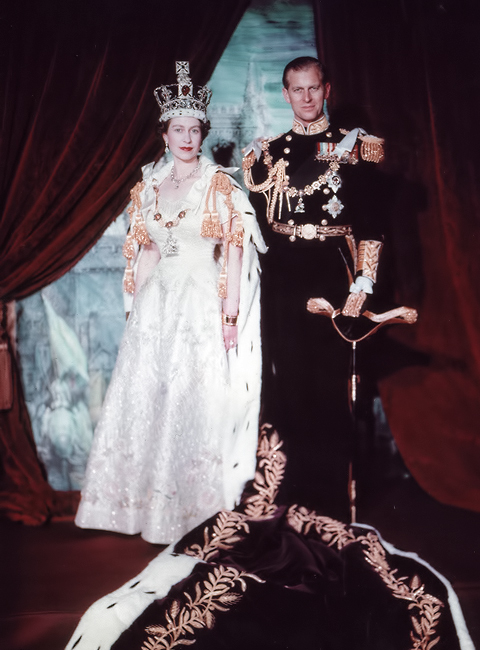
But five years later, in June 1953, the country shook off much of its post-war gloom in nationwide celebrations for the coronation of the new Queen Elizabeth II. The country went wild with huge street parties, evening concerts with fireworks, village fetes, sports events and, in the case of St Albans, a colourful and joyous pageant featuring historic Queens connected to the town. Few people had televisions but that was to change, with the live broadcast of the Coronation inspiring a rush to buy TVs.
A new age was dawning. A new Elizabethan age. Things could only get better.
Join us on Saturday, February 7 at 2.30pm for our one hour City Centre Highlights guided walk through the historic centre of St Albans. For information and to book, visit
