


18 Nov 2025
The rise of Green politics in the UK has been slow but steady over the past few years, but recently saw an unprecedented upswing following the election of new leader Zack Polanski.
All of a sudden the Green Party is taking a stand on social and economic policies, and holding other political groups to account.
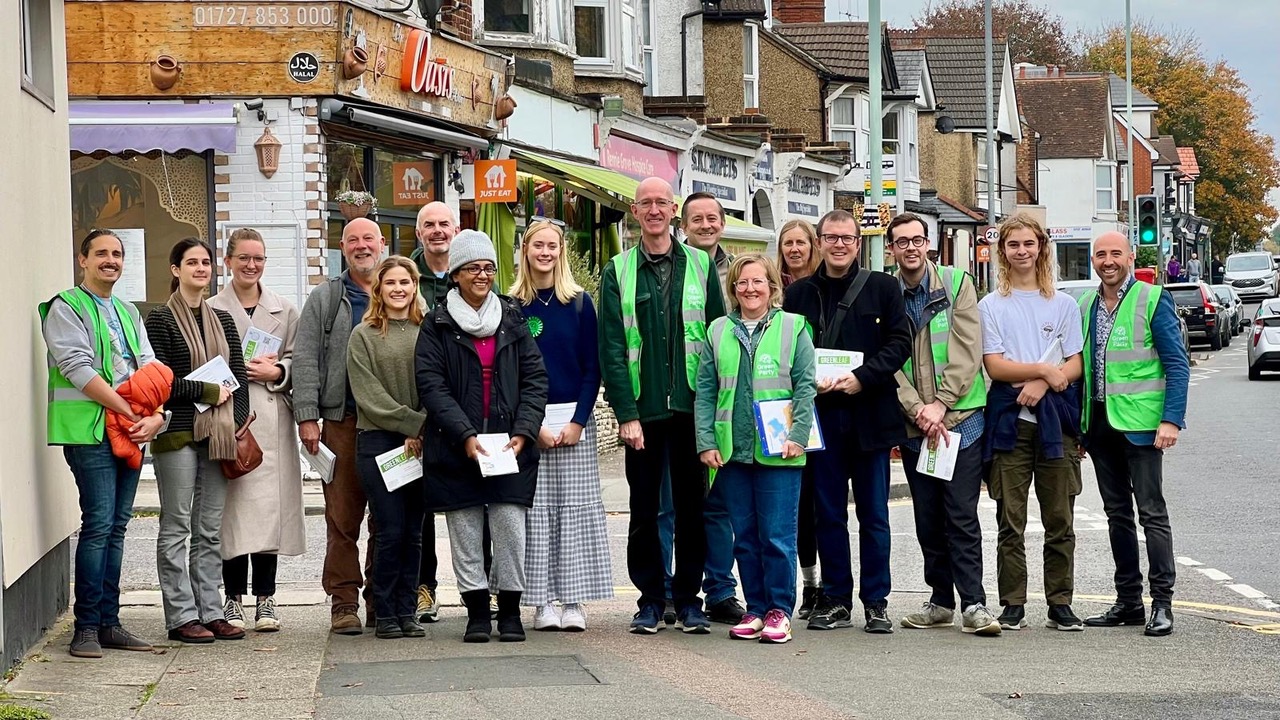
Nationwide, membership has doubled to 140,000 in two months, and in the St Albans district things are even more promising – with numbers tripling this year.
A lot of those fresh recruits are engaged in politics in a way the mainstream parties can only envy, and could become the future faces of the party in the years to come. So why is the time right for a Green revolution after decades of disappointment?
Local Green Party leader Cllr Simon Grover is unsurprisingly very happy about the Green surge, and attributes the Polanski effect to much of this increase in support: “Mostly this is to do with the high profile that our new leader Zack Polanski has built, first on social media and now increasingly on TV and radio.
“Zack is brilliant at expressing Green values and why they matter to everyone right now. He recognises that we are already known for and trusted on environmental issues, but less known for the related issues of social, racial and economic justice. He debunks the right wing tropes and talks about hope. At the same time, support for the traditional parties has collapsed. People are looking for something new.
“Voters were horribly let down by the Tories and now they are being horribly let down by Labour, in ways that we could never have imagined – from dithering on Gaza and bankrolling genocide, to the benefit cap and reversals on climate policy.
“Neither are the Lib Dems offering an alternative, endlessly performing stunts while watering their own climate policies. These parties’ support in polls, and their membership numbers, are plummeting. Ours are rising fast.”
This lean towards the left, and Green politics in general, is in direct contrast to the national media’s obsessive focus on far right parties like Reform, and something the local party is keen to take advantage of.
“We are working hard to welcome the hundreds of new members in the district, and helping them to think about how they might want to get involved. We are knocking on doors to see how residents are feeling in these turbulent times, and showing them how there are more and more of us offering hope instead of hate.”
Despite the lack of proportional representation at the ballot box, Simon is convinced the upswing in support will still win them MPs: “We showed in the last election that we can win seats by targeting our resources. We went from one MP to four and came second in 39 other seats, mostly Labour seats. We will be targeting those second places, and by elections, in the coming years, leading up to the next election. With surging support and the other parties collapsing, anything is possible.”
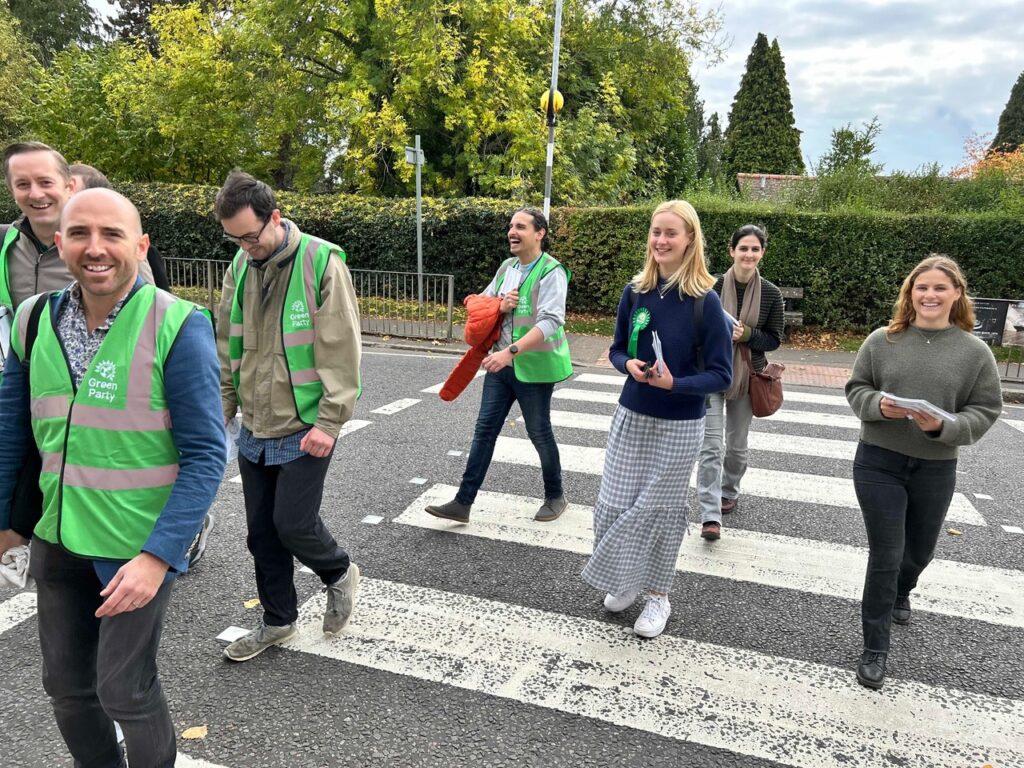
So who are the new members of the Green Party in the St Albans district, and what is it about this particular organisation which appeals?
London Colney marketing assistant Aimee Crompton-Smith was a Labour voter under Corbyn’s leadership, and says she has always supported progressive politics.
“What drew me to the Greens in recent years was their moral clarity and sense of purpose.
“They were the first UK party to call out the genocide in Palestine, defined and recognised by the UN, and they have consistently linked the climate emergency to wealth inequality and global injustice.
“When Zack Polanski became leader this year and spoke so openly about that link, I realised the Greens were the only party really tackling the root cause of the social and environmental breakdown we’re experiencing, so I decided it was time to join, particularly as Starmer’s Labour backed away from these key issues.”
Livvy Gibbs, 22, who works in campaigns and communications, said she joined the Greens two years ago because they are the only party that feels genuinely people-powered.
“While others seem content to manage decline, the Greens aim to transform politics by putting compassion, climate, and community back at the centre of decision making.
“I have never seen myself as a career politician, in fact I dislike the very idea, but I do believe politics should be something ordinary people can and should shape. It should not be a closed world reserved for those who already hold power or a distinct ruling class.”
Osama Ammar, a 44-year-old health and social care regulator from Bernards Heath, said the Green Party’s politics are more universal and mainstream than many believe.
“Our policy is based on the simple premise that we have limited resources and need to preserve and share them in ways that don’t disadvantage anyone. I think almost everyone agrees with that – it is what we teach our children, after all.
“I’ve never joined a political party before and the thing that led me to join was hearing someone saying evidenced and sensible things about how we can change things for the better. I’ve never been disillusioned with politics but never been engaged with local politics at all because I’ve always been focused on Westminster.
I wanted to get more involved in my community anyway but the surge in the Green Party helped me see how I could do that, so I joined.
“I don’t think we’re going to fix the problems we have today with variations on a theme and that we need something quite different in terms of building community cohesion, funding public services, and slowing the impact of climate change. Those are local political issues and I wanted to help.”
Livvy believes it is important for young people to become involved in politics because otherwise the future is being decided without them: “We are inheriting the consequences of decisions made long before we could vote, from the housing crisis to the climate emergency. With votes at 16 on the horizon, there is finally a chance for our generation to have a real say.
“Getting involved is not about playing the game, it is about showing that there is a better way of doing politics, one that is less combative and more collaborative, constructive and compassionate. It is about refusing the idea that nothing can change.”
Aimee says in her experience many young people feel alienated from politics, either put off by complicated language, biased media, or a sense that they don’t know – or in some cases care – enough to take part.
“Engaging in politics isn’t about having all the answers; it’s about exercising your right to fairness and to live safely and with dignity.
“In the 2019 General Election, an estimated 47 per cent of 18-to 24-year-olds voted, compared with 75 per cent of those over 65 [Source: Economic Observatory]. That means decisions are being made about young people, not with them.
“So, I think the question isn’t just why young people should be involved, but how can we make it easier for them to do so? That’s something we’re working on locally with the launch of the Young Greens in St Albans, creating spaces where young people can learn, get active, and feel their voice matters.”
Osama said although he cannot speak for younger people, he is among the oldest of the millennial generation, and something needs to change for all age brackets.
“We’ve been building lives in a tremendously challenging context to build personal wealth and it seems that things are only going to get harder for the next generations if we don’t get together and do something about it.
“I think it is really going to take everyone though, not just younger people, to make sure that we don’t leave anyone behind. Our older people are facing limited public services at the time of their lives when they need them most and we can’t leave them high and dry either.
“In the local Green Party events I’ve gone to so far what’s most noticeable is that it is cross-generational and that everyone is working together to make use of the experience and skills we have as a group.”
Arguably, the UK is in a state of flux at the moment, with the future evolution of the country still very uncertain as voters seek alternatives to the mainstream parties who have dominated politics for so long.
Livvy feels the country is at a turning point: “There is a growing sense that our political system is not working, and that it shuts people out instead of bringing them in. We have seen a striking departure of support from the legacy parties and growing support for smaller ones, because people are hungry for a break from the status quo and for real, radical change.
“We need to show that this change will only come with the Greens, not with the Liberal Democrats who continue to uphold the neoliberal status quo, or with Reform, who have no interest in improving the lives of ordinary people and only serve the billionaires in their pockets, despite the rhetoric thrown around by their rich and powerful mates.
“I believe we need a more democratic future built on cooperation, fairness and accountability, and that starts with Proportional Representation. A fair voting system would open the door to collaboration instead of constant confrontation. It would mean policies that reflect the majority of people, not just a handful of swing voters. For me, that shift is essential if we want to rebuild trust and create the space for real change.”
As a digital mobilisation officer at HOPE not hate, a body which focuses on the organised far right, the communities who are susceptible to them and the issues and policies which give rise to them, Livvy is involved in their work creating an alternative narrative of togetherness and unity, so has lived experience of why it is important to tackle division and misinformation through empathy and community organising.
“Hate feeds on despair, while hope grows through connection. When people feel heard and involved, they are far less likely to turn towards fear or blame. It is about replacing cynicism with solidarity.”
Aimee said the recent shift in politics and the breakdown of the two-option system had resulted in Green Party membership reaching record levels, but also Reform UK’s rise in the polls, suggesting political frustration can take very different paths.
“I hope that we use this momentum to build a credible, compassionate alternative to both establishment complacency and far-right populism. The challenge for the Greens, and for the wider left, will be to show the emptiness of the right’s divisive rhetoric and demonstrate that real change comes from investing in people, communities, and the planet. Whether that comes from a Green breakthrough or a wider progressive coalition, the direction has to be forward and not backward.
“If we don’t hold onto hope, we risk falling into fear, and that’s simply not productive. People across the country are angry, and rightly so. Costs are rising, housing is unstable, public services are not being funded correctly, and the climate is changing at an unprecedented rate, but the question is, where is that anger directed?
“For me, we’re not in a cost-of-living crisis so much as a cost-of-greed crisis. According to the Trussel Trust, UK food banks distributed nearly 2.9 million emergency food parcels between 2024 and 2025, a 51 per cent increase over the past five years. Whereas the combined wealth of UK billionaires has climbed to £182 billion, growing by roughly £35 million per day in 2024 [Source: Oxfam].
“Divisive hate gives people a false target; whereas hope gives us a path forward. If more people can see their struggles come from inequality and broken systems, not from immigration or diversity, then hope will hopefully become change.”
Osama thinks we have a unique opportunity to restore the country to a compassionate state by making the most of this moment: I’m actually quite hopeful about the long term because of how many kind, thoughtful and practical people I’ve met since being in the Green Party. But, I think we are facing a moment where we need to be the thing that gives people hope, even politicians in other parties.
“We need to inspire them into believing that the UK public want fairness, justice and our planet protected so that they change course. We do face a risk that we will have yet another Government that thinks that we are a selfish population and will vote to increase our personal wealth no matter the consequences.
“But I just don’t think that’s who we are in the UK, not really when you spend time with people. And I think the Green Party has the opportunity to remind everyone what co-operation can do to lift up everyone rather than just the few.”
His optimism is refreshing in the face of so many negative sentiments, even locally, with angry posts on social media becoming more prevalent as people’s frustrations with the status quo fester into a state of toxicity.
“The world has changed before because of a hateful vision, but it led to war across most of the world and, incredibly, we can see the patterns that mean it could happen again.
“A vision of hope, and co-operation, created our education systems, extended the quality and length of our lifespan, took humans into space, repaired the ozone layer, and connected almost everybody to the largest information resource ever assembled. Which future do you want from those two options? And why would you want to listen to anyone who sells you a vision of hatred if that is the best they have to offer?”
Given their strong sentiments and obvious passion for political change, would any of them consider running as a councillor or MP in the future?
Aimee thinks she would: “I’ve been politically active since college, and joining the Greens has given me a community that reflects my values for the first time. Values and policies which I believe to be progressive for all, not for some.
“For me, patriotism means building a country where people don’t just get by, they flourish. Where community is valued over individualism, and sustainability over competition and scarcity. There’s so much we could rebuild and reimagine if we had the opportunity. Life really doesn’t have to be the way it is for many people, and I’d like to be part of shaping that change, whatever form it takes.”
But Osama would prefer to support others in taking office: “I wouldn’t [run myself], but I will help the Green Party to find the right people, honest and hardworking people, in the local community to win seats and support them every step of the way.”
Livvy, however, has already made the step:” I am actually standing as a Green Party candidate in next May’s local elections here in St Albans, in the Clarence ward for St Albans district council. I never planned to run for office, but I think it is vital that young people are represented in local politics. Formal representation is not everything, but it undoubtedly counts. If I can help bring honesty, energy and hope into the council chamber, then it feels worth doing.
“We underestimate how much power we already have when we act together. Whether it is campaigning for fair votes, tackling inequality or showing up for our neighbours, real change begins locally. Politics should be something that feels close to home, not something distant or exclusive. That belief is what keeps me hopeful.”
