



27 Sep 2025
Turning on the tap, flushing the toilet, taking a shower, filling the kids’ paddling pool – all things we might take for granted now, but which could be restricted or banned should water supplies run out in the future.
With 15,000 new homes proposed to be built in the district in the period up to 2041 as part of the Local Plan, pressure on water supplies will increase dramatically – but is local water company Affinity prepared for this scenario?
In June, Redbourn villagers were warned that local supplies were running out due to a period of hot weather, and were urged to only use water for essentials like drinking, cooking and washing.
Yet there are 4,000 homes alone proposed in Redbourn parish, despite the fact that Affinity Water cannot meet the current needs.
Locally most people’s water use averages at between 154-155 litres a day, well above the national average of 145. Affinity wants to reduce this usage by 13 per cent by 2030 by promoting water-saving measures and the implementation of smart metering.
Affinity’s WaterSave Tariff trial, launched in October 2023 in Stevenage, introduced a rising block pricing structure where customers pay more per litre as their usage increases, encouraging conservation while keeping water affordable.
A report from the company in May said 75 per cent of customers in the trial were paying less for their water, and usage had declined by an average of 12 litres a day. But this is not the 13 per cent reduction needed from the 150 litres we currently average, which we are told we need to save if the modelling is to work.
Affinity has released a Water Resources Management Plan (WRMP) which suggests there will be a supply-demand deficit in the southeast region as soon as 2028, based on the proposed rate of housebuilding in the region under the old standard method.
But the Government has increased the housing targets in the revised National Planning Policy Framework, with a further 10,500 homes needed in St Albans district to meet these figures, so will the WRMP cope with that need?
Is the company also relying on the extra rainfall we have seen in recent years? While these wet summers have replenished the aquifer, what happens when we enter a period of drier summers as seems to be the case now? Is there still going to be enough water for the region?
One option in Affinity’s 20-year plan appeared to rely on bringing water down south from low-lying Lincolnshire which would normally flow into the sea, and from the proposed Oxfordshire reservoir, although this hasn’t been built yet and doesn’t have planning permission.
There is also the question of the Government’s proposed new data centres, which rely on large water usage, and whether they have been incorporated into the company’s plans.
Affinity believes its resources strategy will meet any new demands and take into account any future uncertainty, but in contrast neighbouring Anglian Water say they will not back housebuilding in towns and villages across Norfolk where its sewers are at capacity.
The Covid-19 pandemic (which resulted in modelled increases in demand of around 9 per cent) and political changes to immigration rules have shown that current and expected future demand for water can change quickly, prompting the company to adopt adaptive planning measures and modelling approaches to deal with different long-term futures, while ensuring they took appropriate short-term actions.
An Affinity spokesperson said: “The figures referenced relate to a mid-range forecast and a one-in-200-year drought scenario. In our preferred programme we are pursuing an ambitious environmental destination, and under our baseline forecast we expect to see supply–demand deficits in the southeast region within the next five years.
“Our adopted supply strategy uses a range of other measures to secure supplies, including local resource development, leakage reduction, demand management, and smaller-scale resilience schemes.”
Transporting water from the Midlands is now being ruled out as a priority as the costs and impact on that region would outweigh the benefits here, resulting in a different approach which could entail abstracting and treating raw water from the Thames.
More is also proposed to increase the level of resilience in the water supply system to deal with a certain level of drought and avoid extreme restrictions such as rationing water.
The spokesperson added: “Our plans are based on severe drought scenarios, not recent rainfall patterns. The WRMP is designed to maintain supplies during a one-in-200-year drought through to 2040 and a one-in-500-year drought through to 2075. Our Drought Management Plan sets out the actions we take at each stage of a dry period to protect supplies for customers and the environment even in extreme drought scenarios.
“All non-household demand, including from data centres, is incorporated into the forecasts that underpin our WRMP. We recognise there is uncertainty about future data centre demand, and the next WRMP cycle will examine this in more detail with other water companies.”
Crucially, these forecasts relate to EXISTING non-housing demand, which is what they know about. The data centres of the future are not included in current projections because they are not in the planning system.
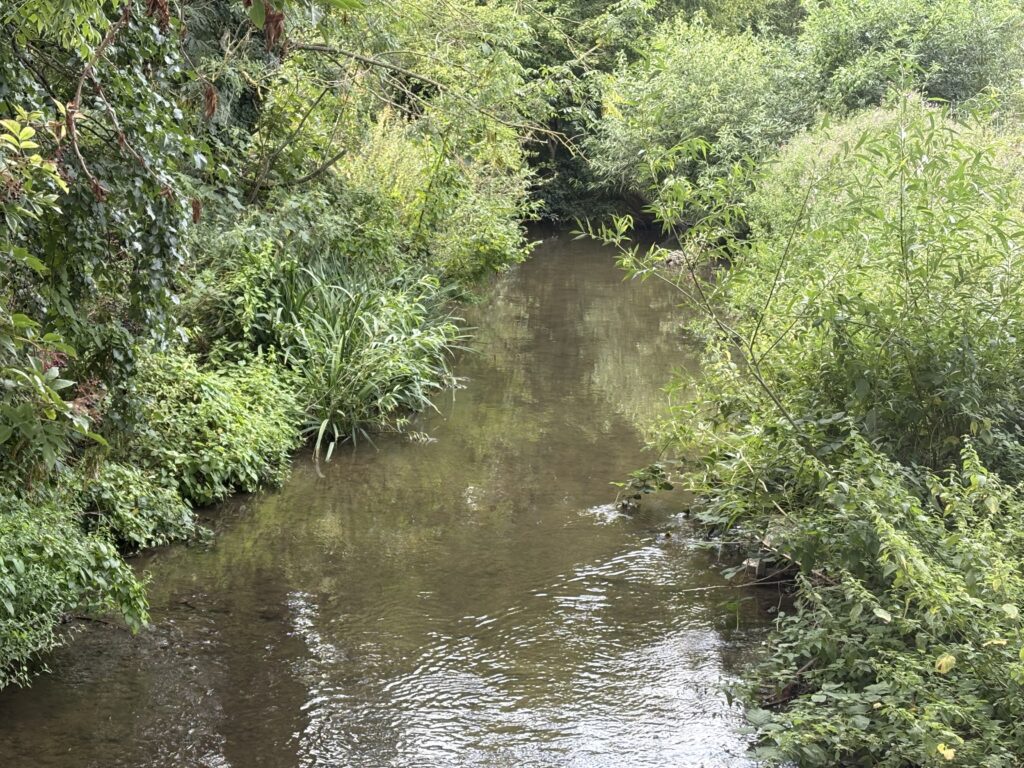
One of the local organisations closely monitoring Affinity’s future plans is the Ver Valley Society, the charity founded to protect and promote all aspects of the rare River Ver chalk stream and its valley, particularly from over-abstraction of ground water and climate change.
Chair John Pritchard responded to the company’s proposals: “There are concrete plans to bring water to the Affinity network from new sources, and no doubt these will be delivered just in time or a little late. Note that the programme for an improved pipe network was ‘Supply 2040’ and has now become ‘Connect 2050’.
“None of the additional supply is coming from the chalk aquifer – so no additional draw on the aquifers driving chalk streams. Indeed, the Ver is one of the rivers benefitting from a further small reduction in abstraction in 2030, which should help the river recover towards its former glory.
“Not so lucky are rivers like the Ivel in north Herts who will have to wait longer for abstraction reductions and improvements to long term flow.
“However, the bigger issue is the reliance on reducing consumer consumption and fixing leaks to close the gap between projected supply and demand. Affinity’s proposed numbers do appear very ambitious given past performance. And successive governments have shown no appetite to run a concerted national campaign to encourage consumers to reduce their water consumption.
“Instead, they appear intent on leaving it to individual water companies to change consumer behaviour.
“The largest risk should Affinity’s plans not unfold as expected is to the environment. Affinity has no raw water storage and aside of hosepipe bans (Temporary Use Banss) and non-essential use bans, its drought management strategy relies on reopening or increasing the take from some existing boreholes.
“That would mean taking more water from the chalk aquifer at a time when the rivers need the water most – fortunately none in the Ver catchment. In the supply and demand chart those steps down in supply are likely to affect future abstraction reductions to restore chalk streams/the environment.
“One might conclude that they will be sacrificed to close the supply/demand gap if things don’t go according to plan…
“The Drought Management Plan is another document that deserves closer scrutiny. The current one (published in 2023) was signed off in a wet period and went relatively unnoticed. We are fearful that the River Ver could still dry up along most of its length before critical triggers are reached and much meaningful action is taken.”
According to the DMP, groundwater has to have fallen to Trigger Zone 3 before a hosepipe ban might be called, but during the drought of 2019 all but the last 5km of the 28km of the Ver had disappeared.
At the time Affinity’s new DMP for 2025-2029 was announced in 2022, the Ver Valley Society revealed: “The plain truth is that Drought Management Plans are more about maintaining public water supply than sparing the environment from the worst effects of prolonged dry weather or a drought. Please correct us if we are wrong, but although water companies are obliged to have Drought Management Plans (developed with countless rounds of consultation), it appears that there isn’t any obligation to actually use them…
“The Ver’s underlying flow comes from groundwater that fell as rain and soaked through the Chiltern Hills months ago. It’s impossible to predict how much rain will fall each winter and replenish the groundwater we all drink and the Ver relies on.”
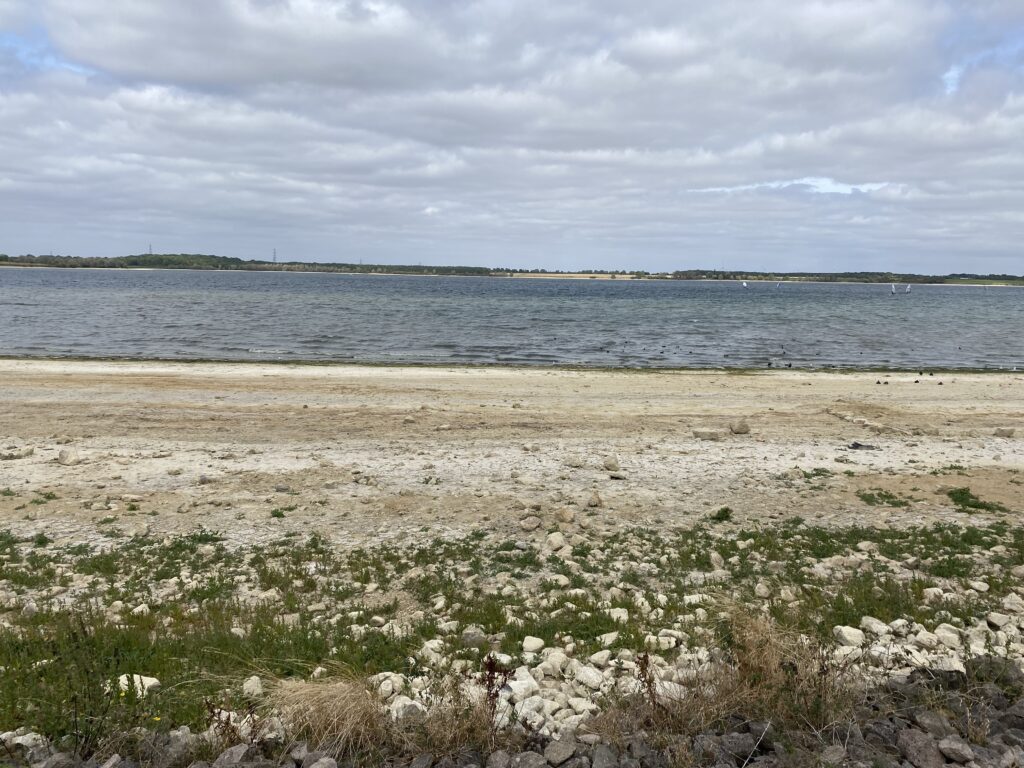
Gee Smedley, spokesperson for campaign group CLASH, which is fighting against the development of north St Albans, said: “It is very useful to see that Affinity acknowledges that the current modelling confirms a structural shortfall of water, and that excludes future data centre demand.
“We are not convinced that the strategy to rely so heavily on water sources from other regions is the right one. We clearly have not learnt from other highly developed regions of the world, like California, who are struggling to manage water in drought periods despite extensive engineer investments.
“Reliance on water infrastructure from hundreds of miles away is a poor solution. There is no information on the carbon cost of moving the water such distances and no strategy from Government to ensure there is joined up strategic evidenced based thinking at local plan making level. Instead there is simply dangerous ideology about house prices and weaken of environmental protections in the new planning bill.
“The aquifer recharge is reliant on surface water and groundwater. We have recently seen the large Cala development approved for north St Albans even though the surface water is being diverted to the sewers using a pumping station. SADC officers should have advised councillors that they can challenge these designs, but instead incorrectly said they were bound by technical consultees in decision making, despite it being very poor.
“It should concern everyone living in the south east of England that the current rate of over development will substantially impact our drinking water supply, which is not an infinite resource, despite the welcome return of the rain.
“Our MPs should be adding their voices to the campaign to ensure surface water is being properly managed. It should not be pumped into sewers, risking more overflow in already stressed chalk streams. We have written to Daisy Cooper a number of times on these matters but have had no response.”
And Cllr David Mitchell, SADC councillor for Redbourn Ward and chair of Redbourn Parish Council, added: “Given the prospect of 5000 new houses in Redbourn parish over the next two decades, you do have to ask if there will be enough water for a rapidly expanding population to drink?
“In June this year, some areas of Redbourn lost their water supply completely for a couple of days. Unless improvements can be made to update the creaking infrastructure, I fear this may be something that will happen more often as the area tries to meet the increased demand for clean water.
“It’s essential that our precious chalk streams are protected from excessive extraction, so I welcome Affinity Water’s plans to source water from elsewhere.
“However, bringing water from the north using the Grand Union Canal sounds very ambitious and very expensive, even a bit bonkers. And, of course, it will be Affinity Water’s customers who will have to foot the bill.
“Personally, I think the water companies should be re-nationalised as drinking water isn’t a choice we have, it’s essential to keep us alive. “
