01 Sep 2025
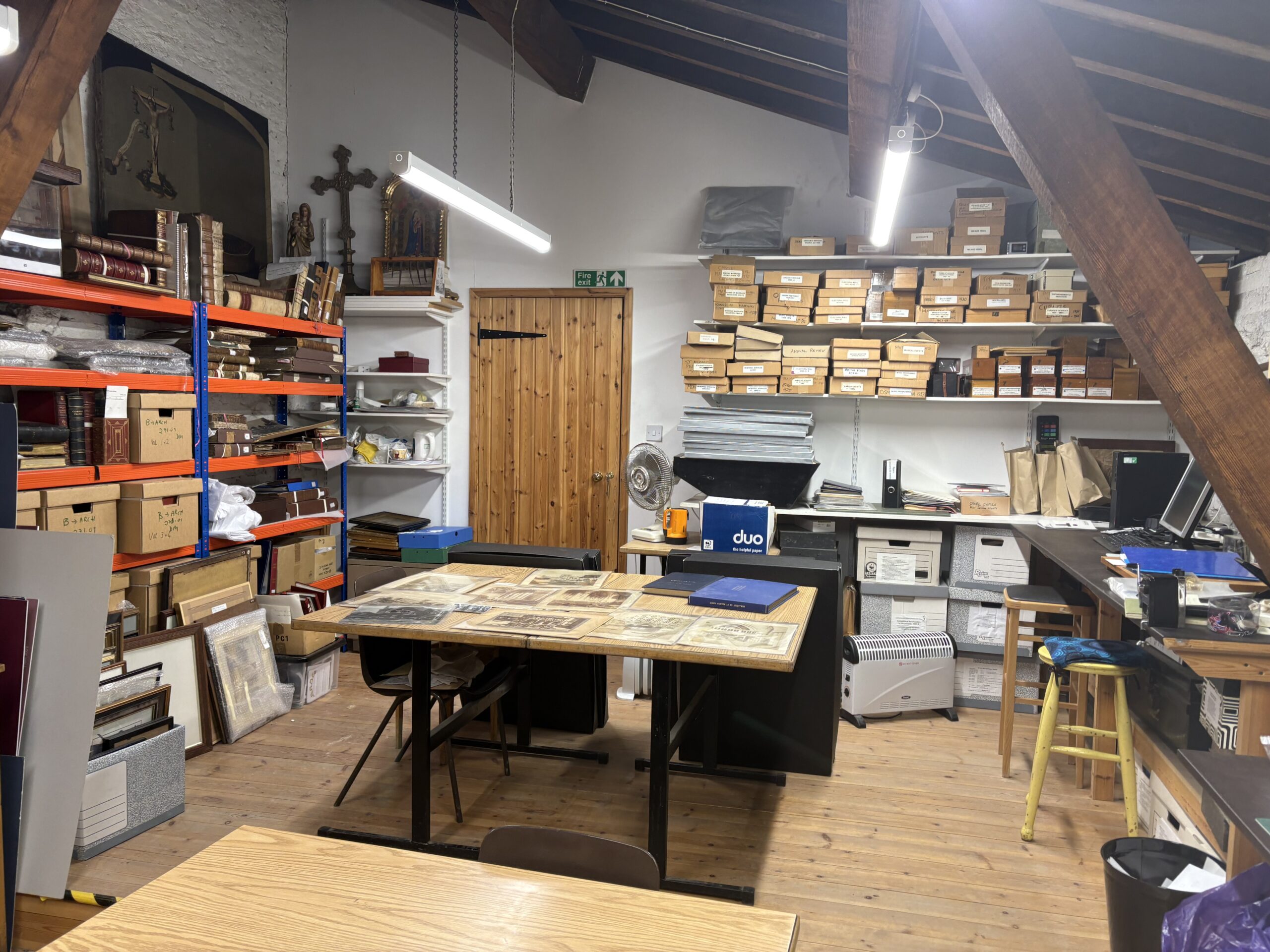
Through an old wooden door and up a winding stone staircase in the depths of St Albans Cathedral can be found a hidden treasure trove of historical artefacts – stacked on shelves, secured in storage boxes, and secreted in cardboard folders and wooden bureaux.
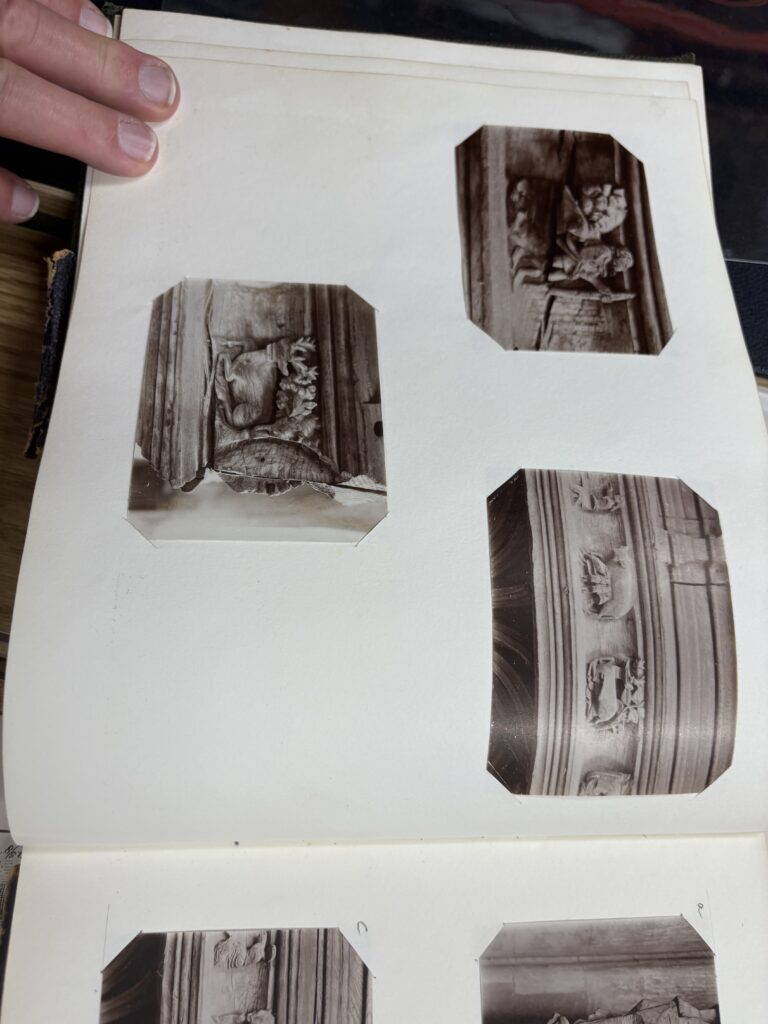
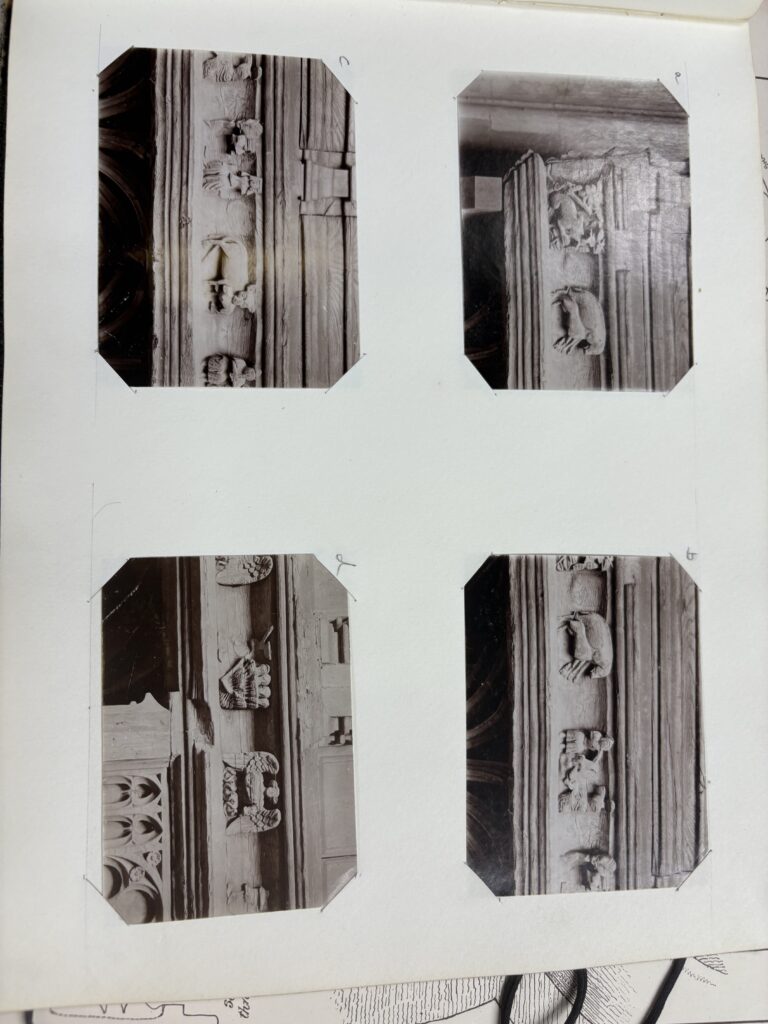
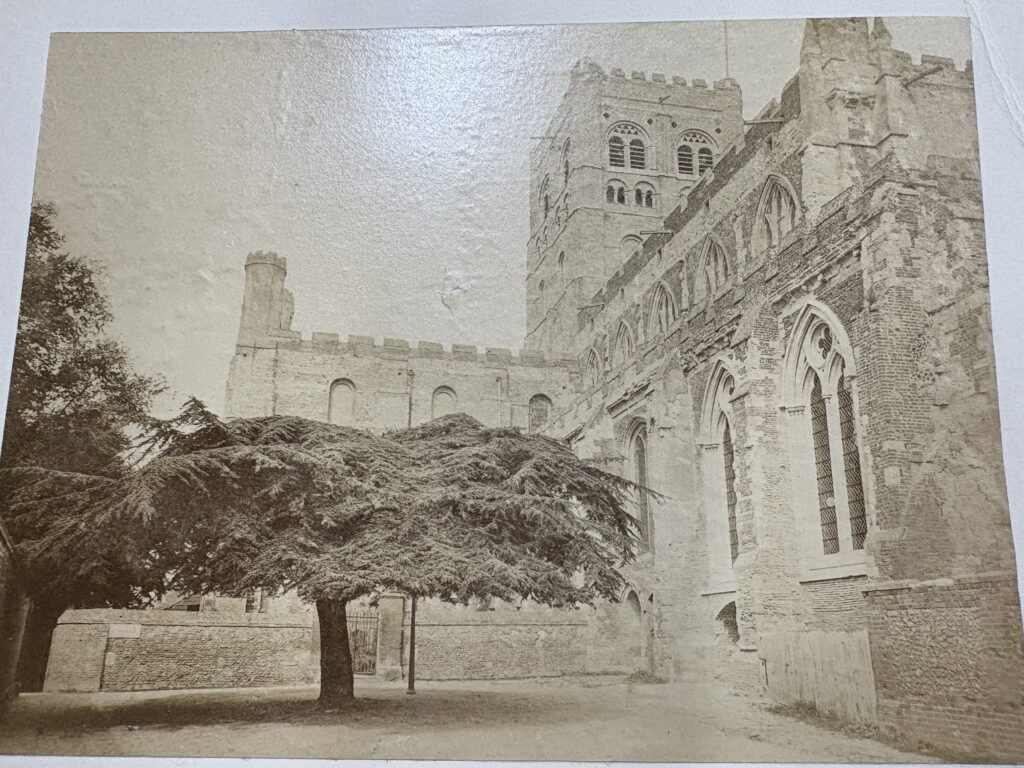
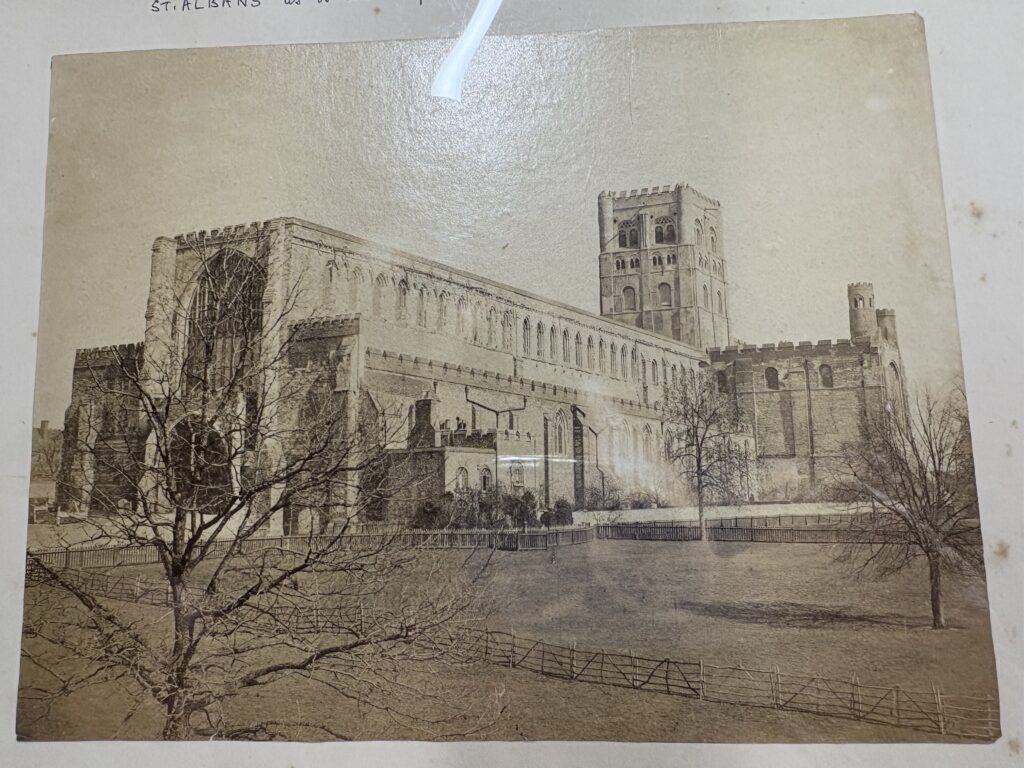
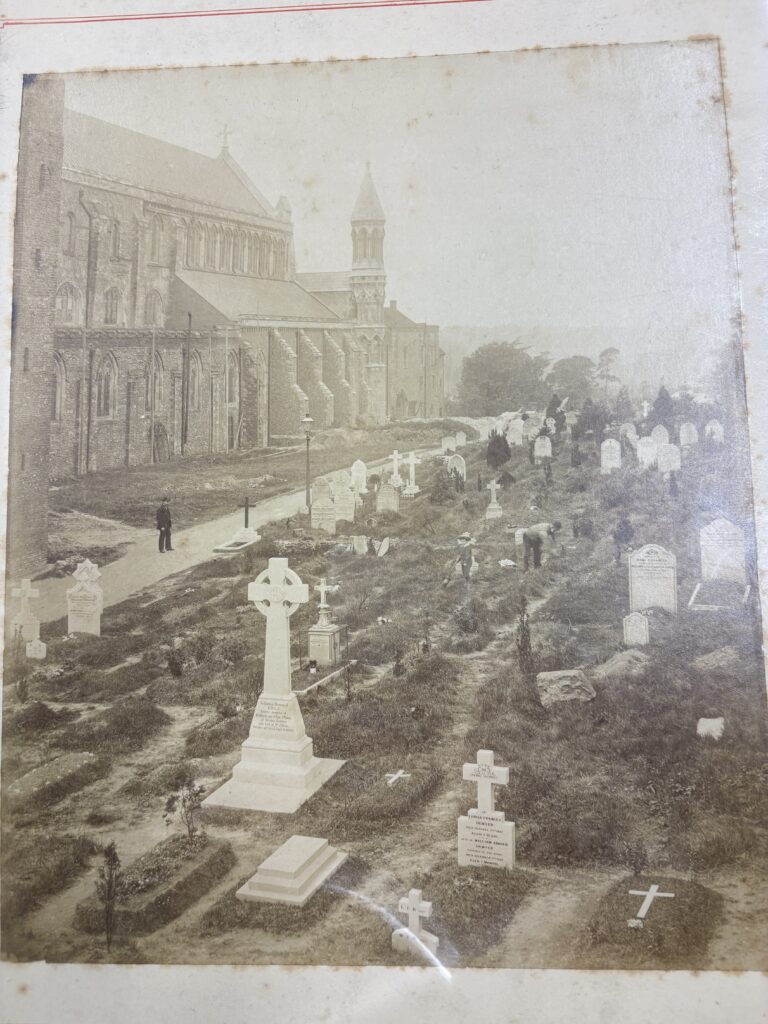
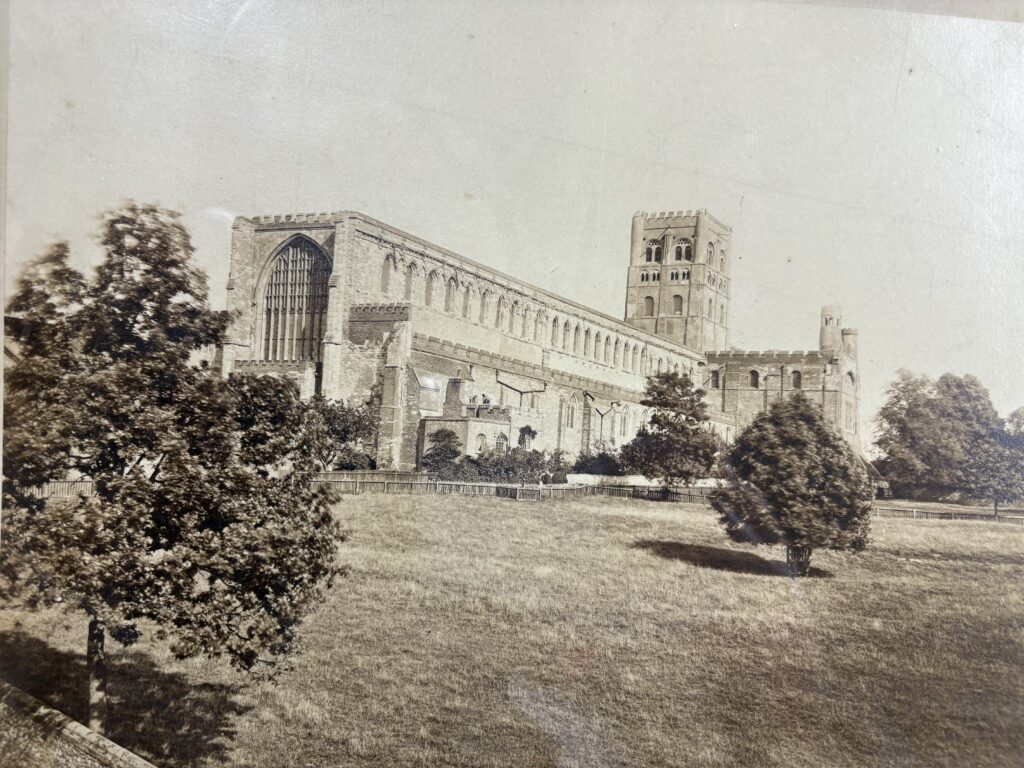
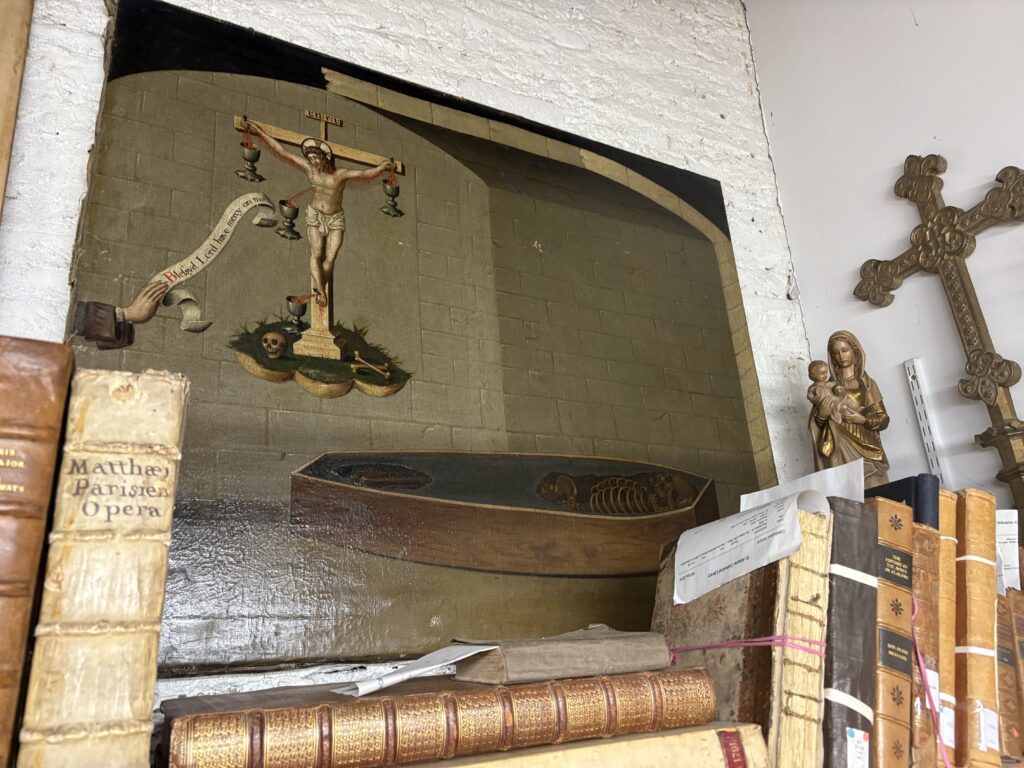
This is the Muniment Room, a remarkable repository of manuscripts, paintings, documents, letters, books, photographs and other memorabilia collated over the centuries, which tell the story not just of the Abbey, but the community that surrounds it. This article, by no means an exhaustive guide to what is stored in the Muniment Room, will attempt to capture a flavour of what can be found there, including extensive images of some of the highlights.
Lead archives volunteer Rob Piggott, who has been involved with the operation since January 2017, has assembled a selection of items from the collection to illustrate its scope, spanning from the Middle Ages through to the present day.
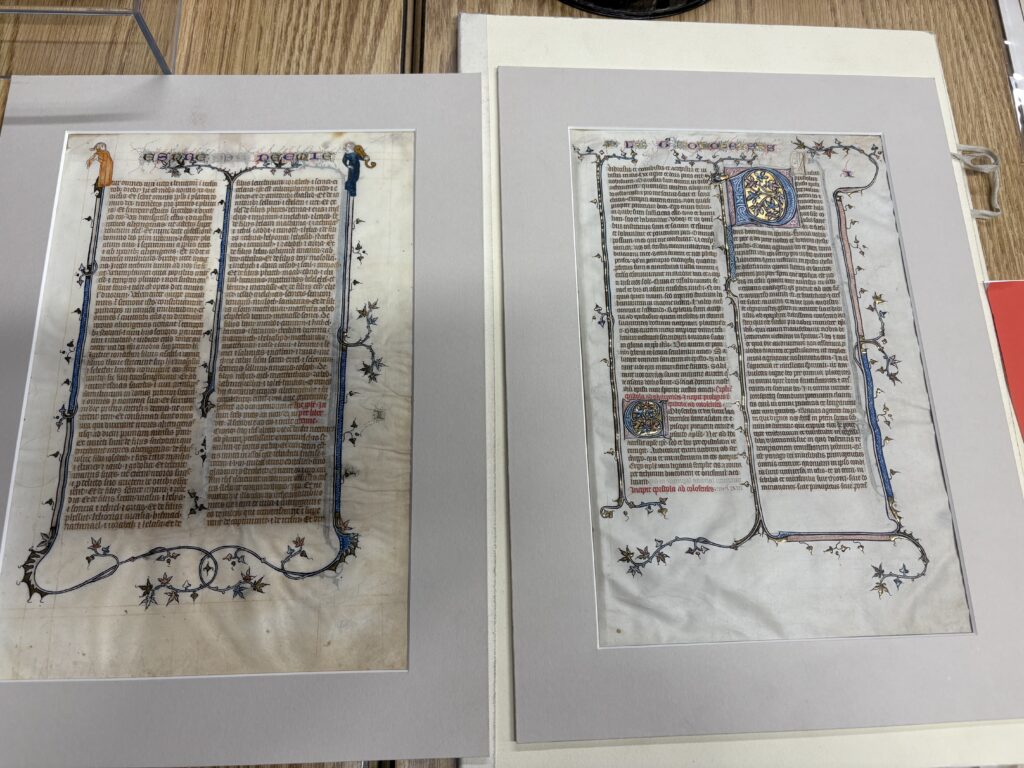
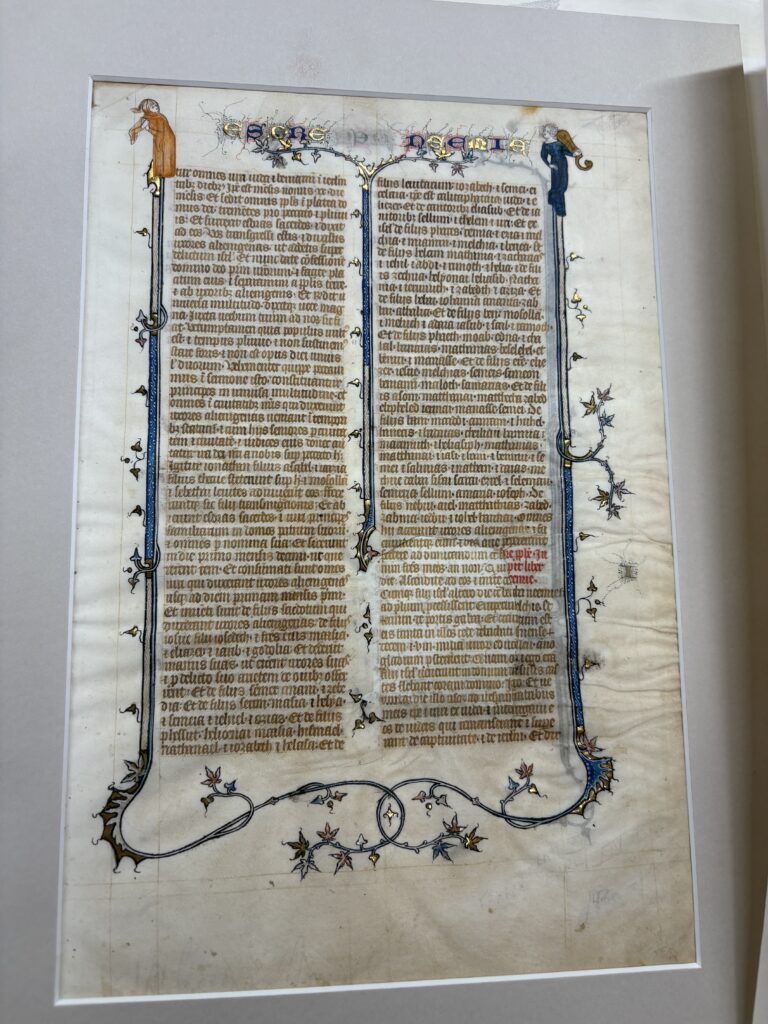
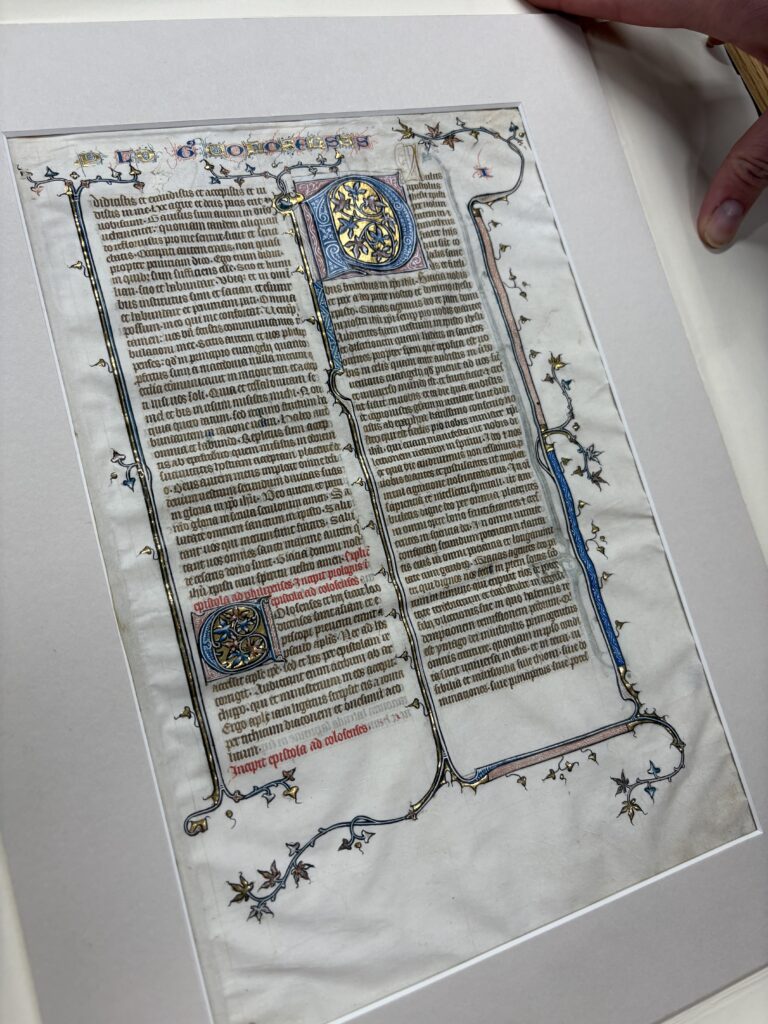
First and foremost among these are pages from the St Albans Bible, beautifully made and showing no signs of being around 700 years old.
The Bible is believed to have been made in Paris around 1320-40, possible on the orders of Michael de Mentmore, a bibliophile and scholar who was abbot from 1336-1349.
It was rebound in vellum in the 16th century using two sheets of the Register of Abbot John of Wheathampstead as flyleaves. It disappeared following the Dissolution in 1539, only to reappear in 1964 when it was auctioned at Sotherby’s as ‘The St Albans Bible’ and purchased by New York rare book dealer Philip Duschnes for £1,500.
He proceeded to dismantle the book, cutting out leaves and individual illuminated initials, many of which vanished into private collections.
St Albans Cathedral was gifted with a sheet from the Old Testament headed Esdre Neemie (Ezra and Nehemiah) by The Fraternity of Friends in 1983. A second page was donated by the family of Dean Thicknesse in 1984, and is from the New Testament (Philippians 4:9 to Colossians 2:23).
Both pages were missing illuminated letters, the first a V and the second a P, with the latter replaced in an appropriate style by artist Joan Freeman.
“It’s unusual to have two pages,” Rob reveals. “There aren’t many institutions that hold them. You could have bought two last year – I think they went for £900 each – but they were much plainer and didn’t have the illustrations. But you’re never going to recreate the whole Bible.”
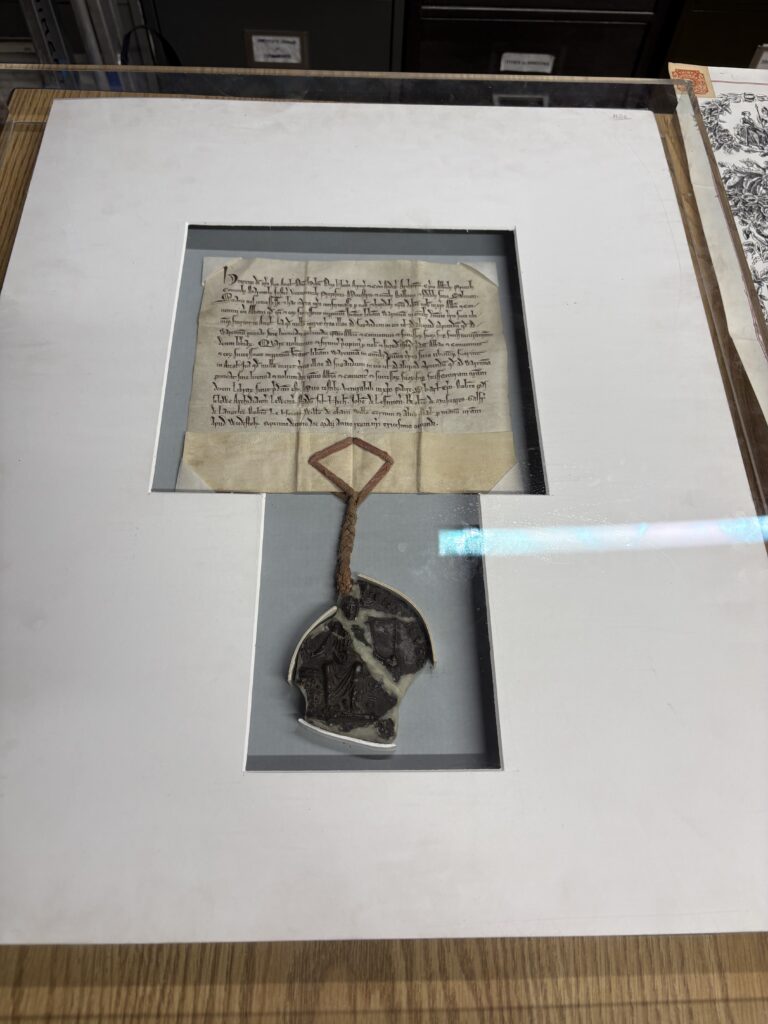
Rob turns our attention onto other treasures: “This is the history of the building in two objects,” he explains, first pointing to a piece of parchment together with a broken wax seal.
“This is the charter of King Henry III from 1247 to the Abbot, granting him the right to farm rabbits, which were important in the Middle Ages for food and fur and were considered a valuable resource.
“It’s one of those privileges which the townspeople were hacked off about, because obviously they couldn’t farm rabbits if the Abbot was doing it, hence some 140 odd years later you get the Peasants’ Revolt.
“We haven’t got many medieval charters, maybe a dozen which have somehow made their way back here, and this is one of the nicest ones because it’s so old, it’s all in Latin and it has the seal of Henry III.”
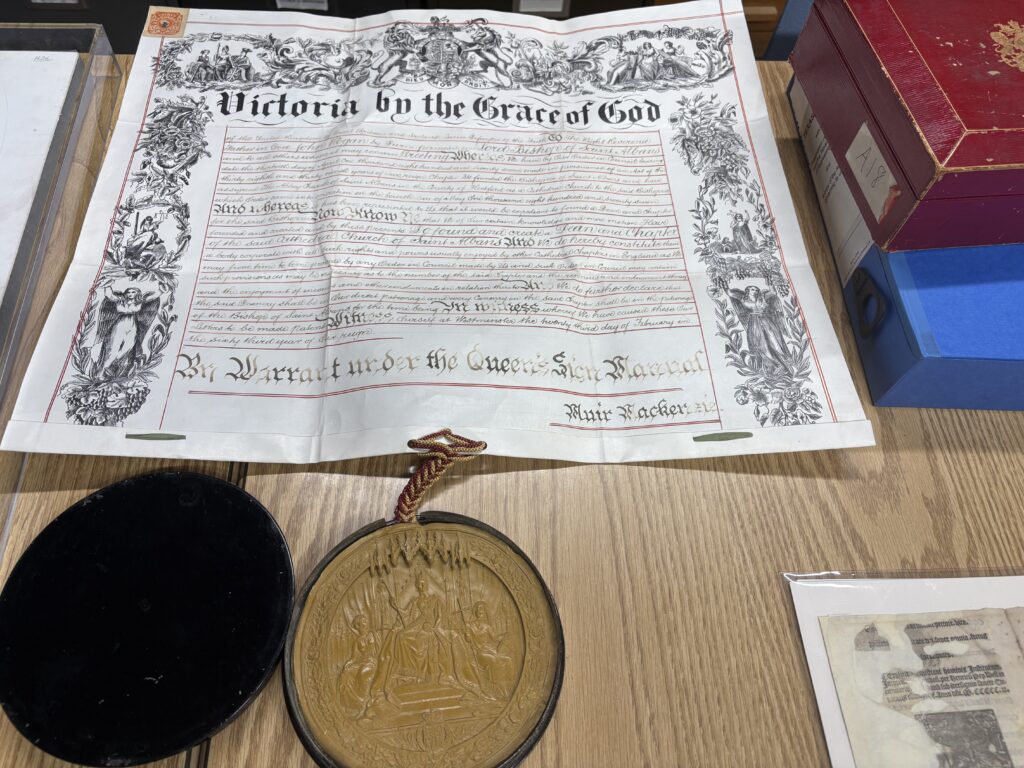
The next item bears the pronouncement ‘Victoria by the Grace of God’, and also comprises of a document and seal.
“This is the charter of Queen Victoria from 1900 to establish the Dean and Chapter of St Albans, and is effectively the founding document for the Cathedral and by default the city of St Albans.
“Although it is dated 1900, the Cathedral itself was created in 1877, so it took 20 odd years to get the paperwork sorted. There are a couple of reasons for this I think, the first was that this was – and still is – a parish church, so there’s still an Abbey parish and the Dean is still the Rector of an Abbey parish, so that was unusual from a cathedral perspective.
“The other, less formal reason was the story I heard that the Church of England wanted Waltham Abbey to be the cathedral for Essex, Herfordshire and Bedfordshire.
“But the Marquess of Salisbury – the Prime Minister at some stages of her reign – was close to the Queen, and they kind of did the deal.
“I think he donated to the choir, but I’m not too sure about that, but he obviously had ties to St Albans which were closer than his ties to Waltham Abbey, so he pushed it through, and having done it reluctantly, the Church of England was not that keen to get the paperwork in place straight away.”
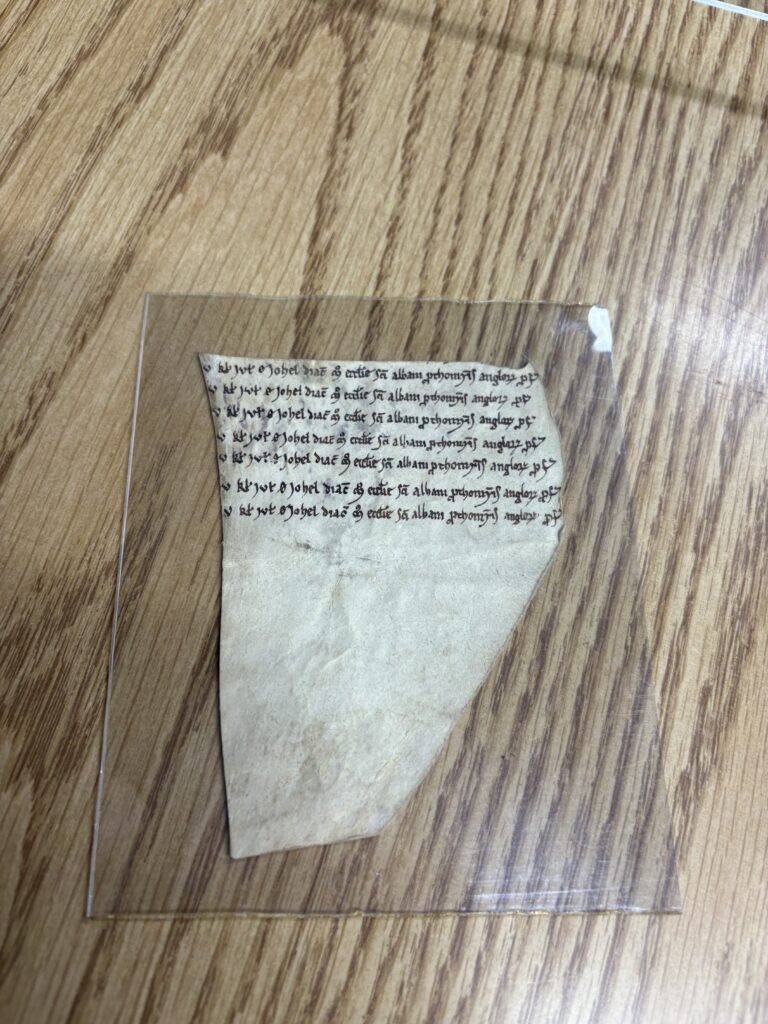
Having spanned the history of the building, including the glories of the Middle Ages, Rob highlights one of his favourite things in the archive: “This is probably the oldest piece of writing we have. It’s written on vellum, which is animal skin, and it’s obviously an off-cut to square up a proper document, with this being the fragment that is usually thrown away. It’s effectively handwriting practice from the late 12th century.
“A scribe was using it to practice his handwriting for an entry of the Book of the Dead. It reads in Latin, ‘Joel, Deacon of the Church of St Augustine, Protomartyr of the English, died in June’.
“I think this must have been for a memorial book somewhere else, and he was being outsourced.
“Having practised it, he threw away this bit of parchment, and it was then rediscovered in the1870s in the Watching Loft, which is the wooden gallery that overlooks the shrine.
“I think they probably stored things in there, so it was full of clutter by the time the monastery was dissolved, rather than the beautiful thing that we look at now.
“It’s great isn’t it, seven lines exactly the same, where he’s practising, practising, practising, and then he throws it away. But it survived for 700 years.”
Because of the ink used, it looks no older than 30 or 40 years: “That’s why it’s so clear. I think calligraphers still use that ink when they’re writing something for permanency.”
A Papal legacy
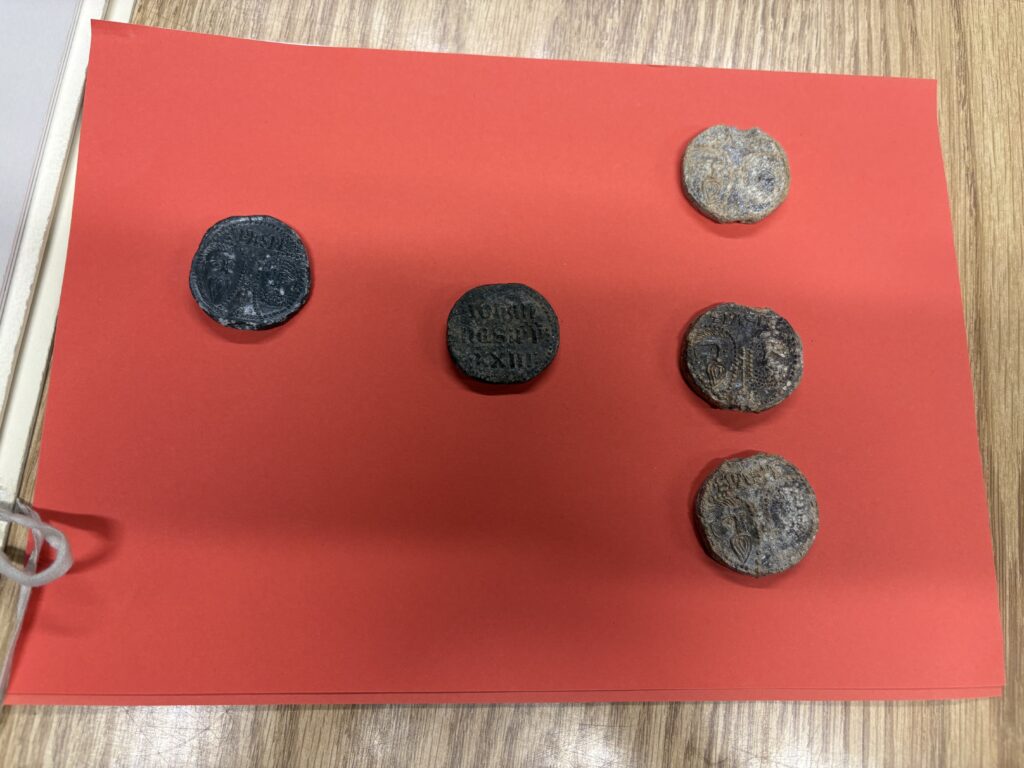
Before the construction of the Cathedral’s new Welcome Centre, archaeologists from the Canterbury Archaeological Trust (CAT) digging on the site in 2017 found the grave of former Abbot John of Wheathampstead (d1465), together a collection of seals known as papal bulls, which were presented to him by Pope Martin V (1417-1431).
You might have guessed that the next items Rob wanted to show me are those very bulls, surprisingly heavy metal discs which the Holy Father would have attached to documents, alongside other bulls issued by Popes Clement VI and John XXIII.
“John of Wheathampstead’s privileges were buried with him and found on his body. There was a school of thought which said that if you were a good Catholic who paid your dues to the Pope, then you’d ensured your sanctity so they were the sort of thing you wanted to have with you at the time of the Last Judgement.
“They were useful privileges to have as well – one lets him not have to fast on Fridays for example, and the other provides a travelling altar so he doesn’t have to go to church when he’s out and about.
“We’re not too sure what these other seals for, but if you look at them on one side they all have St Peter and St Paul, and on the back they have the name of the Pope.
“One of them belonged to [Abbot] Thomas de la Mare, who went to visit John XXIII to get his privileges.
“All good Catholics know John XXIII as Good John, he was the Pope who started Vatican II in the 1960s.
“But this John XXIII was an anti-Pope following the splitting of the Papacy after Clement VI, and he was effectively expunged from the record.”
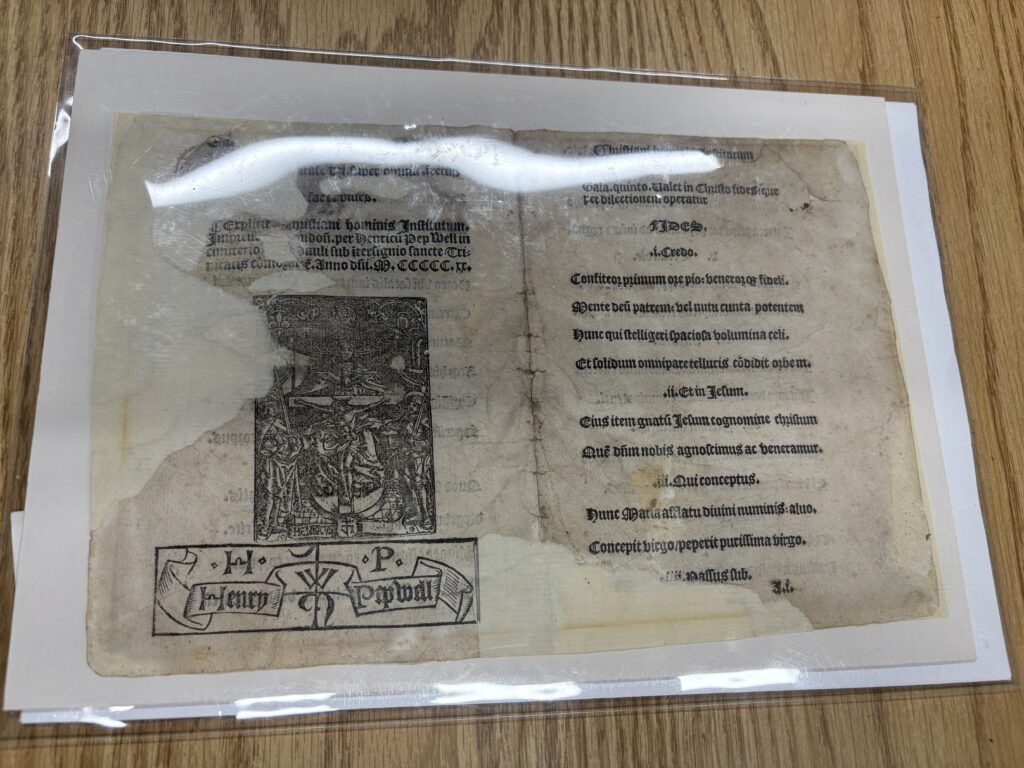
On first glance, there doesn’t seem to be anything overly exciting about the next items, four printed pages in a plastic sleeve, but in fact they are much more than that.
“These are four pages from a book and feature a poem written in 1520 by an English schoolmaster in St Paul’s.
“It is basically a guide to good living for a Christian gentleman, covering the Seven Virtues, the Seven Deadly Sins, that sort of thing.
“He asked Erasmus to translate it into Latin, which is what this is. Erasmus was a humanist and satirist whose work undermined the authority of the Church’s image by saying they were out for money and what have you.
“What’s interesting is that this was here at the Cathedral at the time of the Reformation and the dissolution, so monks would have read this in 1520, and you have to wonder the extent to which the writing was on the wall.
“This sheet is exceptionally rare, and there’s no surviving copy of the complete poem by this printer.
“There’s one in the British Library by a printer called Wickham, and there’s a fragment of this printer’s version I think at the Bodleian [Library in Oxford], but this is effectively the largest section you’re ever going to find of a printing of this poem.
“It’s exciting in the sense that it’s the printed word, it’s the start of humanism and the Reformation, and the monks here would have read it.
“It brings home the immediacy of it all because in 1539 the monastery’s dissolved and it becomes a parish church and goes down on its uppers.
“The building’s then used for a whole load of different reasons – the Lady Chapel becomes a school, the Saint’s shrine is destroyed and disappears, the Nave is left empty, and the church kind of shrinks to the crossing where the tower is. From then on it’s always needing money to shore it up, until the 19th century when lots of work is done and the building becomes a Cathedral.”
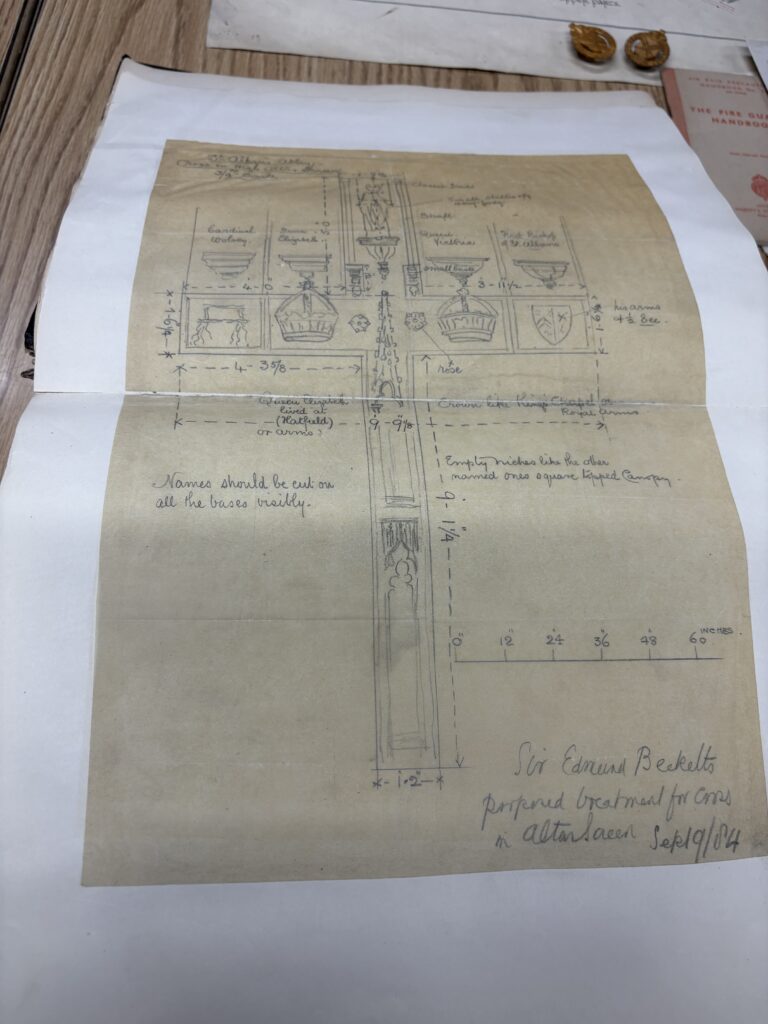
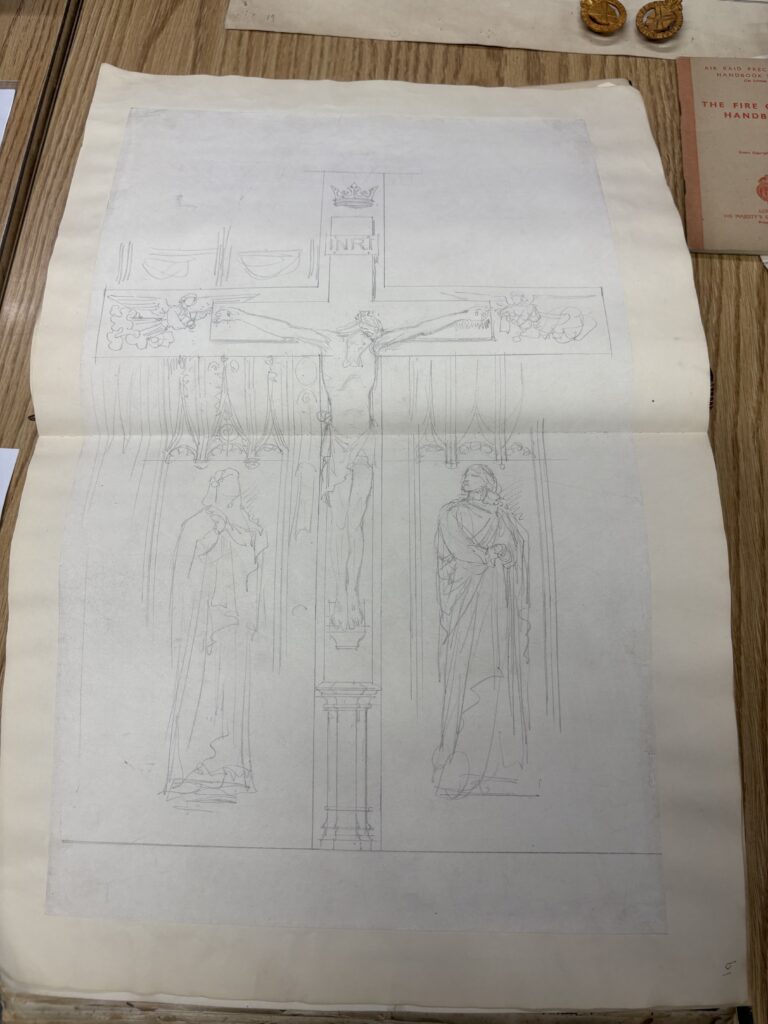
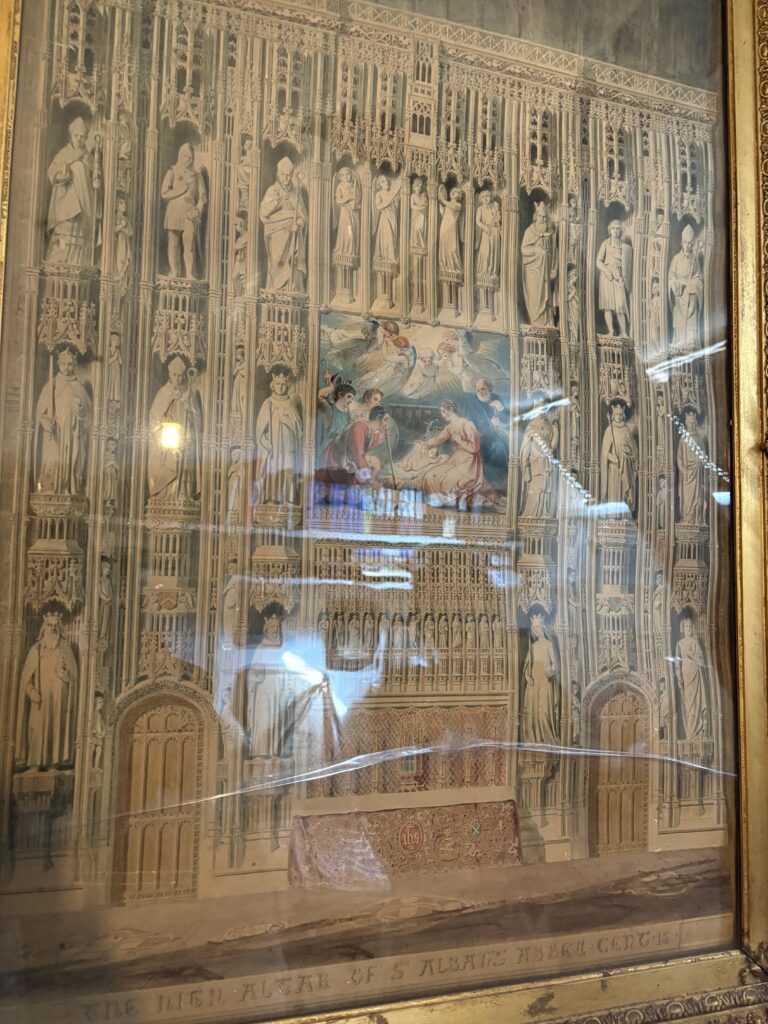
This brings the story neatly to Lord Grimthorpe’s divisive restoration and our next item, a volume of collected letters about the high altar screen, one of the two great controversies surrounding his work, the other being the West End of the building.
“Grimthorpe had the rights to restore the entire building except for the high altar screen, and I think it’s fair to say he was a very difficult man who had very strong views about what he wanted.
“Lord Alderman, who was funding the restoration of the high altar screen, also had strong views, and he wanted a much more decorative, baroque-type representation, whereas Grimthorpe wanted something much simpler, what he would call gothic.
“This is a drawing of what Grimthorpe wanted to see at the high altar screen, with his annotations [under his earlier title of Sir Edmund Becket]. There’s not much religion on this cross – a lot of history and famous people, but not a lot of religion.
“Anyway he fell out with Alderman big time over this and they ended up going to court. Grimthorpe’s argument was that from the Reformation onwards you weren’t allowed to have a crucifix in an Anglican church, whereas Alderman managed to persuade the court that it was a representation of a crucifix. This book contains Alderman’s sketch of what he wanted, which is much closer to what you see there now, with the plethora of saints and Christ on the cross.”
![James Neale’s book of architectural drawings of the Cathedral [The Abbey Church of St Albans 1877]](https://stalbanstimes.co.uk/wp-content/uploads/2025/09/IMG_1591-768x1024.jpeg)
![James Neale’s book of architectural drawings of the Cathedral [The Abbey Church of St Albans 1877]](https://stalbanstimes.co.uk/wp-content/uploads/2025/09/IMG_1592-768x1024.jpeg)
![James Neale’s book of architectural drawings of the Cathedral [The Abbey Church of St Albans 1877]](https://stalbanstimes.co.uk/wp-content/uploads/2025/09/IMG_1593-768x1024.jpeg)
Lord Grimthorpe is also famous for designing the mechanism of the Big Ben clock tower, and while preparing for a visit by Houses of Parliament guides last year the archivists discovered something hidden in plain sight.
“It turned out we have Grimthorpe’s copy of James Neale’s book of architectural drawings of the Cathedral [The Abbey Church of St Albans 1877]. We have a whole stack of these, but because it’s his copy it’s very exciting, because he isn’t a nice person I think it’s fair to say.
“He’s gone through the book in a very Grimthorpian way, butchered it and scribbled all over it. Every drawing he says is wrong, and he’s drawn it in like he restored it. So he’s put the roof on, the turrets on, and he writes on the front page that James Neale is a ‘small architect’.
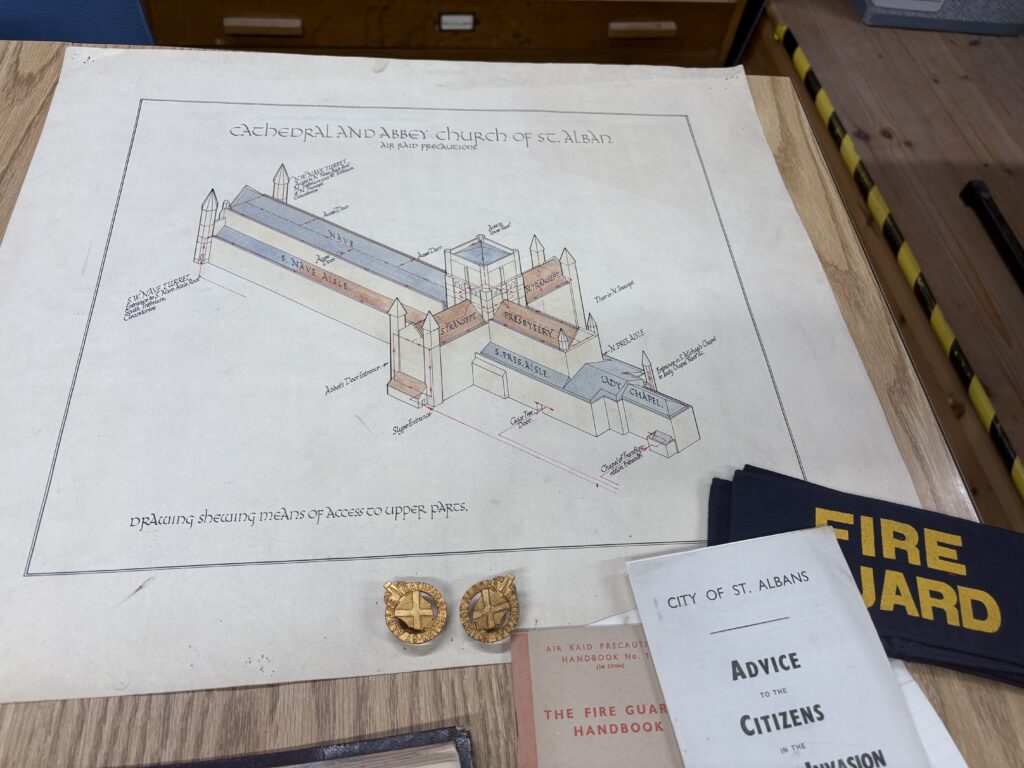
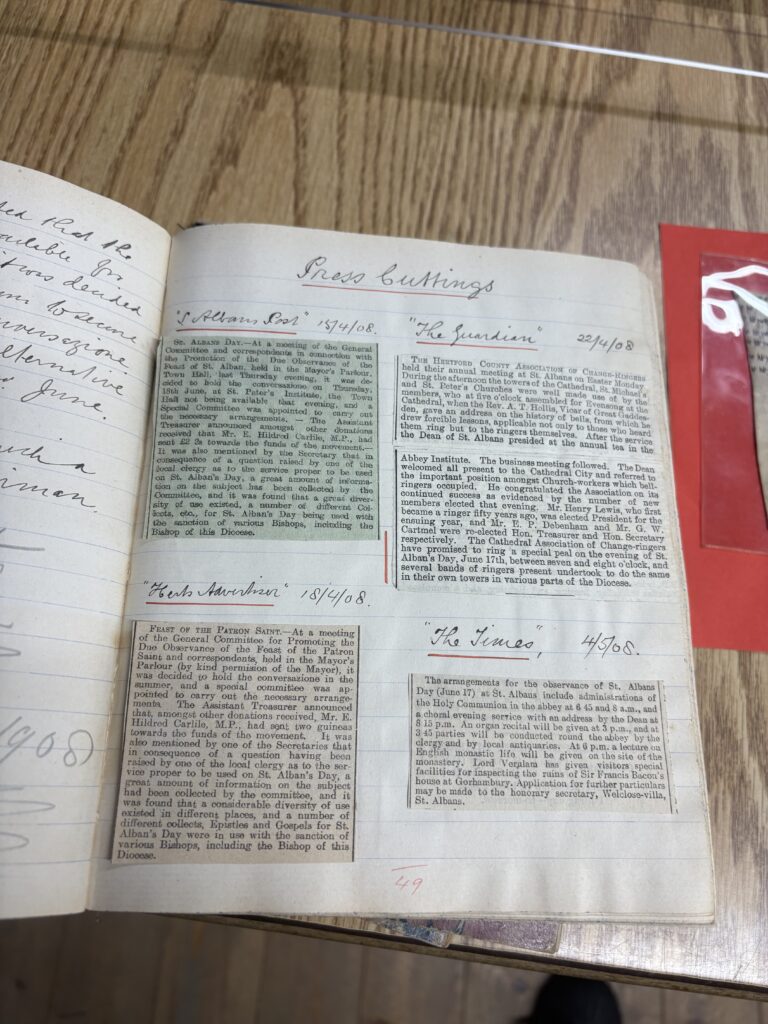
As a living building, the history of St Albans Cathedral did not stop at the end of the 19th century, so as we move into the 20th, we find a rather different selection of items, starting with a 1941 illustration which is actually in a very simplistic 1930s style.
“I think this is my favourite picture of the building because it’s so simple and clear. It was drawn for the fire watchers and stood on the roof during the Second World War, and showed the different exists and how to get down.”
Accompanying leaflets explain what to do in the event of more than one roof being on fire (with the order in which they are to be dealt with: Presbytery, Nave, Transepts and lower roofs), how if you find a bomb then you should throw it off, and what to do in the event of an invasion by enemy forces.
Visitors to the archives include academics, people with a personal interest in records, the Cathedral community itself, and group visits from schools or other organisations.
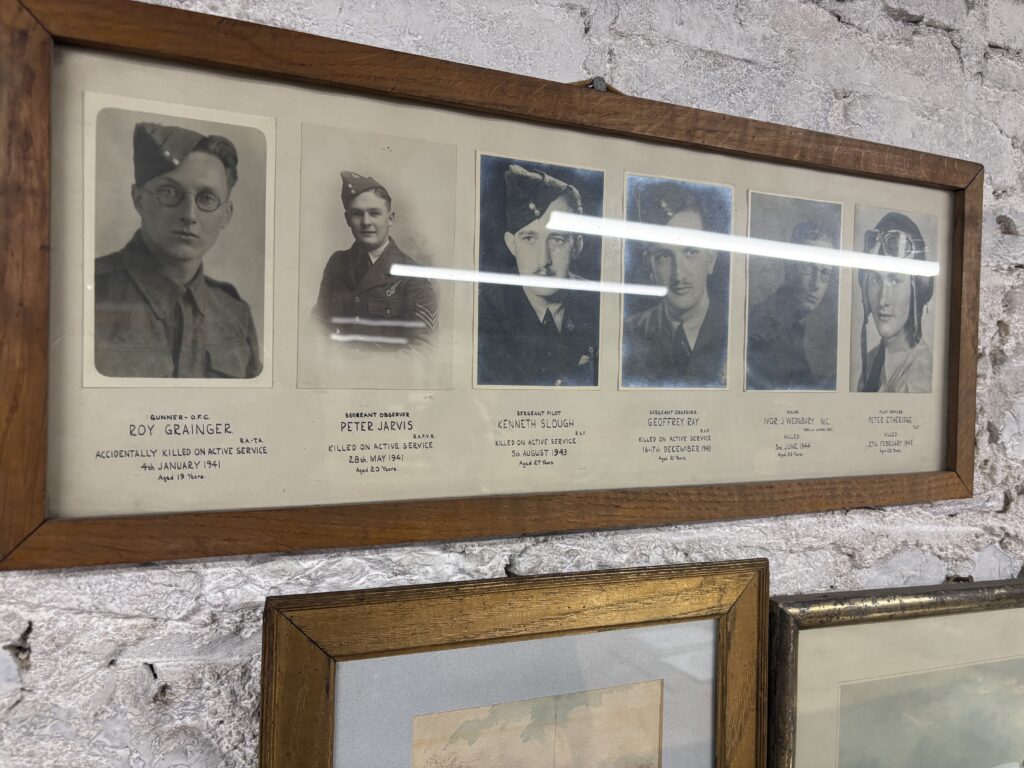
“We have people whose relatives were born or buried or baptised here, and although we don’t keep the registers we do have details of what’s on them. There are other informal records we do keep though, such as people from the parish who fought in the Second World War, and a few months ago a family came to see these because their relatives all lived here.
“It’s not just deaths, we have details on whether they were a reservist, wounded in England, discharged and so on.”
A lack of space prevents much of the collection from being on wider display, but there is an exhibition area which changes regularly.
“We’re going to have an exhibition of different bits of flora and fauna in the Cathedral, and one of the things that will include is a 19th century version of the Book of St Alban, which is a book on hunting and walking.
“In there is a list of all the different hunting birds, and who should own which, and it says a peregrine is the ideal hunting bird for an earl, so will be opened at that page.”
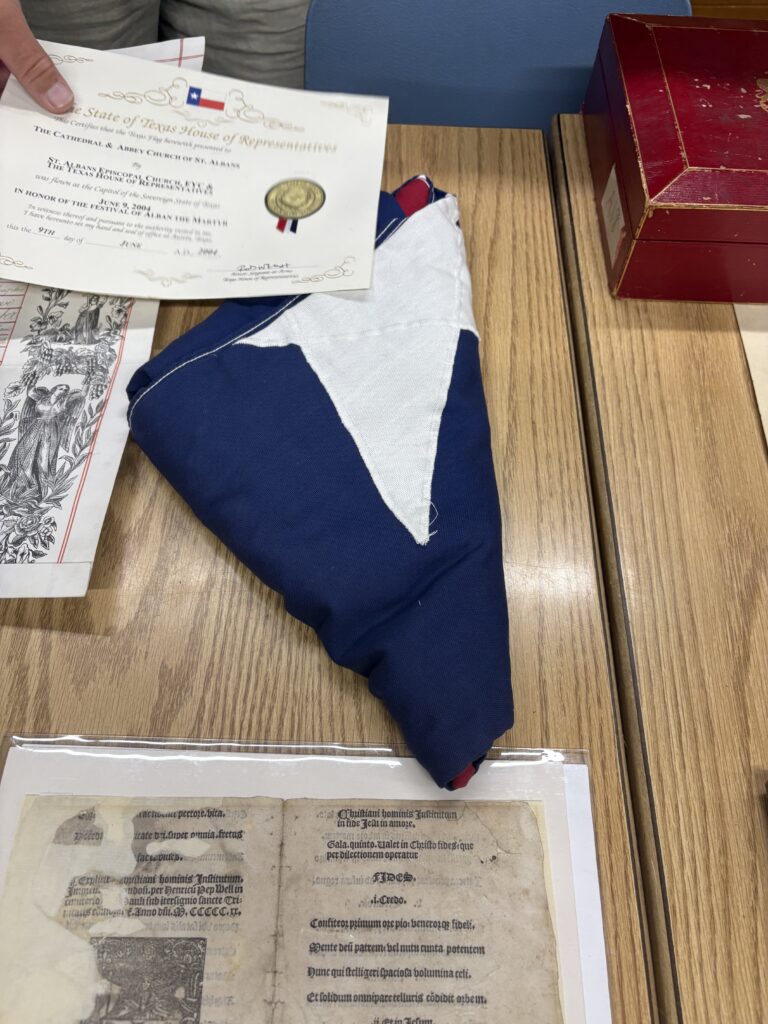
Finally, a folded flag represents the 21st century, with Rob’s caveat: “I always like to get this out, but everybody else on the team kind of groans when I do.”
Although visitors are welcome to hold it, only members of the US Marine Corps are allowed to undo it, because only they are likely to know how to fold it correctly again.
“That’s the state flag of Texas that was flown on 9th June 2004 by the Episcopal Youth Chaplain of St Albans at the House of Representatives in St Austin to celebrate St Albans Day. Not June 22 but close enough.
“All these churches named after St Albans kind of look informally to this place, and I like that. We had a question from a group in Africa a few years ago where they were setting up a church they were going to name St Albans and they wanted to know what colours they should be using in their decoration. So there’s an informal and emotional tie which spreads around the world.”
The collection continues to grows, whether from donations like a set of enamel badges commemorating different years of the Easter Monday pilgrimage, or excavations like those which took place prior to the construction of the Chapter House and Welcome Centre.
“The first papal seal, Clement VI, was found as part of the 1986 excavations, so old things do keep cropping up.”
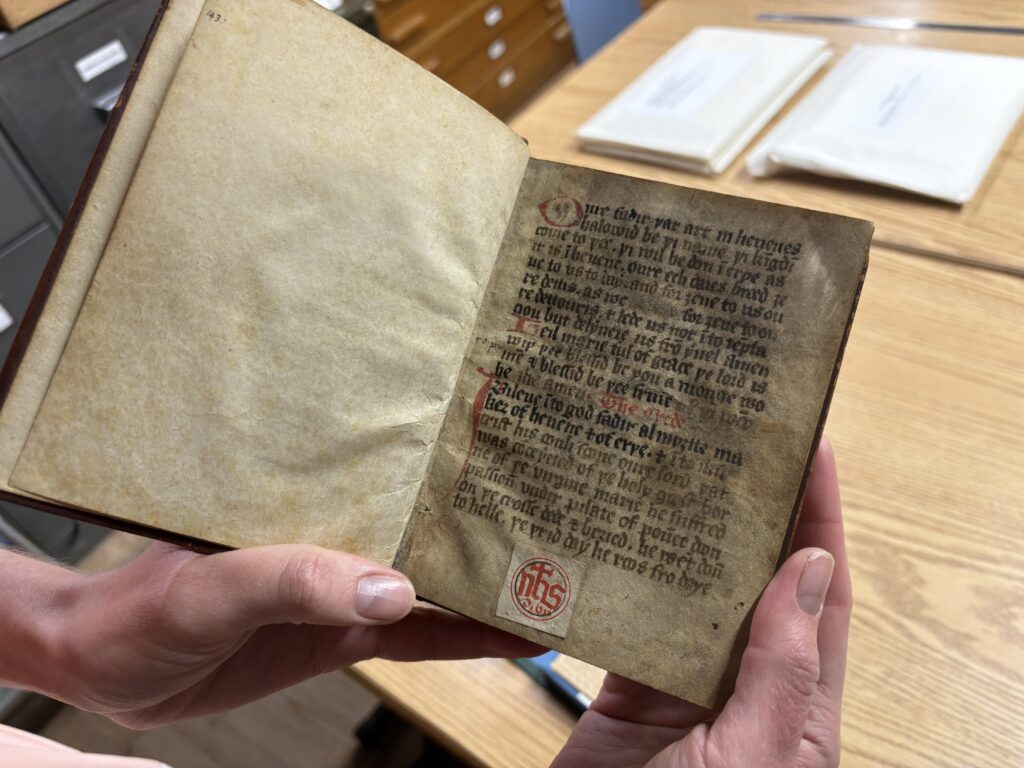
The archives team of volunteers Rob, Judy, Derek, Richard and Ella have all learned by experience rather than education, and devote time each week to working in the department, drawing on their rich knowledge of what is stored there as much as the official records.
“When people come and ask for particular things we try to find them, and over the years you remember the good stuff, or sometimes when you pull things out you discover other items you didn’t know existed.
“We’re forever finding things, every time we do a new exhibition we find something new…”
St Albans Cathedral archives can be visited by appointment, usually on Monday afternoons in term-time. Please email the team for more information at archives@stalbanscathedral.org
Sources for additional information: archives team Derrick Chivers, Sheila Green, Ailsa Herbert and Richard O’Neill; Professor Erik Kwakkel from the University of British Colombia.