


22 Aug 2025
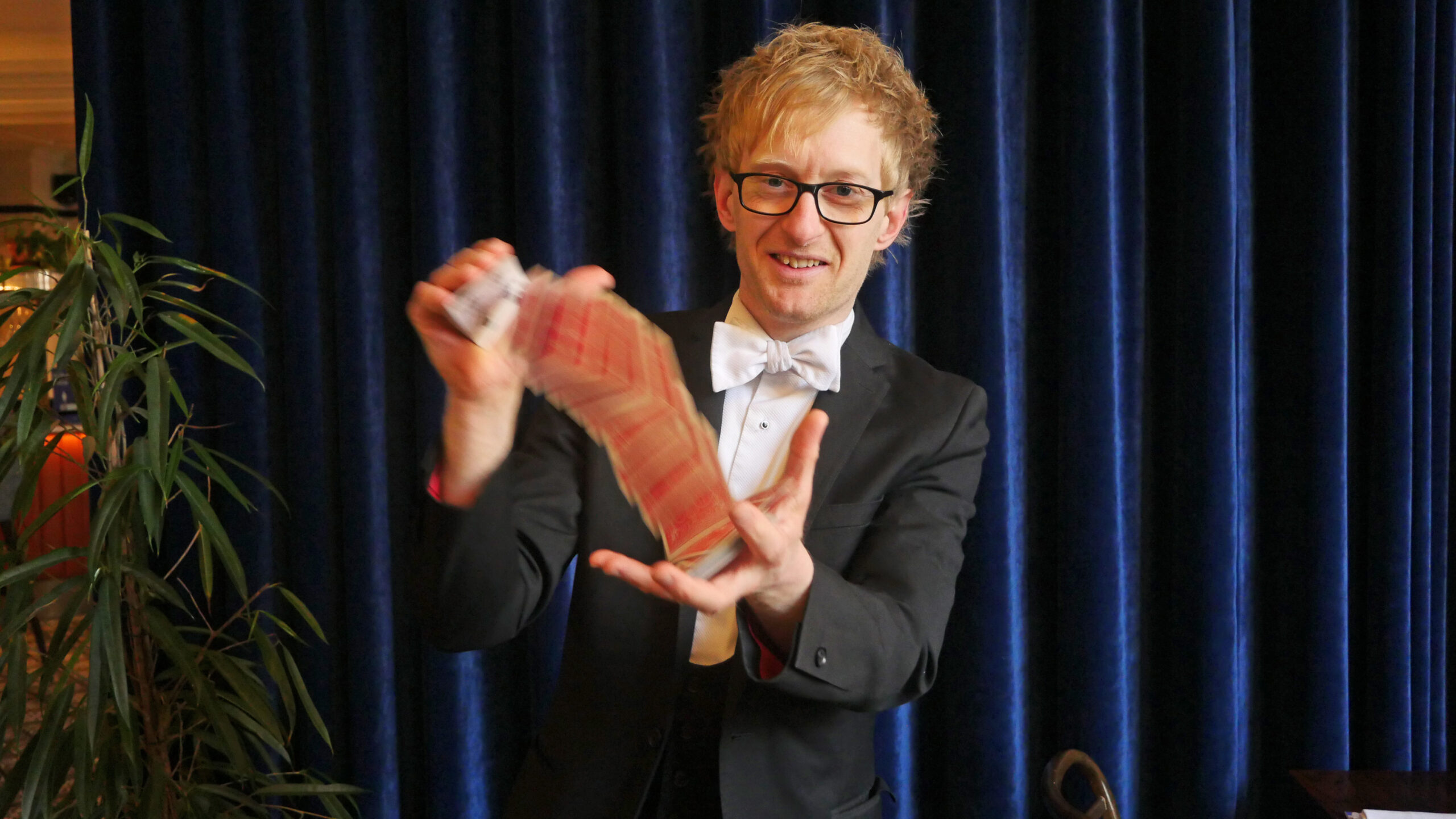
One of the UK’s most accomplished sleight of hand magicians will be bringing his close-up conjuring to the environs of a popular St Albans restaurant.
Tony Middleton – known by his stage name of Sonic – is the creator of The Magic Hour at the Sheraton Grand Park Lane, London’s longest running and most successful parlour magic show.
But now he’s coming home to St Albans for a limited series of intimate performances at the Côte Brasserie, offering diners a rare chance to experience top level magic in an intimate dining setting, starting on August 24.
We caught up with him for a chat ahead of his first show next week to find out more about what audiences can expect, and how he came to forge a career as a professional magician.
So where did it all begin? Is he of the age when Paul Daniels’ Magic Tricks could be found under the Christmas tree, tempting youngsters into struggling through makeshift performances in front of the family come Boxing Day?
“Ah yes, the Paul Daniels magic set. I think many boys get given a magic set for Christmas – usually around age 10 or 11. I didn’t have that, but I was given a book on card tricks.
“Most people have a quick go and then forget about it – but the magic bug bites those who are destined for it I think. I did a few tricks, was pleased with the result, and then I did a few more, until I had worked through the whole book.
“Back then there was no YouTube – imagine that? There were no videos to watch – you had to read the instructions and work it out from there. In some ways I think it was better that way. It wasn’t easy to get the secrets, and you had to put some effort in. That’s as it should be.
“Nowadays if you just type ‘card tricks’ into YouTube or Google, you get thousands of videos. In a way it’s a different problem: you don’t know where to look as there’s too much out there. There is no way of gauging what’s good or bad teaching. You need a guide. The book I had contained about 14 ‘self working’ card tricks and was published by a professional magician. Self working means tricks that don’t involve any sleight of hand. It was a good place to start.”
Of course there is no formal training to become a magician, and careers advisors tend to frown on students who suggest it might be a viable money-making venture, but Tony wasn’t deterred.
“I always wanted to be a professional magician. It wasn’t an option for me to do anything else – I had my mind fixed on it from a young age. I would make it happen whatever. Back then I had more tenacity than I do now. Having a family changes your priorities!
“But although you can’t go to Hogwarts, there are magic societies around the country that you can join. There’s usually one in each county in fact and I was part of the Leicester Magic Circle when I was growing up, joining at the youngest age I could, which was 16.
“You had to pass the audition first of course. Once I got in, I learned at a faster rate as they have weekly lectures, and there was a team of magicians who did regular events in the county. It was a great training and soaked all of that up. Before I left school I had already directed and produced by own magic and illusion show – so I was making tracks.”
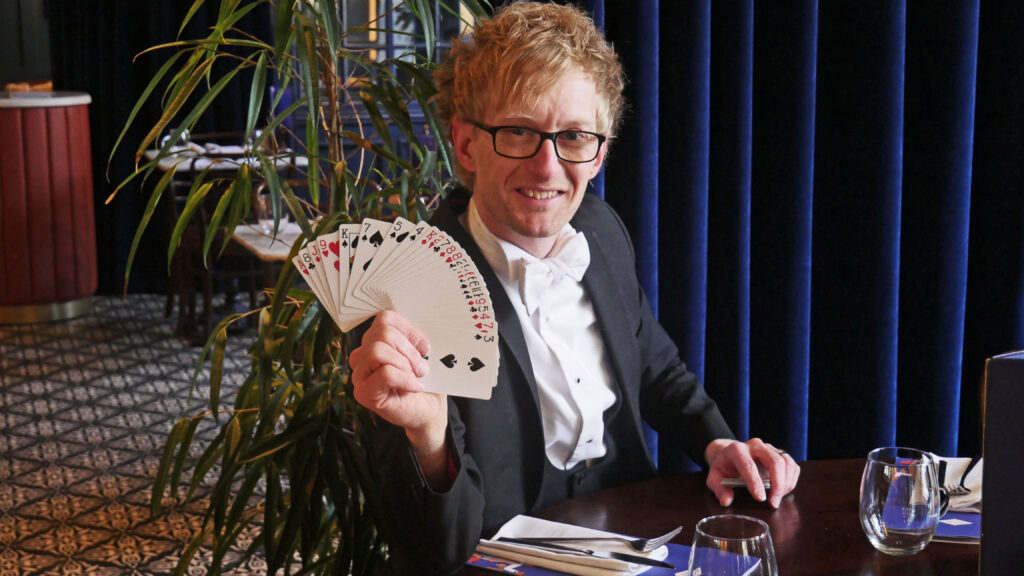
He also became a frequent patron of magic shops, places where the staff would demonstrate tricks for customers: “Once I had exhausted the tricks in my first book of card tricks, I went in search of another. I went to local libraries – but many didn’t have anything. I had to ask if they could order something in.”
Tony’s voracious reading exposed him to the magicians of the Victorian era and magic’s golden age, who became his personal heroes.
“They were the ones who had big touring magic shows, and invented some of the tricks that we still think of as synonymous with magic today – like pulling a rabbit from a hat, catching a bullet in between your teeth and floating a lady in the air. I like to read about their careers and imagine what it would have been like to have seen their shows. There are eye-witness accounts which are really interesting.”
Gradually, by reading more and more books on magic and looking through their bibliographies, he discovered that there were such things as magic shops.
“There used to be two shops in London – one in Charing Cross called Davenports which started in the mid-1800s and unfortunately recently closed.
“But I do have a catalogue of theirs on my shelf. It has 450 pages with descriptions of the tricks they sold with illustrations. I bought the catalogue so I could take my time to read everything and decide what I would save my money for.
“The only remaining magic shop in London now is called International Magic. It’s in Farringdon. I recently took my son there (aged 7), as he is really interested in learning. He won his school talent show doing magic actually! It’s nice for him to have the experience of going there and seeing someone present the tricks. Magic shops offer a feeling of community that you can’t get online – and you never know who you might bump into.
“Sadly there aren’t many ‘brick and mortar’ magic shops these days – it’s all online.”
Setting the bar high, he then aspired to join The Magic Circle, the world’s premier magic society.
“It’s an exclusive members club, and it’s difficult to get in – it’s a big deal. They have their own building in Euston with a theatre, museum, library and clubroom. You have to audition and it typically takes people a few years to pass the examination.”
But not only did he succeed in his goal, he subsequently became an Associate of the Inner Magic Circle with Silver Star, which denotes excellence in performance.
“You can achieve this by examination, but in my case I was surprised with the promotion by the President at my show The Magic Hour after I came off stage. It was a great honour, and a total surprise. The Magic Circle wanted to recognise my achievement in performing my own weekly show in London for 12 years. It’s been one of the biggest successes of my career to date.”
And what a career, with performances in front of some of the world’s top celebrities…
“I appeared on the TV show Penn & Teller: Fool Us with Jonathan Ross – that was fun. I was on the first series with another magician. We did a mind-reading based trick involving a fantasy holiday. In terms of close-up magic, I once did a private party for Sir Roger Moore at a restaurant in Regent Street, and I’ve entertained at many exclusive events at 5-star hotels in London including SAVOY where I had a show in Simpsons in the Strand for three years.
“Along the way I’ve met Simon Cowell, The Hairy Bikers, Prunella Scales and numerous X Factor and BGT stars. You never know who will be at an event. Recently I entertained the internet celebrity and boxer KSI – he came to watch my London show.”
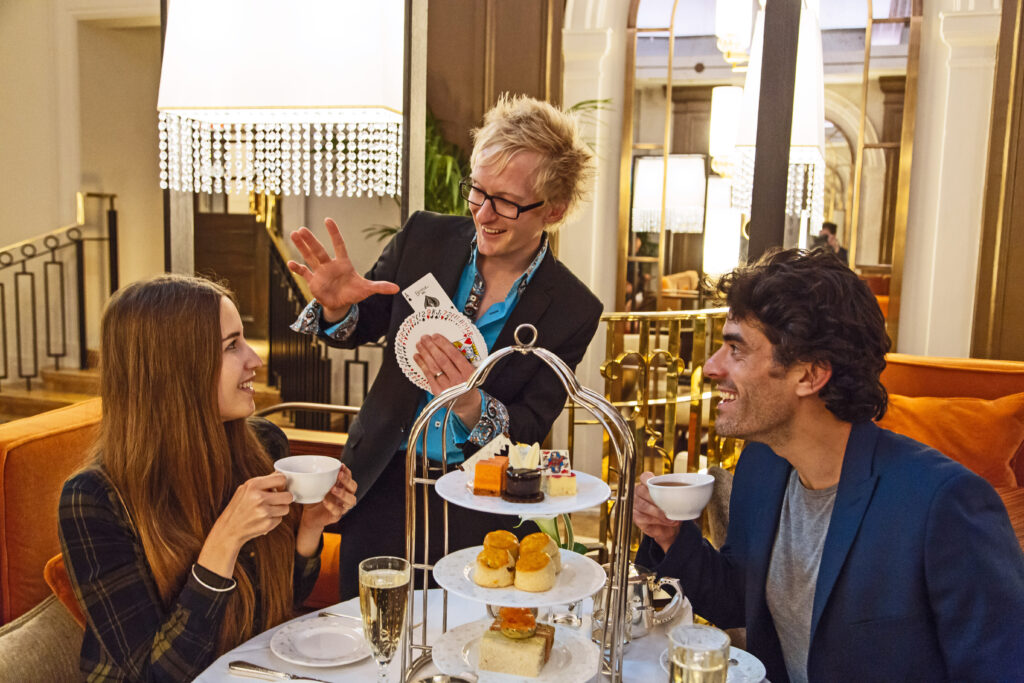
So what are his favourite tricks? “I like visual tricks best – sawing a person in half, making objects vanish or appear, but I also enjoy mind-reading based magic too. I always include a range of effects in my shows because different things appeal to different people. It depends what kind of person you are as to what type of magic you like best. Ask a few people any they will all pick out different things as highlights. Of course magicians like the technical stuff – because we know skill required to perform certain moves etc that the general public wouldn’t be aware of.
“Performing close-up or on stage are different challenges. With close-up you literally have the audience right on top of you, so there’s nowhere to hide. Sometimes you are even surrounded, or partly surrounded. Your sleight of hand has to be good so they don’t catch any secret moves. I do enjoy close-up magic a lot because it’s personal. I’ve done many weddings, private parties, birthday parties, and garden parties in St Albans – pretty much every kind of occasion really.”
But what if it goes wrong? “Well there’s the old saying that you don’t know your show until everything has gone wrong. It’s true! The times when something unexpected happens is when you really learn your craft.
“When you book a skilled magician, you are paying for all the time they have spent getting their performances right. It’s not something you can do overnight. If I have a high profile event to work at, I do what I have perfected over year – not something new. In the business they call it building up ‘air miles’.
“When I started out – when I was about 15-16 I mean – I remember doing a show at a village fete (I didn’t charge any money back then). I hadn’t anticipated the challenges of performing outside…
“The wind knocked my props off the table and it was a disaster. It’s not like that anymore of course, but sometimes things can happen that are out of your control, and then you have to think quick, and be super professional.”
Performing in front of local residents probably has its own challenges then? “People have asked me for some time ‘when are you going to do a show in St Albans?’, so I finally decided to make it happen. I think it will be really nice because it’s a light-hearted, personal show which can be enjoyed by all ages. Côte Brasserie has a nice vibe – it’s smart but also chilled out. I will do just over an hour of my best close-up magic – it’ll be really fun.
“Also I know lots of people in the area, so I’m sure I will see a few familiar faces. In fact every time I walk into town I see someone I know – that’s what comes from living here for 15 years. There will only be 25 seats per show – so get in quick! All the content will be different to my London show, so people can see both if they wish and it will be a different experience.”
Before he disappears (figuratively, not literally!), just one last question: why Sonic?
“I used to have really spiky hair when I performed, so other magicians called me ‘Sonic’ – like the hedgehog. I used that as it’s easier to remember than Tony Middleton. When people have had a few drinks they remember Sonic. I style my hair messy when I perform still, though it’s not quite like when I was in my 20s.”
You can book tickets for Tony’s St Albans shows via his website: https://www.magichourshow.com/st-albans-show
