


30 Jun 2023
Is the tide starting to turn against the controversial city centre road closures?
As we move towards the third and final period of the trial, the success of the scheme is increasingly coming into doubt.
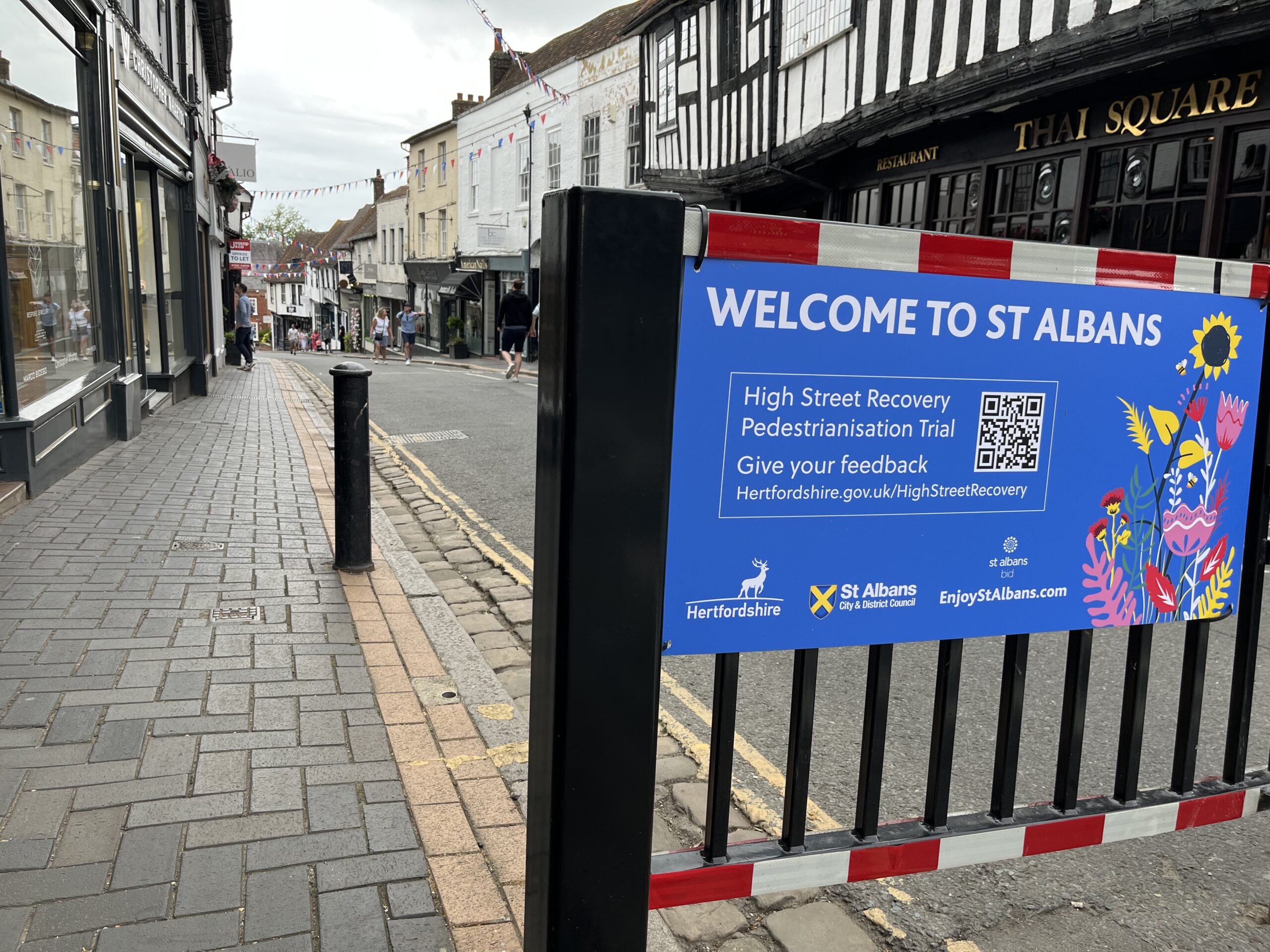
As readers will be aware, the closures of High Street, George Street and part of Verulam Road by Herts county council first took place in the wake of the first Covid lockdown to promote social distancing.
As we moved out of the pandemic, County Hall decided to launch an experiment into pedestrianisation in St Albans city centre which also saw Market Place, Spencer Street and Upper Dagnall Street permanently closed.
The trial was supposed to last 18 months, but will now come to a close at the end of October.
Opinions have always been polarised about the scheme, with a survey carried out last July receiving just 85 responses from almost 4,500 letters sent to residents, businesses, the emergency services, public transport groups and residents’ organisations.
Of these responses, 30 per cent supported the trials, while 49 per cent were opposed, and the opinions of the rest were unclear from their answers.
HCC chose to ignore opposition – which included concerns from Christopher Place, The Maltings Shopping Centre and St Albans Chamber of Commerce – and plough ahead with the trial.
Now eight months into the year-long project, the St Albans Times can report growing dissatisfaction from various parties within the city.
One business – which we will not name at this time – has reported a 60 per cent fall in transactions on a Saturday since the closures were introduced in November.
Others have said confusion and frustration about the weekend pedestrianisation of High Street has put their customers off travelling into St Albans, pushing them to Watford which is easier to access and has better parking.
So what has the scheme actually achieved?
Arguably there are no perceived advantages from shutting the streets to vehicles. Pedestrians can be seen sticking to the pavements in George Street and High Street, there are no markets taking advantage of the space, and only a smattering of tables and chairs offering al fresco dining.
Not one business has applied for a pavement licence in the licensable areas, and the closure of High Street during the Friday evening rush hour does nothing more than add to congestion in the surrounding area..
Indeed, the very atmosphere of the affected streets can be seen to have changed since the closures were introduced. There is less of a buzz, the dynamic of the area has shifted and these streets have not turned into the vibrant community areas which were promised as part of the original proposals.
For some businesses, they have also lost the drive-by showcase of their premises which used to exist, a useful reminder to customers that they were there or a chance to highlight their stock in the shop window.
In High Street, the need to keep the road open during the week has prevented the installation of any improvements such as extra seating or planters, while in George Street school buses continue to rumble down the road every morning.
During the recent St Albans Half Marathon, the continued closure of High Street in addition to the streets being shut for the event saw staff unable to get to work and customers being late for reservations or having to cancel.
Of 11 George Street businesses asked whether they preferred the road to be closed all week, at weekends or reopened fully, seven opted for the latter option.
Deliveries remain a problem, as the scheme presumes all shops supply their goods in paper bags, whereas customers and delivery drivers alike are restricted on the times they can access the premises.
The need to create a shared space for cyclists and pedestrians has created its own hazards, while the large gaps in the gates means mopeds, scooters and motorbikes will ride down George Street at any time of day.
Keith Fields of Beelex Electrical in Verulam Road said it has created a divide across the city, with those living in the east and south unable to get through to his shop at weekends.
“It puts people off visiting, and many think High Street is also closed in the week.
“Communication from SADC, HCC and the BID has either been poor or non-existent.”
The team at The Wacky Barber, opposite, described the closures as “ridiculous”, claiming all they ever see is chaos as the road is turned into a turning point for frustrated traffic.
As we have previously reported, the Abbey Precincts Residents Association has expressed reservations about the merits of the closures, and Verulam Residents Association also has issues, as chairman Timothy Beecroft explained: “We are not as directly affected as those in the city centre but have expressed our concerns about the knock-on effects of the road closures on traffic levels in King Harry Lane, Watford Road and at the King Harry roundabout, all of which are already busy enough.”
But it seems the county council won’t even consider ending the trial until the autumn, as a spokesperson revealed: “We’ll be collecting data until the trial ends in October 2023, so it’s too early to draw any conclusions. We are monitoring footfall (how many people come to the city) and dwell time (how long they stay for), as well as traffic flow.
“At the end of the trial the data will be analysed and presented to the project board, consisting of elected members from county and district council levels, who will make the final decision in the autumn on whether or not to proceed with any permanent outcomes or whether amendments are required.”
