03 Jun 2025
Mental Health Awareness Week is an annual initiative highlighting the struggles many people face with their mental wellbeing. but for a group of men in St Albans, taking care of themselves is more than a calendar event, it’s a lifeline, as Anisha Kashim found out…
In a quiet corner of the city, every other week, a group of men gather at the Lower Red Lion pub – not to just get rounds in, but to talk.
This is Talk Club, a mental health community making a tangible difference in men’s lives.
Talk Club was born out of tragedy. In 2014, co-founder Ben Akers lost his childhood best friend, Steve Yates, to suicide. Ben subsequently created Talk Club, a project turned national initiative aimed at helping men talk before things reach crisis point.
Since its launch, Talk Club has grown into a life-changing movement across the UK and beyond. The format is simple but powerful: peer-to-peer groups, familiar places like pubs or gyms, structured conversations, and a focus on “mental fitness”. There’s no therapy, no judgment, and no pressure, just a safe space for men to check in with themselves and each other.
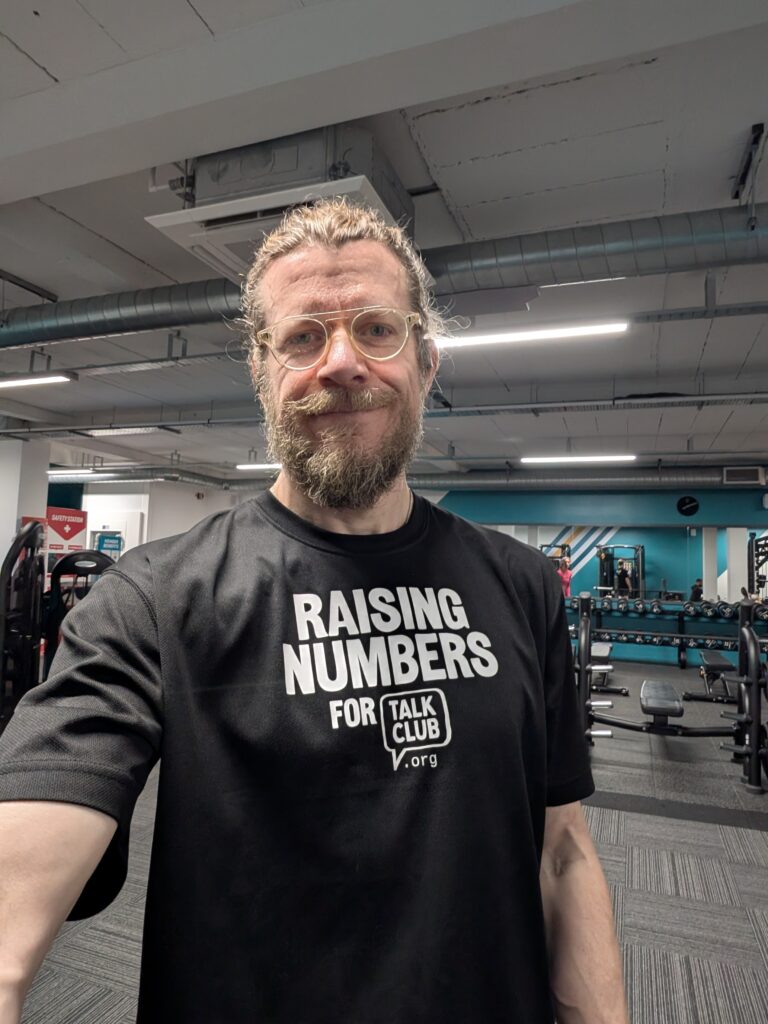
Here in St Albans, the local Talk Club chapter is led by Rich Warmsley, a compassionate and empathetic community leader whose own journey with mental health has inspired him to support others.
Rich first noticed something was wrong five or six years ago. “I felt off-kilter, but I put it down to work stress,” he recalls. As the years progressed, and especially during the tricky lockdowns of 2020 and 2021, those feelings deepened into something harder to ignore.
“I was living alone and took on a demanding job, working remotely. With support of friends, family and professionals, I realised this wasn’t just a challenging few weeks, this was depression. A word I’d resisted.”
Seeking help from his GP, Rich underwent counselling and later cognitive behavioural therapy through the NHS.
But it was Talk Club that offered something different – a community.
“I stumbled across it through a brilliant non-alcoholic beer called Clear Head, which donates 5% to total sales to Talk Club for every can or pint sold,” he says.
Curious, he joined an online session. “It just felt right, modern, welcoming, no pressure to be anything but honest.”
One of Talk Club’s key philosophies is about how we talk about mental health. Rich, who has undergone Mental Health First Aid training, is careful with his words.
“Saying someone ‘is depressed’ can become a permanent label (especially in the workplace) versus ‘experiencing depression’, just like any illness can come and go. Mental health difficulties are not necessarily a permanent identity. It can be a moment in life – it’s not a character flaw, nor a lack of ‘gumption’!”
He also points out that many people with mental health challenges remain highly functional – until they’re not.
“You often cope well until you can’t. That’s why it’s vital to talk earlier. Just like other illnesses – prevention or early treatment is better than bottling it up and hoping for the best – with the risk that things might get worse.”
Held fortnightly at the Lower Red Lion, Talk Club St Albans provides a confidential, structured meeting format. Each session opens with a simple but revealing question: “How are you? Out of 10?”
From there, the group discusses what’s going well, what could be better, and what each person plans to do to improve or maintain their mental fitness – like exercise, nutrition, sleep or social connection.
“It’s not about fixing each other,” says Rich. “It’s about giving men the space to say what’s on their mind without fear of being judged or told to ‘man up’.”
Conversations can be deep, emotional, even life-changing, but they’re also ordinary in the best way.
“We talk about work stress, relationships, loneliness, parenting, anything. And we do it in an everyday way – it’s lighter than you might think!” Rich says.
“Sometimes just saying something out loud is enough to take the weight off.”
While it is often easy to get swept up in the cosy bubble of St Albans, the mental health challenges here are real.
“There’s pressure to have it all together,” Rich notes. “People are juggling high-stress jobs, family responsibilities, financial worries, and there’s not always space to talk about the toll that takes.”
That’s where Talk Club steps in. It’s free, it’s local, and it doesn’t require a diagnosis or referral.
“You don’t need to be in a crisis to come,” says Rich. “You just need to be ready to be honest, with yourself and others. Just like a regular gym, walking or cycling habit – this is about maintaining fitness, it just happens to be about the mind.”
When it comes to men’s mental health, the statistics are stark (Office for National Statistics, 2024):
- In the UK, males aged 45-49 years were found to have the highest suicide rate;
- Three-quarters of suicides are male.
Talk Club exists to change that. “It’s not trying to replace therapy, and it’s not about a mental health crisis which needs more urgent support, ” Rich says.
“It’s trying to get men talking regularly, to help to prevent things progressing and maintain that mental fitness – you’re equally welcome whether you’re going through tough times, or just need to top up that healthy mental fitness.”
The group is just one of many national and community-based mental health support initiatives.
Organisations like Mind, CALM (Campaign Against Living Miserably), and the Samaritans offer further resources for those in need. But Talk Club fills a unique niche, a friendly,
low-barrier, in-person space where mental fitness is treated like going to the gym: something worth maintaining, not just fixing when broken.
The St Albans Talk Club meets every other Monday at 7pm at the Lower Red Lion. Sessions are free, confidential, and open to any man aged 18+. You don’t need to commit, or even say much, just show up and listen if that’s all you can do.
The club also welcomes volunteers and donations to help it grow. The easiest way to contribute is to buy a pint of Clear Head at the Lower Red Lion!
Landlord David Worcester said: “We are proud to support this important initiative and provide a safe space for men to talk about their feelings within the confines of the pub. Hopefully this article will encourage more people to come along.”
Whether you’re feeling like a 9 out of 10 or a 4 out of 10, there’s space for you.
When asked what impact Talk Club has had, Rich doesn’t hesitate.
“We’ve had guys walk in feeling like a 5 out of 10 and leave feeling like a 7. Every small shift is a win, and just like improvements in daily steps or gym weights, those changes add up over time. That’s what happens when we feel heard.”
The next dates for Talk Club St Albans are June 2 and 16. You don’t need to register any details (everything stays confidential), but you can email Rich at stalbans.captain@gmail.com to ask any questions.
For more information or to get involved, visit: www.talkclub.org OR @talkclubstalbans on Instagram
If you or someone you know is struggling with mental health, you are not alone. Support is available:
- Samaritans: 116 123 (24/7)
- Mind: 0300 123 3393
- CALM: 0800 58 58 58
Let’s talk, St Albans. Because talking saves lives.