13 May 2025
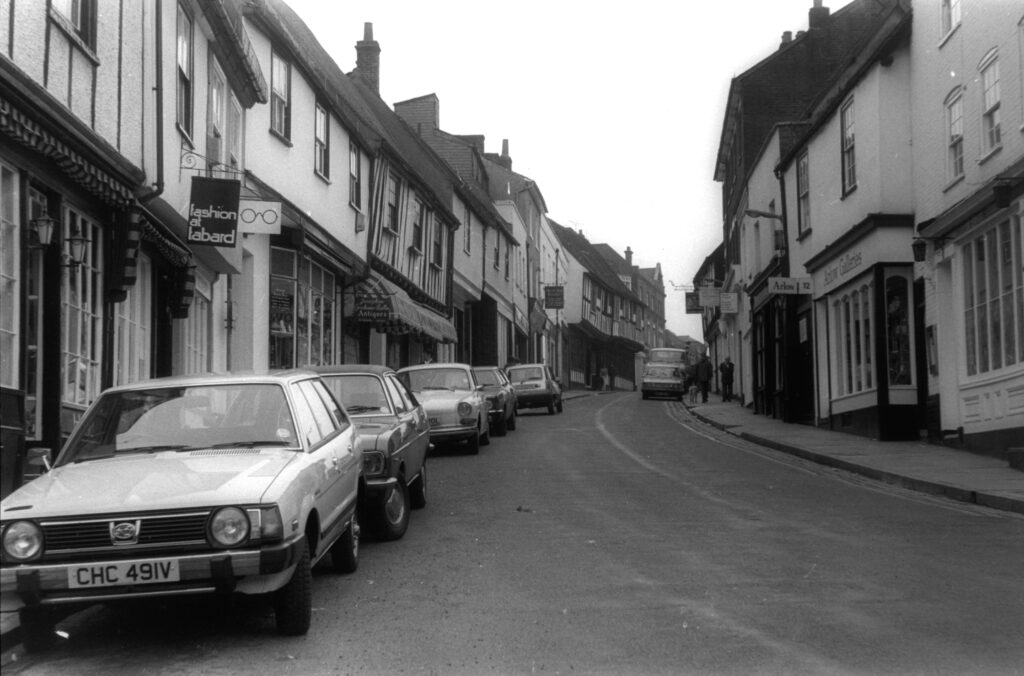
As the 1960s came to an end, the city of St Albans had yet to see the arrival of any major retail centres, with a compact shopping area boasting a variety of independent outlets and hostelries, a handful of which survive to the present day.
There are of course those which have become lost to the mists of history, forgotten gems which once shone brightly on the city’s retail landscape. But what if we could be taken back to that moment in time and explore the shops of Holywell Hill and George Street as an average shopper would have done?
‘In Britain Magazine’ is the official publication of the British Tourist Authority, and aims to provide an indispensable reference for visitors to the UK looking to get the most out of their trip.
Founded in 1932, it presents a wealth of illustrated features on towns, cities and other attractions, with a day out in St Albans the subject of one such article in January 1969.
Elizabeth Bell’s column ‘Seen in the Shops’ covers familiar ground in its introductory paragraphs, highlighting some of the obvious tourist attractions like the Cathedral, Roman theatre and “fine old houses in streets with enchanting names such as Fishpool and Romeland”, but then it gets really interesting…
For Elizabeth then spends the rest of her two page article exploring a variety of shops in Holywell Hill and George Street, detailing the contents of their stock and something of their history, providing a level of detail which really does paint a picture of what it must have been like to visit St Albans on that particular day, probably at some point in late 1968.
In this article we will not only focus on Elizabeth’s musings during her visit, but also include comments by a selection of Albanians who can recall some of the retail outlets featured and can elaborate on the history of their premises before and after this time.
Additional research has also been carried out by John Morewood, President of St Albans and Hertfordshire Architectural and Archaeological Society (SAHAAS), for which we are very grateful.
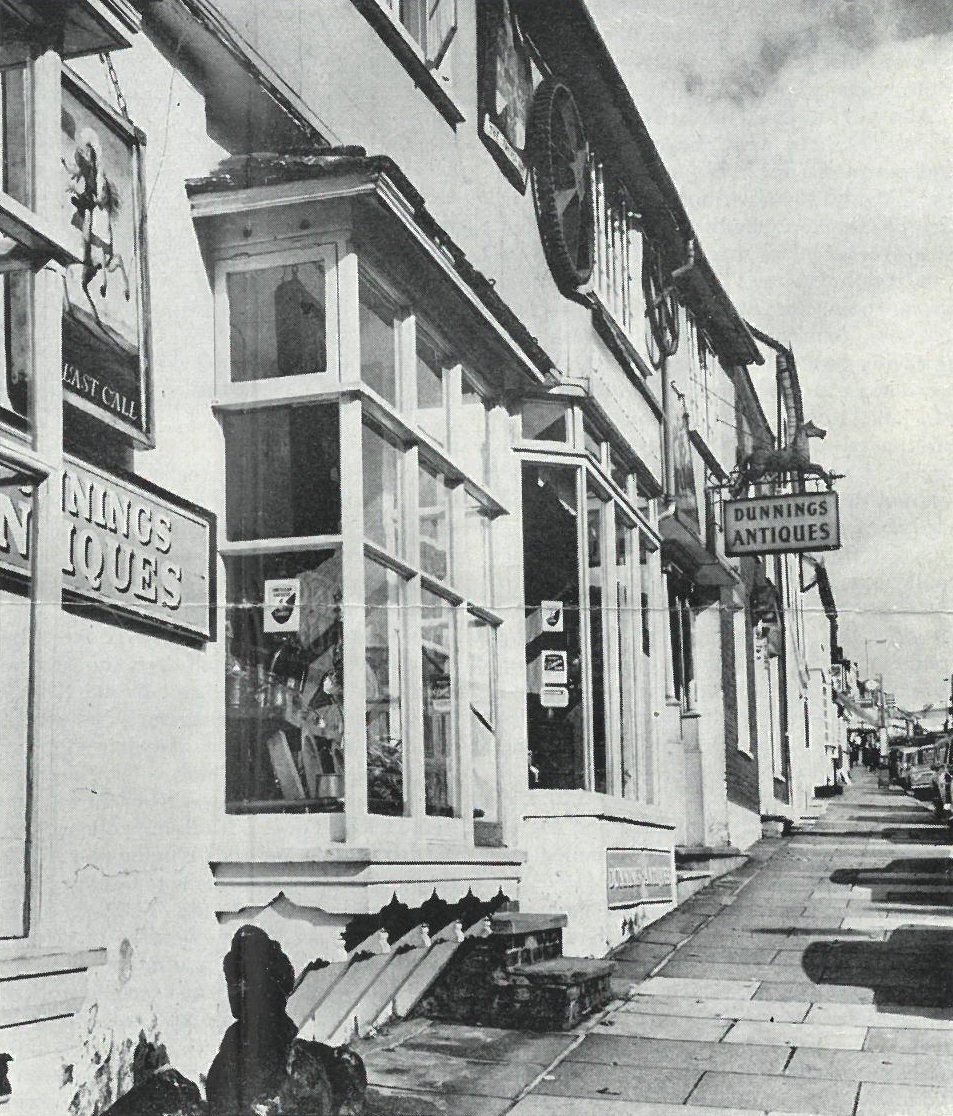
Today there is only one survivor of the city centre’s once vibrant antiques trade, L.A James at 11 George Street, but back then they were much more prevalent, and Elizabeth highlighted how they were “exceptional in their quality and variety”, with many people coming to the city specifically to visit these establishments.
Dunnings Antiques was owned and run by Christopher and Dorothy Sykes, and could be found at Vine House, 58-62 Holywell Hill, now occupied by Stitch to Fit tailors, Lee Moran hair salon and Satin Bow Bridal.
It was first mentioned in the historic Kelly’s Directory of 1946 as ‘AF Hache trading as Dunnings’ and registered as an antique furniture dealer. By 1956 it was ‘C&D Sykes trading as Dunnings Antiques’ based at 56/62 Holywell Hill. Although it was still trading in 1982 it had gone by 1984.
Before the building was divided into smaller premises, Dunnings occupied the entire footprint, but was something of a rabbit warren of nooks and crannies.
Elizabeth wrote: “You keep encountering another room or steps to a basement showroom, or a door leading to the delightful little garden courtyard at the back”, which featured an “exceptional” view of the Cathedral from the upper terrace.
She then goes on to mention some of the unusual items found within the ship, including a selection of old painted inn and trade signs, one featuring a large wrought-iron pair of tailor’s scissors, and another representing an apothecary by its depiction of a pestle and mortar.
There was a red and gold papier maché crown which had once featured on a post lining The Mall in London for a ceremonial occasion, 18th century hand-blown wine bottles, old tavern fittings and early chemists’ bottles and jars. A wooden Wills’ Gold Flake cigarette machine included the instructions ‘6d in the slot’, prompting Elizabeth to comment: “Those were the days!”
She concluded by referring to Dunnings’ sideline in hiring stock to film companies for the creation of authentic period surroundings, before crossing the road to the premises occupied by Crispin’s, a specialist in primitive and cottage furniture established in 1967.
The old half-timbered premises at 37 Holywell Hill and 2 Sopwell Lane was built in the late 15th century as a hostel for visitors to the Abbey, and remains one of the best-preserved medieval buildings in the city.
The building was first known as The Crane – a name it retained until at least 1556 – and by the late 16th century, it had become The Chequers (or Lower Chequers), distinguishing it from its namesake, the Chequers Inn on Chequer Street.
The building’s fascinating history includes the grim fact that it was the location of the last recorded case of smallpox in St Albans at the end of the 19th century.
The building returned to its roots as a pub in the early 1900s under Benskin Brewery, operating as the Crown & Anchor. However, disaster struck in 1958 when a brick lorry crashed into the corner of the building, forcing its closure. The damaged property was sold to Thomas Crispin Shemeld, who transformed it into an antique shop, preserving its historic charm while giving it new purpose.
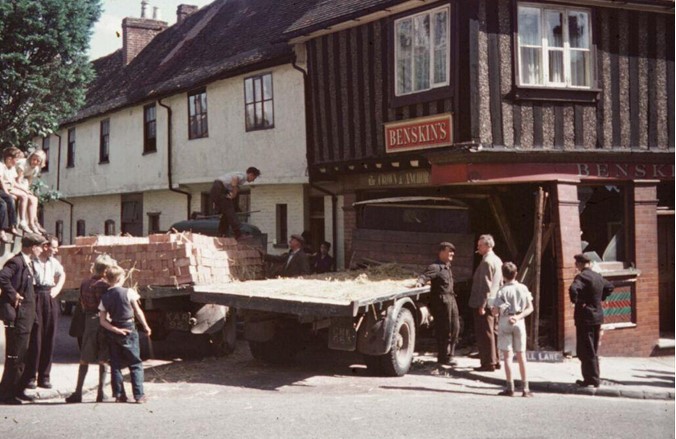
Crispin’s continued operating there until 1985, when it was taken over by estate agent Strutt and Parker, with no 2 Sopwell Lane sold as a private residence. After the estate agents relocated, the corner shop briefly housed ‘It’s A Small World’ baby wear before the entire property was converted back to residential use in 2023.
On her visit, Elizabeth spotted three-legged 18th century cottage stickback chairs, and an old oak livery cupboard with its original wooden pegs for hanging clothes, and a space at the bottom for fresh lavender.
Other bygones included rushlight holders, an 18th century harvest barren for transporting cider to workers in the fields, and some carved wooden knitting sheaths, with one bearing the gloomy message ‘One’s life is but a span; prepare, prepare to die’.
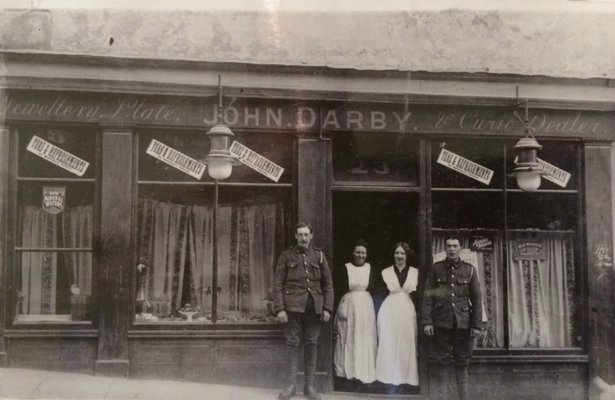
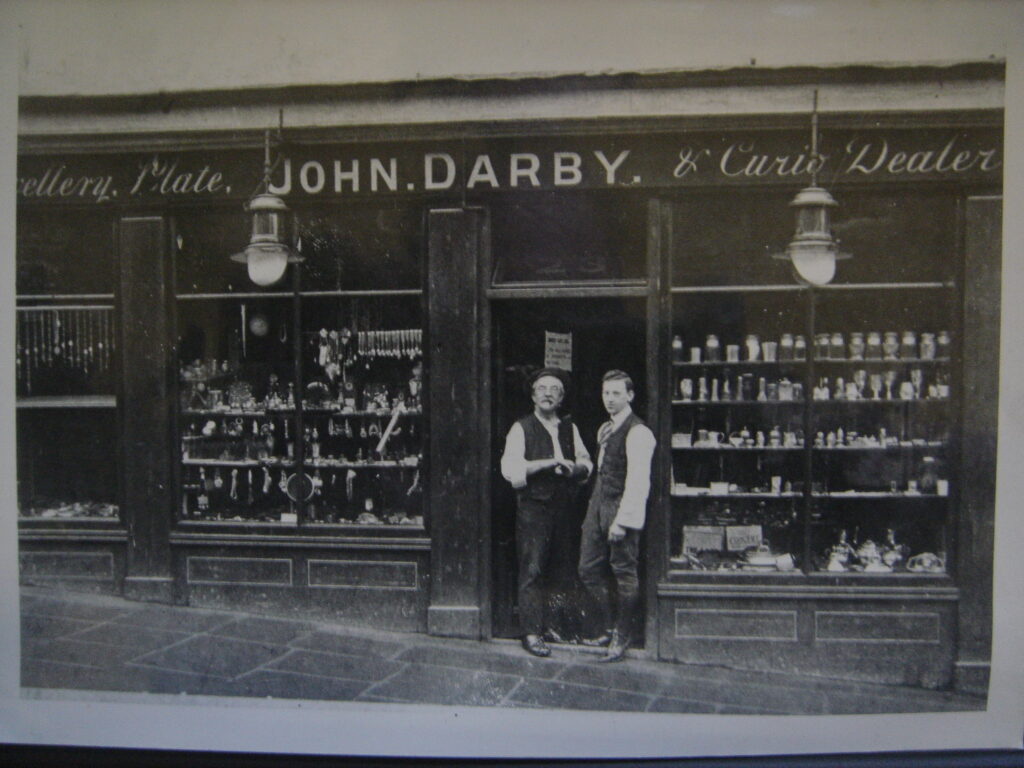
Her final stop-off in Holywell Hill was FE Norwood’s shop at no 23, now home to Pots of Art, but in the late 1960s selling furniture and porcelain.
Chartered architect John Darby is the descendant of the building’s former owners: “23 Holywell Hill was my grandfather’s shop and home in the very early 1900s. It was a jewellery / curio shop but then changed to a tea shop at the time of the First World War due to the economic conditions.”
Elizabeth then made her way to George Street, which she described as “undoubtedly the best shopping street of all for sheer variety”.
Her first stop was Josephine Grahame-Ballin’s shop at no 21 (now part of Trinder Hair), selling assorted items of Victorian jewellery, 17th and 18th century furniture, ivories and jade, Staffordshire dogs and figures, and old maps and prints. The latter included a 1701 map of the county by Robert Morden, and a first edition map of the area by John Speed (1551 or 1552-1629), which would be highly collectible today.
Next door was Antelope Antiques, selling Roman pottery lamps among other items including some brass-decorated wooden stirrups of eastern origin.
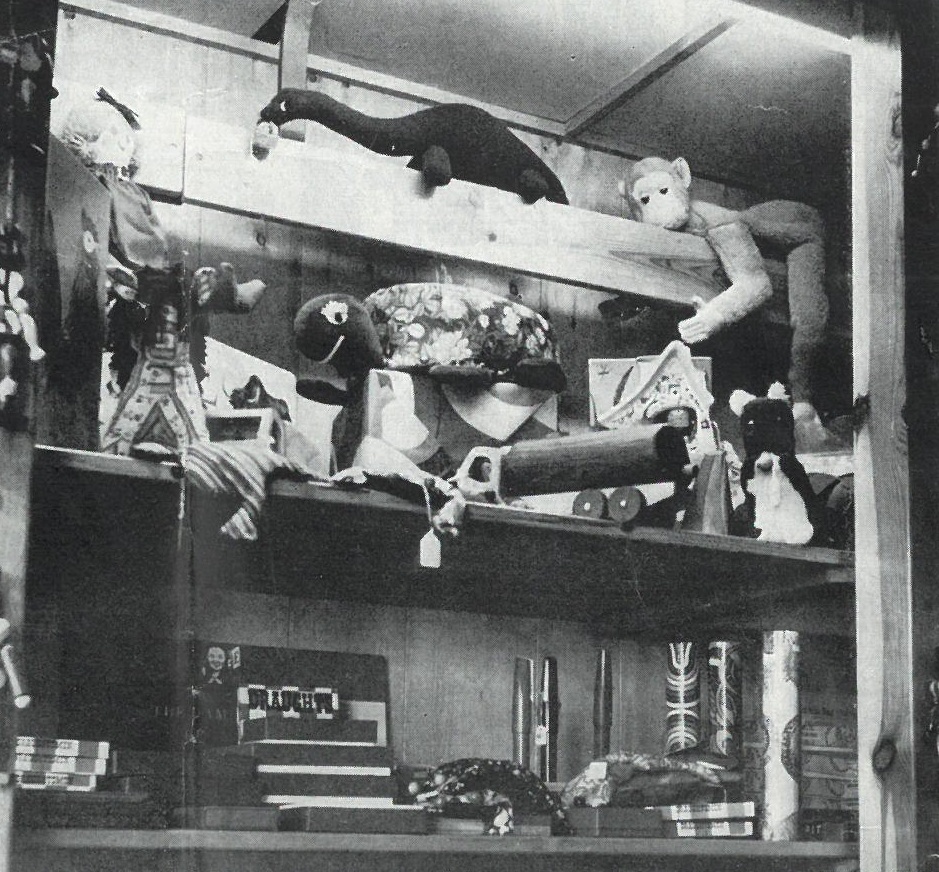
Located opposite at nos 9-10 (Earleys and Smallbone of Devizes today), one half of the Arlow Gallery sold pottery, glass, kitchenware and other homeware gifts, while the remainder specialised in handmade toys, including carved wooden tractors and racing cars and stuffed animals apparently created by university students.
The Arlow Gallery started trading in 1958 selling arts and crafts and greeting cards at 18 George Street. In 1966 they were located at 10 George Street and by 1981 they were running a gifts shop at 12 George Street and an ‘Oriental objets d’art’ business at 9 George Street. In 1984 they are Arlow Galleries Gifts at 12 George Street and finally closed in 1990.
Meanwhile, interior designer David Craigen (4a George Street – Galio Jewellers) was mentioned only for the dachshund draught-excluders on sale in the shop.
The exact locations of various fashion retailers were not included in her article, but Elizabeth name-dropped dress shop Flaire (no 5), the Trader John Boutique – “for teenagers – colourful, trendy and entertaining” – and John Weller’s Bootshop, also selling pullovers, shirts, ties and cufflinks.
Weller’s was established in 1969 and remained at 22 George Street until 1987.
Interestingly, St Albans Civic Society member Geraint John’s memories of the area included two long-lost shops not mentioned in the article: an upmarket grocer’s in George Street called Oakleys, and the Englands Shop at 42 Verulam Road, a greengrocer and Post Office which is now the Rug Maker.
Continuing with Elizabeth’s commentary, Muffs at 15 French Row (now Kristina B hair salon) also received a mention, having opened six months previously with the aim of selling quality teenage fashion, “avoiding the shoddy”.
And just round the corner in New England Street could be found Dena Bryant’s St Albans Gallery, selling local arts and crafts produced by five potters, two toymakers and more than 50 local painters.
The building now occupied by Raindrops and Roses in High Street was at the time the original Health and Heather shops, established by Joan Ryder, who at the time was still living in the city, daughter of the Ryder Cup founder and former Mayor Samuel. This nationwide chain was eventually rebranded as Holland and Barrett.
Finally, for those shoppers looking for refreshments, she suggested the White Hart Inn and The Waterend Barn, but also the Tudor Tavern (now Thai Square) which at the time offered a steak bar and buttery.
Coming to the end of her article, Elizabeth’s final mention was of the Little Mermaid restaurant at the end of George Street, owned by the Danish Count and Countess Scheel, who moved to the city during the Second World War, later prompting St Albans to become twin towns with their home of Odense, a connection which survives today.
The restaurant, which opened in around 1963/64, was gone by 1970. Its premises at no 18 are now occupied by The Bride designer boutique.
The St Albans Elizabeth Bell visited in 1968 might no longer exist, but hopefully in some way we have managed to capture a flavour of the city she explored back then.
She adds: “Among visiting shoppers in St Albans, many a Dane is likely to be found – also many an American from St Albans, Vermont, and St Albans, West Virginia. I hope that this article may lead them to purchases that will not only provide pleasure but also a constant reminder of their stay in this country.”
Additional sources: stalbansmuseums.org.uk, Professor Tim Boatswain (the history of 37 Holywell Hill and 2 Sopwell Lane).