28 Jan 2025
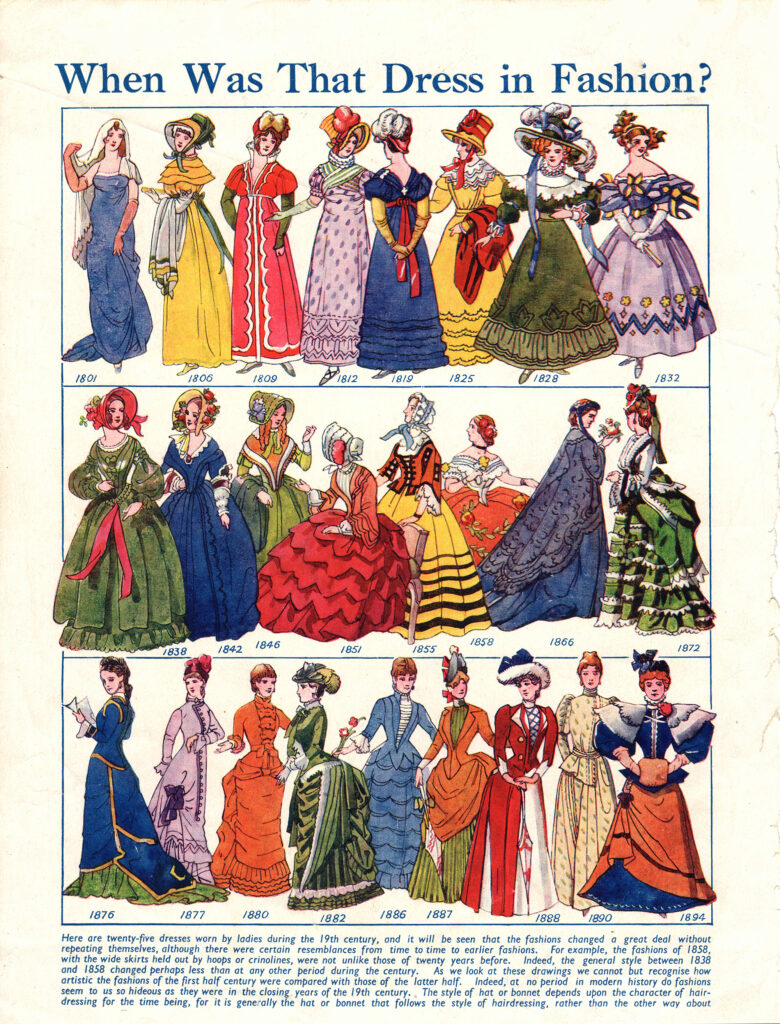
It’s pretty normal to see the Victorian age as full of sombre darkness. Black and white photos of severe, buttoned-up gentlemen, television adaptations showing mills belching out smoke and ragged children in Dickensian slums. However, thanks to technical advances, Victorian fashion was not only a riot of colour but finally began to become democratic.
When Queen Victoria came to the throne in June 1837, it was the start of what must have seemed like a very different era for the people of Britain.
For a start, she was just 18. She brought with her a new set of attitudes to life with modesty and piety considered essential. And after her marriage to Prince Albert in 1840 and with the birth of their ever-growing family (nine children in total), the large happy family was seen as the Victorian ideal.
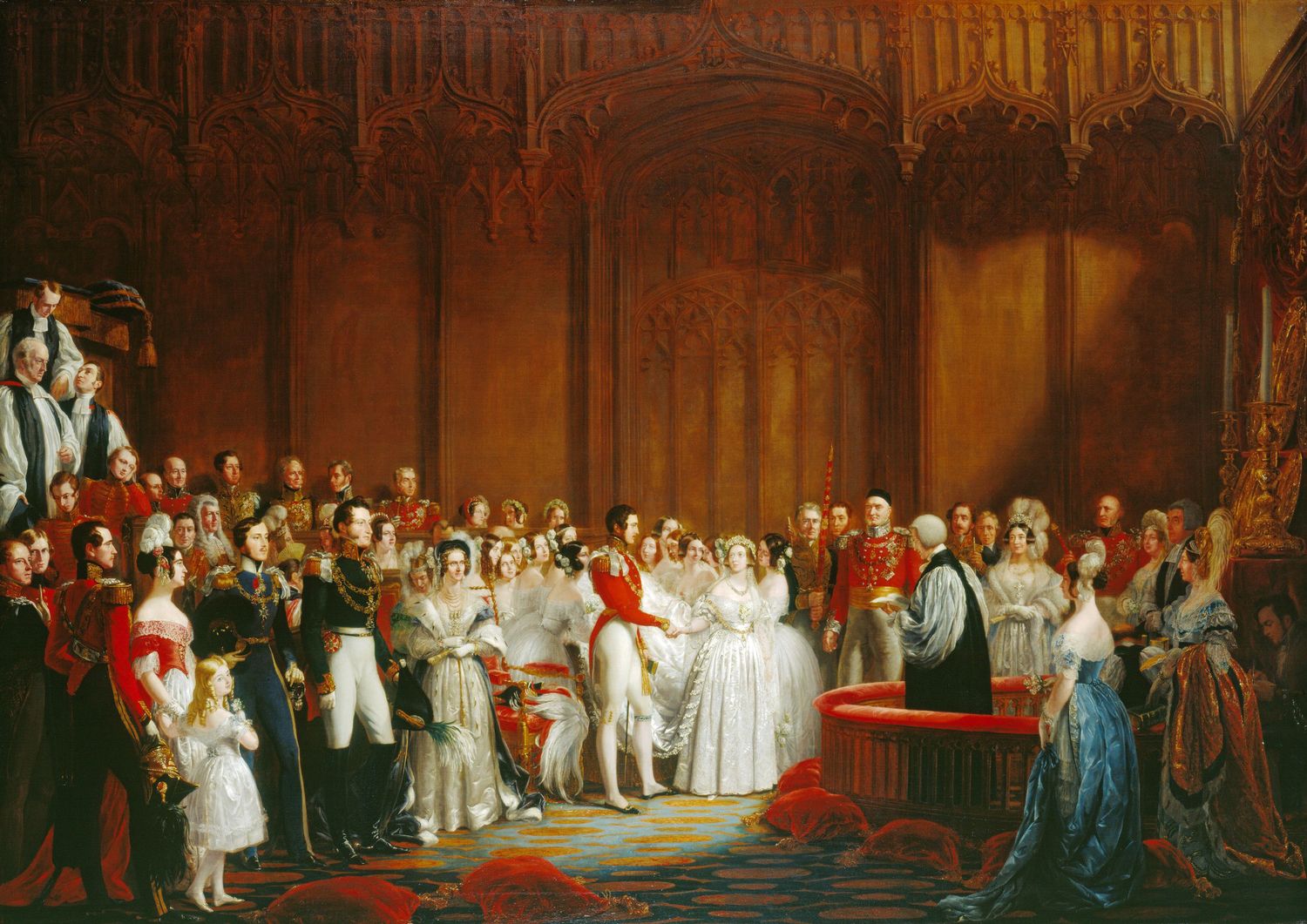
Victoria also started changing fashions from early on in her reign. She was one of the first women to wear white at her wedding. Up to then it was quite usual for women to wear a wide range of colours, with wedding dresses ranging from blue to brown, even black and red, plain or patterned.
But Victoria’s white heavy silk satin wedding dress, adorned with Honiton lace, set a trend which is still going strong. And white satin rosettes and flowers, entwined into beautiful wreaths, were everywhere in St Albans during a visit made by Victoria and Albert a year or so after their marriage.
She later wrote that there was “a brilliant display of fireworks and the town was a scene of hilarity and universal merriment”. The tour of St Albans obviously went well as Victoria added that “we enjoyed it of all things; nothing could be more enthusiastic or affectionate than our reception everywhere. I am happy to hear that our presence has left a favourable impression”.
But what would she have been wearing? During the early 1830s, fashionable dresses had sleeves so huge that they needed to be supported by wire-reinforced pads tied to the upper arms. Hemlines were just above the ankle. But the new Queen preferred a simpler and more modest style and fashion inevitably followed her. Dresses became plain and untrimmed.
Necklines were demurely high, sleeves long, skirts dome-shaped and discreetly floor length. It all sounds straightforward until you come to the waist. Waistlines were expected to be cinched. Severely cinched, if you wanted to achieve this new silhouette. So numerous petticoats held wide skirts in place, while shaping your waistline was a womenswear staple, the corset. Usually made of cotton, the corset had strips of whalebone sewn into vertical channels, providing enough flexibility to allow the wearer to breathe and move whilst still being supportive.
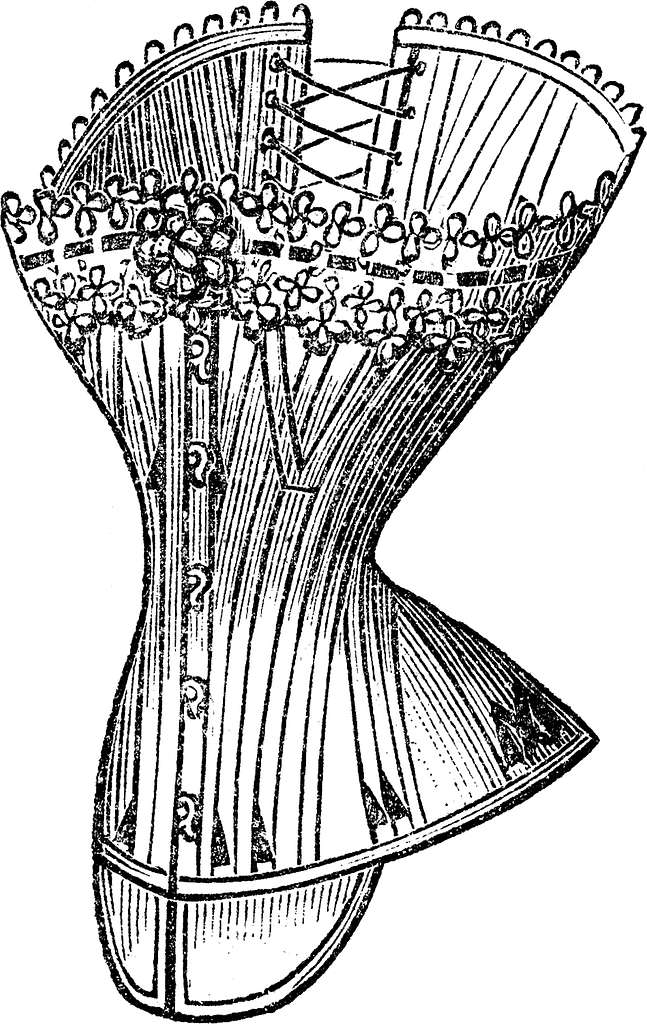
However, inserted down the front of the corset was a busk, a long strip of wood or metal rather like a 12-inch ruler. This provided a smooth line and was usually totally inflexible, meaning it was almost impossible to bend forwards.
The corset was laced up at the back and the growing fashion for tiny waists created the pressure to tie it up ever tighter. This could result in a permanently deformed ribcage displacing internal organs, making it difficult to both breathe and eat. However, far from suggesting that this was unhealthy, there was a common belief that women’s internal organs needed to be supported.
And, after a lifetime of corset wearing, they certainly did need support, as all the muscles lost tone.
The average waist size of dresses for young women was between 19 and 24 inches. Today a size 10 at Marks and Spencer is made for a waist of 27.5 inches.
Women also had to wear increasing numbers of petticoats to support the skirt – by the late 1840s up to seven were required – winter and summer. If you think these would be hard work to carry around, then think of the tight sleeves to the bodice which could prevent lifting the arms above 90°.
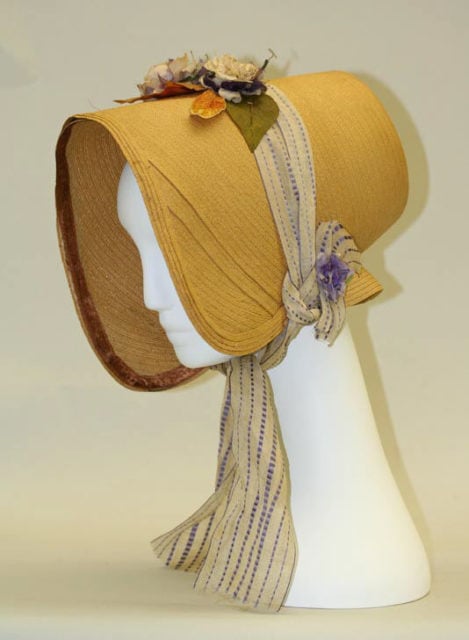
And then the close-fitting bonnet with a brim so far forward that a woman could only look in front.
So female styles, for the most part, ensured fashionable women were blinkered, physically constrained and restricted. So much for fashion nostalgia?

And then, along came the crinoline. These were created during the 1850s and dispensed with the need for multiple petticoats. The fashion for wider and wider skirts had reached the point at which petticoats could no longer do the job but, rather than change the fashion, a new solution was found – the cage crinoline. This was a cage of steel hoops, relatively lightweight but also strong enough to hold out the skirt without heavy petticoats. That was the good news. The bad news was that you needed to swiftly learn how to sit down without allowing the whole dress to billow up, exposing all. Unsurprisingly, the popularity of the cage crinoline went hand in hand with that of ankle length drawers. The width of the crinoline also made it pretty difficult to get onto the omnibus or through a train door. And best not to stand too close to an open fire.
The crinoline reached ridiculous proportions during the 1860s with flounces added to the skirt to emphasise the width, but having gone as far as they could, inevitably the fashion changed.
All that mass of material was pulled round to the back of the skirt to create the bustle, supported underneath by pads of horsehair or ruffled petticoats.
Later a metal framework was invented, the New Phantom Bustle, which tied round the waist and held the skirt in place without the need for quite so much material.

And if you’re wondering why women would willingly choose to inflict such uncomfortable and awkward fashions on themselves? Well, it gets worse. Victoria had swathed herself in the deepest mourning of unremitting black after the death of her beloved Prince Albert in 1861, but Victorian society had discovered glorious, fabulous colour and there was no going back.
The invention of chemical dyes during the mid-19 th century was a complete game changer. Yet it was a mistake. William Henry Perkin, an 18-year-old chemist was attempting to create artificial quinine to treat malaria. Instead, he inadvertently found a way to create cheap dyes from coal tar. This meant that bright colours, previously made from natural dyes and which faded quickly, could now be mass produced. 2,000 tons of coal could dye 300 miles of silk. So gloriously vivid shades of poppy-red, azure blue and violet were now available for most women. But if you had a particular hankering for emerald green, this was a fashion choice which could severely damage your health. It could, in fact, kill you.
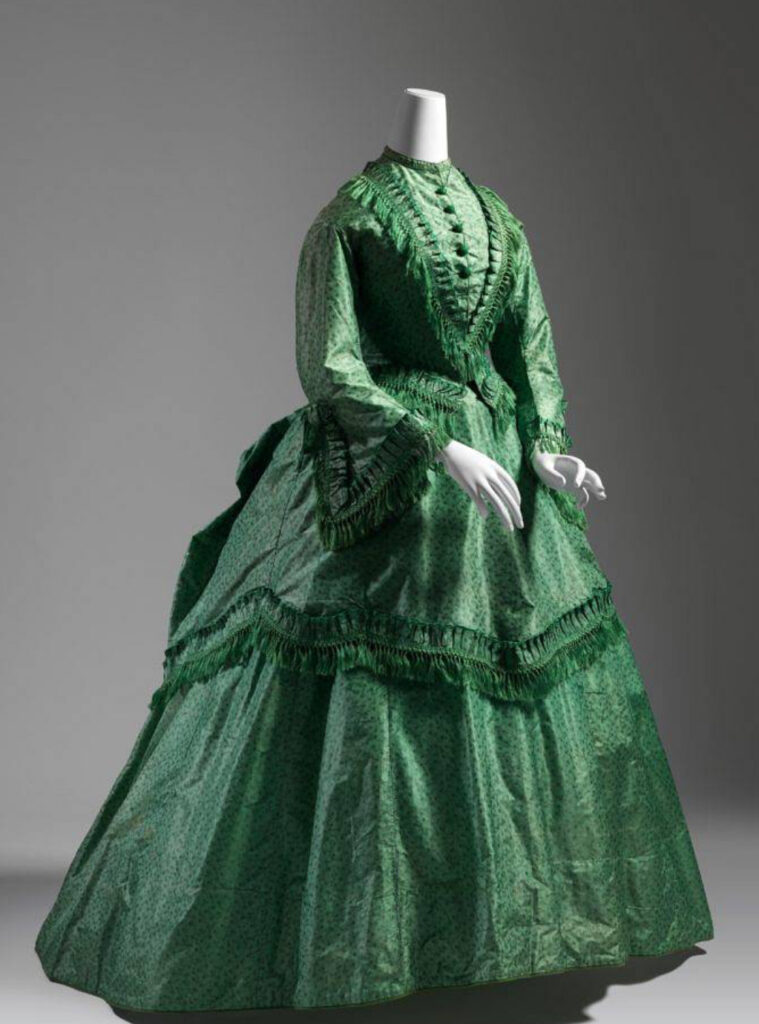
Green was a difficult colour to create and retain. Then in the late 18th century, a German-Swedish chemist called Carl Wilhelm Scheele tried mixing arsenic with copper. This created a startlingly bright emerald green which became widely popular.
It was vibrant, lasted without fading and so was used in everything from clothing to wallpaper. But it contained poison.
Yet even when news spread that wearing this colour could cause ulcers, sores, vomiting of blood, as well as damage to the liver and kidneys and the British Medical Journal warned that a woman wearing this colour would “carry in her skirts poison enough to slay her admirers”, did that stop the truly fashion conscious from wearing it? Of course not.
The development of dyes also produced a fabulously bright purple. Previously it was so expensive to produce from its one source, the murex snail, that there were strict rules on who was allowed to “wear the purple”.
But now fashionable Victorian women could drape themselves in fabulous purple hues – as long as they didn’t mind the side effects.
Fortunately this was not as lethal as the emerald-green but the new chemical purple dye did produce skin irritation and rashes which were known as the “Mauve Measles”.
These new dyes meant good news for fabric merchants. Not so good for those who had to work with the dyes. For them, things usually didn’t end well.
For men, however, the arrival of a reliable black dye which stayed black was highly welcome as it wouldn’t show the coal smuts that hung in the air all the time. Less laundry required.
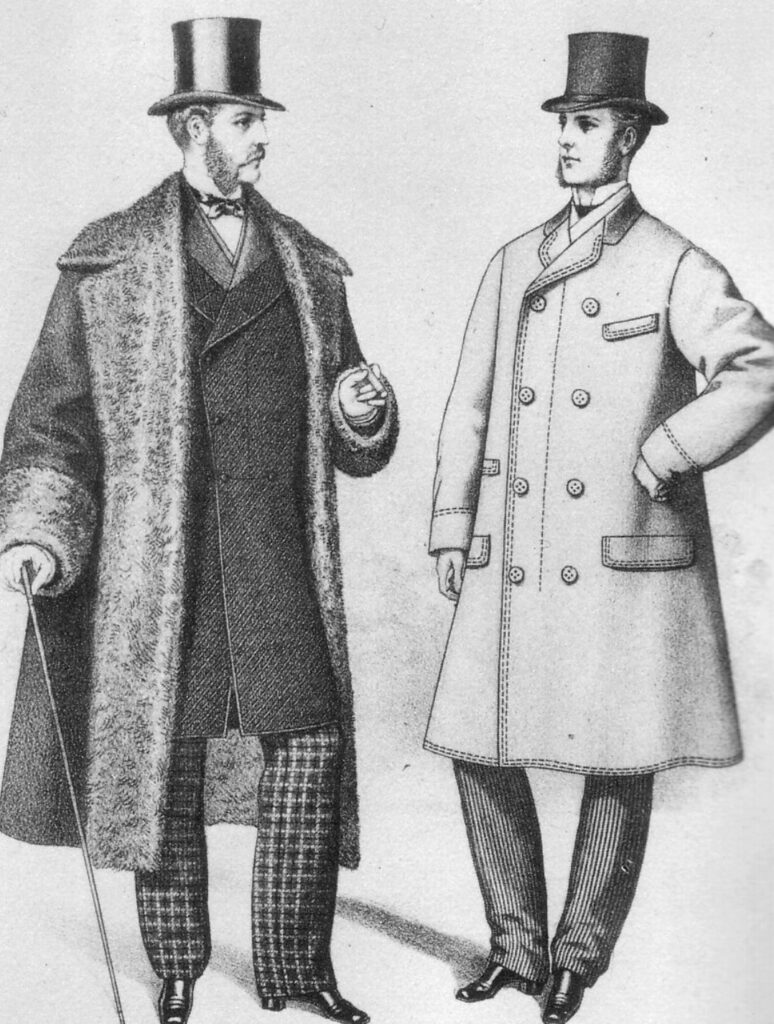
And what about men’s fashion? By the end of the 18th century the standard gentleman’s outfit was established – the three-piece suit of jacket, waistcoat and breeches.
And, like with women’s, it all had to be worn winter or summer. While the breeches morphed into trousers,
this suit remained the basic look throughout the 19th century with just a few adjustments to the cut, styling and fabrics.
The ostentatious silks and satins of the Georgian period were abandoned in favour of woollen fabrics in more muted colours – black, greys, beige – with a crisp white shirt underneath.
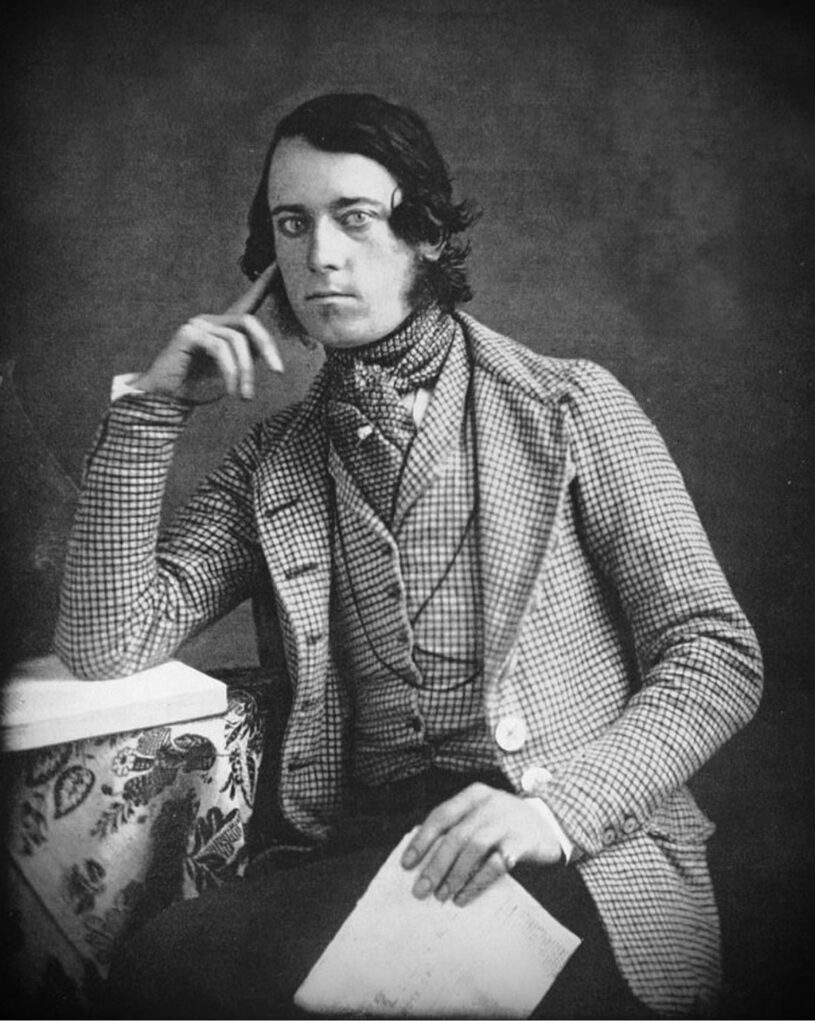
The white shirt was a sign of a gentleman, as frequent laundry was necessary in an environment full of coal dust and smoke. Only the wealthy could afford this, so that poorer working men wore patterned fabrics which didn’t show the dirt.
Men’s fashion didn’t reach the ridiculous excesses seen in womenswear, but there were some sillier trends. Those white shirts needed a collar that stood up straight, requiring massive amounts of starch. The downside was that as soon as the collar was fitted round the neck it was in danger of cracking and spoiling the look. You have to feel sorry for Victorian laundresses.
There was also the top hat, fashionable throughout the period, but originally of monumental proportions – up to 14 inches high. How many of these blew off in a high wind or got knocked sideways going through doorways? Simple practicality won through eventually and hats shrunk to a mere 10 inches.
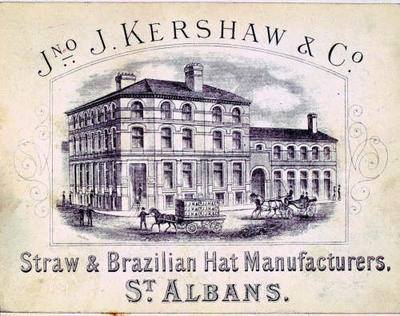
Hats were always worn in public by both men and women – different hats for different occasions and seasons. During the summer, straw hats were popular, many of which would have been made here in St Albans.
In the late 19th century, there were about a dozen straw hat factories in the town, employing about 25 per cent of the population.
Victoria Street was a centre of production, as was Fishpool Street. Amongst the many styles made by Dunham and Martin of Fishpool Street was the straw boater, commonly worn by men for summer leisure activities. Their clients included elite schools including Eton and Harrow.
So where does the democratic angle come in? It emerged during the 1850s in the form of sewing machines. These instantly reduced the cost of clothes production.
The wealthy continued to have their clothes made to measure at their dressmakers and tailors. But now the mass production of ready to wear clothing allowed poorer people to occasionally buy some new clothes, rather than rely on the second-hand markets.
Yet it was not until the 1890s that common sense in fashion trends seemed to prevail. Perhaps this was due to the influence of The Rational Dress Society, founded in 1881. They campaigned against clothing that impeded movement or deformed the body, in particular, those restrictive corsets and crinolines.
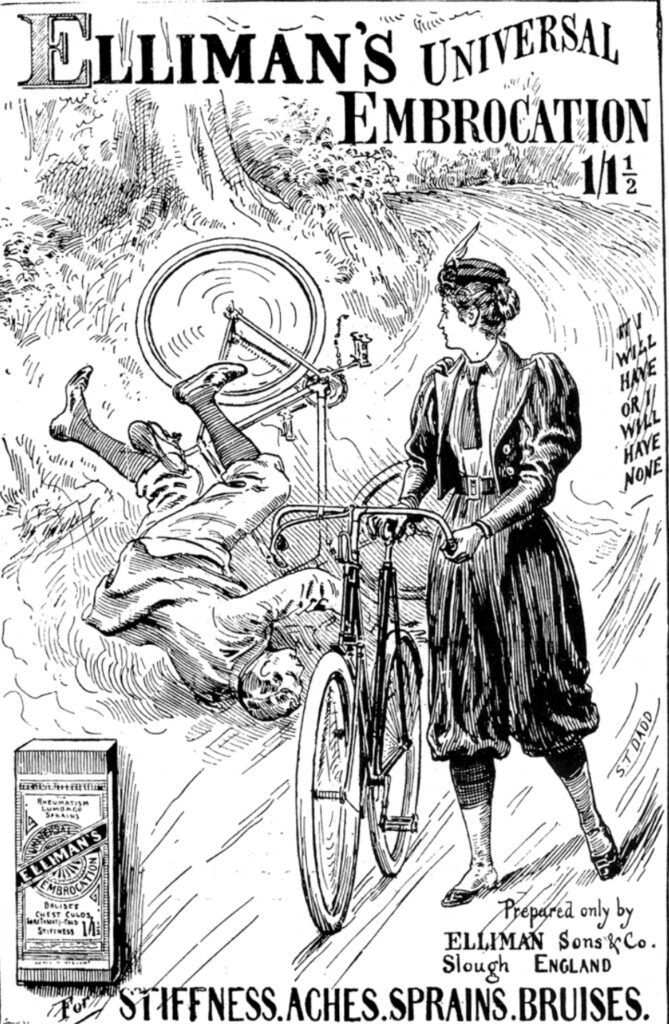
This coincided with the rise of the bicycle, which transformed daily life, particularly for women. The bicycle was known as “the people’s nag” as it was affordable, fairly easy to maintain and lightweight. And although women astride bicycles in their “rationals”, or bloomers, were initially seen as shockingly unladylike, did that stop them?
Queen Victoria died in 1901 after a reign of over 60 years and was succeeded by her son, King Edward VII. There were new fashions, but nothing radically different. The real catalyst for change was the outbreak of World War I in 1914. But that’s another story.
History in colour.