20 Jan 2025
Elena Hogg, founder of local culinary company FOOD by Elena, explores the benefits of adding more grains to your diet…
The world of food and nutrition is rife with controversy, contradictions and misleading advice, and one of the main players is the humble grain.
I’ve seen health advice bandied around on social media that vilifies grains because of their high carbohydrate levels and caloric density, but I have also listened to nutritionists talk of the importance of grains in our diets, with their high levels of iron and magnesium, as well as being a source of fibre.
So why the mixed messages? Well, it’s largely down to this: not all grains are created equal. Take rice, for example. Nutritionally, brown rice has more potassium and fewer calories than its refined counterpart, as well as roughly five times more dietary fibre.
This is largely due to the fact that, while the inedible husk is removed from all types of rice, white rice also has its bran and germ removed during further milling processes, while brown rice doesn’t.
Naturally, there’s a price to pay for the benefits: it takes longer to boil brown rice thanks to its tougher exterior; however, the positive spin on that is you have more time to prepare all your other ingredients while the rice is cooking. No more mushy white sludge caused by your curry sauce needing ages to reduce.
That’s right; I’m a “rice cooker’s half-full” sort of woman.
Wheat is one of the most ubiquitous of grains and two of its most popular incarnations – pasta and bread – are stalwarts of the typical UK diet.
Again, the wholemeal version is far more beneficial from a dietary point of view and absolutely worth the switch.
It’s not always easy, though: I remember when my husband and I first ventured into the realms of wholemeal pasta, we’d complain about the cardboardy mouth-feel. Now we regard it as a pleasant ‘nuttiness’ and held that line once we had kids. It’s all about how you pitch it, right?
Leaving aside rice and wheat, the less commonplace grains have achieved top-of-my-shopping-list status of late.
I’ve upped our intake of spelt, oats and pearl barley, among others, and my son (now 13 and adept at ‘roasting’ in the non-oven sense) has deemed it ‘the ultimate in St Albans-ness’, then proceeds to over-exaggerate the word ‘keen-wah’ repeatedly. I tell him it takes one to know one, what with his penchant for health-food shop peanut butter on rye.
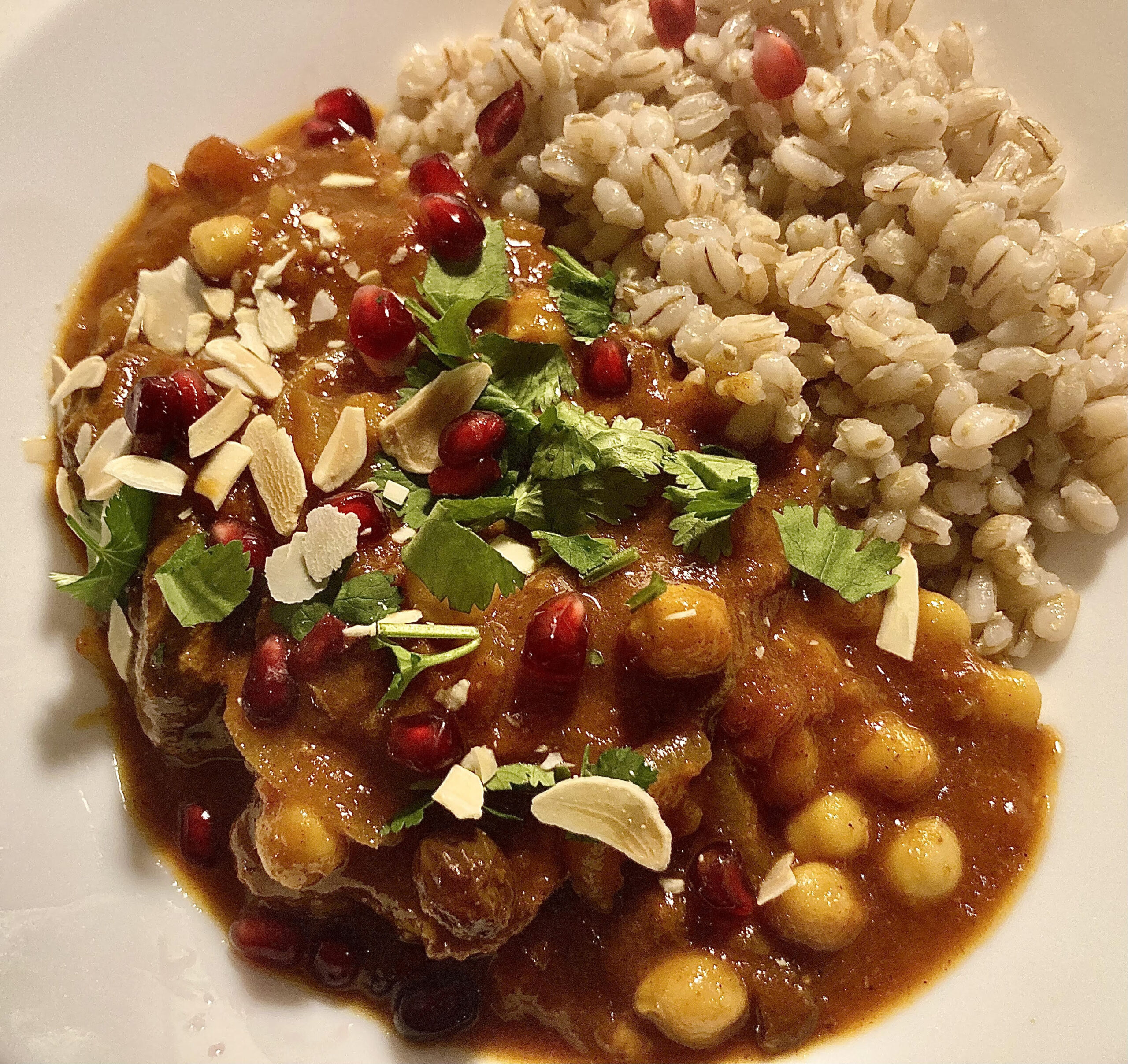
Last weekend, I made a tagine for a Saturday supper with friends. It’s a great option for preparing in advance because the flavours amalgamate beautifully with a very slow simmer followed by a stint in the fridge before reheating to serve a day or two later. I decided I wanted a substantial and robust grain to withstand the richness and the heady spices. Pearl barley was the obvious choice with its chewy texture and slightly toasted flavour.
I would like to try using pearl barley for a risotto, too, because I’ve heard it provides the requisite creaminess and has a good al dente quality. I am a fan of a very well-cooked risotto, preferring a rice pudding vibe to al dente, but I can imagine pearl barley being a fabulous foil to some punchy, umami flavours, so perhaps a leek, pea and parmesan barley-otto will be on the cards this weekend.
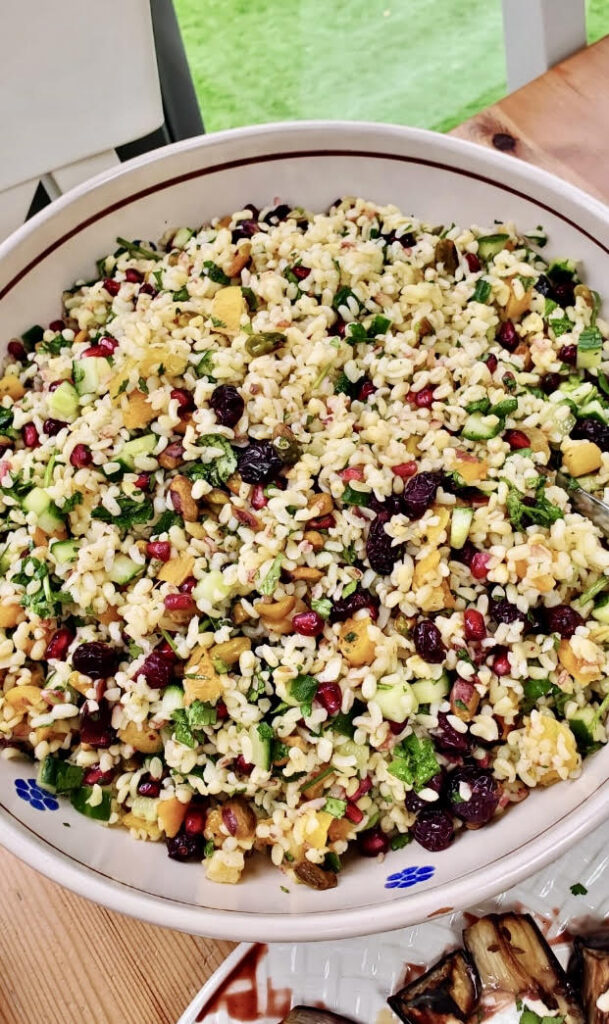
Another favourite is my jewelled tabbouleh, named so because it’s studded with pomegranate seeds, cubes of dried apricot, cranberries and pistachios, all gleaming gems visually, but also decadent in the eating.
Traditionally, this Morroccan dish is eaten with an abundance of herbs and just a scattering of bulgur wheat, but to make it more substantial, I prefer to up the grain quota. And you can use almost any grain you like: cous cous (try the wholemeal variety – it’s delicious), buckwheat, freekeh or quinoa (the red and black mix you can buy is very attractive). I tend to stick with the traditional bulgur wheat, but use the coarse variety as opposed to the smaller-grained kind, because it’s the perfect cross between cous cous and pearl barley – the right flavour for this kind of salad, but with a little more bite.
In the summer, I add cucumber for crunch and freshness, but at this time of year, I swap it for diced raw courgette, which is more buttery than watery. Combine with the ‘jewels’ and plenty of coriander, parsley and mint. Add your grains while they’re still warm, then dress with olive oil and salt and you have a hearty winter salad.
Don’t forget a sweet treat: flapjacks made with jumbo rolled oats and plenty of nuts and seeds are as close to a health food as traybakes get, and a little piece will go a long way on the satisfaction scale. Oats are known for releasing their sugars slowly, even if you wolf them down.
There is no doubt a correlation between my recent foray into the world of wholegrains and the timely need for less processed, more comforting food. Soft in texture and mild in flavour, grains help you feel both nourished and hugged. And at this time of year, with sub-zero temperatures and a January that feels never-ending, we all need to fend off the frostbite with a tasty bite, don’t we?