


20 Dec 2024
Has the death knell sounded for St Albans City and District Council after half a century as our local authority?
The Labour Government has announced plans to extend devolution to all parts of England, providing additional powers and funding flexibility for elected mayors, and replacing the current system of two-tier local government with unitary authorities.
This means scrapping county and district councils, creating new unitary councils with populations of at least 500,000 people, in order to deliver efficiency savings and improve public services.
For St Albans City and District Council and Hertfordshire County Council, the implications of this announcement are huge.
The modern St Albans district dates back to April 1 1974, when the three authorities of Harpenden Urban District, St Albans Municipal Borough, and St Albans Rural District were abolished under the Local Government Act 1972.
The new district was initially awarded borough status, with the city status held by the old St Albans Municipal Borough was extended to cover the rest of the district on July 9 1974.
This meant the authority could be known as St Albans City Council, although it preferred to use the designation of St Albans City and District Council. The role of Mayor dates back to the first borough charter of 1553, and is largely a ceremonial position, although they can take a casting vote in the event of a tie at council meetings.
Under the Government’s new proposals, SADC could disappear into a larger unitary authority, although the future of the Mayor’s role has yet to be disclosed.
SADC leader Cllr Paul de Kort said it was really too early to say very much, as the Government has not firmly mandated one course of action or speed of progress.
But he added: “I do worry that it proves to be a massive distraction from dealing with the problems that local government is battling with on behalf of local people, whatever tier is being considered.
“I do believe that the Government should be concentrating on providing the help that councils need to improve local people’s lives, and I am unonvinced that addressing this aspect of provision of public services should be the priority the Government seems to have made it.”
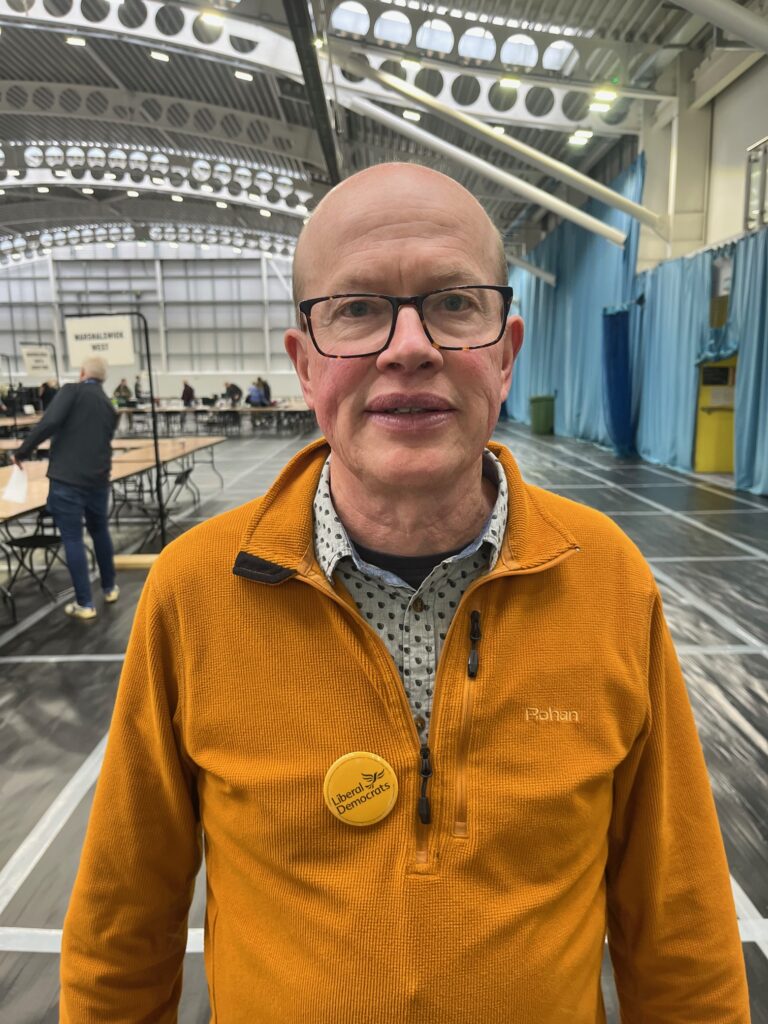
The district council also released a statement in the wake of the announcement: “The Government has announced its Devolution White Paper – the precursor to legislation, providing some additional details about their plans for the future organisation of local government.
“While it is early days and there are many unknowns, it is clear that there will be both challenges and opportunities ahead. We are considering carefully what the proposals mean for our community, our services and for local government decision making across Hertfordshire and will be working closely with our partners to find the best way forward.
“What is most important, whatever structure we end up with, is that local government continues to serve the needs of local people, acts with their best interests at heart, and delivers the good public services people want, and that everyone is able to contribute to decision making through the local democratic process.”
HCC leader Richard Roberts has also responded: “Any proposals on devolution and changing local government structures would need to be evidence based, carefully developed, and subject to consultation before being introduced.
“We have not been actively seeking changes to the structure of local government in Hertfordshire, but the Government is now clear it must be explored so it is the responsibility of all local leaders to carefully consider the options available and assess what has the best potential to benefit our residents and businesses.
“Devolution done well can maximise Hertfordshire’s many strengths, enabling our communities and businesses to reach their full potential.
“The devolution of powers and funding to local decision makers could enhance our ability to focus on priority areas such as increasing investment in our roads and public transport, providing better access to education and skills, tackling health inequalities and building new homes while protecting our green spaces.
“Irrespective of our structures the essential services provided by local government across Hertfordshire still need to be delivered. It is vital that any changes do not negatively impact the capacity and resilience key service areas such as adults and children’s social care. We need to ensure our residents are kept safe and cared for.
“Any proposals must also ensure that communities retain their voice and continue to have a say on the issues most important to their local areas.
“This is an historic moment for our county. The views of residents, businesses, local government partners, and other stakeholders across the public and private sectors will be essential in shaping our approach and any proposals would be subject to consultation following discussions with Government.”
Local campaigner Paul King, who represents action group Greenbelt, said there was a disconnection between recent changes to the National Planning Policy Framework – which stripped planning powers from local councils – and claims that devolution would allow communities across England to take back control over the things that matter to them.
“So local communities can decide what they like, as long as it doesn’t include the preservation of the countryside?”
He said the bill places a considerable emphasis on regional mayors but unfortunately does not address the unitary authority concept in an effective way, especially as these regions would be around 1.5m – whereas the population of Herts as a whole is 1.2m.
“Whilst there is logic in the concept of having just one authority covering all services in an area, to have an authority so large that it bypasses local accountability and covers significantly divergent areas, with populations requiring different needs, raises the question of whether it is such a great idea. This is particularly so, when the main emphasis is then on one person to run it – the mayor.
“A better solution would be to have smaller unitary authorities based around the large towns/cities, covering populations of several hundred thousand. That way the two-tier structure could be eliminated, with the consequential cost saving, but local accountability would remain.
“In Hertfordshire’s case, there is the added issue of how wise it would be to hand considerable powers to a county council that has proved inept at running the limited services that they currently control. They appear to have a policy of making it difficult for the population that they are supposed to be providing services for to communicate with them, and operate in a bubble devoid of any scrutiny.
“These proposals are likely to be met with a considerable amount of apathy by local people, since in the case of SADC, they have ridden roughshod over the community’s views in a number of spheres, so have provided little reason for the public to be concerned over their potential demise.”
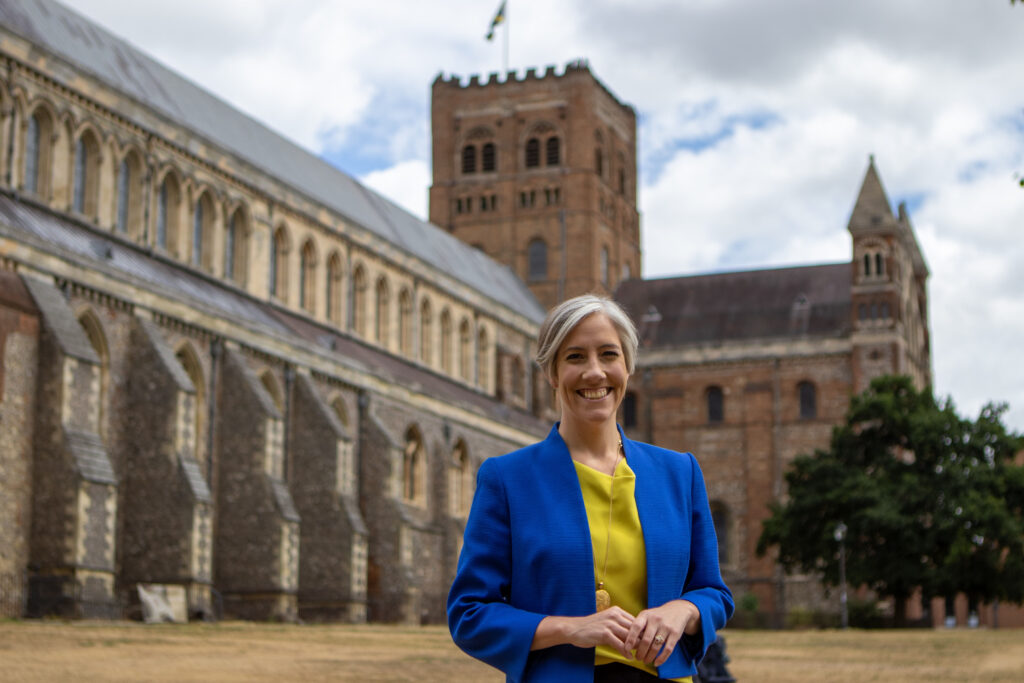
St Albans MP Daisy Cooper has also commented on the proposals: “St Albans residents are still facing a cost-of-living crisis and battling to access public services under strain. It’s not remotely clear that any form of local government re-organisation will do anything to improve the funding or performance of vital local services but it would very likely cause huge disruption.
“Easy access to services is also really critical for people who are digitally excluded, those from lower socio-economic groups and many more.
“As a liberal, I believe that people should be able to influence the decisions that affect their lives. And, that decisions are better when the people elected to make those decisions, know and understand their local community. This allows for real engagement and discussion between elected representatives and the communities they serve.
“But the Government’s proposals, as they stand, will basically mean the end for real community-based councils like St Albans City and District, with decisions being moved further away.
“The perverse result for us in Hertfordshire will be that instead of devolving power closer to communities, decisions and services will likely be centralised away from our local town and city centres to the county level.
“Rather than devolving power, Whitehall is proposing huge combined-authorities of more than 1.5 million people, each with a single elected mayor.
“That could well be a mayor who has never even visited some of the town and city communities for whom they’ll be expected to make decisions.
“Gone will be the truly local knowledge our district councillors bring to decision making in St Albans, who genuinely understand the priorities of the neighbourhoods they serve.
“The Government say that there are savings and efficiencies to be had by combining local councils, and reducing their overheads. What they don’t say is that reorganisation will be expensive in its own right.
“Experience in other areas is that the process will be incredibly disruptive for years, on top of almost a decade of cuts by the Conservatives.
“Relocating council offices to Hertford, Watford or Welwyn won’t help to plug the gap in funding for temporary accommodation costs, which have more than doubled in recent years. Nor will it support the hundreds of families who are being let down by the failing Special Educational Needs and Disabilities service.Potholes will be left unfixed as a mountain of cash will be redirected to integrating the ten existing district council systems.
“The real problem with local government isn’t how our councils are organised – it’s that they have been starved of funding for far too long.
“Ministers talk about the power to operate franchised bus services, and create joined up transport networks, but our county council already has access to these powers. The problem isn’t a lack of powers, it’s a distinct lack of funding from Whitehall. Powers without funding are not real powers at all.
“Only time will tell exactly what the new super council for our area will look like, but until then, this vanity project must not be an excuse to not fund essential services in our district.
“Frankly, rather than embarking on a paper pushing drive to re-draw boundaries and create new logos, the Government should concentrate on unlocking the financial help that councils need to improve people’s lives.”
