


21 Dec 2024
If you were to sit down with a blank sheet of paper to come up with ways of celebrating Christmas, I bet you wouldn’t think of setting fire to a pudding, dressing a portly gentleman in a red suit and bringing a tree into the living room. But then the traditions of Christmas weren’t decided in a day, they evolved over centuries.
And the festivities at what we now call Christmastime didn’t begin with the birth of Christ. For centuries before there had been celebrations at midwinter. The pagan festival of Yule marked the winter solstice with the lighting of a log to ward off evil spirits and bring good luck for the future. We’ve kept the yule log, but now we eat it.
When the Romans arrived in Britain nearly 2,000 years ago, they brought their winter festival of Saturnalia with them, honouring the Roman god Saturn.
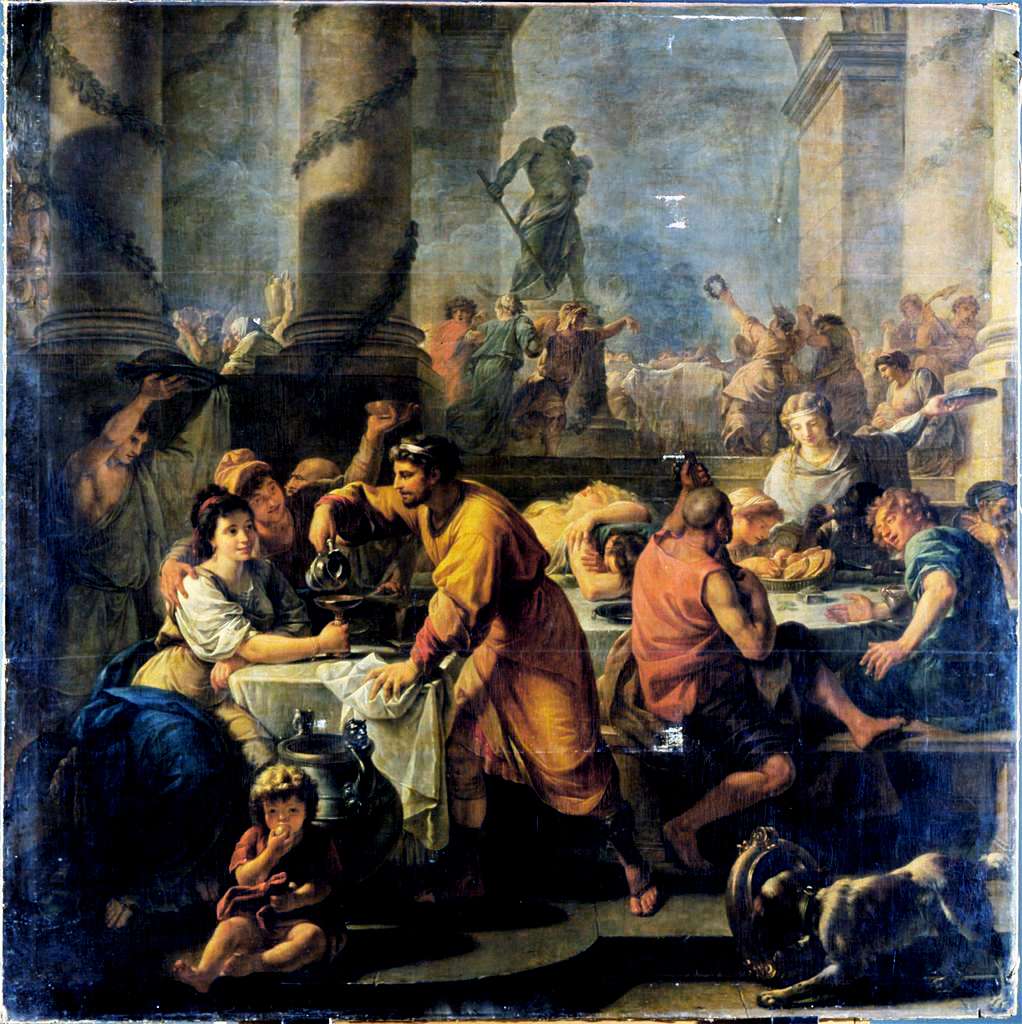
This was the licence to eat, drink and turn traditional roles on their heads. For slaves it was the best time of the year because, for a few wild days, they became masters and were served by their owners. Houses were decorated with evergreen plants, games were played, gambling was rife and presents were exchanged.
The slaves wore pointed hats that were only permitted to freemen for the rest of the year – this custom lives on with the paper hats in our Christmas crackers.
As Christianity spread, Christmas began to replace the old midwinter festivals. Clearly people didn’t want to lose their traditional celebrations, but with a tweak many could simply adapt and carry on.
Present-giving continued, now representing the gifts of the Wise Men to the infant Jesus. The house continued to be decorated with evergreen foliage which took on symbolic
meaning – holly represented the crown of thorns, and ivy the need for believers to cling to God.
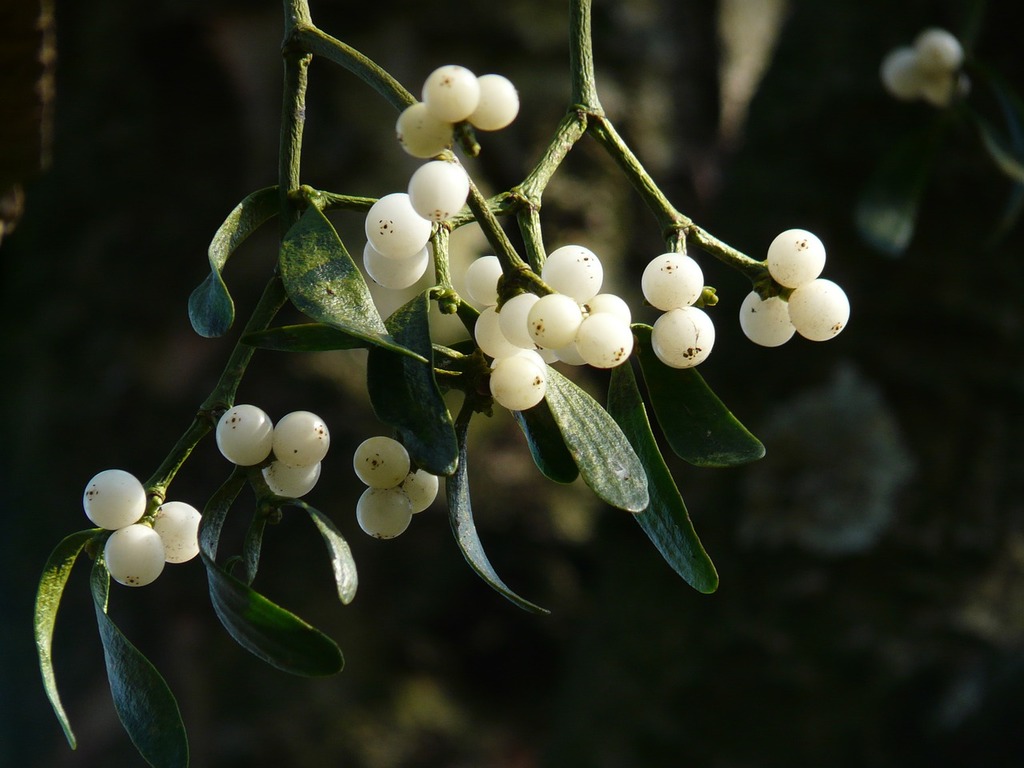
Mistletoe, a symbol of love, ceased to be used in church after the 16th century Reformation due to its pagan origins (with the exception of York Minster, for some reason) but its popularity at home ensured it carried on being used.
Out of the ancient festivities came the tradition of the Lord of Misrule, who was voted in by lot to preside over the ‘Feast of Fools’. He would be in charge of the activities – games, masques and dancing. Mayhem usually followed, fuelled by copious amounts of food and drink.
All this merriment carried on until the 17th century, then mostly stopped stone dead. Following the English Civil War, Oliver Cromwell and his Puritan followers ran the country, and they were on a mission to improve moral standards and remove what they saw as decadent behaviour.
This included the traditional Christmas festivities and many activities were banned by law. It was hardly a surprise that this went down like a lead balloon with the public, so it just went underground and the celebrations went on in secret. And with the restoration of the monarchy in 1660, the Puritan restrictions were rapidly thrown out and Christmas feasting and entertaining was back out in the open.
Talking of feasting, Christmas was always a time when wealthy landowners were expected to entertain and feed the poorer levels of local society. Tenants would be invited to a generous meal on one of the twelve days of Christmas. Beer and bread would also be provided to the poor who just turned up uninvited but hopeful. Christmas was not a time to turn people away.
Before the turkey was introduced into Britain in the 16th century, the traditional meal for the rich was the boar’s head, displayed on a huge platter with an apple in its mouth and sprigs of rosemary in its ears.
As if this wasn’t enough, the feast also included dishes such as swan, partridge and roast goose, but the pièce de résistance was the peacock. A tricky challenge for the cook, for the skin and feathers had to be stripped off intact and then sewn on again after the bird was cooked. The final flourish was painting the bird’s beak gold. The more elaborate the appearance of the food, the more this reflected the household’s wealth.
Christmas pudding has come a long way. It first started out as plum porridge – a mix of raisins, spices, breadcrumbs and fruit juice. This was served as a starter and had to be eaten with a spoon like a soup.
It evolved into a pudding during the 17th century which allowed lucky tokens to be added to the mix – a coin, a gold ring, a thimble. The coin was for good fortune, the ring for a wedding and the thimble for an unmarried but happy life. If a young girl found a thimble in her Christmas pudding, would she be disappointed or relieved?
Subsequently, brandy began to be poured over the pudding and set alight. This was said to represent the passion of Christ.
The Victorians certainly took to it with enthusiasm. In ‘A Christmas Carol’ Charles Dickens describes: “Mrs Cratchit entered – flushed, but smiling proudly – with the pudding, like a speckled canon ball, so hard and firm, blazing in half of a quartern of ignited brandy”.
Spices brought back from the Holy Land by the Crusaders – cinnamon, cloves and ginger – were used widely in the medieval Christmas feast. They were mixed with minced meat and covered in a pastry crust decorated with a figure representing Christ.
The 16th century Reformation did for the figure of Christ (no worshipping idols allowed), and gradually the meat content was replaced with sweet dried fruit, creating the meatless mince pie. You would probably also find it hard to recognise the original gingerbread. Medieval recipes didn’t actually include ginger.
Instead, breadcrumbs were mixed with boiled honey, pepper and saffron, then sprinkled with cinnamon. Gingerbread’s red colour was derived from adding ground bark from the red sandalwood tree. You could also throw red wine into the mixture.
Obviously you needed to be able to afford these expensive spices.
Gingerbread was served at the end of a feast as it was believed to sweeten the breath and aid digestion. It was seen as especially good at preventing flatulence. Incidentally, the Romans believed that lettuce did pretty much the same job but also aided sleep and helped sexual stamina. Lettuce or gingerbread? There’s a choice.
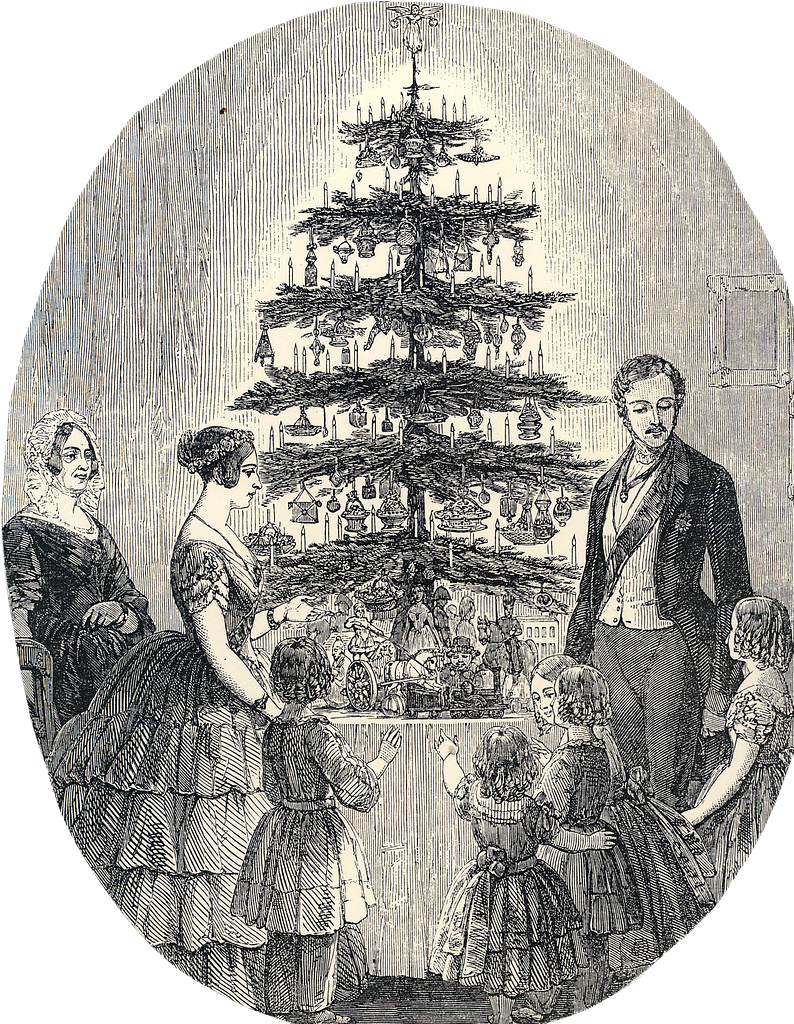
We have the Georgians and Victorians to thank for many of our Christmas customs. Queen Charlotte, wife of King George III, brought the first Christmas tree to Britain in 1800. The tree had been part of the tradition in her German homeland since medieval times, and its origin may go back to before the Romans.
However, it was Queen Victoria and her husband Prince Albert who really popularised the tree. In 1848, a picture was published showing them with their children surrounding a tree decorated with candles, sweets, fruits and gingerbread. Soon everyone wanted to have a Christmas tree indoors.
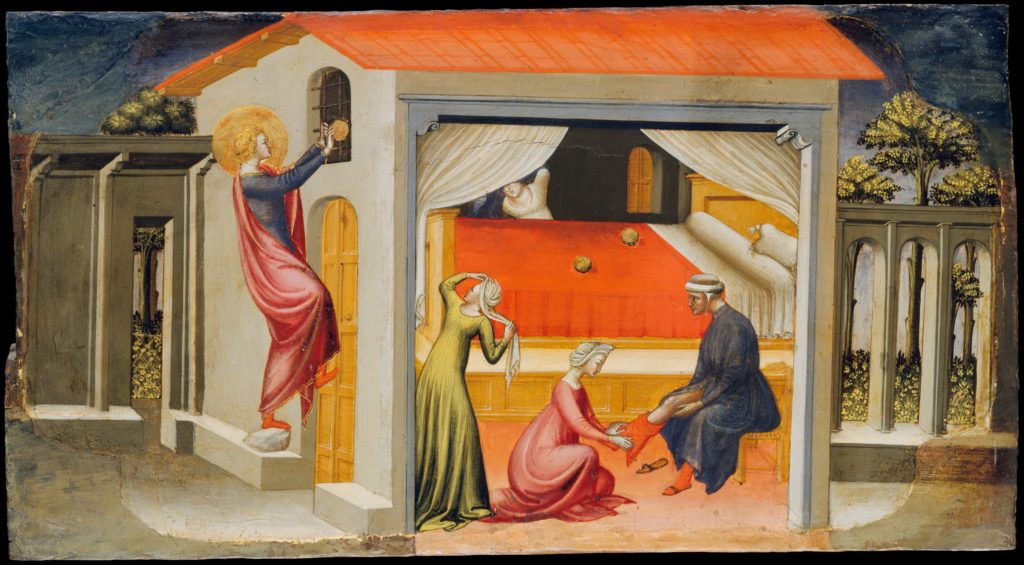
What about Santa Claus? Surprisingly the original Father Christmas was a bishop – Bishop Nicholas of Myra 1,600 years ago in Asia Minor – who had a reputation for secret generosity.
On one occasion he threw a gift of money over the wall of a poor man’s shack where it landed in his daughters’ stockings that were hanging up to dry. The legend of St Nicholas and the tradition of Christmas stockings were established and spread.
The Dutch called St Nicholas Sinterklass and this has been corrupted into Santa Claus, and the image of the stately bishop in his green gown has somehow evolved into the red-faced, white-bearded old gentlemen we know today. The red suit seems to have appeared in the late 19th century, the colour popularised by advertising for Coca Cola in the USA in the 1930s.
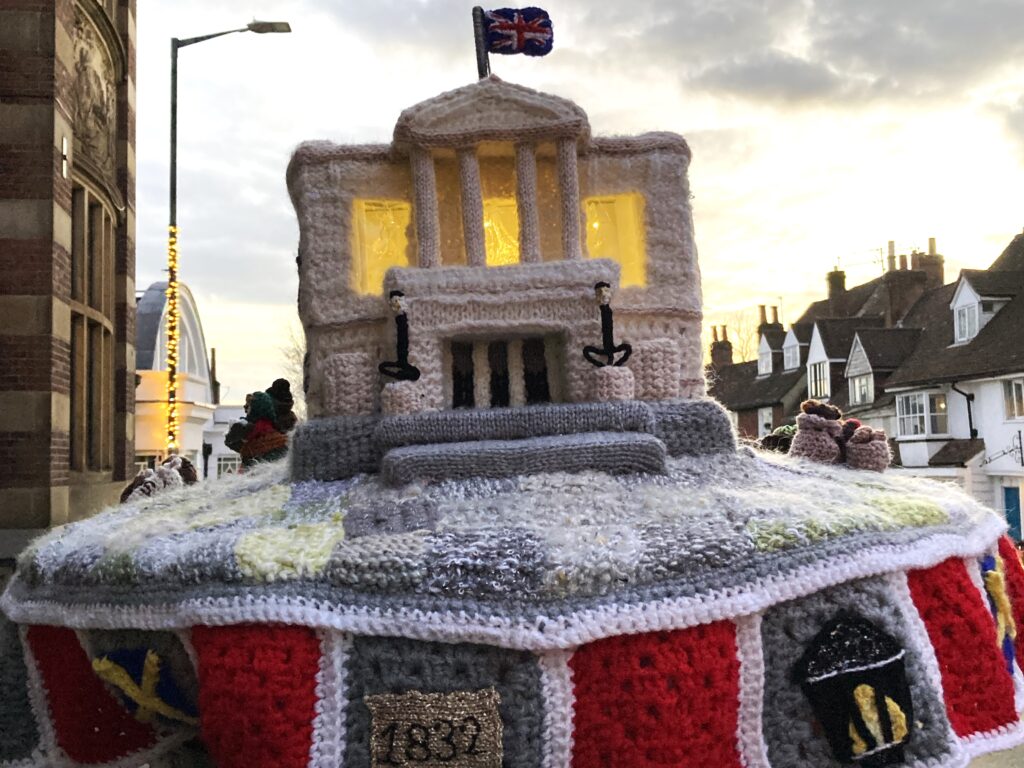
So, from the wild games of Roman Saturnalia to the Lords of Misrule, from a 4th century Bishop to a jolly Santa Claus, our Christmas traditions have evolved over the centuries. And haven’t stopped evolving. We’re still creating our own traditions here in St Albans. Children look forward to the arrival of the Round Table’s Christmas Santa float collecting for charity. And as for the knitted postbox toppers, ever more inventive and intricately crafted, they are now a fixture of our city’s decorations.
Merry Christmas and a happy New Year from the St Albans Tour Guides.
Join us over the Christmas holidays for one of our special walking tours like Wars of the Roses and Tudor St Albans. Or our regular Historic St Albans tour. History in colour. www.stalbanstourguides.co.uk
