23 Oct 2024
Alban Film Week is on its way and our connections with the film industry have always been strong. Many of our historic places have been used for film and TV locations and we are also conveniently close to a number of big film studios including Elstree, Warner Brothers at Leavesden and Pinewood Studios.
But what happened to our own St Albans film industry? Yes, there was one – of sorts. Over 100 years ago, ‘A Dream of Toyland’ was entirely filmed on location and produced in St Albans at Alpha studios.
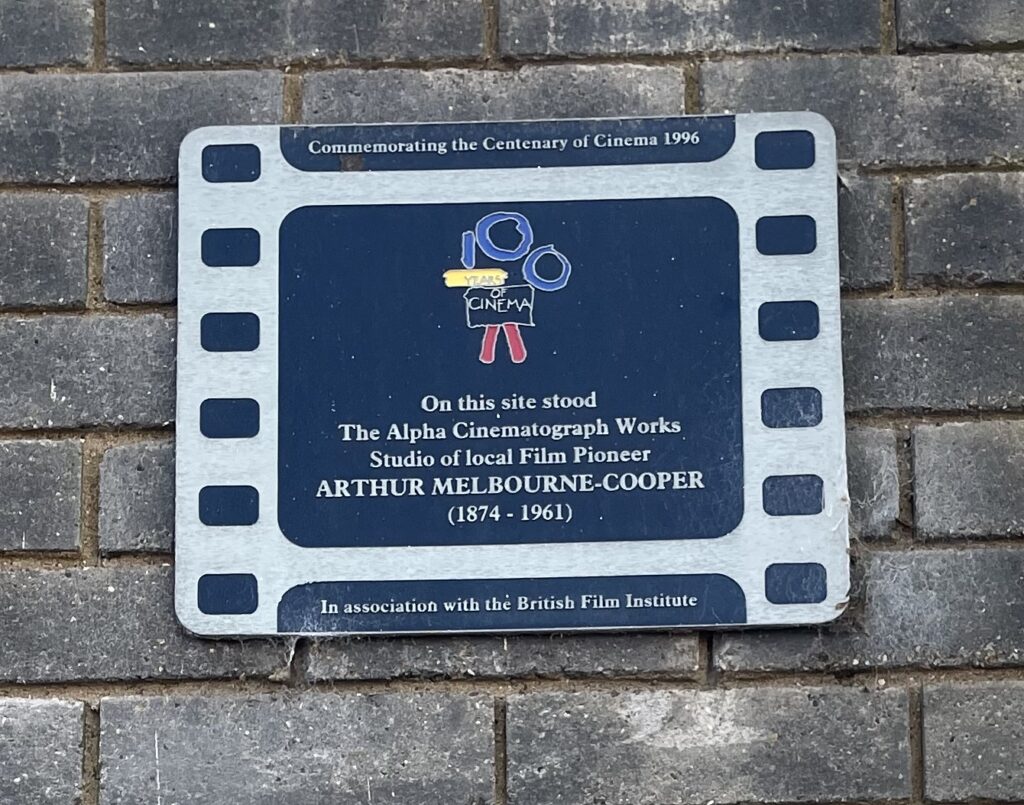
Opened in 1901, the Alpha film studio was based in Bedford Park, Beaconsfield Road. Seven years later, it relocated to Alma Road (where Telford Court now stands). It was called the Alpha Cinematograph Works. Nearby was the Alpha Picture Palace, one of the earliest cinemas in the UK.
The man behind all of this was Arthur Melbourne Cooper, born here in 1874. His father was St Albans’ first portrait photographer. Having learned photography and developing skills in his father’s studio, Arthur was smitten by the newly developing film industry, which was being led by a number of visionaries, including Thomas Edison in the States and the Lumière brothers in France.
Determined to become involved, 18-year-old Arthur joined the American born pioneering cinematographer, Birt Acres, in High Barnet. Brit was an innovator, developing a moving picture ‘Kinetic’ camera which was used to record events. And so the early newsreel was born.
Arthur worked with Birt on various filming assignments across the country including sporting events such as the Derby, the Boat Race and Henley Regatta. Variety acts were also filmed to provide some comedy. These early films were short, lasting only a minute or two which meant that several films would be shown at the same session, often mixed in with live entertainment.
They were screened at fairgrounds, music halls and church halls – anywhere that was big enough to accommodate a screen and chairs of the audience – and, importantly, it had to be dark.
Today we are used to superb graphic animations and visual effects but imagine seeing an animated film for the very first time. After all, photography itself had only been around for about 60 years. It must have felt exhilarating but also terrifying. Arthur showed these films locally, adding drama where possible. During the running of a film of a Barnet militia parade, for example, Arthur disappeared behind the screen and suddenly the sounds of a bugle rang out.
Advertisers soon started to see the potential for adverts on film.
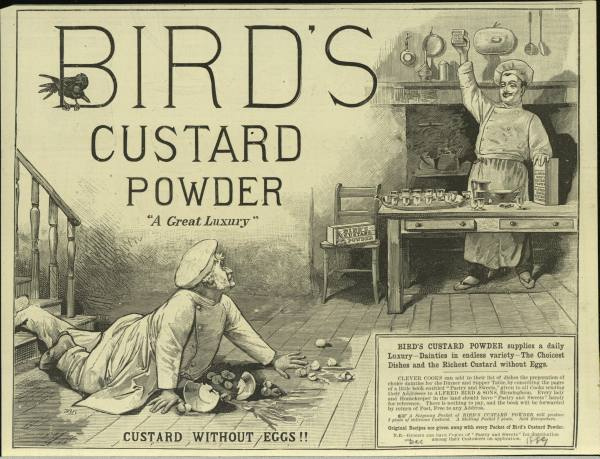
One of the earliest adverts was for Keen’s Mustard. In 1896 Arthur travelled to Blackpool to film the sunset – Blackpool being famed for its sunsets at the time – then inverted the film to depict a glorious sunrise with a tin of mustard emerging from it. This was followed a year later with a funny advert for Bird’s Custard consisting of a chef falling downstairs, breaking eggs and extolling the virtues of making custard from a powder.
Again, bear in mind that most advertising up to that point was in some form of print – posters, billboards, newspapers, periodicals. This was part of the beginning of an advertising revolution.
Then Arthur started to experiment. In 1899 he produced an advert for Bryant and May, as an appeal to raise money to send boxes of matches to British troops fighting in the Boer war. The advert was shot, frame by frame – a technique called ‘stop-motion animation’.
Figures were made from matchsticks joined invisibly with thin wire. These were put in position, a picture taken, then the matchstick men were moved slightly, next shot taken and so on. Eventually the final film showed matches coming out of a box, forming themselves into ‘people’, climbing a matchstick ladder and writing the appeal message on a blackboard. It’s a technique that’s still in use over a century later. Replace the matchsticks and wire with Plasticine and you have – Wallace and Gromit!
Arthur could see entertainment potential of this new medium, rather than just for information or education. This led to a split from Birt Acres and a return to his father’s old premises in London Road. These were more or less opposite the Odyssey cinema but long since demolished.

But Arthur had big ambitions and soon outgrew the place. And thus the Alpha Cinematographic Works and Bedford Park studio were founded. These occupied a large site with two outdoor stages. Daylight was essential in early film making as the quality of artificial lighting was poor. The existing house on the site was converted into a film laboratory for processing and a dressing room for the film actors. Arthur also made use of St Albans streets and surrounding countryside as do modern productions today.
Not only did Arthur direct and produce films, on occasion he acted too – in ‘McNab’s visit to London’ in 1905, he plays the part of a kilted Scotsman arriving on a train with his golf clubs.
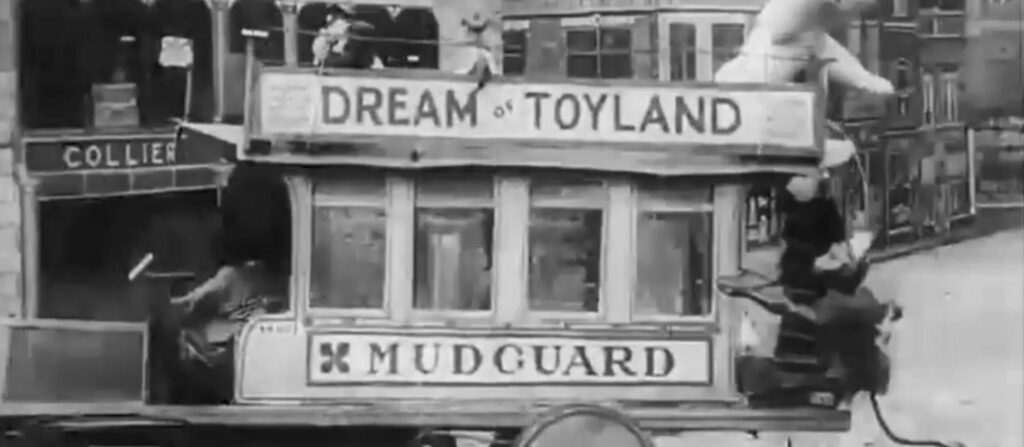
‘A Dream of Toyland’ was produced here in 1907. By this point, films were getting longer, running up to 10 minutes with more elaborate tales.
The opening scenes were filmed in St Peter’s Street, then followed a sequence of stop-motion animation as the child goes to bed and dreams that his toys come alive. It ends in tears – but predates Toy Story by almost 90 years.
Many local people joined in to laboriously make every toy’s movement, frame by frame.
By 1908 Arthur’s business was growing, moving to a new site in Alma Road with more space. And the Alpha Picture Palace, designed by local architect Percival Blow, was opened (The Odyssey now occupies the site).
Local people were able to enjoy an evening out, watching films made in familiar locations and often featuring people they recognised. And in this busy year Arthur also found time to get engaged to be married.
Meanwhile in the wider world, the Summer Olympics took place in London and Manchester United won the First Division Championship. The Model T Ford was introduced and the Boy Scout movement was formed. In politics, the Suffragettes were making their mark, protesting in the Ladies’ Gallery of the House of Commons.
Whilst the French Lumiere brothers (who, like Arthur, were sons of a portrait photographer), using their newly invented ‘Cinematographe’, in 1896 became the first people to show films to a paying audience in London, the Alpha Picture Palace was one of the first purpose-built cinemas of its type. It had raked seating for 800 people, but unlike traditional theatres, the cheapest seats were at the front.
The projection room was separate – very important because the flammability of nitrate film was always a fire risk. Smartly-uniformed staff served hot chocolate – Arthur had previously snapped up the uniforms of the staff of a Cadbury stand at a trade exhibition. The next few years saw a boom in cinema building across the country, eventually curtailed by the First World War.
Arthur opened another Picture Palace in Letchworth but this was not a success. Less popular with locals, it was twice damaged by fire. Arthur’s finances took a blow.
Arthur eventually wound up his businesses in St Albans and moved out of the area with his family. He made films with a new partner for a while, then became a munitions inspector during the Second World War.
Eventually he became a manager for an advertising company and continued to produce adverts.
He died in 1961, a year in which films such as ‘Breakfast at Tiffany’s’ and ‘West Side Story’ hit the cinemas, and Rowntrees Smarties were being advertised on television. A long way from Arthur’s matchstick men, but all owing a debt to Arthur and those other early pioneers of film making. In all, it is thought that Arthur produced up to 300 films, many of these locally.
And if only the residents of Letchworth had shown more enthusiasm for going to the cinema, perhaps the Alpha Cinematographic Works would have flourished and put St Albans on the world map for film production and cinema?
What could have been?
www.stalbanstourguides.co.uk.