18 Sep 2024
Elena Hogg, founder of local culinary company FOOD by Elena, cracks a few eggs for lunch…
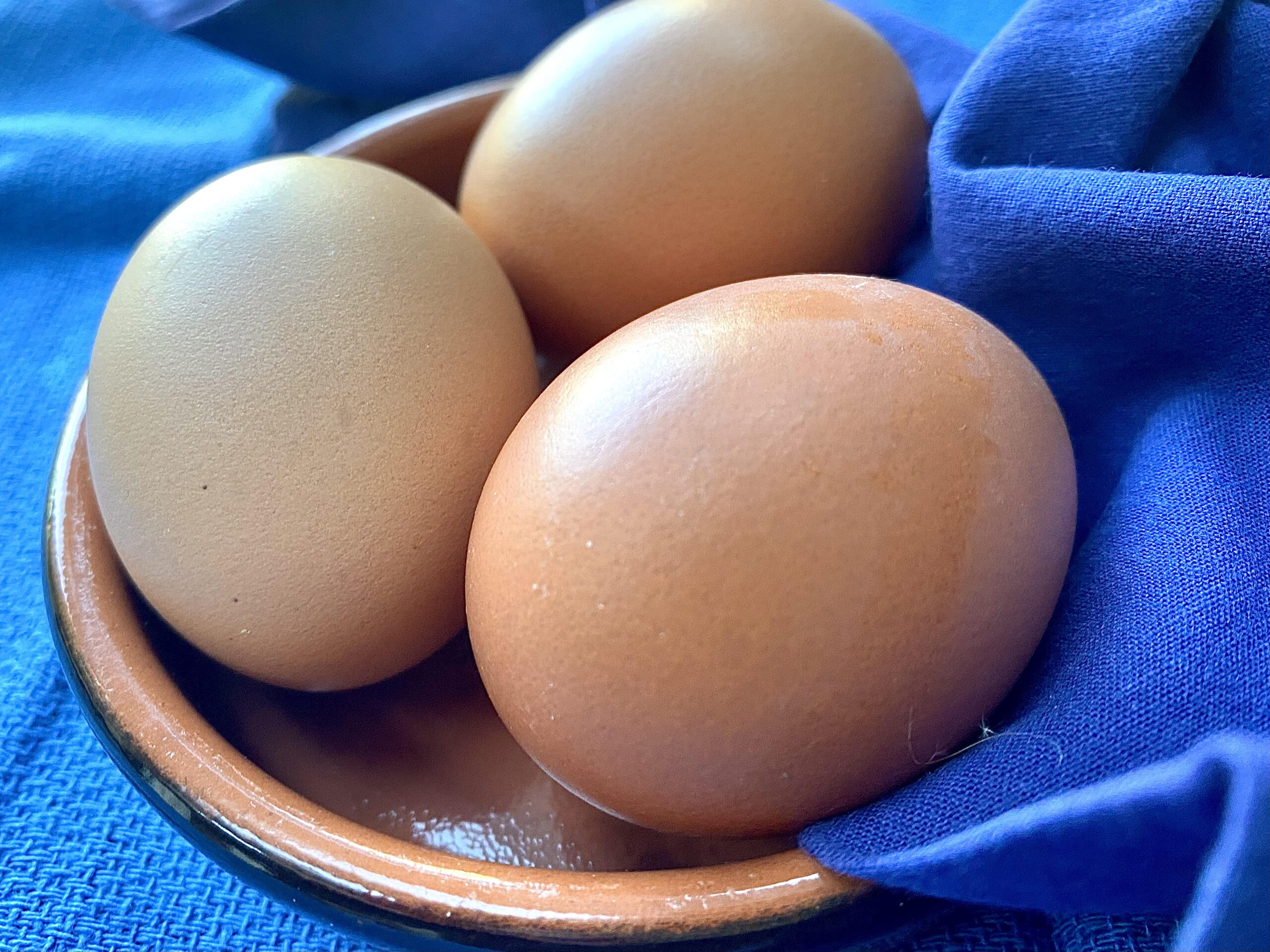
“How do you like your eggs in the morning?” go the lyrics to the Dean Martin song. I prefer them for lunch, is my answer.
Don’t get me wrong, eggs are practically synonymous with breakfast, but somehow I feel like their versatility is wasted on breakfast. I recognise that’s hugely unfair, and I only feel that way because I’m not much of a morning eater.
Brunch feels a very civilised time to be having cooked food, but before then I’m limited to coffee and cereal, I’m afraid.
A wobbly poached egg and smashed avocado piled atop a slice of wholemeal sourdough is a beautiful thing indeed, and a staple on the brunch menus of St Albans. Avocado has a fairly delicate taste, though, and eggs can heroically withstand a veritable avalanche of flavour, which is how I enjoy them most.
Trouble is, as someone who prefers bland foods any time before 11am, the egg dishes that pack a flavour punch necessarily have to be for my lunch or dinner.
And my all-time favourite is without doubt a frittata. So straightforward, but so satisfying: the perfect balance between yielding and firm, with a huge variety of added textures and flavour pops to experiment with. Almost nothing is off limits.
I recall that I once added some surplus cold baked beans into my frittata mix before pouring it into the pan and it was surprisingly tasty, if a little unorthodox.
My mum puts leftover cooked spaghetti into her pan and pours her frittata batter over them (There’s no such thing as leftover spaghetti in our house, so I’ve yet to try it.).
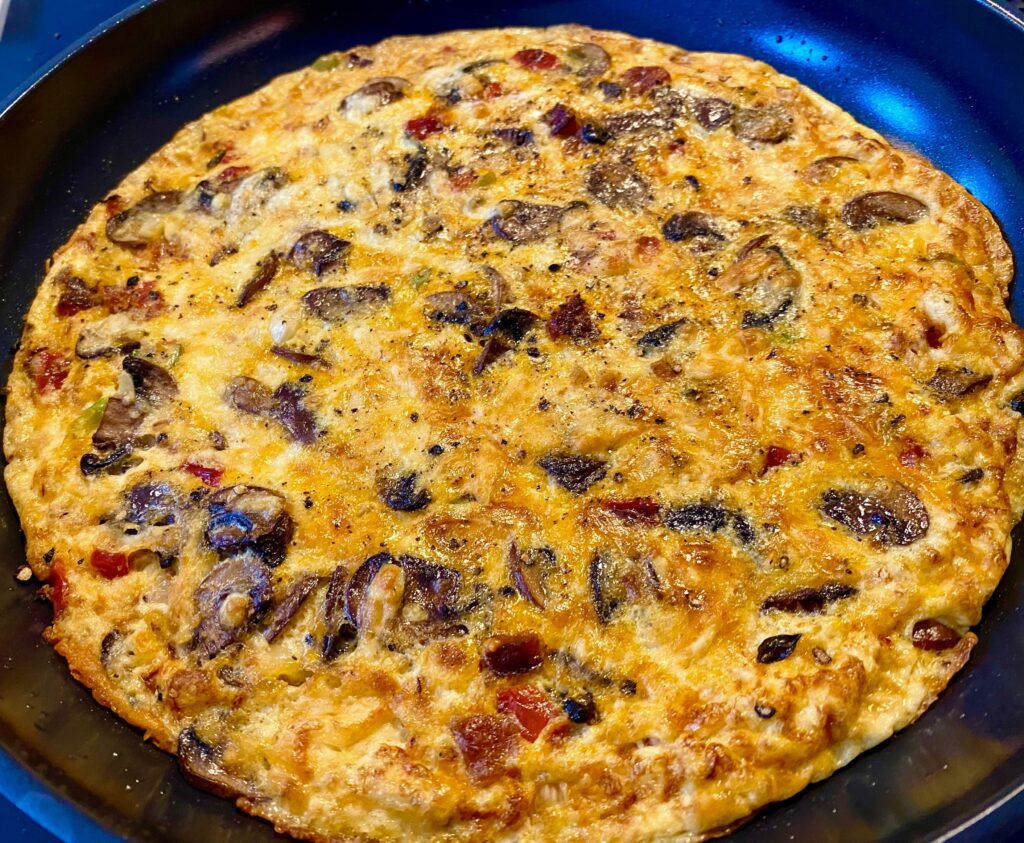
I recently made a frittata for supper that featured mushrooms and bell peppers.
That’s what I had in my fridge, but had it been asparagus and cherry tomatoes, or just about anything else, it would have worked equally as well. I think carrots are the only veg I don’t think would work, and I can’t really fathom why I think that.
But I do.
Whatever you’re using, the trick is to make sure it’s well cooked before adding to the eggs, because the eggs take very little time to cook and raw ingredients won’t have time to soften and release their flavour.
Mushrooms, in fact, are tastier if they’re almost over-cooked or ‘crozzled’ (which I’ve been told isn’t a real word, but whose very sound defines its meaning). Let the slices cook till they release their water, but then keep going until all the water’s evaporated and the mushrooms are catching slightly. Their flavour intensifies and they take on a real bite texture-wise, complementing the eggs beautifully.
The final touches are up to you: throw in some thyme or parsley, add some pecorino or gouda, perhaps drizzle over some chilli oil or sprinkle on some sumac for a zingy kick. The frittata world is a welcoming one.
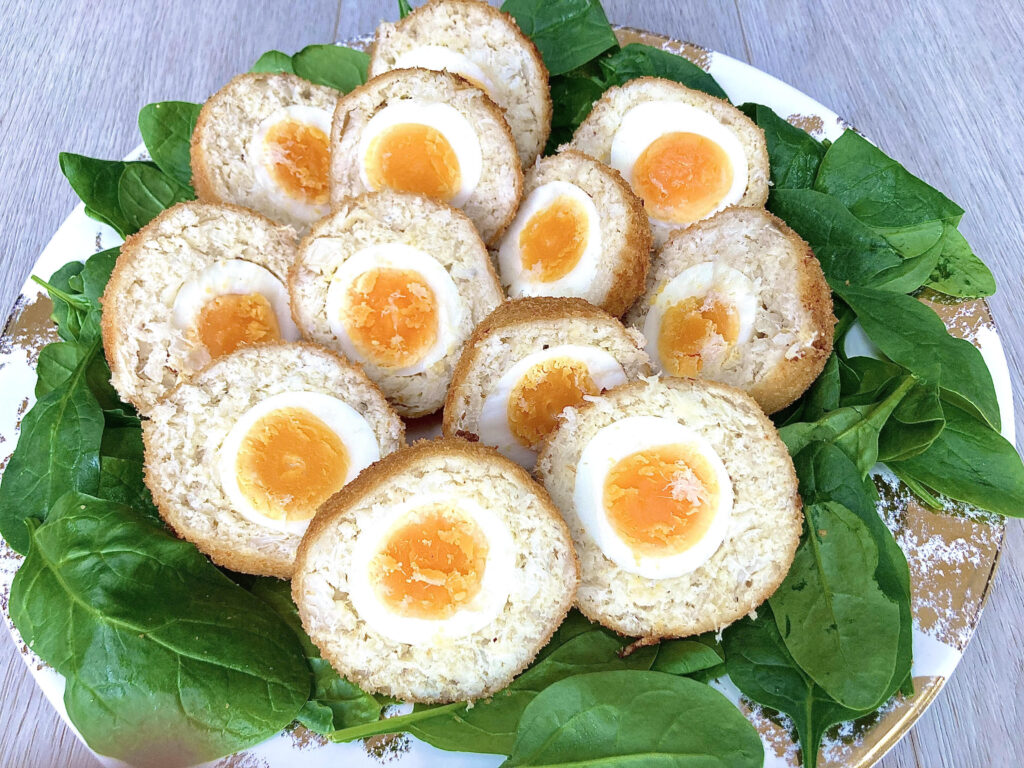
Not all things made with eggs are quick and easy, though. One of my favourite things to eat is also one of the most long-winded to make: Scotch eggs. In particular, smoked haddock scotch eggs, which I like to eat with curried mayonnaise in a riot of ‘80s retro-mania.
The recipe is written by the great late Gary Rhodes, who was himself a champion of ‘80s gastro-classics. And, as many of us will recall, the ’80s was a decade in which no culinary corners were cut. Recipes were long and complex, and this one is no exception, but the result is well and truly worth it.
Gary begins with a white-fish mousse, rather than one made with smoked haddock, unless you want a very powerful flavour. The smoked haddock is poached separately in milk and then flaked into the mousse, which needs to have just the right consistency to be moulded around the boiled eggs. If that weren’t enough trickiness, the boiled eggs themselves need some close attention, because you want to avoid an overcooked, greying egg yolk in favour of a vibrant pop of sunny orange when you slice it in half before eating.
If you manage to get through all that without needing a paper bag to breathe into, you heat up your pan of oil for deep-frying and begin the three-dip process.
Take your chilled, mousse-wrapped egg and gently douse in flour, then dip in beaten egg and, finally, cover in breadcrumbs. Some say a second dip in egg and breadcrumbs helps create a good, thick crispy coating, but I find it creates too thick a coating which can then come away from the mousse, so I always stick with one dip.
Although this process is laborious, there are less painstaking Scotch egg recipes out there, and many with a twist on the regular variety. Black pudding or chorizo Scotch eggs, Thai-style pork and prawn ones… I’ve tried many that have been very successful. Don’t attempt it if you’re pushed for time; wait for when your stress levels are having a deckchair day and you won’t mind making a mess of the kitchen or clearing it up.
I know days like that don’t come along very often, but when they do, a proper, homemade Scotch egg is definitely a good way to celebrate them. Maybe even with a kiss, as Dean Martin suggests.