10 Sep 2024
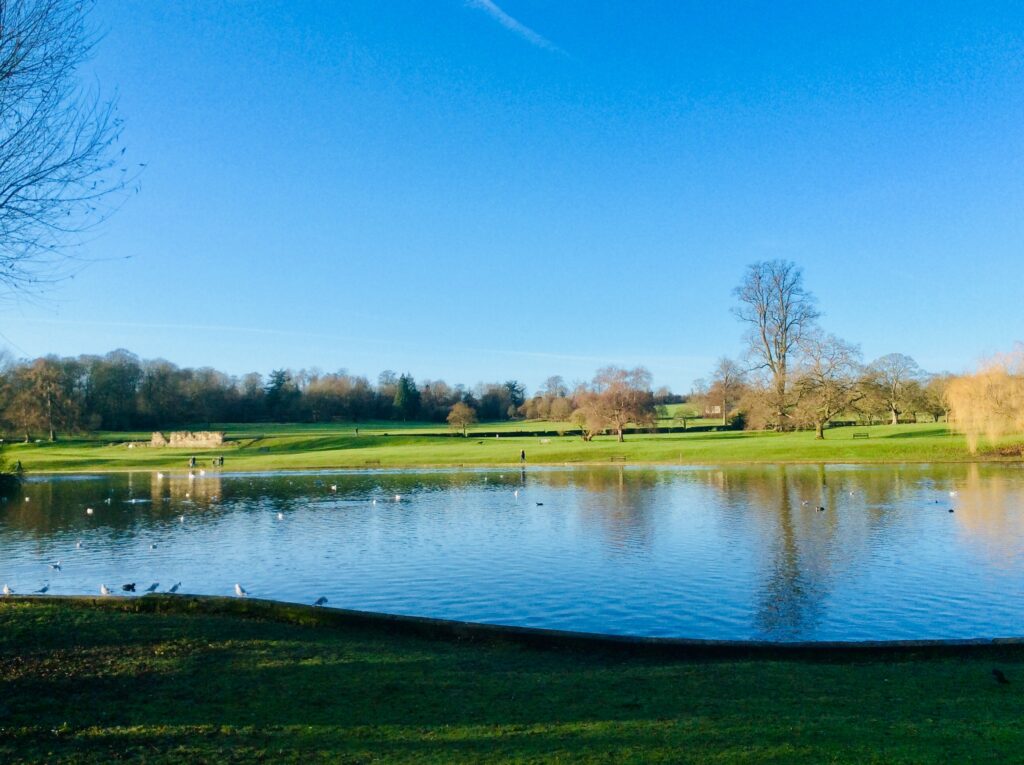
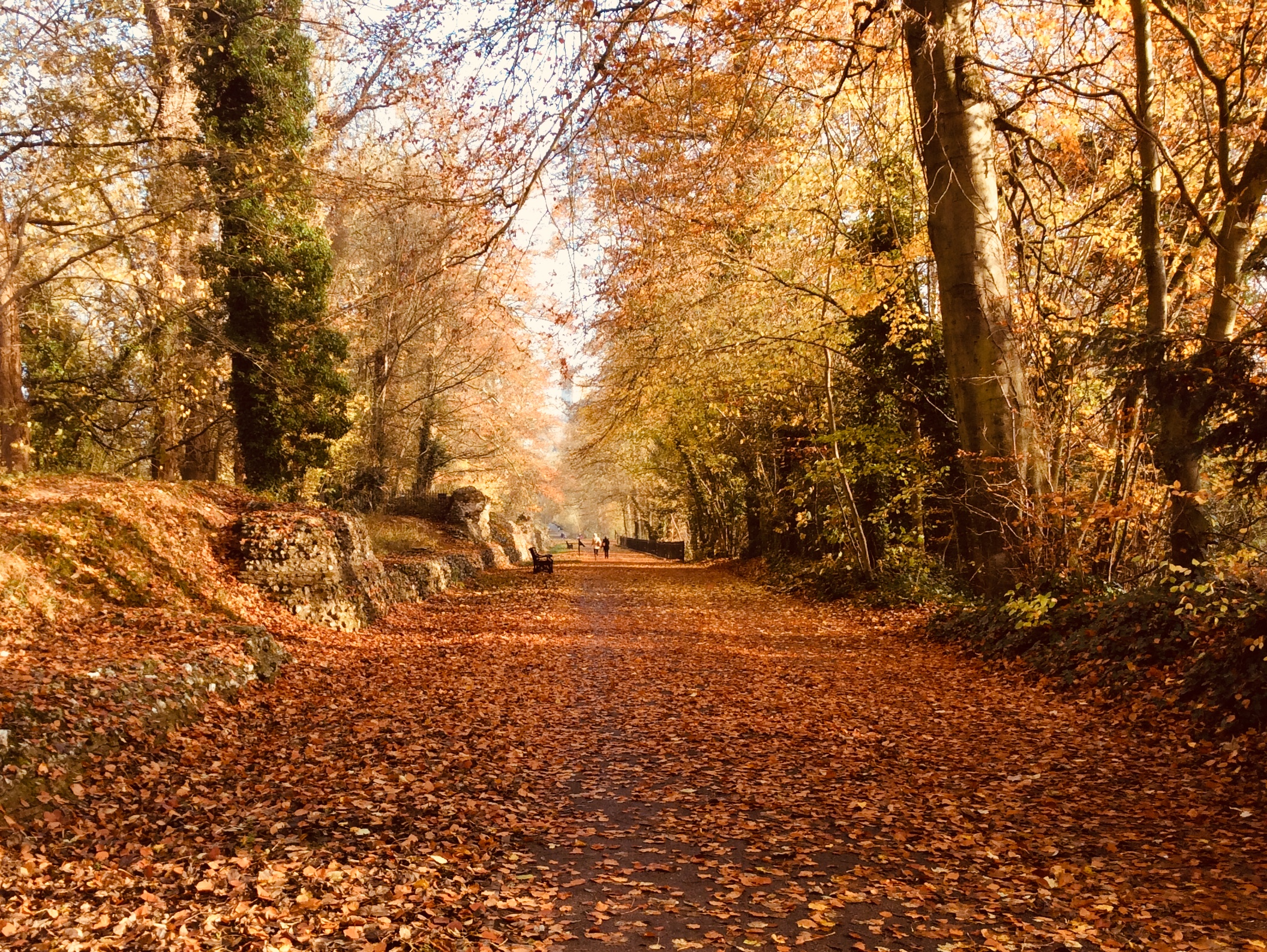
To mark the 90th anniversary of Verulamium Park and Lake, Dr Robert Wareing, who regularly walks the park with his wife Linda, has undertaken a labour of love to research its history and to celebrate its place in the heart of St Albans residents.
Probably the earliest embryonic form of Verulamium Park measured just 960 feet long by 17 feet wide (292 metres by 5 metres). This narrow strip of land – believed to be the current Ver riverside path – was gifted to the City of St Albans (for the nominal sum of £1) by Captain Gape, the owner of St Michaels’s Manor, in November 1927.
It is clear from council minutes of April 1929 that for some considerable time the question of the creation of public open space close to the city centre had been under “most serious and earnest consideration” by a perceptive and forward-looking authority. Further, “the Mayor – with the approval of the council – has been in negotiation with the Earl and Countess of Verulam upon this very important question”.
These negotiations culminated in the acquisition by St Albans Council of 102 acres of freehold land that now forms Verulamium Park and Lake. At that time, the Park included St Germain’s Farm, Verulam Hills Farm and extended from the riverside walk up to King Harry Lane, also encompassing the Causeway and the woods. (The area of Seabrook Field – adjacent to Bluehouse Hill) – was added in 1958).
St Albans City Council quite properly realised this was a unique opportunity to buy such a huge parcel of land adjacent to the Abbey Orchard and close to the city centre. Its potential as a municipal park was unsurpassed (although it is thought that the council initially only wanted to create a green break in housing development to the south of the city). The notion of a ‘park’ evolved later. In that era, ‘The Park’ was Clarence Park and Verulamium was ‘The Lake’.
The land clearly benefited from what would now be called “location, location, location”, and it was appreciated that the treasure of ancient Verulamium lay beneath the soil.
An agreement was quickly reached and Lord Verulam (The Right Honourable James Walter, 4th Earl of Verulam) sold the 102 acre property for the price of £6,500. This is the equivalent of £300,000 in today’s money.
I’ll leave you to decide if that was a fair price. (I would simply point out that the first of three stages of revitalizing the River Ver and Park Lake is expected to cost £2.2 million.)
The price was regarded by the council as “a very generous offer by his Lordship” but that amount of money still needed some finding.
A loan had to be raised for what, in 1929, was a very substantial sum. Once this was achieved, the next big hurdles were the process of constructing the Lake and converting farms of mainly pasture land into a municipal green space. This was to cost four times more than the land itself.

If we think we are now experiencing a period of austerity, imagine just how much worse it was in 1929 in the lead up to the Great Depression. It was the most difficult time for the council to embark on such an ambitious and heavy public spending plan.
Fortunately, the council was able to take advantage of a golden opportunity that was born, paradoxically, out of the incredibly harsh economic conditions that seemed to be working against them. It came in the form of the Unemployment Grants Scheme, sponsored by the Ministry of Health, which financed public projects that provided work for the growing numbers of jobless. The council decided to try their luck and apply for a grant and loan.
Meanwhile, the council had been busy deciding how to make best use of its new acquisition. Ideas quickly multiplied. Recreating an ancient fish-pool (later redefined as a “boating lake”), constructing a paddling pool, sports ground, large tea rooms, and “the usual paths and walks, seats, shelters and toilets” all came together to form the wish list. Also, what later proved to be particularly controversial, was the inclusion of “Archaeological and Antiquarian Excavation at the site of Verulamium”.
This list materialised into plans and these plans were submitted to the Ministry. They “provide for much unskilled labour,” ran the council’s covering note, adding “a scheme of this magnitude is beyond the reach of ratepayers unless substantial help can be given”.
The reply from the Ministry caused dismay. Terms of the grant and loan were not acceptable to the council and the imposition of strict conditions showed clear portent of bureaucratic wrangling for which this process was notorious. The conditions included: “transferred labour” from distressed areas “must be used”.
Work must begin by August 1930 and be completed in 20 months, and the whole plan had to be “non revenue producing”.

The cost of cutting out the lake to what was thought to be the clay bed of a former monastic, or even Roman lake, and of landscaping the surrounding grounds, came to £25,911, an astronomical figure for that time. The grant and loan on offer was “simply not enough” concluded the council.
But the council had to be realistic. They had already invested a considerable sum in buying the farmland and no other means of getting the work done was practicable.
Wisely they decided to negotiate hard and be prepared to compromise. “Delete ‘boating’ altogether, and call it ‘an ornamental lake,’” the council conceded, “also delete the large tea rooms… revenue is a secondary consideration. Our primary object is to restore a lake as believed to be in former times”.
These amended plans were accepted, and the Ministry hurried to spell out further terms to go with an increased grant and generous loan arrangements. “Men must be engaged only through employment exchanges,” they said. “Ten per cent only may be permanent supervisory staff; 75% of all men must be ex-servicemen; all materials British where possible; and suitable accommodation for transferred labour must be found.”
St Albans, although not an area of great deprivation, had not escaped hardship. Therefore, obtaining suitable accommodation would present little difficulty because plenty of homes locally would be glad of the extra guaranteed income from lodgers. (Interestingly, there is a myth some that jobless men from the North and Wales were accommodated at the Black Lion in Fishpool Street, which was then a ‘common lodging house’ with others staying at The Goat in Sopwell Lane.)
The council was quick to agree to the new terms of the plans because time was pressing.
There remained considerable haggling about the detail of the scheme between the council and the Ministry of Health, particularly the funding of archaeological excavations. Decisions were made and then rescinded by different Government departments, including the Treasury and Ministry of Works. Eventually, however, after top level political intervention, a detailed agreement was negotiated with a favourable outcome for St Albans.
And so Verulamium Park and Lake was conceived…