26 May 2023
In the centre of St Albans, where the Museum + Gallery now stands, once stood the Moot Hall. Within its timber framed walls and under its thatched roof, the Abbey of St Albans – that great Benedictine Monastery which stood on the site of today’s Cathedral – controlled every aspect of life in the town.
People were brought to the Moot Hall to face trial, whether for petty theft or for downright revolution. And anyone in the Moot Hall in late spring in 1455 would have had a grandstand view of what was to take place outside its doors. When, for a few hours, the town of St Albans was to become the most important place in the Kingdom.
It was the 22nd May. The King, Henry VI, was encamped with his men in front of the Moot Hall. Just outside the town, the King’s cousins of York quietly prepared their men for battle. They attacked, finding the King’s men woefully unready, scrabbling to don their armour whilst arrows whistled lethally amongst them. It was a bloody fight for survival and records talk of the streets being strewn with corpses.

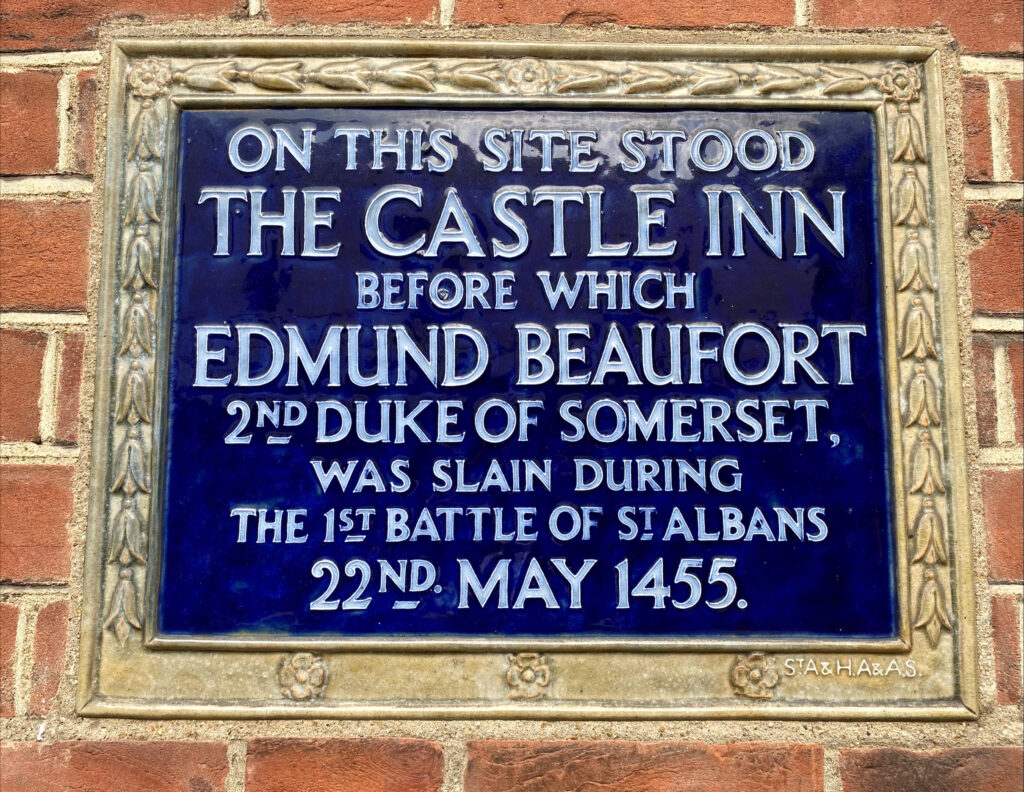
The King’s military leader, Edmund Beaufort, Duke of Somerset, was trapped with his men inside the Castle Inn, (now an estate agent on the corner of Victoria Street, formerly Butts Lane (The existing plaque in Victoria Street is on the wrong side of the road).
Edmund came out fighting and was struck down in the inn’s doorway. This may be a myth but apparently a prophecy had warned Edmund that he would die in a castle entrance. He probably didn’t expect it to be an inn.
This was the first battle of the long, sporadic war which was known then as the War of the Cousins, but which we know now as the Wars of the Roses. This flowery name doesn’t do justice to the viciousness of this fight for the throne of England.
This first battle was won by Richard, Duke of York, and was witnessed by the Abbot of the Monastery, John of Wheathampstead. It was said that Abbot John forced Richard to look upon the results of his destructive and bloody violence. But war had begun. And more would die.
Henry VI was a weak king, subject to ill health and a victim of sudden bouts of what was thought to be madness. He was intensely religious and reclusive.
During his fight to keep his throne from his usurping Yorkist cousins, Henry was captured, rescued, deposed, recaptured, imprisoned, restored to the throne, finally dying in 1471 in the Tower of London in very murky circumstances.
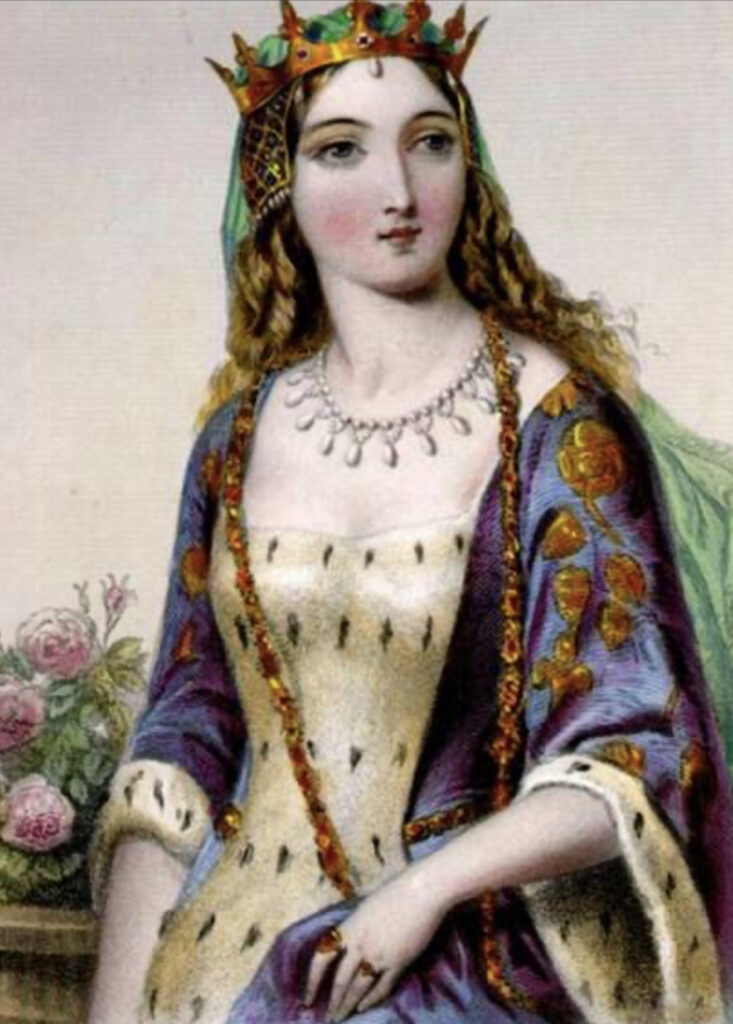
There was a second battle of St Albans, six years later, in February 1461, led by Henry’s wife, Margaret of Anjou. And this time, the King’s men won.
Margaret was called the She-Wolf of France. When she was 15, she was brought to England and married to Henry. Margaret was described by the Duke of Suffolk, as beautiful, witty, intelligent, courageous and brave. In fact, Edward Hall, a historian of the 1500s, described her as being more like a man than a woman (because she couldn’t possibly be brave and clever by being a mere woman).
But Margaret was also known to be ruthless. A she-wolf. She was certainly seen as stronger than her husband.
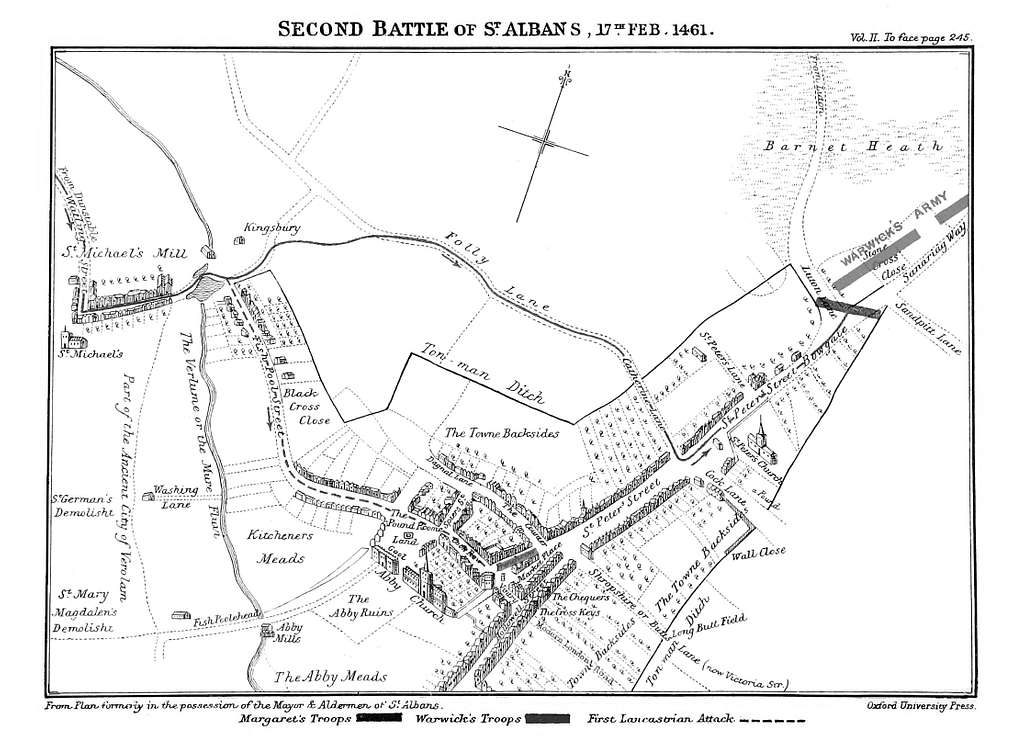
So at times Margaret ruled the Kingdom in his place. Henry had been captured by the Yorkists, which is why Margaret was leading the Lancastrian army in 1461. And on 17th February she led the army to victory here in the Second Battle of St Albans.
After an initial foray into the town up Fishpool Street, her forces were repelled by Yorkist archers in the Market Place. They withdrew and re-entered the town up Catherine Street, making camp in Bernard’s Heath, where the battle took place.
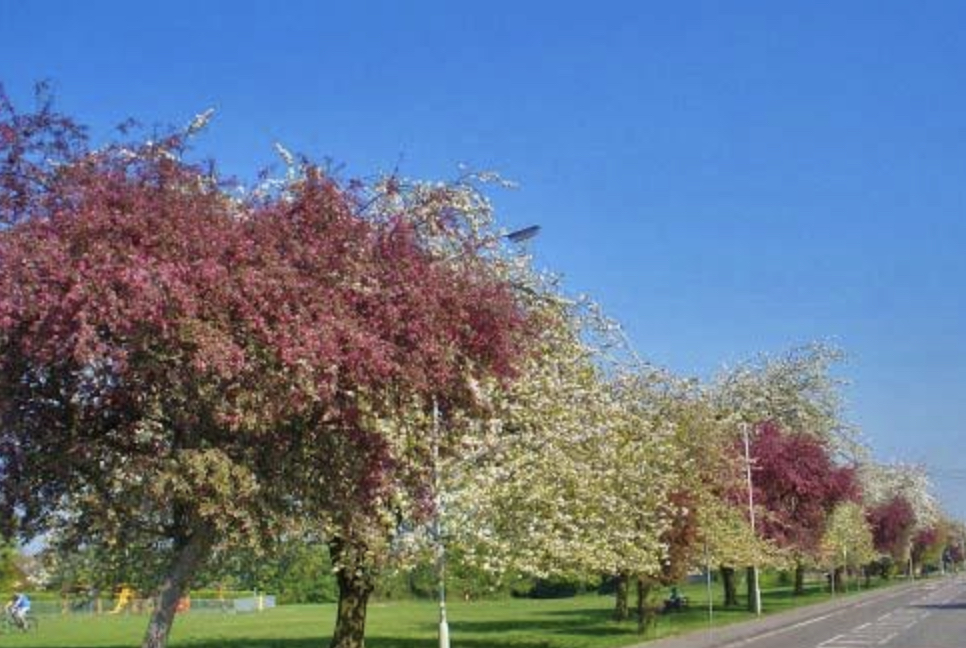
The red and white blossoms of the trees which line Sandridge Road today remember the fallen of both the Lancastrian and Yorkist factions. Red for the House of Lancaster, white for the House of York.
After the battle Margaret freed her husband from captivity. Her victorious troops stormed through the town and Abbey, looting everything they could grab. And Margaret, instead of trying to restrain them, is said to have joined in, looting from the Abbey its finest jewel, a ruby.
But for the Lancastrians, it was all in vain. Following their victory in St Albans, they were comprehensively defeated only a month later at the notorious Battle of Towton, considered to be the largest and bloodiest ever on English soil.
After years of war, Margaret’s power was finally broken after another defeat, this time at the Battle of Tewkesbury on 4th May, 1471. A defeat especially bitter for Margaret, who lost her only child, Edward, Prince of Wales. He was 18. Margaret was taken prisoner by the Yorkists, but ransomed by her cousin, King Louis XI of France, where she lived out her final days, dependant on his goodwill. She died at 52 years old.
It was a time of bitter and bloody conflict and St Albans is still marked by the impact of those two battles. To discover more about the people and events of that turbulent period, join the St Albans Tour Guides for their War of the Roses guided walk on Sunday 11th June. Or visit the exhibition, the Forgotten Battle of St Albans, at St Albans Museum + Gallery until 25th June.
History in colour; www.stalbanstourguides.co.uk