03 Sep 2024
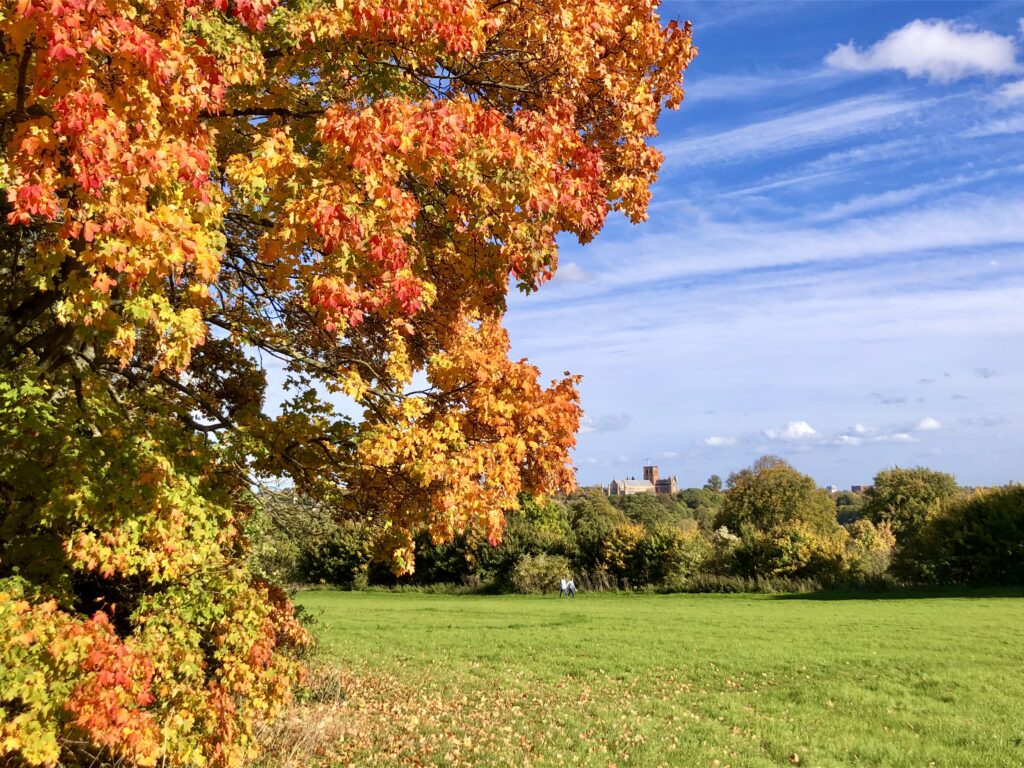
Over the past 50 years, Dr Robert Wareing and his wife Linda feel privileged to have walked in Verulamium Park almost every day, in all weathers and through all the seasons, and have a deep love of this precious space.
To mark the 90th anniversary of the park, Robert has undertaken a labour of love to research the history of the park and lake, and to celebrate its place in the hearts of St Albans residents.
Another related and appropriate reason for this research being published now is because St Albans is on the threshold of implementing ambitious and wide-ranging multi-million plans for revitalising the River Ver and and the lake, and thus Verulamium Park. Robert is hoping the revitalization of the Lake is handled sensitively and with due respect to the rich history of this precious place.
Robert’s findings will be revealed in a major series of articles published in the St Albans Times over the coming weeks.
This series of articles is largely based on original research by the (now disbanded) Friends of Verulamium Park which was published in booklet form in 2010, entitled ‘Verulamium Lake and Park, St Albans. 1927 to 1934′. Janet Ouston, Alan Malin, Sheila and Howard Artiss, John Buckingham and Donato Cinicolo were all major contributors. We gratefully acknowledge the work they did to make these features possible.
The 102 acre Verulamium Park is named after the Roman City of Verulamium, the remains of which lie buried beneath the soil on which it stands.
Some of the ancient city walls and recreated outline of the main London Gate can be seen in the park together with the remarkably well preserved mosaic and hypocaust.
So next time you take a leisurely stroll in the park, let your mind wander back almost two thousand years to the life and times of ancient Roman Verulamium.
After reading this account of the conception, development and birth of this icon of St Albans – our beautiful, ubiquitous and unique Verulamium Park and Lake – your thoughts may also linger on a much more recent, but no less dramatic, period of our city’s history.
Verulamium Park gives St Albans lungs to breathe and provides a haven for wildlife together with natural beauty for people to enjoy in lots of different ways, walking, relaxing, cycling and playing. It also provides a protective cloak for the Roman city beneath.
In my view, just as the Abbey is the jewel in the crown of St Albans, so Verulamium Park forms the emerald in that same crown … and it is the Lake – both the large and small – that adds a special sapphire sparkle to this gem.
As with all precious jewellery, it is hand-crafted. Except in the case of our lake and park, this hand crafting was on a monumental scale … and mainly done with picks and shovels!
The way gaunt, jobless men from the North and Wales (together with the unemployed from St Albans) toiled during the Great Depression to carve a giant niche in our city’s history has long been part of our folklore but it was only in the last decade that definitive research was published by Friends of Verulamium Park revealing firm evidence of just how the lake and park came into being.
Now is the perfect time to look at how this gem was created for two reasons.
First, because Verulamium Park celebrated the 90th birthday of its completion this summer. The precise day of its birth (and formal opening of the park) remain a mystery and is clouded by the fact that the lake was finished and used extensively by local people for swimming and bathing for a couple of years before the park was completed.
Second, because we are on the threshold of implementing ambitious and wide-ranging multi-million plans for revitalising the River Ver and and the Lake, and thus Verulamium Park. Unless handled sensitively, change can be seen more as an act of destruction than of creation, as that which exists is dismantled before being replaced with something new. Let’s hope the revitalization of the lake is handled sensitively and with due respect to the history of this precious place. If the lake and park was a building, I’m sure it would be ‘listed’ and thus protected.
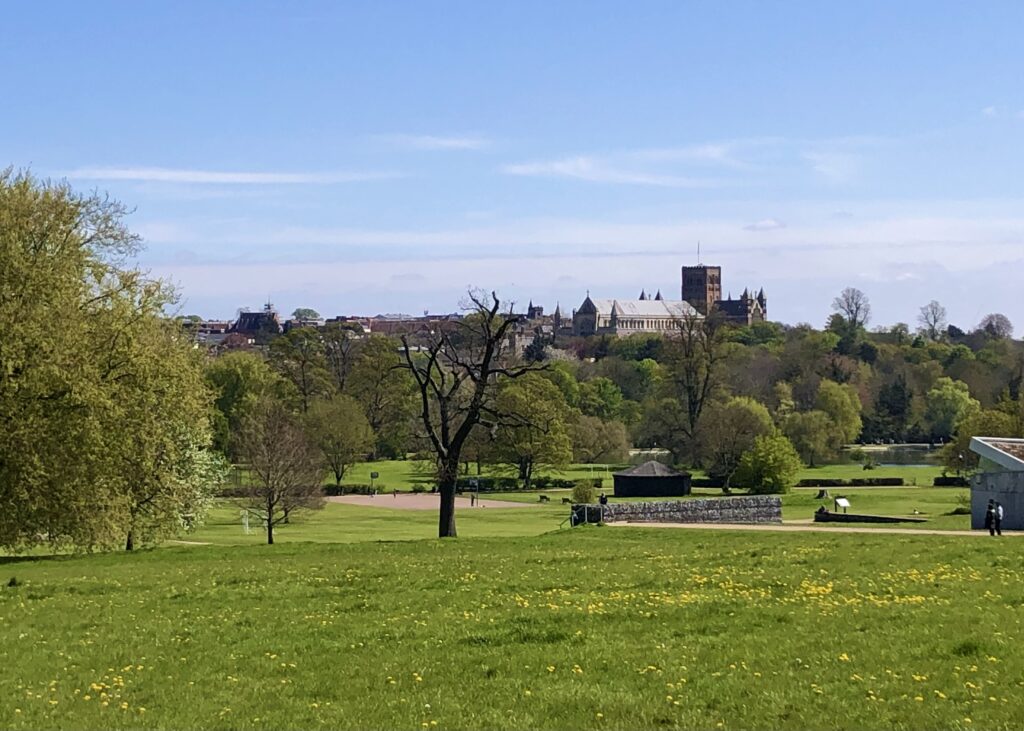
I have done my best to summarise – and simplify – this complex part of our history taken mainly from ‘Verulamium Lake and Park, St Albans,1927 to 1934’ written by Janet Ousten and colleagues and published by Friends of Verulamium Park. Factual evidence is rather sparse. I have therefore been compelled to join up rather widely spaced factual dots to form a picture using a combination of logic and imagination. I try to make this distinction clear. This is where I digress from the scientific rigour of my principal source document.
Probably the earliest embryonic form of Verulamium Park measured just 960 feet long by 17 feet wide (292 metres by 5 metres). This narrow strip of land – believed to be the current Ver riverside path – was gifted to the City of St Albans in 1927. Part 1 of this series describes how the park and lake, as we now know it, was conceived and financed in the harshest economic conditions in the lead up to the Great Depression between 1927 and 1930.
The second part of the series will cover the embryonic period of the lake’s development, between 1930 to 1932.
It looks at how, before the massive construction work started, archaeological excavation of the Roman remains was entrusted to the eminent Dr Mortimer Wheeler and many significant ‘finds’ were made. Work began excavating the lake bed on September 15, 1930.
Around a hundred manual labourers – with about 50 per cent of them, it is thought, “transferred” from Depressed Areas, possibly from Jarrow and South Wales – set about the monumental task of carving out the lake bed by hand using only picks and shovels.
Work on the lake was completed ahead of schedule early in 1932 and most of the “transferred labour” are believed to have returned to their homes far away. Some, however, are thought to have brought their families and adopted St Albans as their home. Part III will look at the completion of the lake, and the subsequent creation of Verulamium Park itself.
It is thought that the birth of Verulamium Park was in June 1934. Landscaping continued through 1932 to 1934 and followed what I believe to be the distinctive naturalistic principles of Lancelot “Capability” Brown, the most famous figure in the history of the English landscape. Existing hedgerows and trees were preserved, hundreds more trees planted and bulbs sewn. In Verulamium Park, the park’s natural undulations echoed those typical of the English landscape and when linked to the sculptured serpentine shape of the lake reflected the essence of “Capability” Brown’s famous and very popular style.
Attractions of Verulamium Park and Lake abound. Foremost is the natural beauty of the landscape and the abundant wildlife. The park and lake are ubiquitous in catering for the many and varied recreational and sporting needs of thousands of visitors.
Yet somehow our remarkable park meets all these divergent needs … and still retains its beauty and safely cloaks its Roman treasures below, recently winning two prestigious awards. the internationally accredited Green Flag Award, and the rare and much sought after Green Heritage Site Accreditation from Historic England.
The final part of the series will examine the future of both park and lake, and the significant challenges faced in the years ahead.
St Albans is on the threshold of implementing ambitious and wide-ranging multi-million pound plans for revitalising the River Ver and and the lake, and thus Verulamium Park. It is bringing together the district and county councils, the Environment Agency, Affinity Water and English Heritage, each of whom has a key role but different priorities.
The hope is that the revitalisation of the lake is handled sensitively and with due respect to the rich history of this precious place.
The public debate to consider possible improvements to the park was going on for twice as long as it took to create the park from conception to completion!
Proposals have evolved and changed over time, before a plan has finally been agreed. There seemed to be two distinct camps, or opposing forces, at work.
These can best be summarised as radical change versus preservation of the status quo (and the application of TLC to what we have).
The radicals were pushing for significant change to the size, shape and vista of the lake, with newly planted vegetation and aquatic plants to screen the lakeside and an additional stream. The conservatives were advocating the systematic application of proper care and maintenance to the existing lake and park, to preserve the natural beauty of this precious space.
We will look at all of these arguments and more besides as we conclude this insight into our beloved Verulamium Park and Lake.