


15 May 2023
Deborah Heath is at the Abbey Theatre for Terrence Rattigan’s seaside classic…
I admire Company of Ten for the interesting range of theatrical experiences they offer their audience. In contrast to their last show, gritty crime drama The Incident Room, we are currently treated to a stylishly executed production of Separate Tables by mid-20th century playwright Terrence Rattigan.
This is in fact two linked one-act plays, set in the same private seaside hotel. Each tells the story of a different man and woman and in fact it was the original intention of Rattigan that the same actor and actress would play both roles. I applaud director Terry Prince’s move to cast each role separately as it gave more authenticity to this naturalistic piece.
The theme of both plays is loneliness; how it is a different experience for everyone and specifically
how being surrounded by lots of people can actually make you feel more isolated.
Let’s take a moment to consider these other people, the hotel residents; all of them with their own back story and classically post-war British suppressed emotions.
To call them supporting characters would belittle both the writer’s craft in creating them and the skill of the actors playing them.
There was super teamwork between Suzanne, Brower, Beverley Robley, Alison Muir as the three older female residents. Pete McEntee portrayed sad retired school master Mr Fowler with great sensitivity.
I welcomed the bright dynamic of the young academics played by Harry Johnson and Tanishia Gearing.

The strength of ever-diplomatic hotel manager Miss Cooper was captured perfectly by Lianne Weidmann in a performance that commanded the entire play.
Act I tells the story of disgraced ex-Labour MP John Malcolm and his former wife Mrs Shankland who disrupts Malcolm’s predictable world by arriving as an apparently random hotel guest. Both roles were played with power and grace by Russell Vincent and Tracey Chatterley and thus the ebb and flow of their re-developing association were utterly believable.
In this act particularly, Terry Prince’s thoughtful realisation shone and the audience were treated to Rattigan’s skills as a wordsmith and observer of human behaviour with lines such as “She is not the alone type…you need to have the character for it.”
In Act II, we meet most of the characters again. It is rewarding to see whether and how their personal stories develop after 18 months.
Our young academics are now joined by their baby son, an element that brings some welcome comic relief.
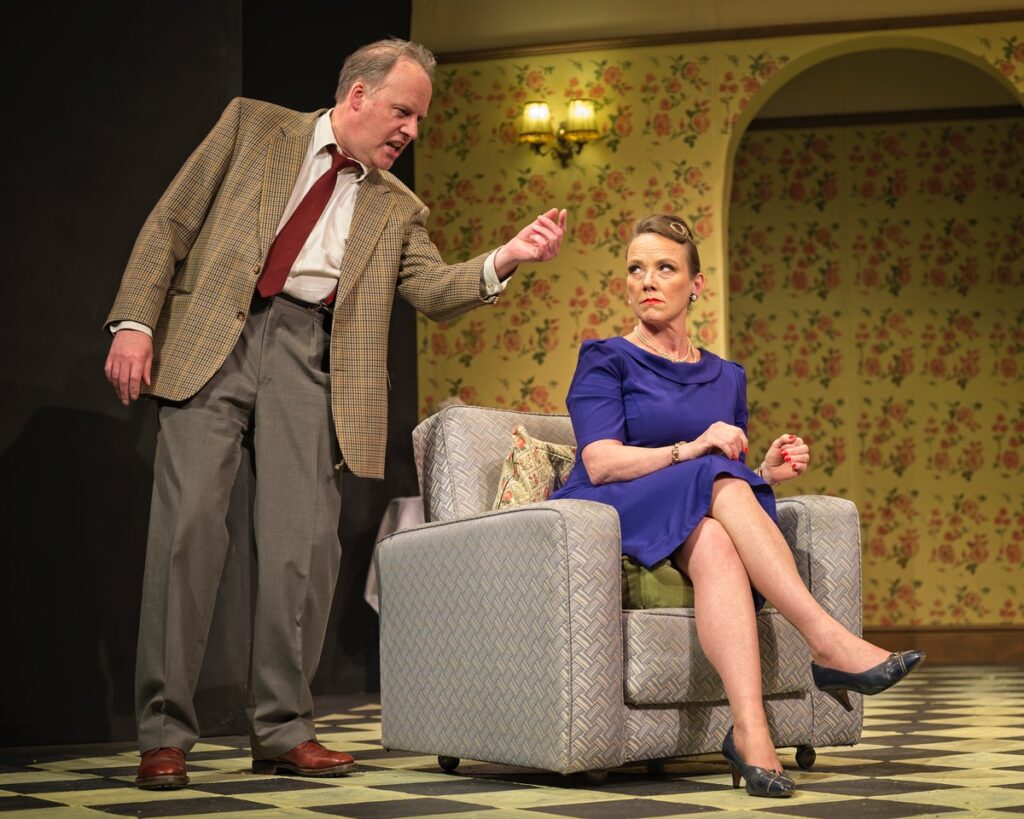
This time, the plot follows the relationship between downtrodden young spinster daughter Miss Railton-Bell and retired Major Pollock, played convincingly by Angharad Pugh-Jones and Tony Bradburn. Here we follow the discovery by the other residents that Major Pollock is not what he seems to be including being recently arrested for soliciting the company of young men on the promenade.
The attitude towards homosexuality in 1950s Britain was extremely different to now and there is some thought-provoking dialogue. This fact explores all characters through their reaction to this early piece of gossip and is a snapshot of the social attitudes of the day.
Interestingly, influenced by the threat of censorship and public reaction, Rattigan wrote a second version of Act II where The Major picked up young women instead.
I cannot end this review without praising the beautiful design elements in this production.
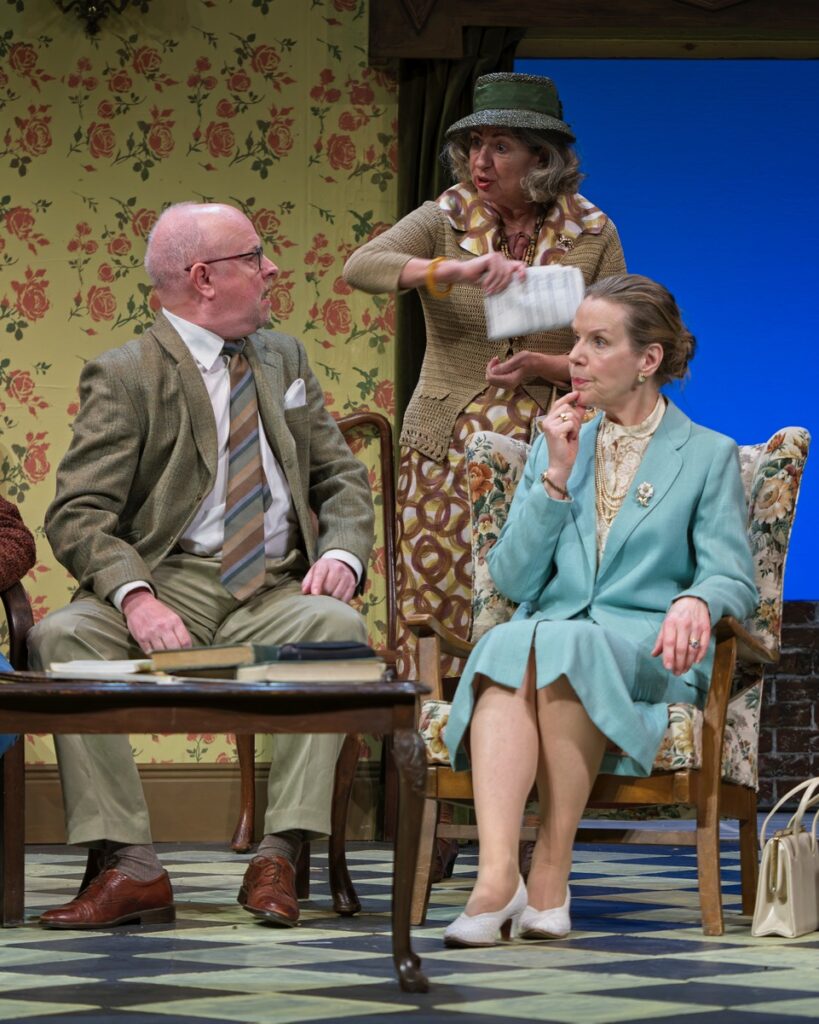
The costume and prop realisation were outstanding. Ali Pagan’s elegant set captured the style of the private hotel perfectly and I must applaud the scene changes which were done in character by the hotel staff transforming the dining room in to the lounge with choreographed ease.
“Separate Tables” is an apparently gentle play with some dark themes and this production from CoT is an extremely fine piece of theatre. However, this is not simply due to the script which is a masterpiece of character driven storytelling.
The sensitive direction, high production values and marvellous character portrayals from the tight cast make this production a great success.
