10 Jul 2024
Elena Hogg, founder of local culinary company FOOD by Elena, finds greater value in labour-intensive cooking…
I spend a lot of time chopping, as is par for the course, what with my running a food business.
Most of the time (all of the time, really), cleaning, peeling and dicing vegetables are all tasks that dismay me; an unavoidable and often painstaking process to be endured before the more fun and creative elements of cooking can get underway.
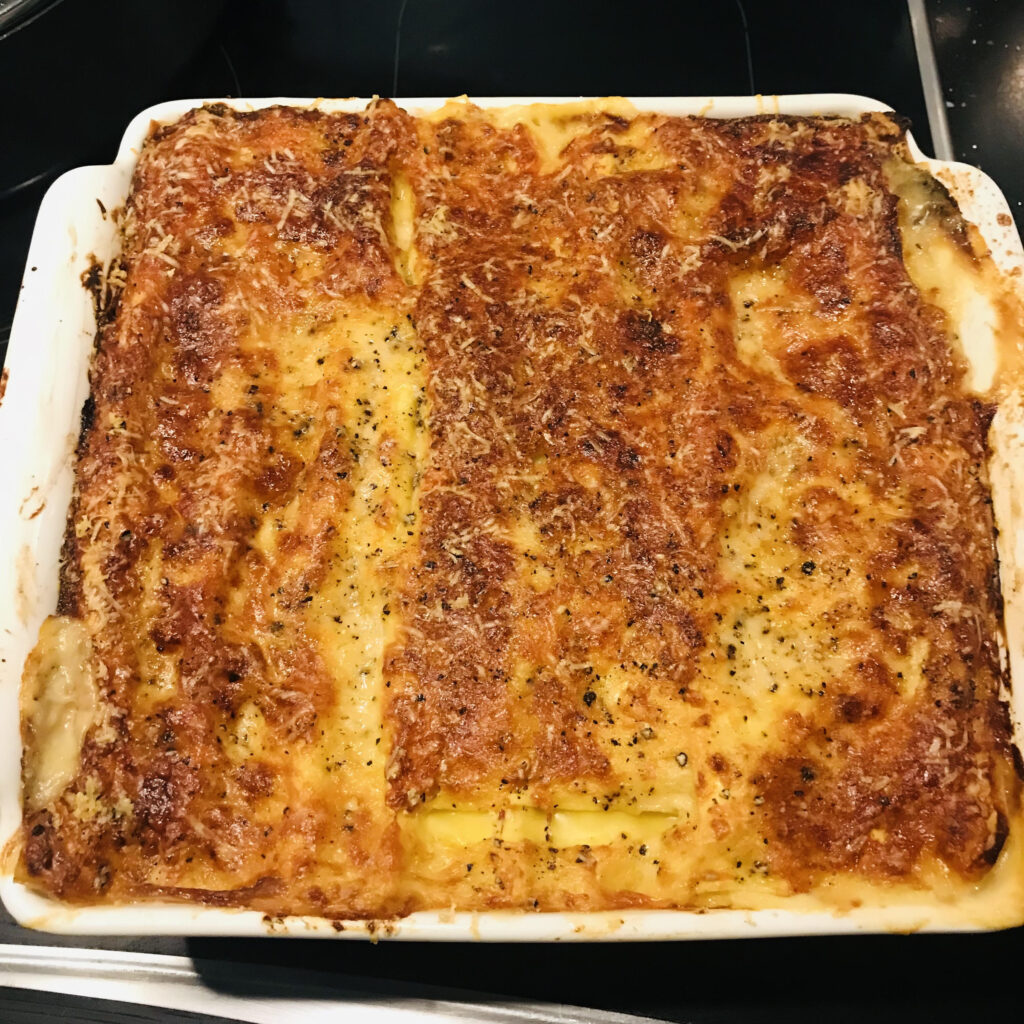
I feel my carpel tunnel twinge as the realisation dawns that I can no longer put off making the ragù for the lasagne I’ve been promising the children for about three weeks now (their all-time favourite, yet still ranked second place after my own mum’s lasagne, which is an utterly fair call).
But the ragù sauce, as you will no doubt appreciate, involves a veritable marathon of vegetable prep, followed by a long and slow simmer – none of which can be done on the hop.
Nor can many of the dishes on my menu, for that matter, so my chopping companion of choice is the radio. Sometimes a cheerful and cheesy song-fest, but often really interesting broadcasts like Woman’s Hour or the Today programme on Radio 4. There’s nothing more satisfying than being productive in your job while at the same time upping your current affairs knowledge or your socio-cultural awareness – in essence, I feel quite smug on these days.
Earlier this week, I found myself doing exactly that: slicing and dicing while listening to Oliver Burkeman discuss the concept of convenience. It resonated strongly with me.
He said: “There’s a flaw in the idea that more convenience is always better, because certain kinds of inconvenience force us to engage with the world in ways that make us feel alive.
“Plus, as convenience dominates, we forget the old, supposedly more effortful ways weren’t always that arduous at all.”
As I listened, I thought about how I was cubing tiny pieces of onion, carrot and celery for my ragù, rather than shredding them in the food processor. This is because they cook down better if diced, meaning better flavour and texture.
There is value in doing it this way, albeit very little convenience.
Burkeman went on to discuss the sense of reward we can get from doing things the hard way, which of course applies to so many facets of life.
But think of the satisfaction in a mouthful of homemade lasagne compared with its more convenient ready-meal counterpart. We deny ourselves the feeling of reward if we über-convenience our way through life.
A guest on the programme, Coco Krumme, who authored the book ‘Optimal Illusions’, said, “It’s one thing if somebody else is preparing my food; to me it’s altogether something else if I don’t even see the person preparing it, or I simply click a button and my food arrives, right? That’s this layer of abstraction that feels very different.”
Is Krumme right? Are we distancing ourselves from basic living processes with all this convenience?
It’s so easy it is to click a few items on the Deliveroo app and have them arrive on the doorstep half an hour or so later.
Does the immediacy and ease with which we can feed ourselves in turn cause a sort of frenzied level of expectation? Perhaps it’d be less trouble in the long-run to go to the effort of cooking.
The effort of cooking. It’s a fine line. Going the extra mile when there’s a long list of tasks to complete for a client’s elegant, five-course meal causes me stress, naturally, but when it’s just a weekend lunch, I am able to achieve that zen-like utopia. When the effort doesn’t feel like effort, but more like therapy.
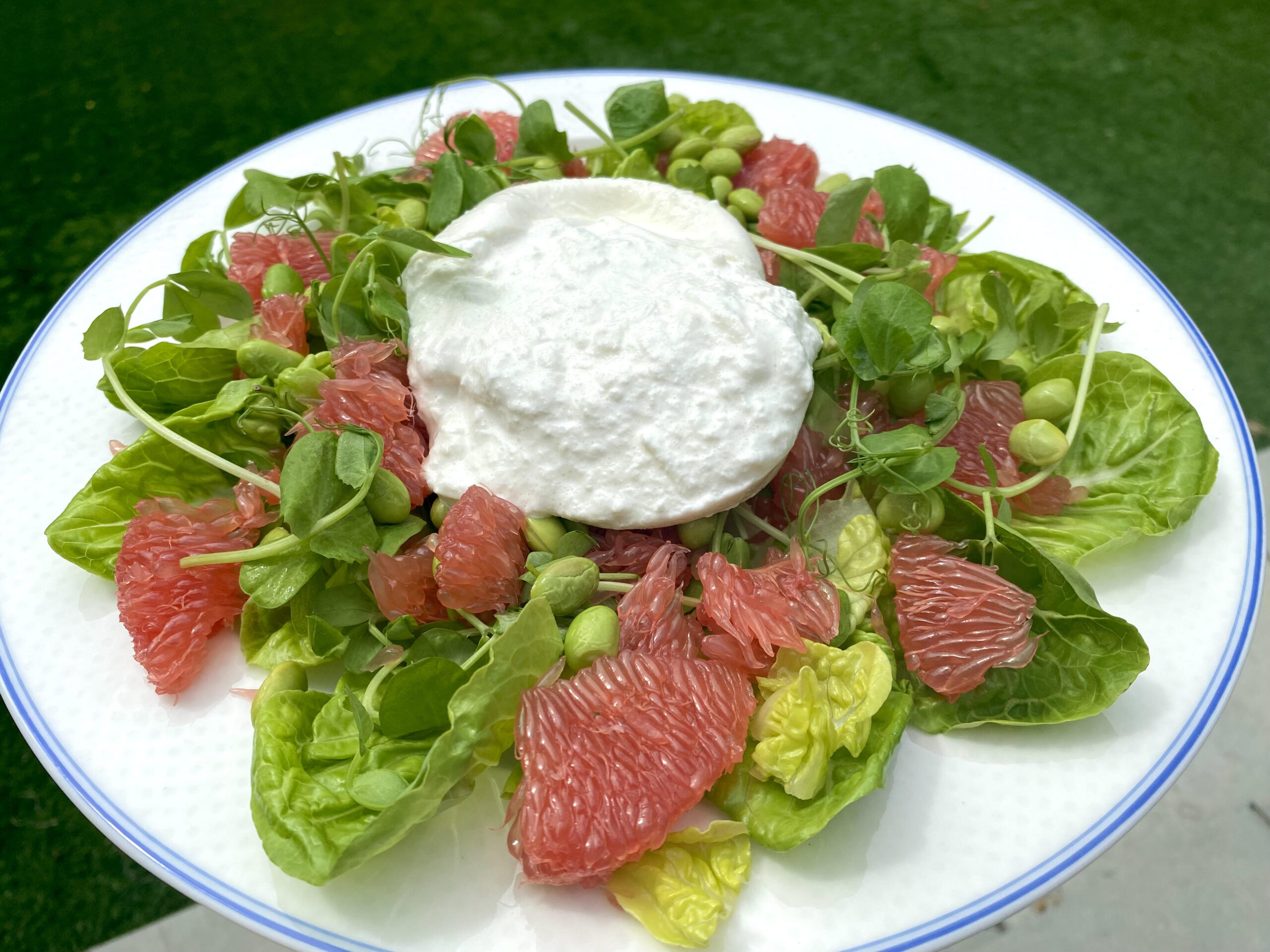
This was very the situation last weekend, in fact, when a neglected red grapefruit lurking in the fruit bowl caught my eye. I also had a tub of burrata – the product of a moment’s indulgence at the supermarket – that needed using, having waited patiently in the fridge tempting me all week.
I found a Thomasina Miers salad recipe that combines exactly these two ingredients and began preparing the grapefruit.
I took great tactile pleasure in peeling the membranes carefully away from each half-moon segment, leaving just the tiny, juice-filled vesicles, kitsch-pink against the green salad leaves and brilliant-white burrata.
Did it taste better prepared so assiduously? I like to think so.
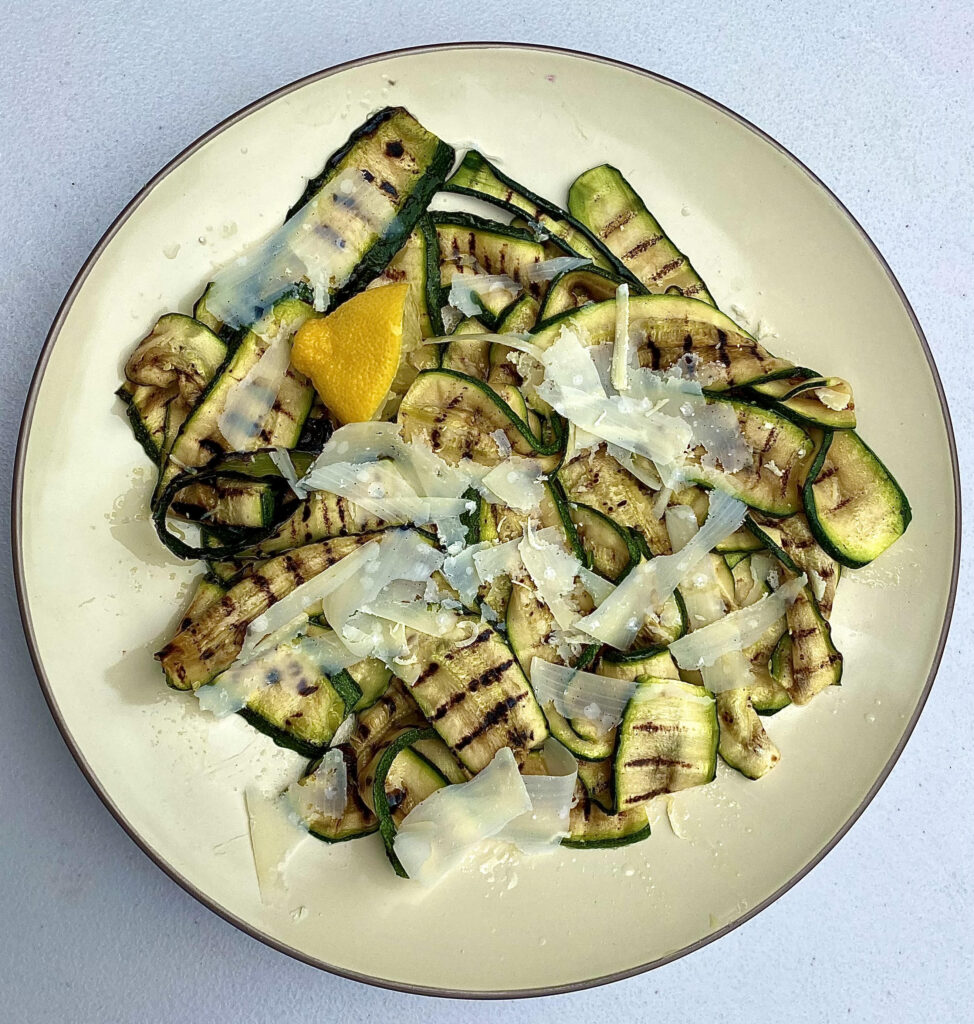
To accompany the salad, my griddle pan offered up a solution. Charred courgettes with parmesan and lemon. But the slices of courgette needed to be thin to properly cook through, which took some precision rather than carefree hacking. And to achieve good char lines (which had more to do with my slight compulsiveness than much else, to be honest), each slice needed full contact with the griddle pan’s ridges, meaning I could only fit three or four in the pan at a time.
So ensued a good twenty minutes of griddling, during which time I couldn’t easily turn my attention to other tasks for fear of over-char in the blazing hot griddle pan. It’s strangely freeing to be so tied up.
Perhaps, then, labour-intensive lasagne is a metaphor for achieving meaningful life-balance, and not just a daunting culinary Everest that gets repeatedly deferred.
Towards the end of his programme, Burkeman said, “There’s something I find very calming about the inconvenient aspects of my life right now.”
Liberation through effort? Pass me a chopping board.