24 Jun 2024
Elena Hogg, founder of local culinary company FOOD by Elena, is inspired to embark on a week of research and experimentation.
After a recent family trip to London to see a matinée performance of ‘Spirited Away’, we found ourselves wandering the West End streets looking for a place to eat: somewhere trendy enough to make the most of a rare visit to central London, but not so out-there that the kids would menu-moan. (I’ve invented this phrase; I think it’s self-explanatory and probably a phenomenon not unfamiliar to many parents.)
As if the gods of Soho had heard us, there appeared before us a Korean BBQ restaurant with its tabletops-cum-griddles steaming and spattering as diners flung their slices of bulgogi down to cook.
The children’s eyes lit up, as they always do when fire is involved, or perhaps because something usually deemed dangerous was about to be permitted. The meal was a huge success – there’s something very wholesome about cooking your own morsel of food, watching it sizzle and transform, then eating it as soon as it’s cool enough. And happily, despite their zeal, no children were harmed in the process.
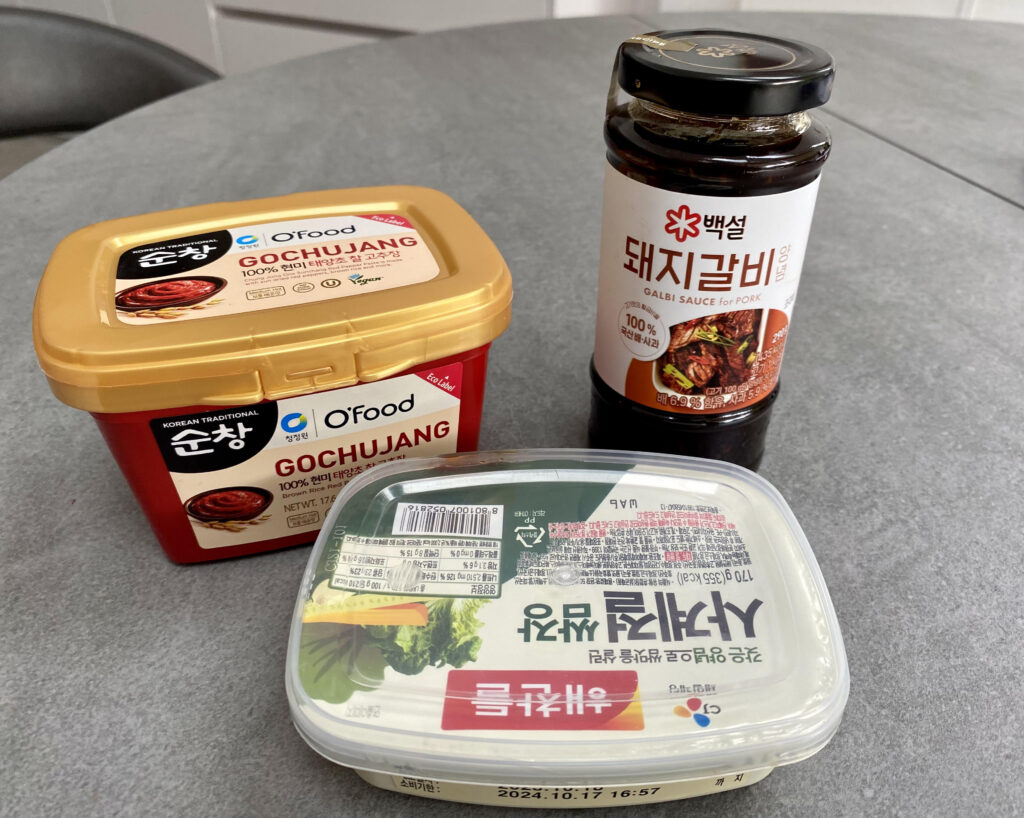
A stone’s throw from the restaurant is a Korean supermarket, which we came across en route back to St Pancras. All my foodie hankerings spiked at once, compelling my feet to walk in, even though by this point it was late and the kids were borderline feral. We entered a brightly lit cavalcade of colour: neat rows of jars, bottles and tubs full of promising substances. There was every kind of dried seaweed product imaginable and stacks upon stacks of noodles from glass to sweet potato. Yes, sweet potato noodles!
Despite the financial battering that any theatre trip delivers, particularly followed by a meal out, items needed to be purchased. Choosing was the hard part. Some things had English as well as Korean writing, but others were in Korean only and buying them felt like some sort of culinary lucky dip. Though in this age of Google translate, no language need be a barrier, of course.
My shopping spree led to a week of research and experimentation. My favourite kind of week, if it weren’t for regular daily life getting in the way. I know very little about Korean food, except that I’ve always enjoyed it. Part of me felt quite daunted as I attempted to recreate traditional dishes, until I realised that I was simply giving it a go, and feeding only my close family, so the pressure was off.
As a caterer, you become accustomed to cooking in the knowledge that someone is paying you for your creations, and so they must be the absolute best you can do, and that your business depends on their recommendations.
I also have a slightly unhealthy relationship with perfection and keep a metaphorical whip handy for regular self-flagellation.
So it was with a refreshingly liberated mindset that I set about preparing a handful of Korean dishes. Nothing needed to be truly authentic, just tasty. And I can do tasty!
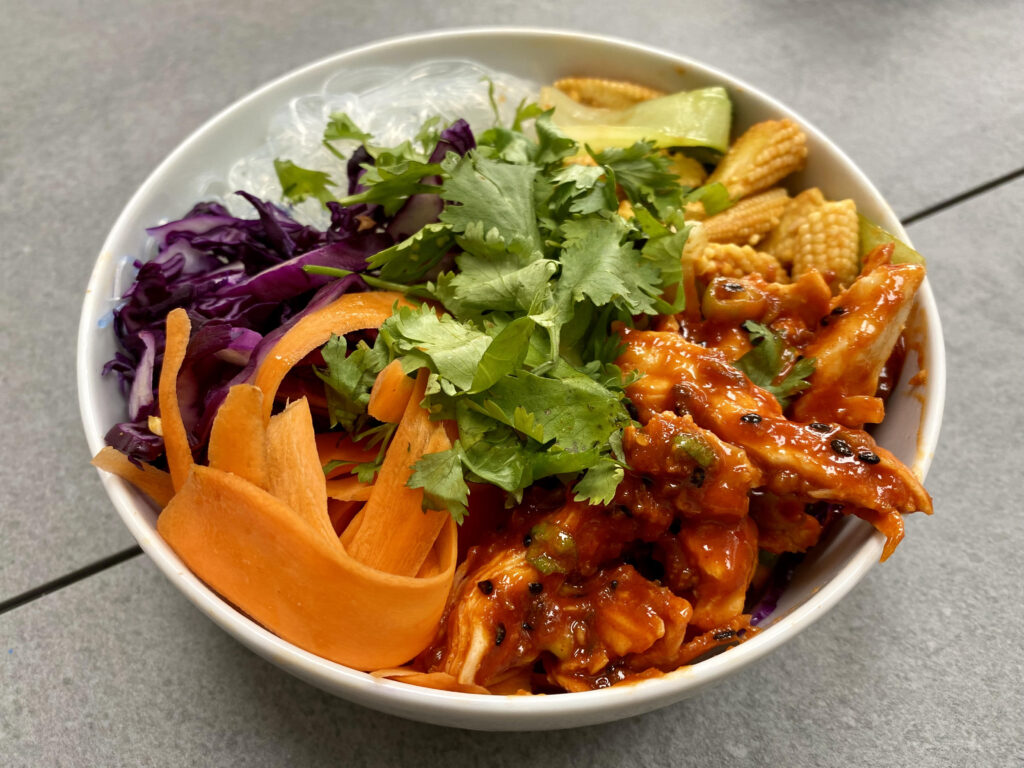
The first image my mind conjures up when I think of Korean food is a colourful bowl crammed with fresh ingredients each in their own section. I now know this is called ‘bibimbap’ – ‘bibim’ meaning ‘mixing’ and ‘bap’ translating as ‘cooked rice’. (Thank you, Google.)
So out came my newly acquired tub of gochujang – a vibrant, fruity chilli paste so popular now that it’s in all the main supermarkets – and also the tub of sagyegeol I’d bought, a soybean paste brimming with umami.
I used both these powerhouses to flavour some chicken, which formed the main event of my own take on bibimbap, along with some glass noodles (whose sticky gloopiness put our chopstick technique to the test), some bok choi, baby corn, carrot ribbons and some sliced red cabbage in homage to possibly Korea’s most famous food, kimchi, which – try as I might – I just cannot enjoy. My gut bacteria will just have to manage without.
Another star-buy was an incredibly more-ish bottle of peanut sauce.
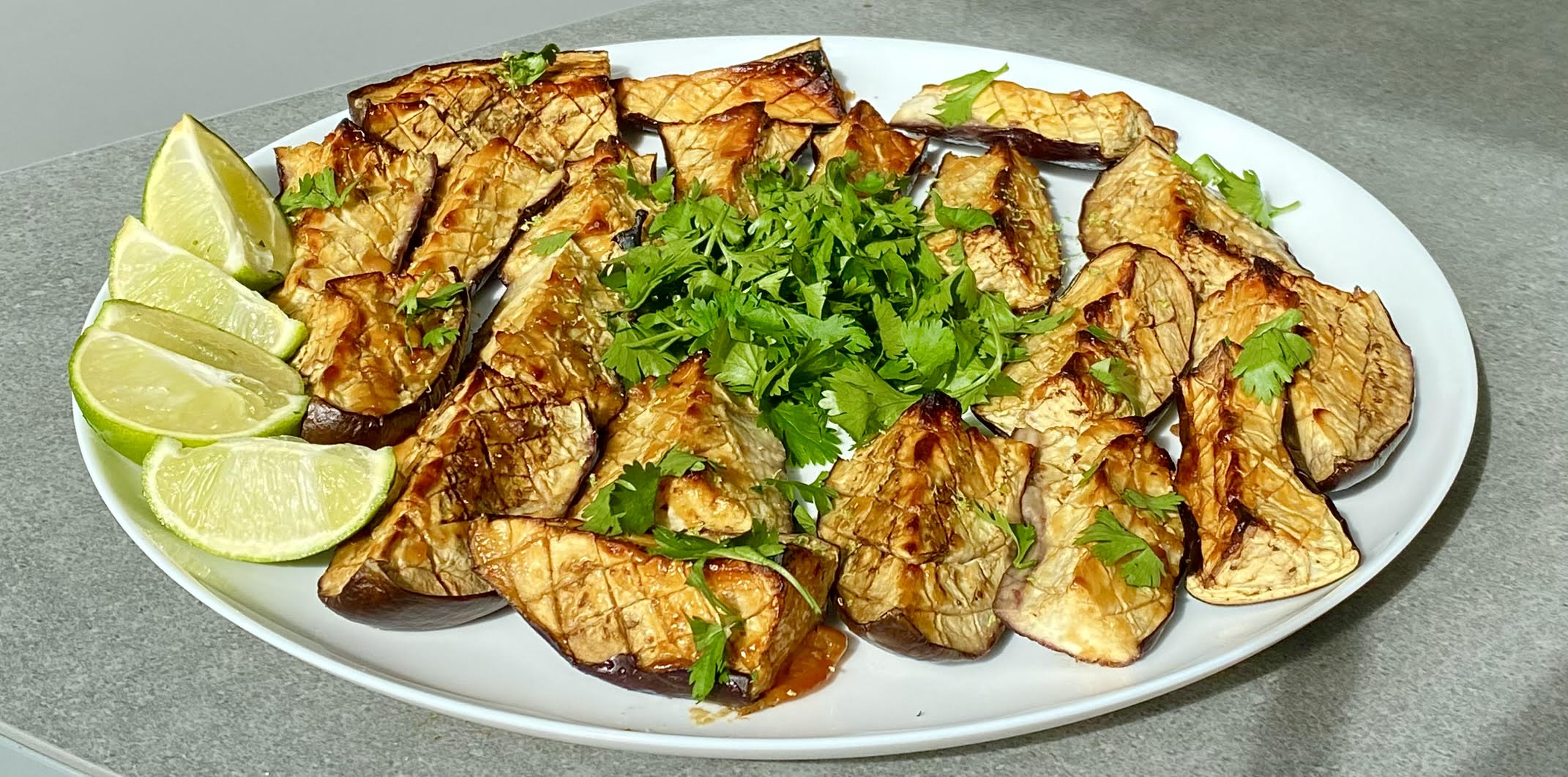
I decided to try this out on some wedged-up aubergines, which I scored in a diamond pattern to absorb more of the nutty yum, then baked in the oven until golden.
Don’t go too high with the temperature (170 fan should do it) because the peanut glaze will start to catch before the aubergine’s properly cooked through, and undercooked aubergine, with its chalky bite, is a sad thing.
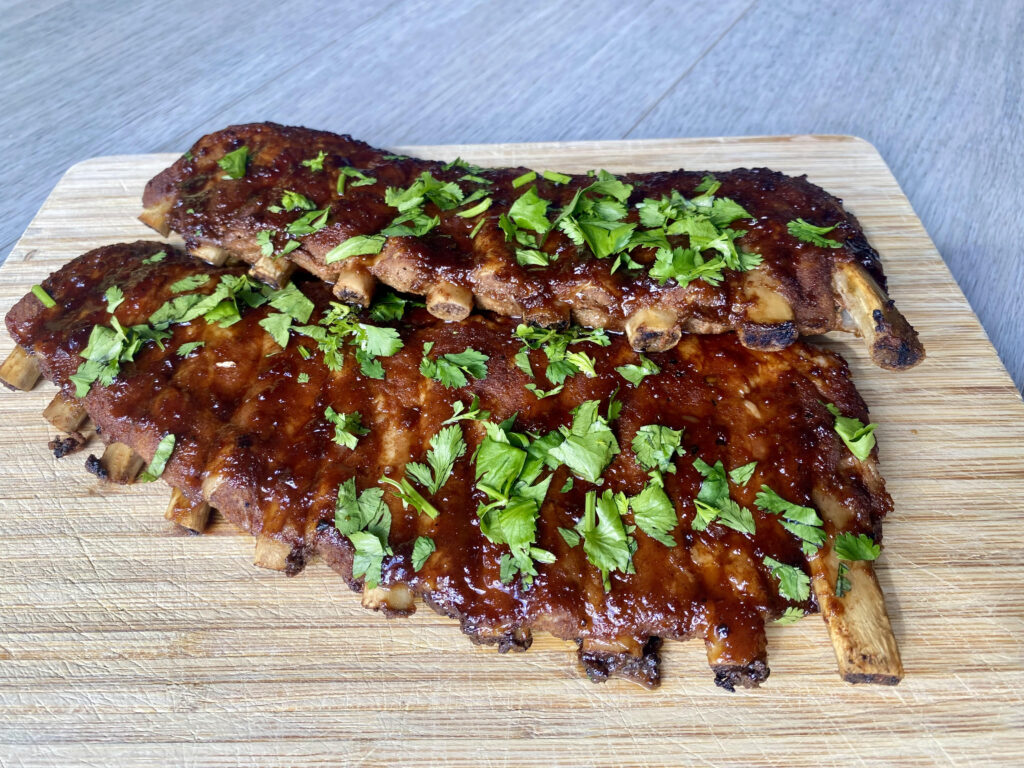
The aubergines accompanied a rack (or three) of pork ribs, for which I used the jar of galbi sauce I’d bought. ‘Galbi’ means ‘ribs’, and it’s made using an addictive combination of salty soy, and sweet pear, apple and onion purées. Naturally, I smeared it thickly and the result was sticky heaven. For a starchy element to the meal, I found a Korean potato recipe called ‘gamja bokkeum’.
Potatoes are crisped up in a pan, then liquid is added for them to braise in and soften. The liquid reduces during the cooking time and forms the glaze that makes this recipe so delicious.
Again, with a view to being inspired but not restricted by exactitude, I decided I’d do this all in the oven instead of a hob-top pan, and as far as my taste buds can tell, no harm was done, and in fact I’m not sure I’ll ever be able to revert to the regular kind of roast potatoes. In hindsight, though, in the context of the whole meal, I’d probably try and incorporate one or too more savoury or sharp elements, given everything I’d made (the ribs, the aubergine and the potatoes) was very sugary.
But that’s the beauty of experimentation – you learn as you go. With cooking, only ‘doing’ really teaches us. You can read all the cookery books and watch every YouTube video there is on knife skills, but only having a go yourself can really improve your ability. And any pursuit of authenticity or perfection will pressure you out of trying, so relinquish all ambition and let anticipation and plain old greed take over. Now that’s a recipe for success!