05 Jun 2024
To mark the occasion of its reopening following a month-long refurbishment, we take a look back at the long history of The Peahen, the former hotel which initially served as a coaching inn for the route up Holywell Hill into the city centre.
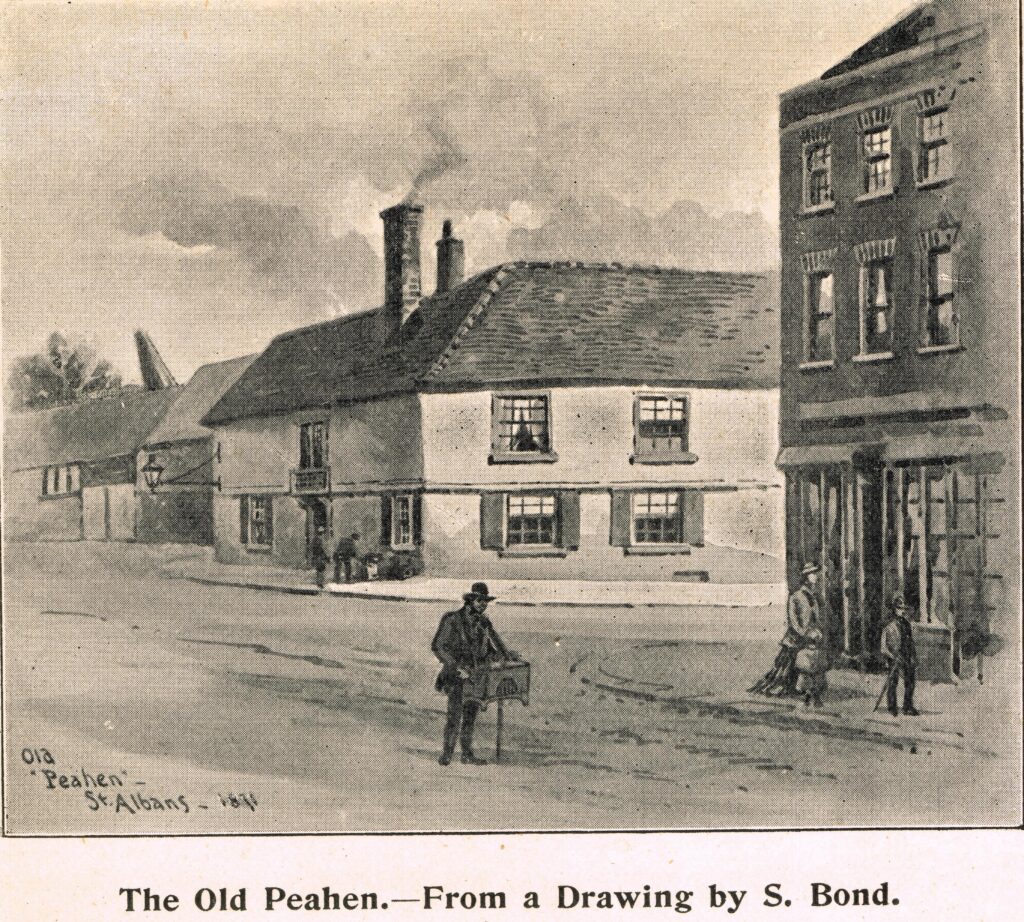
A building bearing the name of “le Pehenne” is mentioned as far back as 1480, at which time it is believed to have been a half-timbered building, part of an assemblage of hostels on Holywell Hill.
For many years it was believed to have been the scene of the private marriage between Henry VIII and Anne Boleyn in 1533, but this is now considered more likely to have taken place at Whitehall Palace.
In 1568 it was kept by Alice Thomson, who left the lease to her son John in her will, and by 1621 both The Peahen and the adjoining Woolpack were owned by one Henry Baldwyn.
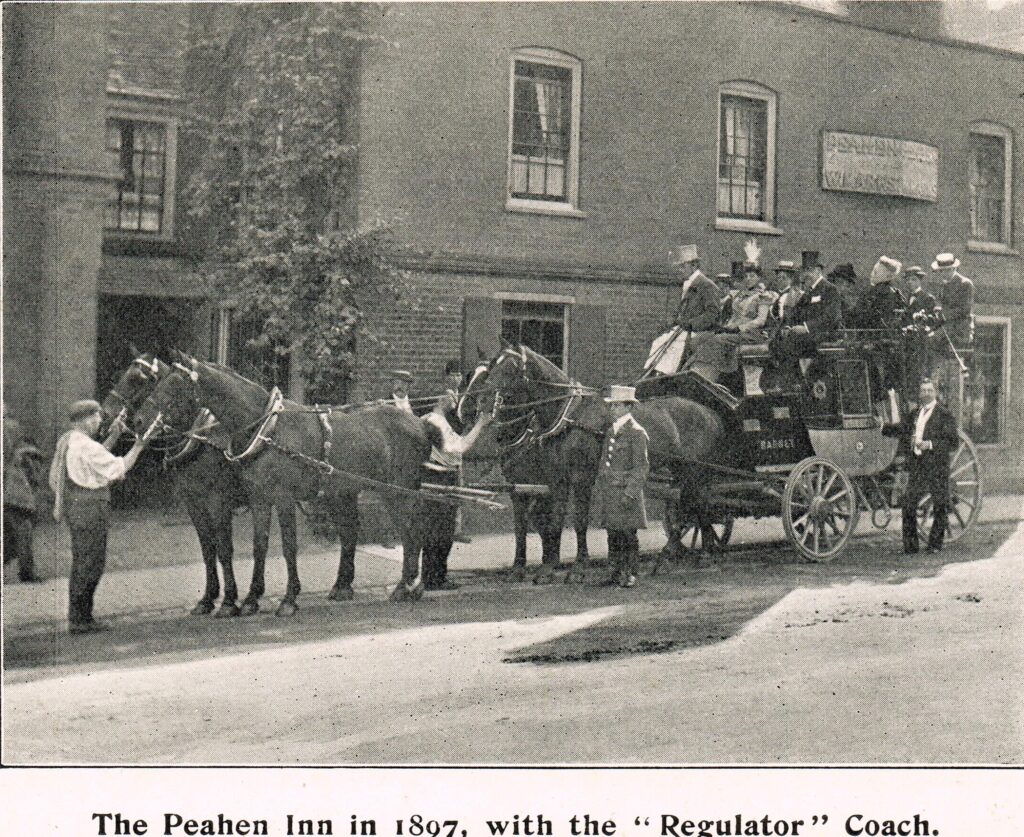
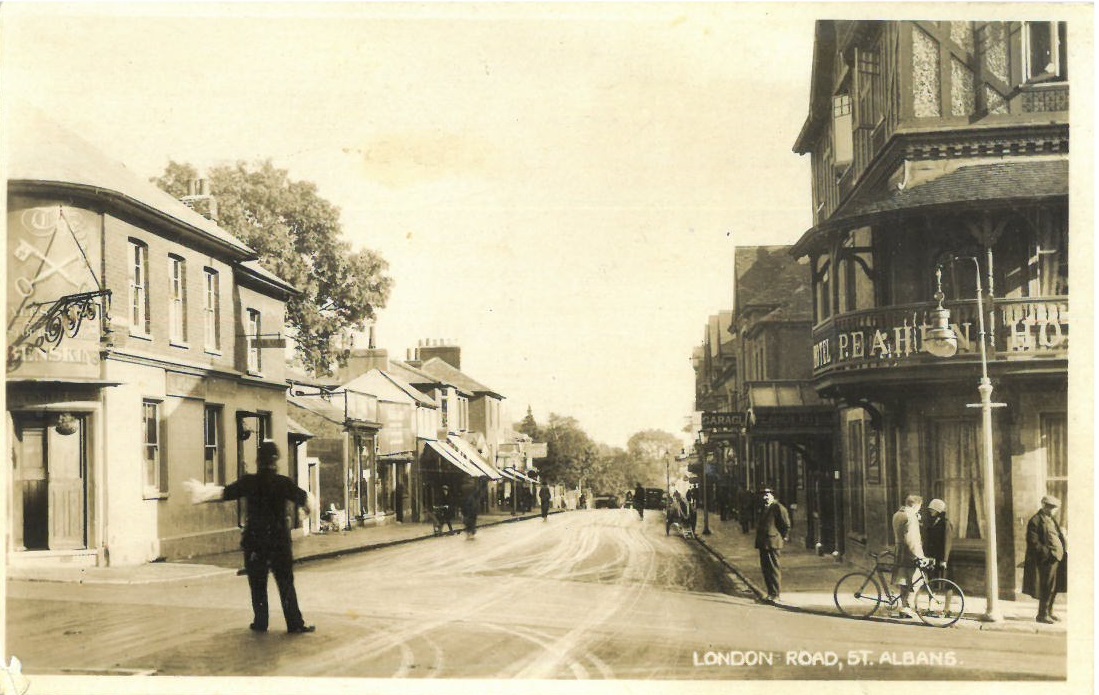
After the building of the London Road in 1796 The Peahen occupied a more prominent corner site and was now the first inn for traffic arriving from London, but even after its merger with the Woolpack in 1852 it remained little more than a small timber-framed building.
William Marks, who was born in St Albans in 1828, became landlord of the Peahen early in 1870 after his mother’s death, and was instrumental in the construction of the modern building.
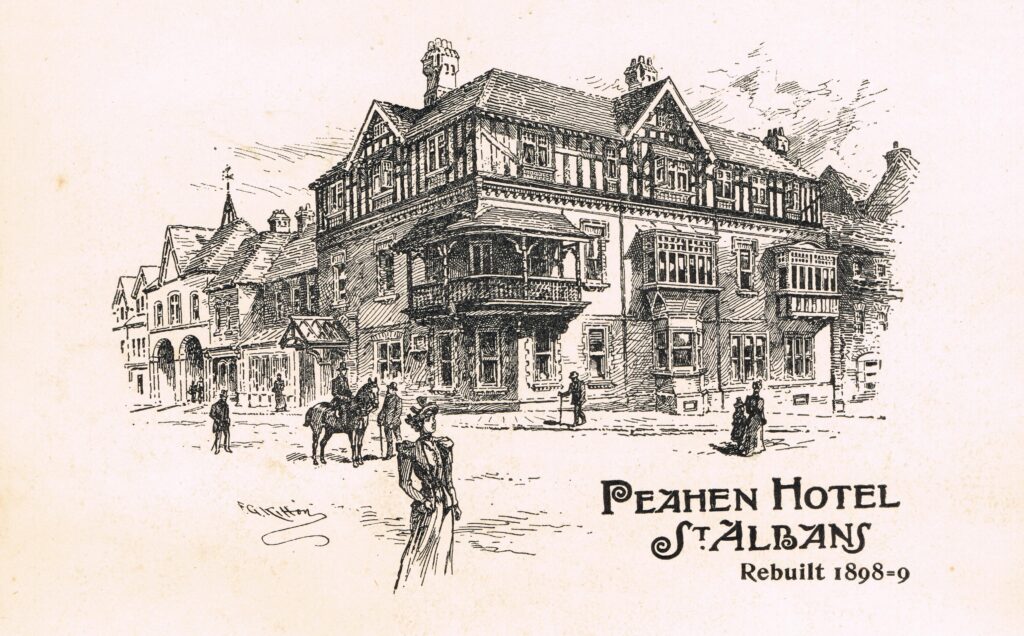
The hotel was actually owned by the Marks family from some point before 1780 until 1898, when the original building was demolished and rebuilt, but its replacement is believed to have offered stabling well into the 20th century.
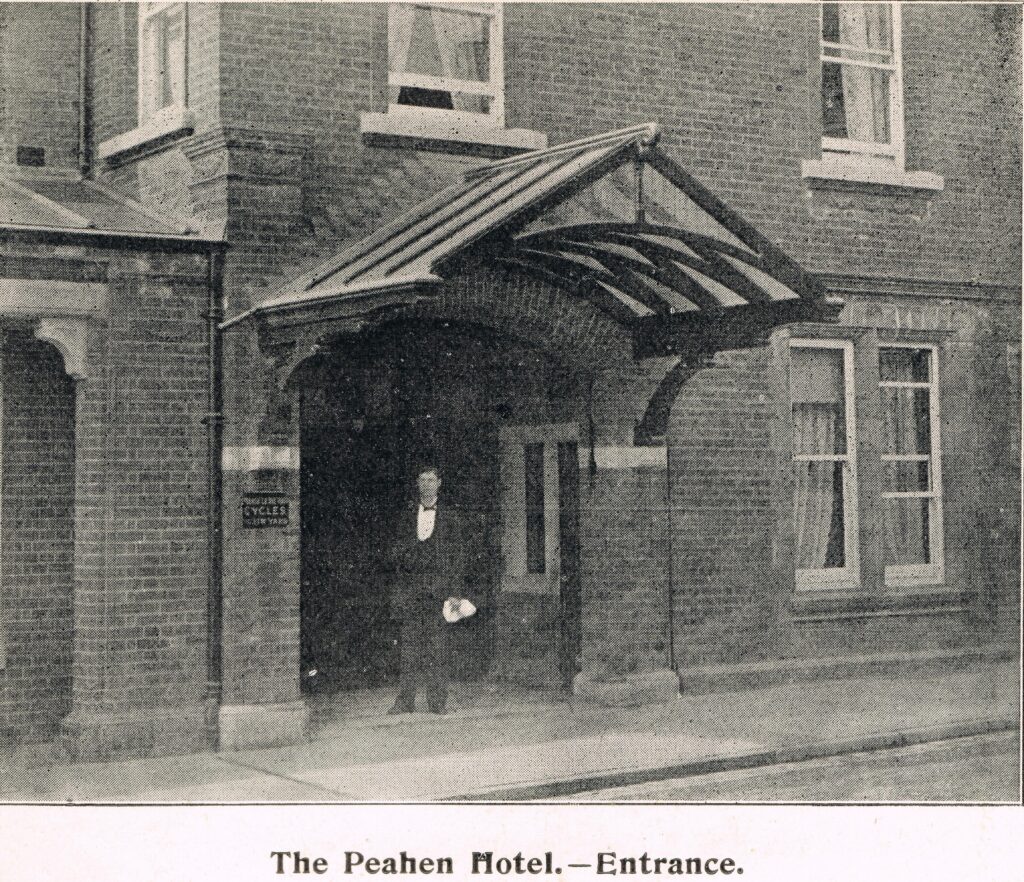
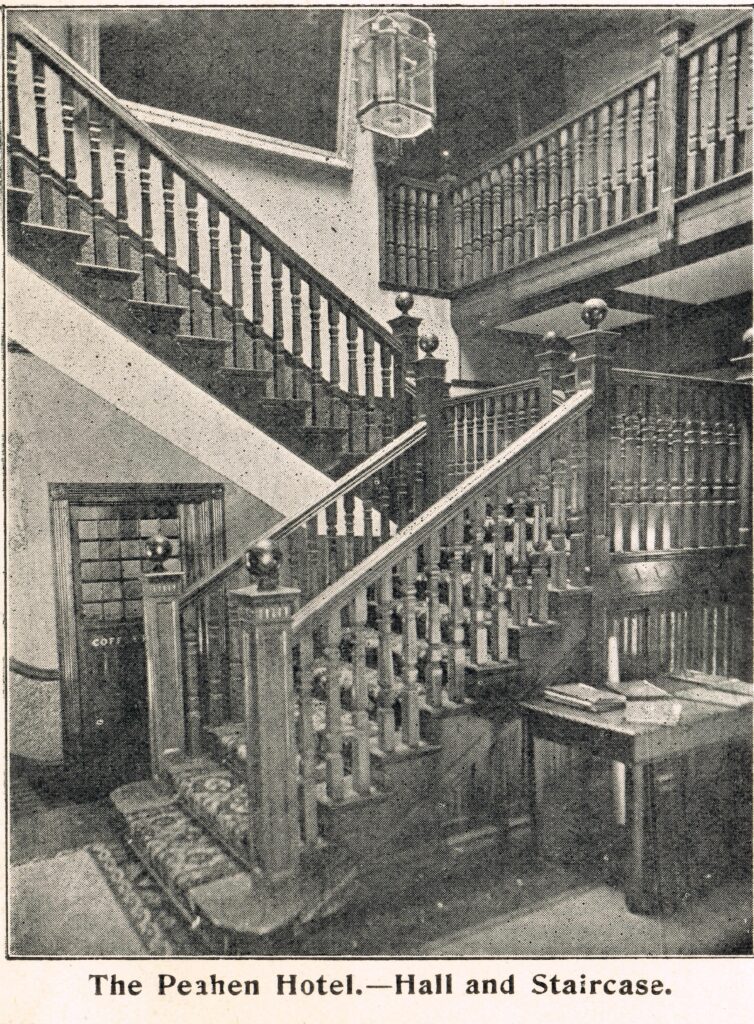
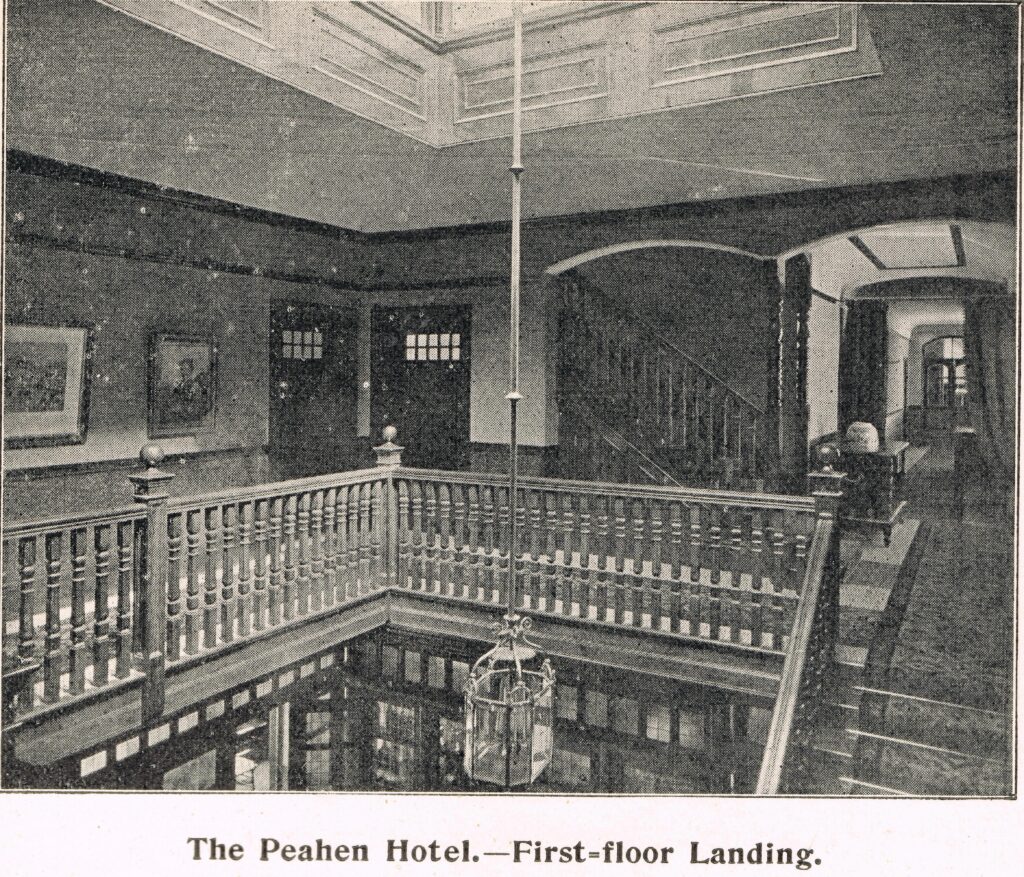
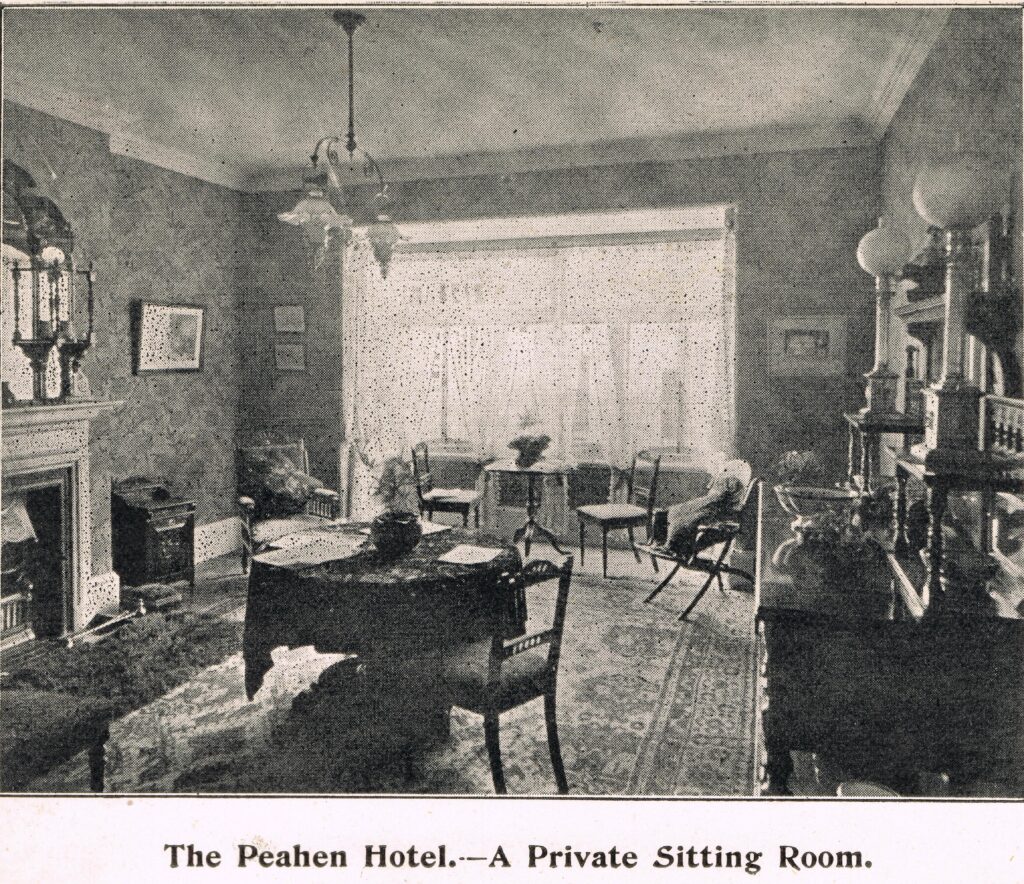
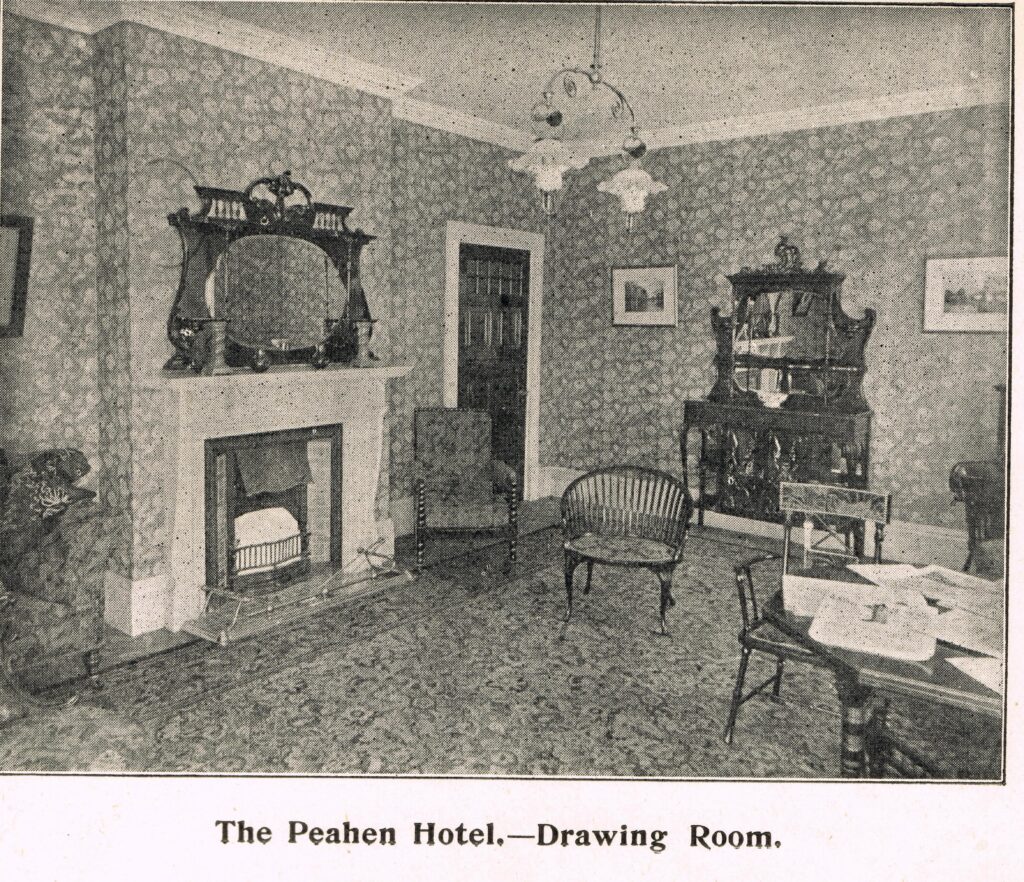
A promotional booklet for the newly rebuilt hotel celebrated its transformation.
“Those who remember the old Peahen cannot fail to be impressed by the magic change that has been wrought in the space of a few months.
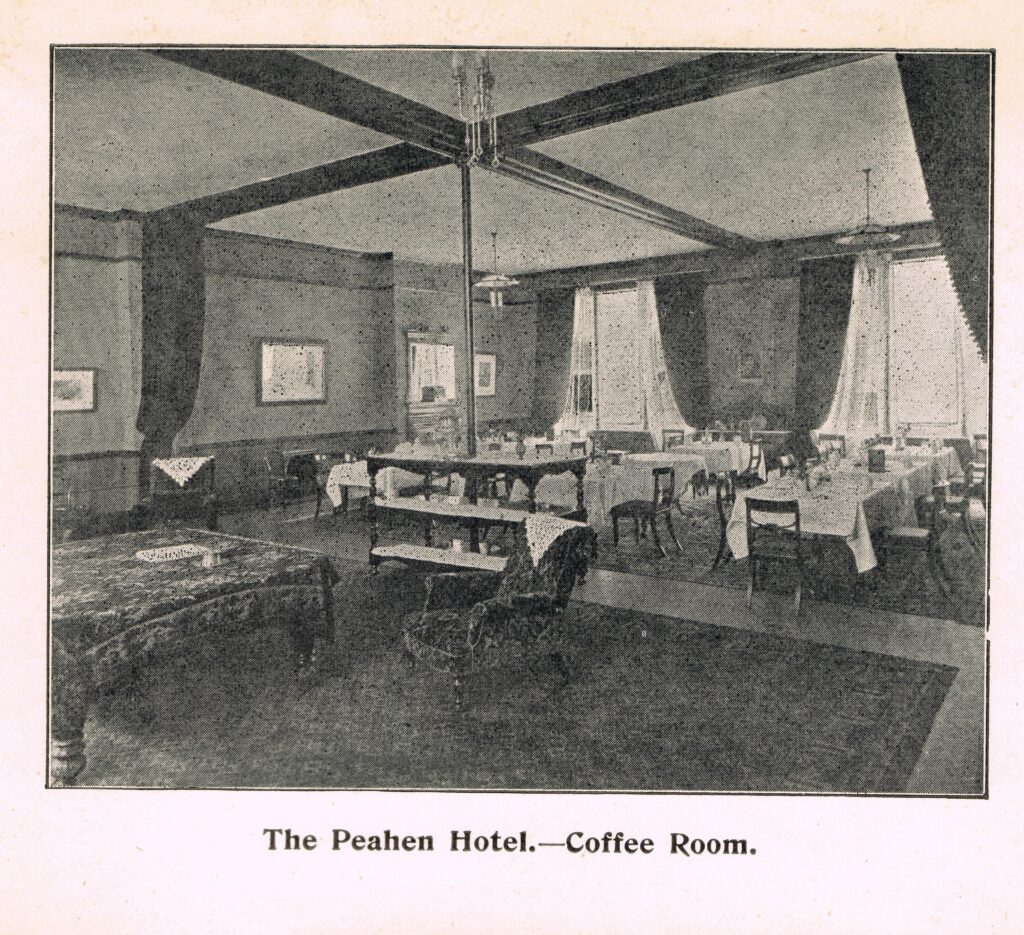
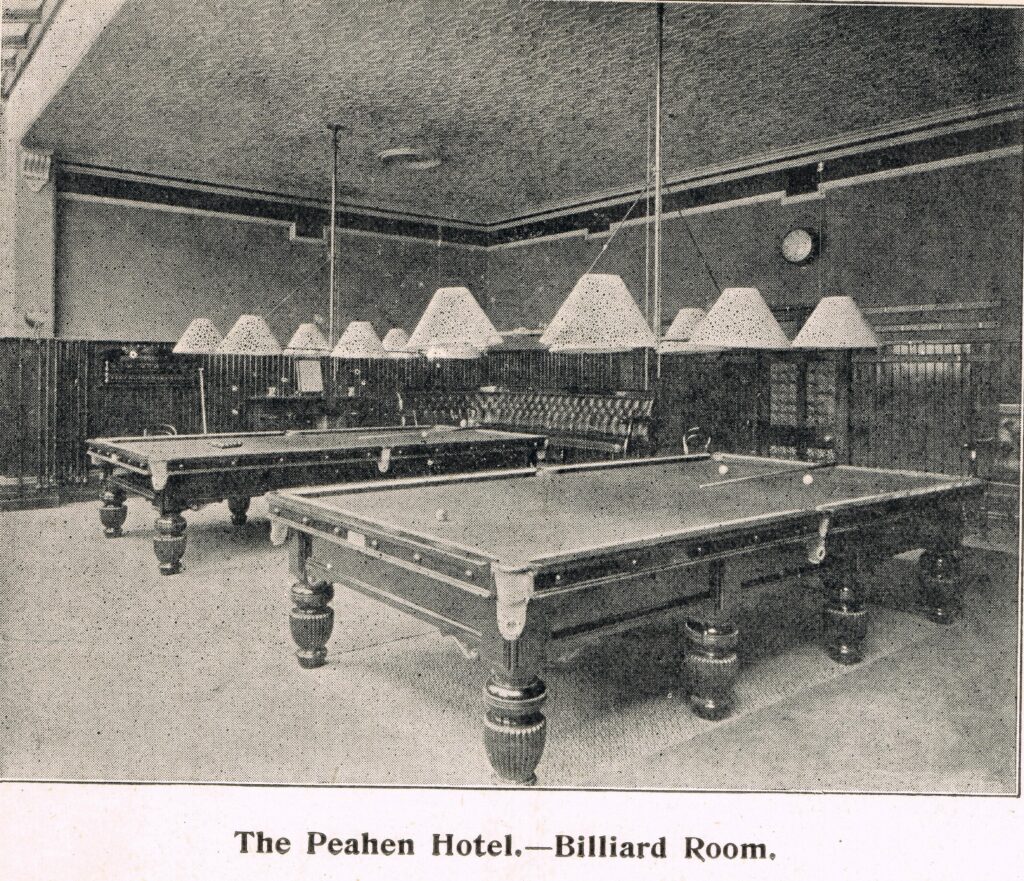
“There are no less than thirty bedrooms and sitting-rooms, a drawing-room with outside balcony, smoking-room, billiard-room, an assembly-room and a magnificent dining-room.
“Those who are interested in antiquities will find preserved in the ceiling of the dining-room the ancient moulded beams and carved brackets that originally formed part of the old Woolpack…
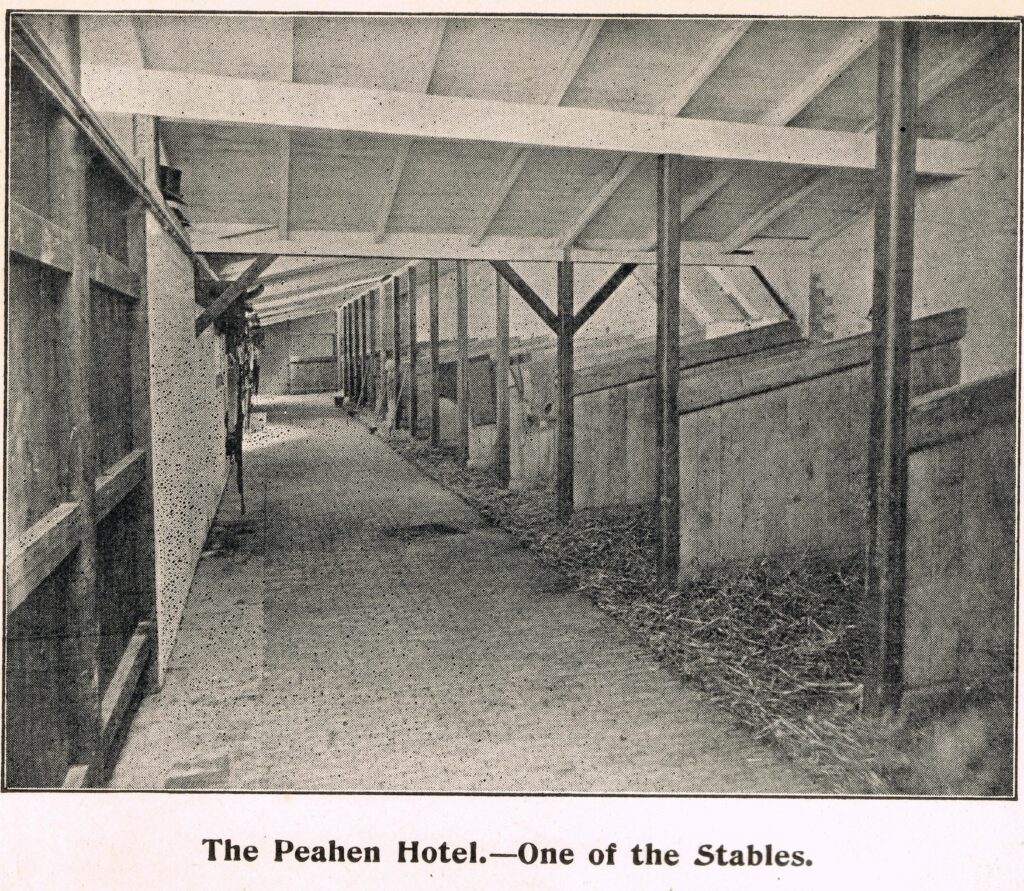
“Mention must be made of the coach-houses and extensive stabling… Here is accommodation for thirty horses, while a staff of ostlers and stable-boys are responsible for the comfort of the animals placed in their charge.”
Further commentary on the building occurs in The Victoria Country History (1908), but this is less complimentary about the rebuilt Peahen: “Before the present London Road was made in 1794 there was no road eastward from St Peter’s Street and Holywell Hill (formerly Holywell Street), then the London Road. Between these points on the steep hill into the town were the principal inns.
“Of those that remain the ‘Peahen’, which stands at the south corner of the London Road, is, perhaps, the most important.
This dates back to the fifteenth century, but the house has recently been entirely rebuilt in a style which cannot be said to harmonise with its surroundings; the only relic of the old inn is some sixteenth-century woodwork in the coffee room.”
When the First World War broke out the 2nd London Division set up their headquarters in the hotel, and in 1936 family brewers McMullen & Sons Ltd bought The Peahen, remaining its custodians to this day.
It was in 1932 that the first shop opened on the site. Sidney and Evelyn Cash were the first tenants, opening a ladies’ fashion shop, ‘Adaire’. The shop closed in 1968 on the death of Sidney and then became a carpet shop, followed by a men’s wear shop, after which McMullens converted it back into the pub that we now recognise.
By the time we reach the 1960s the Deamer family are known to have operated Peahen Coaches out of the yard, and more recently The Peahen’s former public bar on London Road closed in the 1990s before being again converted into shops.
Today the stylish upstairs rooms, which once provided luxury accommodation to the hotel’s guests, serve as office space for a variety of businesses, including The White Rooms, Kokoro Global and Zest, and has been renamed Hart House.
Sources: hertfordshire-genealogy.co.uk, CAMRA, hertsmemories.org.uk, St Albans Through Time by Robert Bard, Memories of St Albans’ (2000) published by True North Books Ltd. and thanks to Andy Lawrence for the images.