04 Jun 2024
St Albans has often had to face down trouble. For centuries, its strategic location has placed it right on the route of invaders, from Roman legionnaires to Norman troops bristling with weapons. Not to mention lying on the deadly path of armies on the move. But the people of St Albans are nothing if not adaptable. And resilient.
By the 5th century, the Roman army had withdrawn and new settlers were arriving – the Saxons.
By the middle of the 8th century, St Albans was part of one of the most powerful Anglo-Saxon kingdoms which stretched from the River Humber to the Kent coast. This was the kingdom of Mercia. In the late 700s it was co-ruled by Offa and his Queen, Cynethryth.
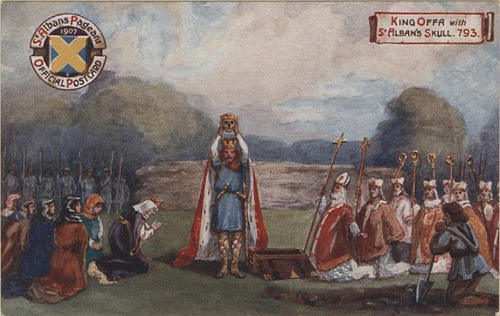
They are thought to have founded the Abbey of St Albans in 793.
Cynethryth was a highly respected and influential queen. She even had her own coinage, which was unique among women in the West. But, like many powerful women, in later centuries her reputation was damaged, and by the early 1200s, she was being accused of being a troublemaker and evil advisor to Offa. Then she was mostly forgotten.
Starting around Offa’s time, raiding parties were making sudden bloody attacks on wealthy places, such as monasteries.
The Vikings had entered our history in a storm of blood and fire. They were sea raiders, looking for portable treasure and other items they could carry off. This included humans, who could be sold at slave auctions around the Baltic. Stories of their blood-splattered violence spread along the coast and inland, creating terror, especially in poorly defended settlements like the Abbey of St Albans. And in 874, the Vikings are said to have brought trouble here.
The legend says that a vicious raid by Vikings based in Cambridgeshire stormed through St Albans in a maelstrom of death and destruction. They killed Mercian soldiers, looted and torched homes, ransacking the churches and the Abbey church itself. A hoard of Saxon coins found near Fishpool Street suggests that someone tried to save their possessions from the marauders. Why they never came back to recover their money, we can only surmise.
After the raiders withdrew, the local people were left to pick themselves up and try to put their lives back together.
This was the legacy of the great Viking army, who were now co-ordinated and intent on invasion. Mercia fell and by the 870s the only Anglo-Saxon kingdom left was Wessex, under King Alfred.
Four years later, in 878, Alfred defeated the Viking army at the Battle of Edington and a boundary between the Saxons and the Danes was agreed – in this area, along the River Lea.
So, St Albans became a frontier town. And life went on. Anglo-Saxon St Albans was based around the Abbey. A source of work and opportunities.
But what happened to you if you broke the law? If you were seen as a troublemaker? People lived in small communities, so justice was community based. People would be grouped in tithings of 10 people. If one broke a law, the other nine had to get them to court or they would all be punished.
Banishment was a much feared punishment. To be cast out from your close community and be forced to survive alone in a hostile world, to become an outlaw, was a terrifying deterrent and far from the romantic idea of Robin Hood and his Merrie Men.
Justice relied on oaths. The people involved swore they were telling the truth. To discover if they were lying, Trial by Ordeal was sometimes used. This meant a troublemaker would be made to carry a piece of red hot iron for a certain distance. The burns would be examined, bandaged, then sealed by the priest. After three days, the bandages would be ceremonially removed. If the burns had begun to heal with no infection, then the accused was judged to be telling the truth.
Another form of justice was Trial by Combat, to be fought by the accused, or represented by a nominated champion. It was believed that God would ensure that the person who won the fight would be innocent.
Trial by water had no good outcome. Centuries later it was still in use in witch trials. If you floated, you were guilty, but while drowning revealed your innocence, that was no consolation.
The people of St Albans and the Abbey had to become resilient about picking themselves up and putting their lives back together because more trouble was on the horizon.
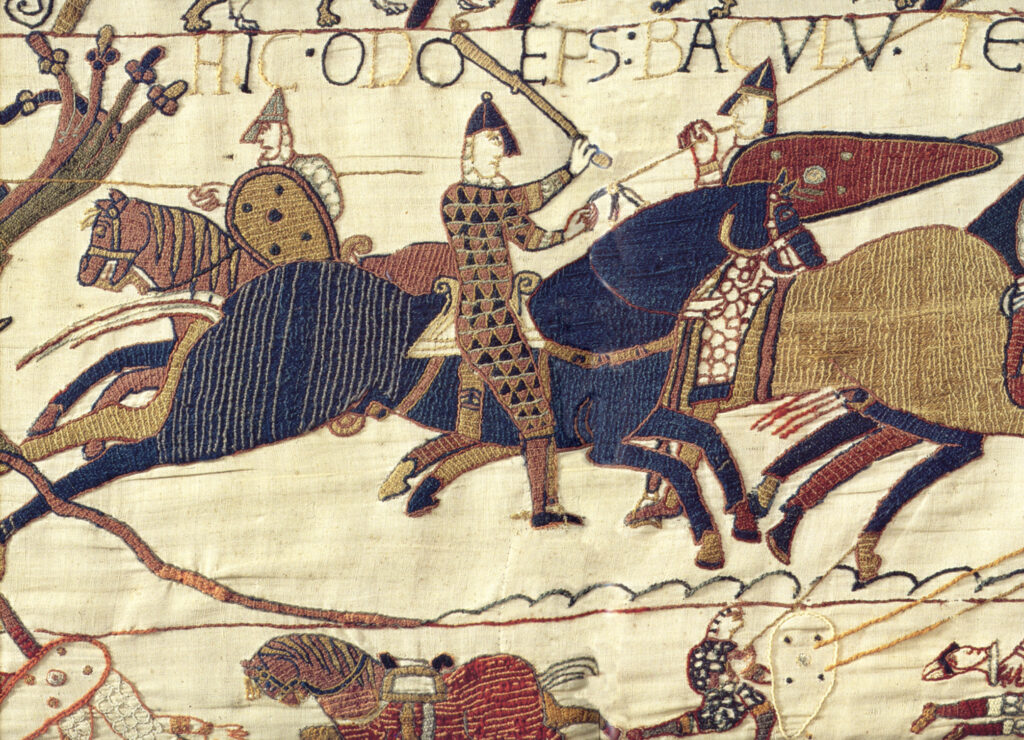
And this time it came from just over the Channel. In October 1066, Duke William of Normandy set sail for England in boats full of thousands of Norman, French and Breton troops. And life in England was never going to be the same again. Especially for women.
By 1077, the first stones of the new Abbey Church of St Albans were being laid. The Anglo-Saxon church which had protectively encircled the shrine of Alban was demolished.
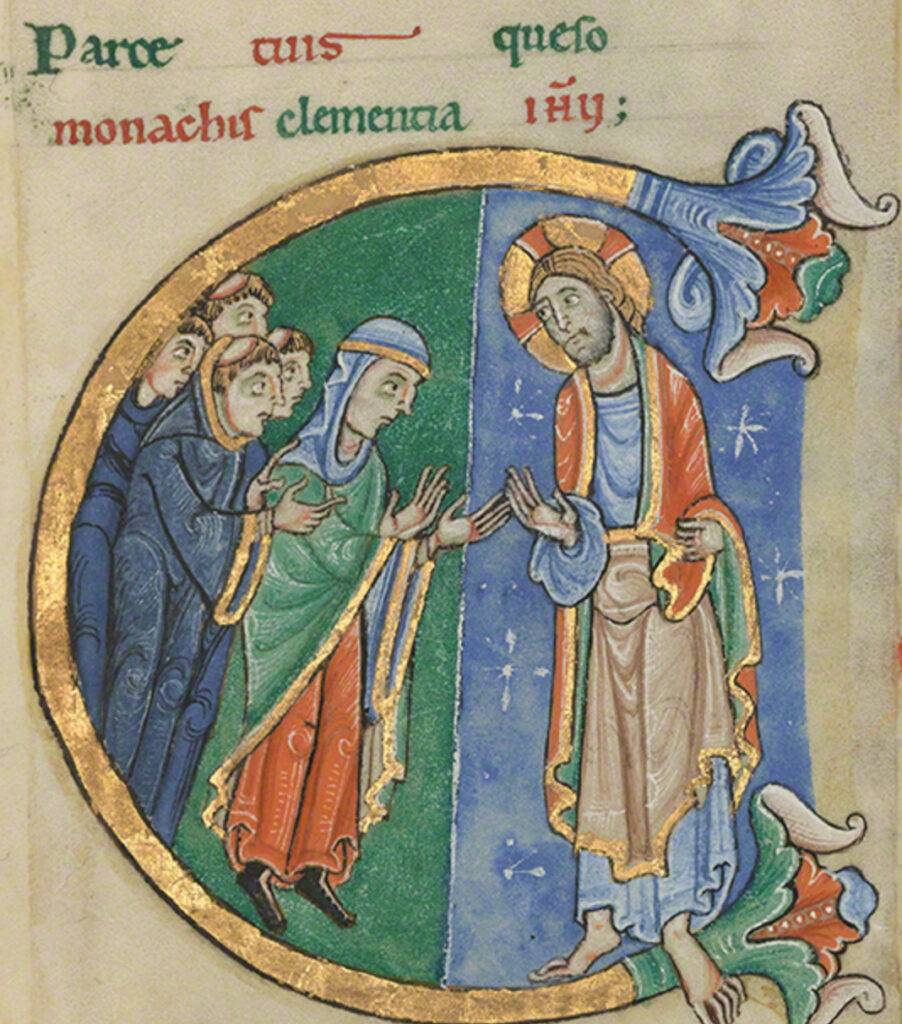
But the Normans did more than destroy the old church, they also destroyed the way of life for the women here. St Albans Abbey was a mixed monastery, with nuns here as well as monks, common in Anglo-Saxon England. But then trouble came.
The first Norman abbot, Paul of Caen first confined the nuns to the almonry to take care of the poor. Then he tightened rules on pretty much everything – the women’s clothing, their diet, their daily exercise, and prayer. By 1140, Abbot Geoffrey of Gorham was apparently worried the close proximity of women and monks, so he got rid of them completely.
The nuns were moved to Sopwell Priory, a small Benedictine convent founded by Abbot Geoffrey. A second house was founded at St Mary de Pre (Gorehambury) in 1194. It was first used as a hospital for women lepers and later as a nunnery.
And just like that, the women were no longer at the centre of life at the Abbey. But that didn’t stop the women, or indeed the men, of medieval St Albans from creating trouble or standing up for themselves.
Trouble was on the horizon.
Discover more about this troubled period of history on a guided walk of Medieval Life in St Albans on 23rd June at 2.30pm. For more information and to book, visit
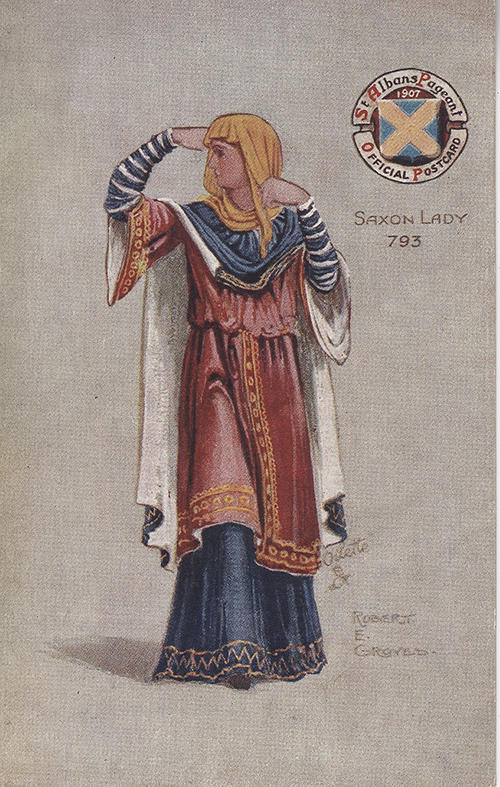
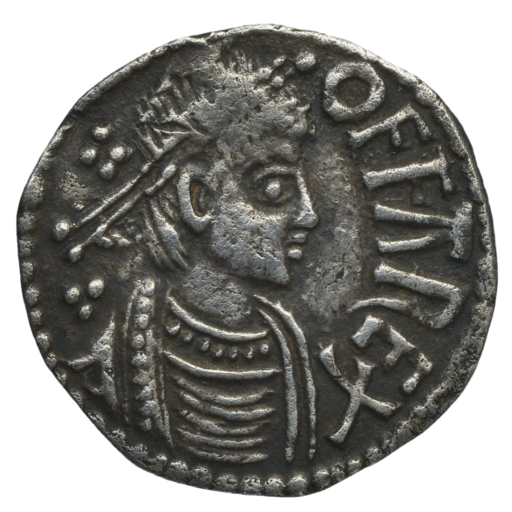
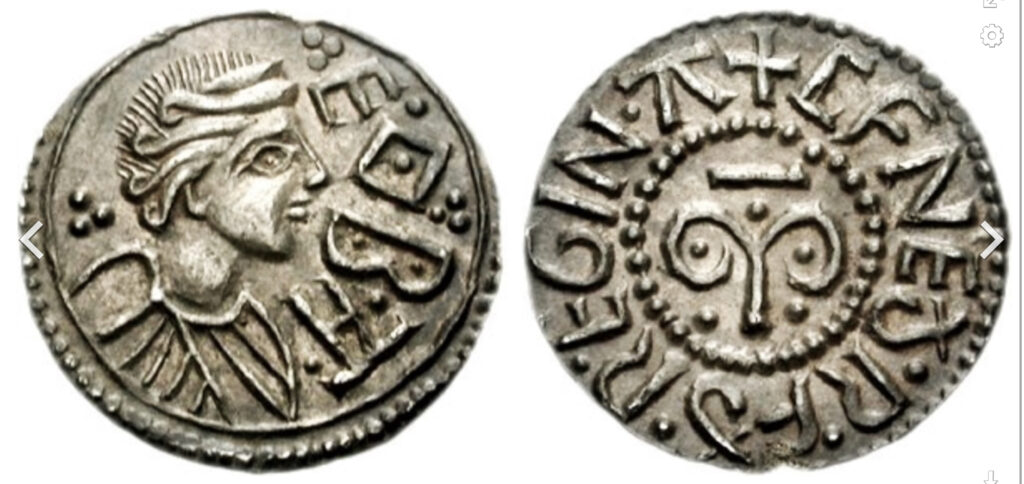
Photo: Classical Numismatic Group www.cngcoins.com